
Find What Your Plant Is Telling You
Yellow leaves, crispy edges, drooping stems, and mushy growth are clues. Pick the symptom you see first, then follow the matching fix.
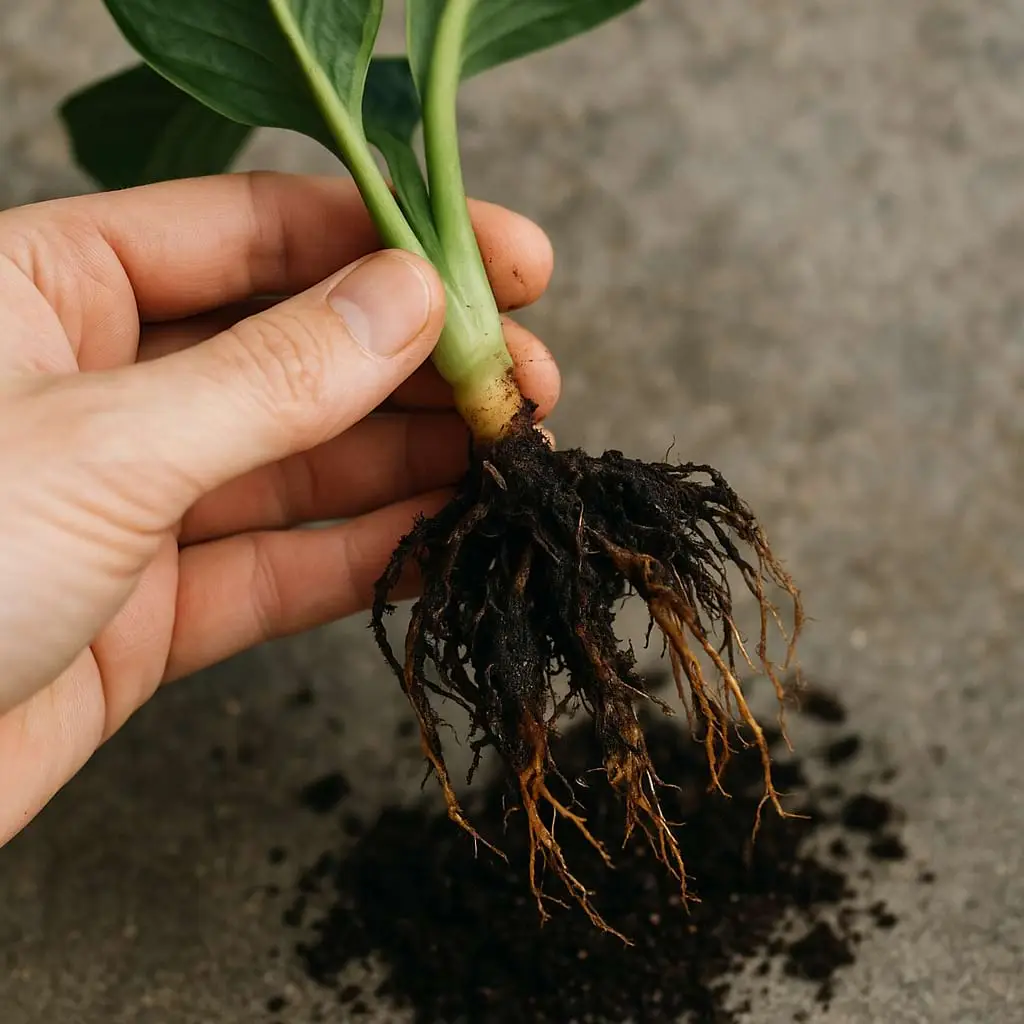
Check the soil before changing anything else. Too wet or bone dry explains many beginner problems.
Start with the symptom you can see
These shortcuts send you to the most likely guide without reading the whole library first.
The most common beginner plant signal.
Brown tips Dryness or scorchCrispy edges usually point to stress.
Drooping Water stressToo much and too little water can look similar.
Mushy stems Act quicklySoft stems and black roots need immediate checks.
Match the symptom to the likely cause
Start with the main thing your plant is showing you before changing the whole care routine.
The Houseplant Problem-Solver: A Visual Guide to Diagnosing Sick Plants
Pick the guide that matches the job in front of you.
Leaf discoloration issues
Color changes are the fastest way your plant reports stress.

Yellowing Leaves
The #1 houseplant problem. Learn to tell the difference between yellowing from overwatering, underwatering, and nutrient issues.
Open guide →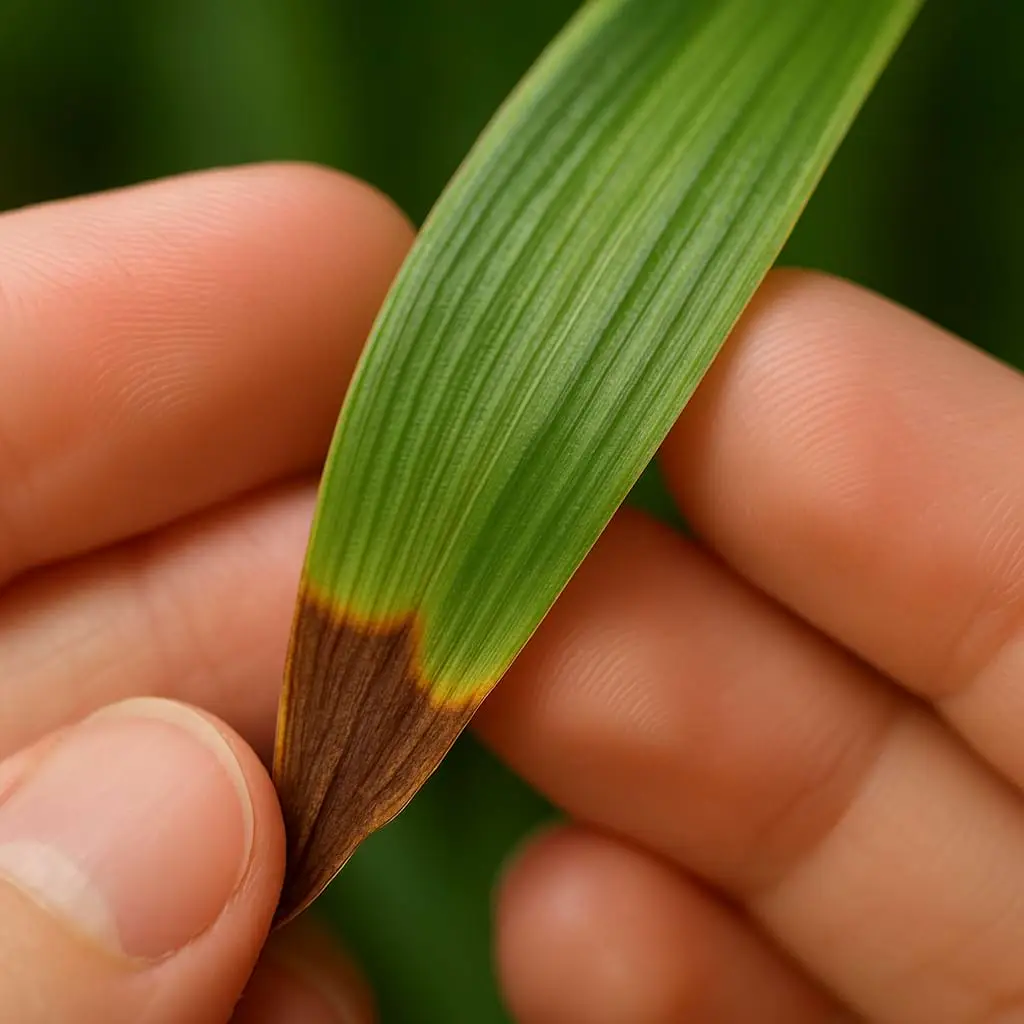
Brown, Crispy Tips
Dry, crispy tips are a common issue, often caused by underwatering or low humidity.
Open guide →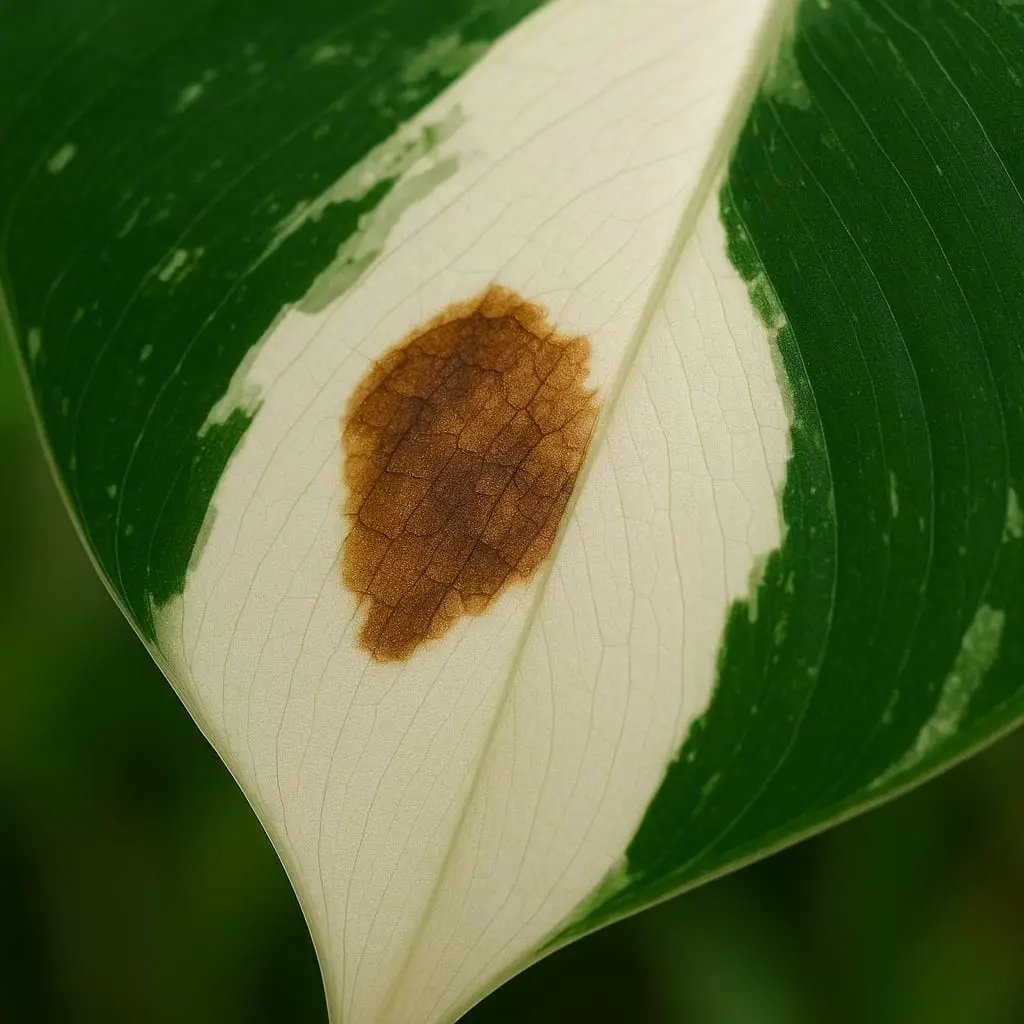
Browning Variegation
White or pink sections turning brown and crispy can be caused by low humidity, overwatering, or sunburn.
Open guide →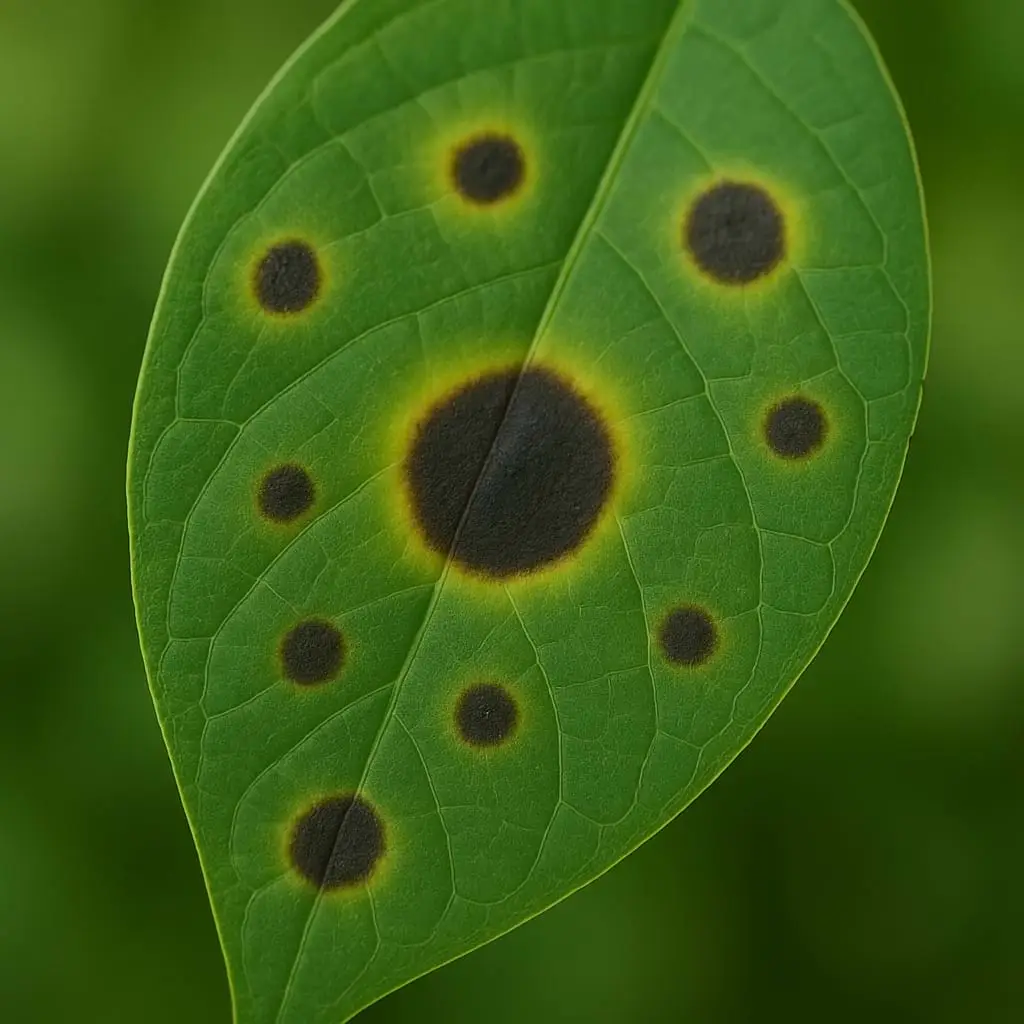
Brown or Black Spots
Dark spots on leaves can be caused by fungal diseases, pests, or physical damage.
Open guide →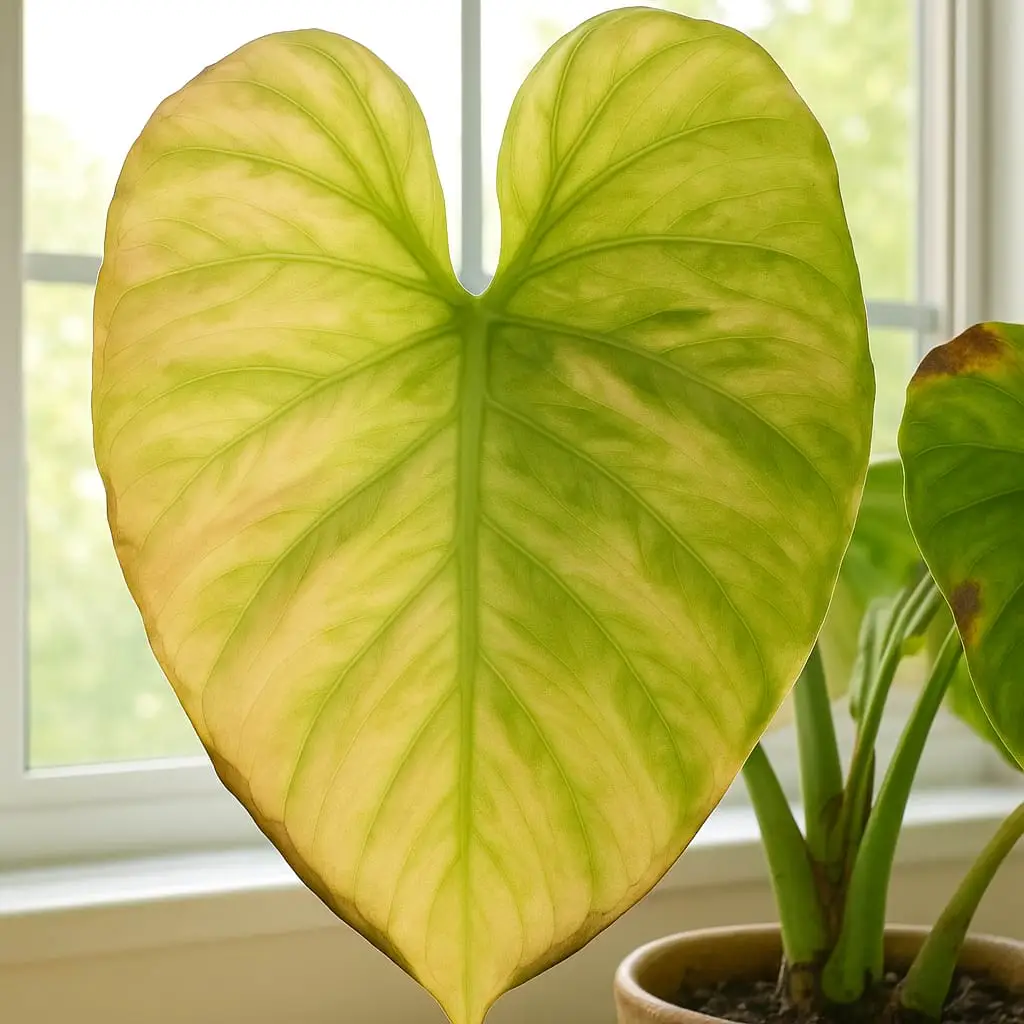
Pale Faded Leaves
Leaves looking washed-out or losing their vibrant color can be caused by overwatering, underwatering, natural aging, acclimation shock, or pests.
Open guide →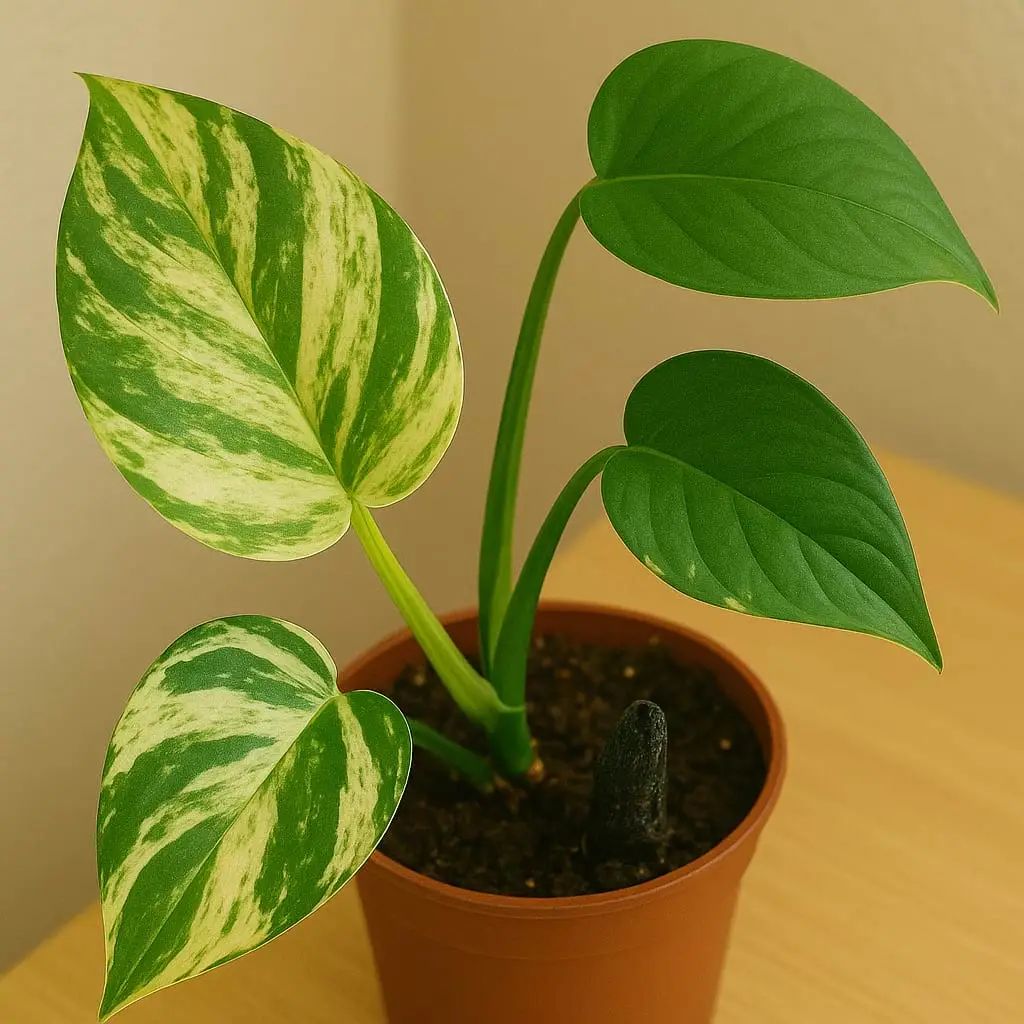
Losing Variegation (Reversion)
Is your prized variegated plant turning green? Understand why plants revert and how to encourage more colorful leaves.
Open guide →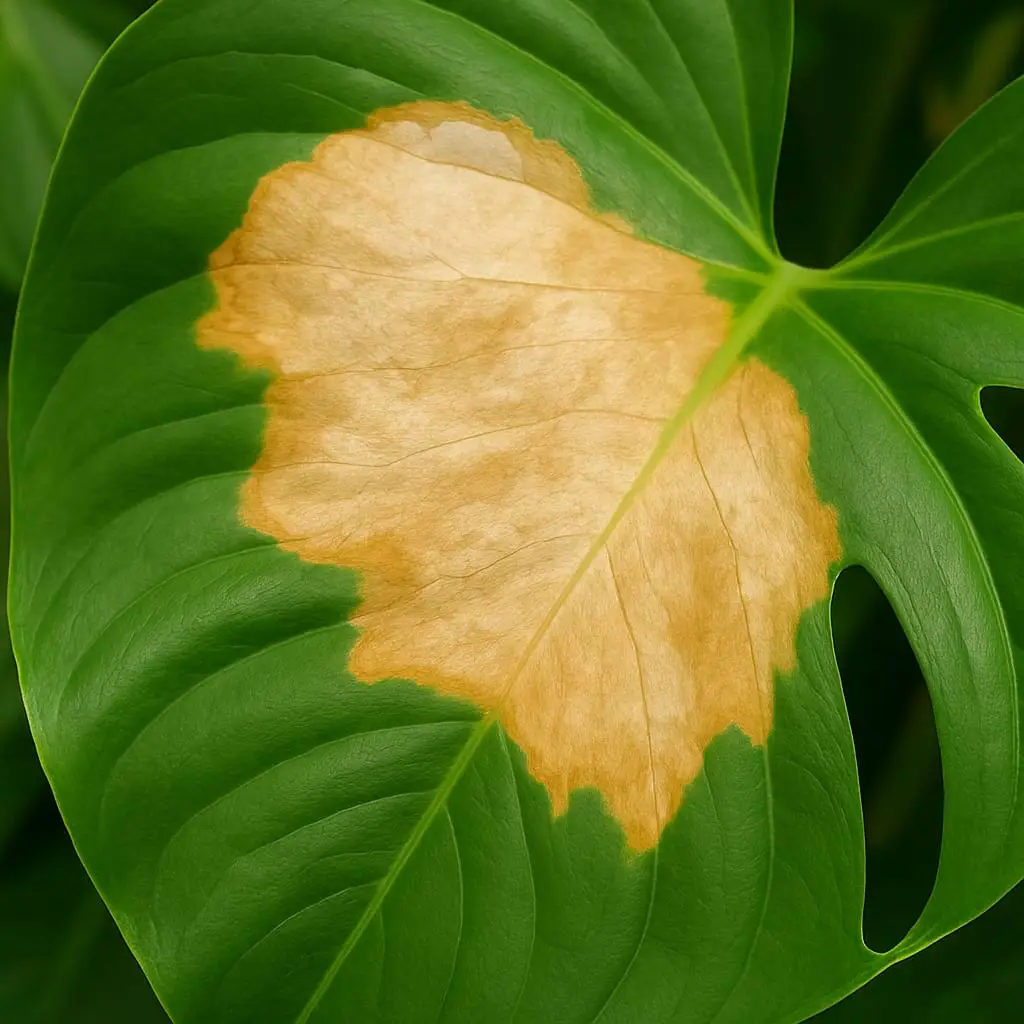
Sunburn / Leaf Scorch
Seeing crispy, brown, or bleached patches on your leaves? It's likely sunburn. Learn to identify, fix, and prevent leaf scorch with this step-by-step guide.
Open guide →Shape, size, and growth problems
These issues show up in how the plant grows, rests, stretches, curls, or drops leaves.
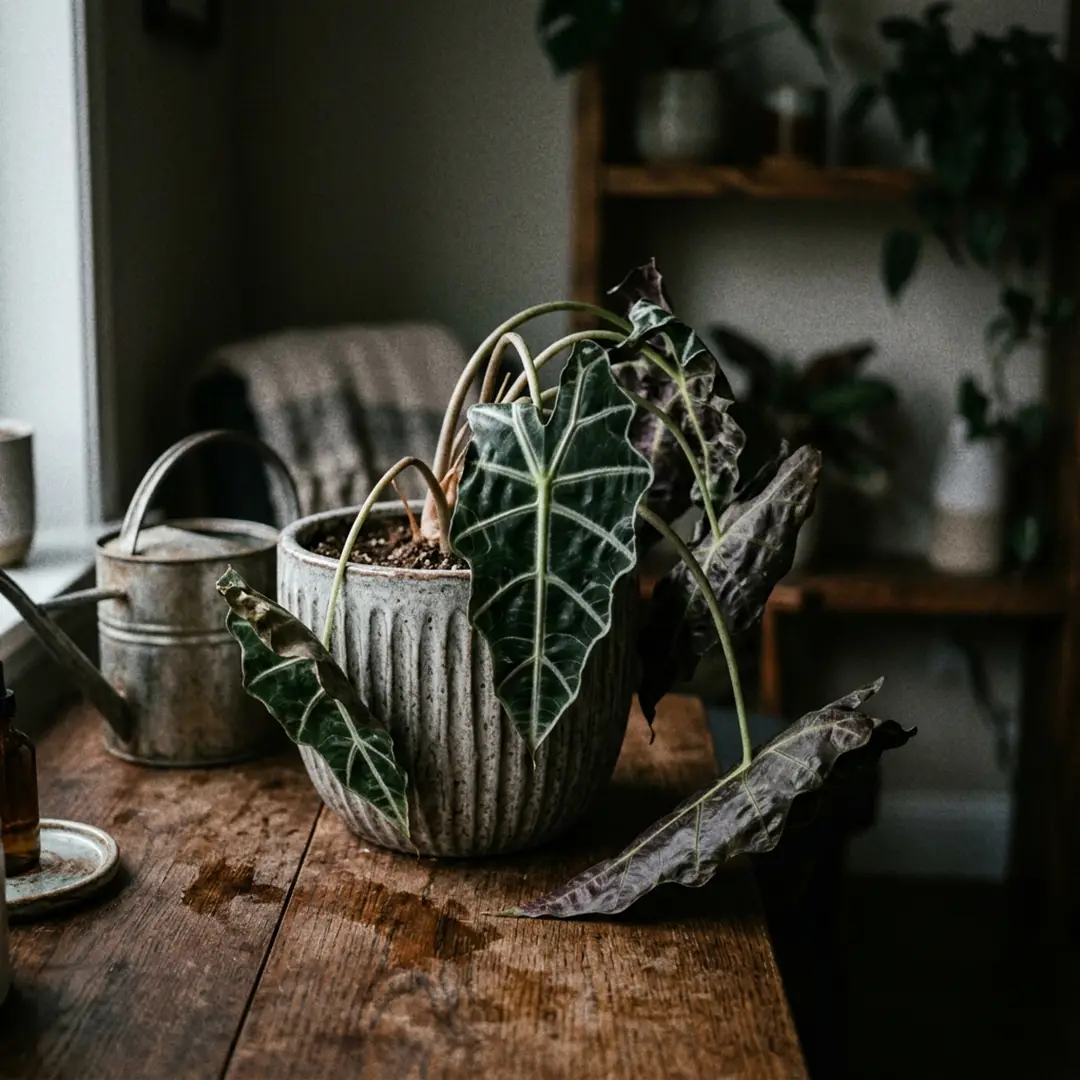
Wilting or Drooping Leaves
The most dramatic cry for help. Learn why both over- and under-watering cause drooping leaves and how to tell the difference.
Open guide →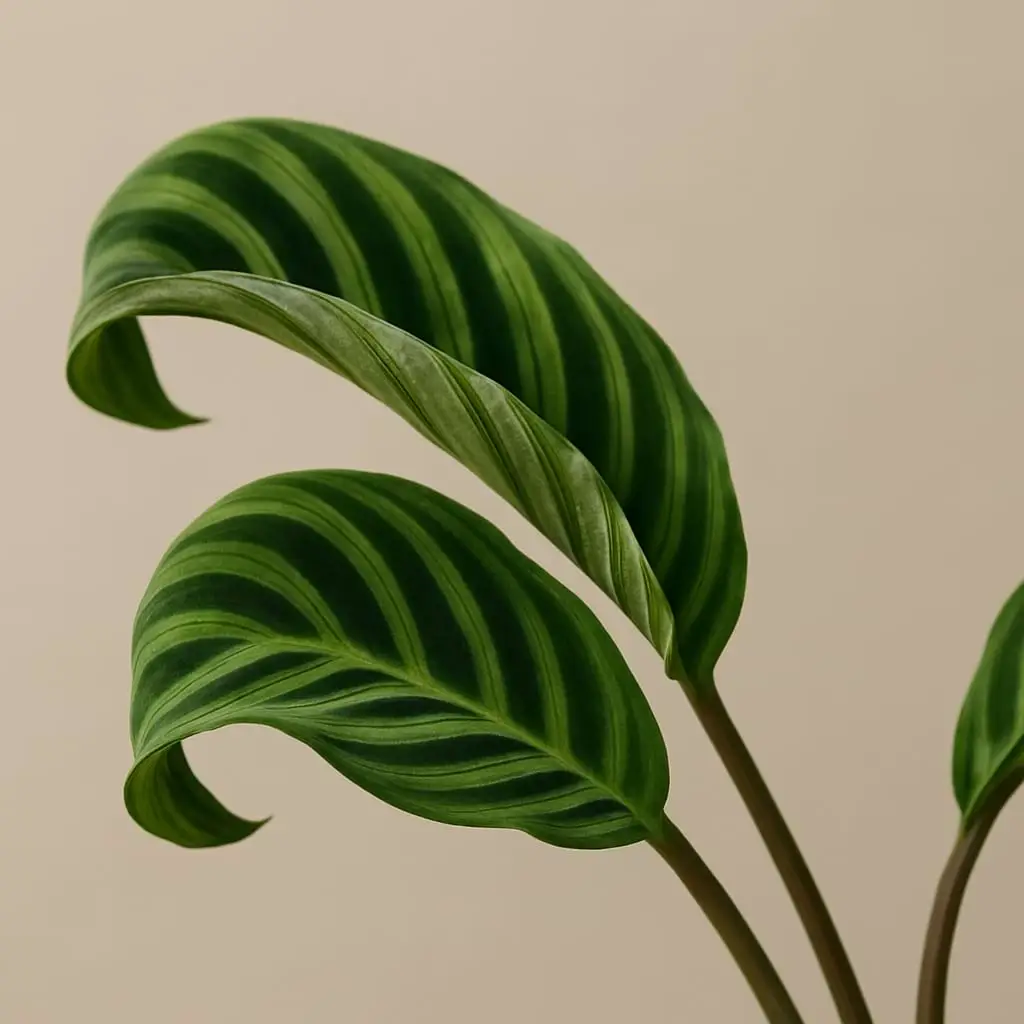
Curling Leaves
Leaves curling inward or drooping, cupping, or rolling up can be caused by watering stress, pests, or heat and light stress.
Open guide →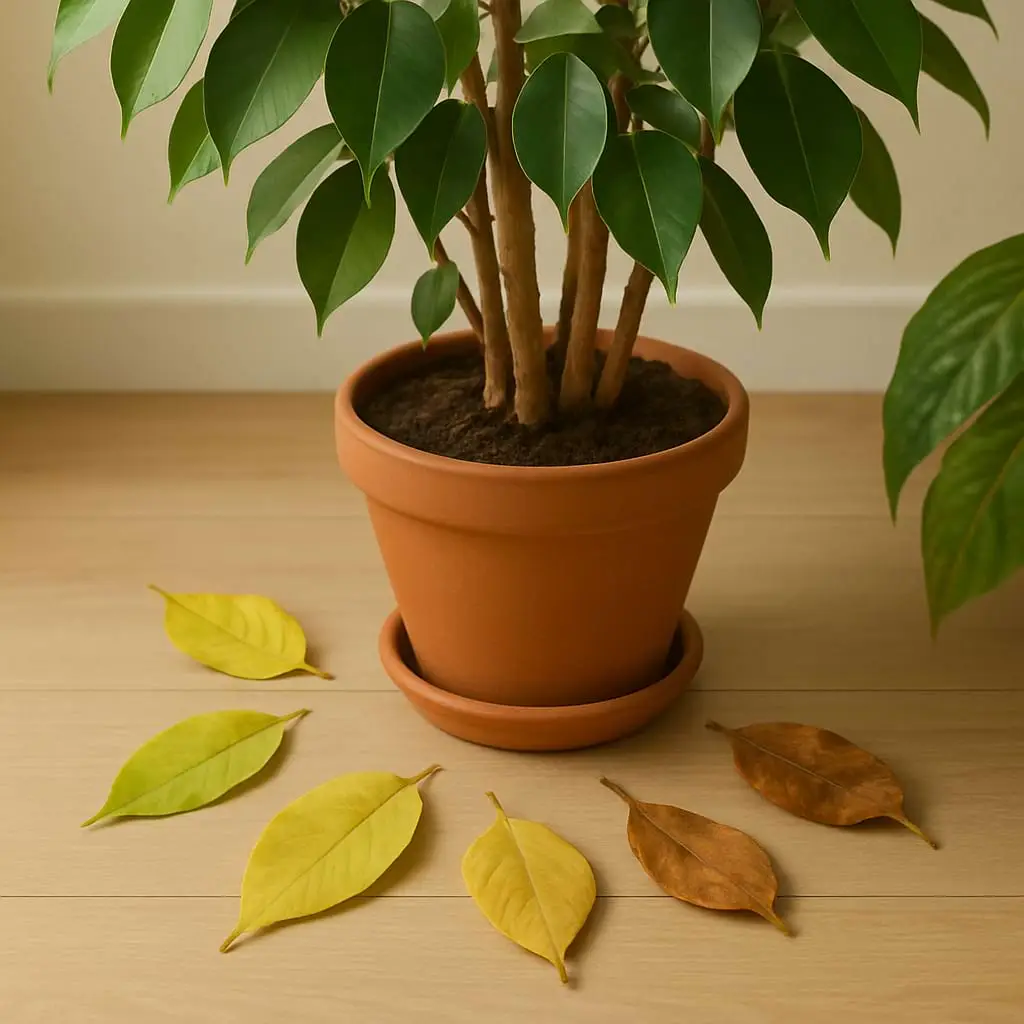
Leaf Drop
Leaves dropping can be caused by overwatering, underwatering, natural aging, acclimation shock, or pests.
Open guide →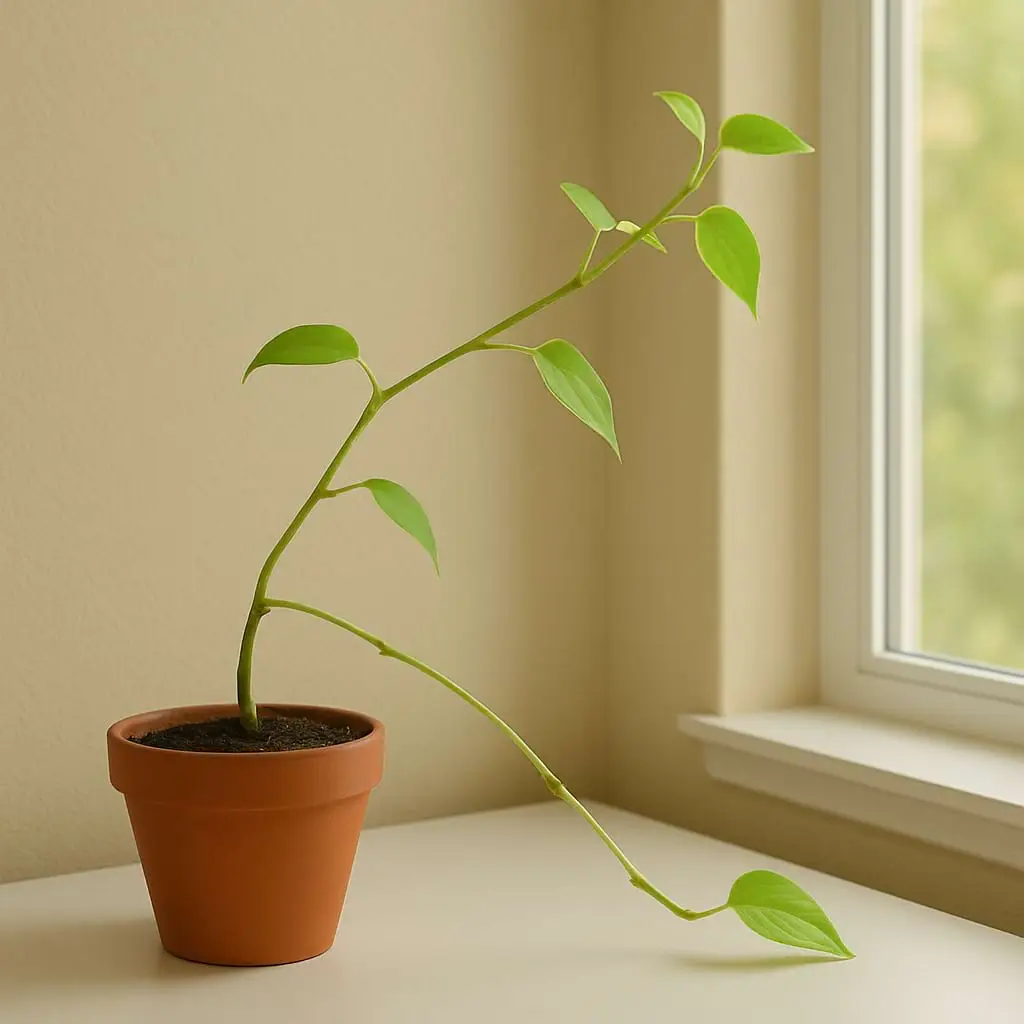
Leggy Growth
Long stems with large spaces between leaves can be caused by insufficient light or a lack of rotation.
Open guide →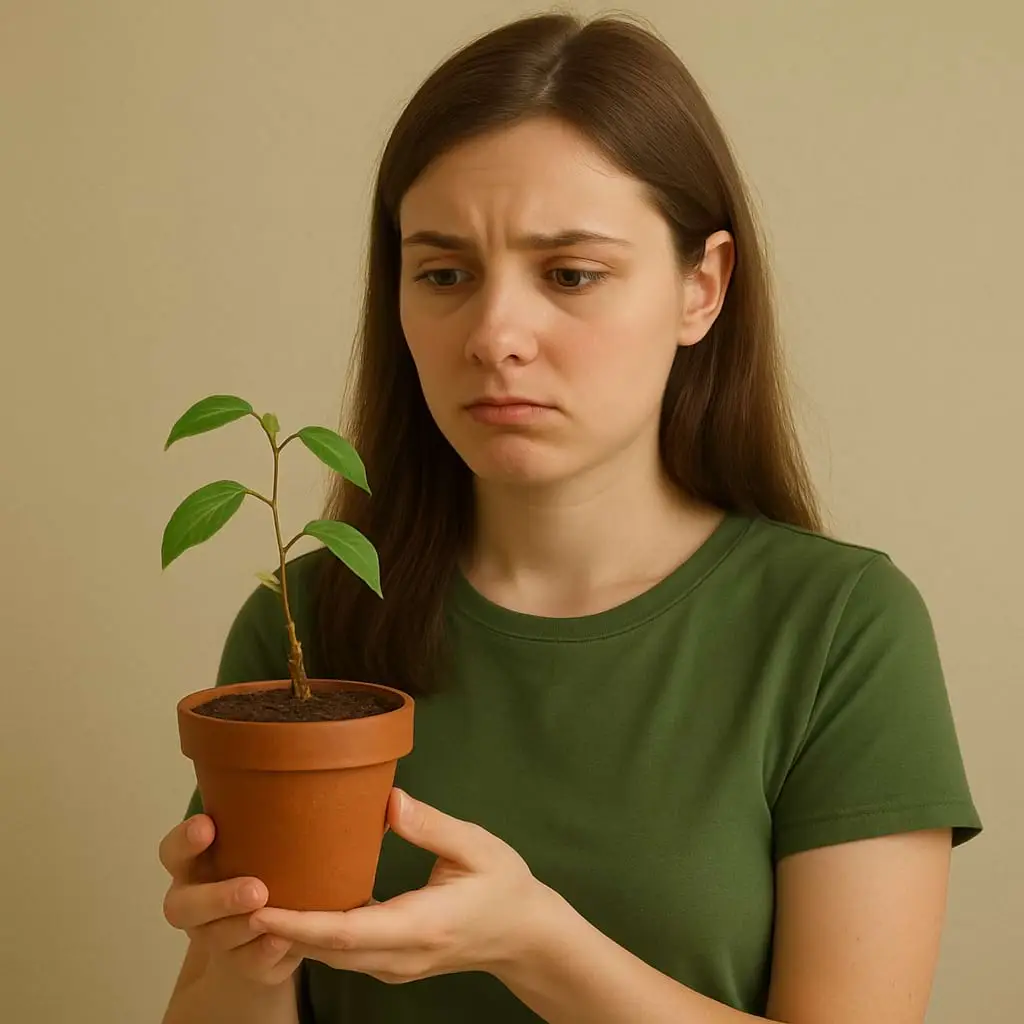
Stunted or Slow Growth
Is your plant just... stuck? A guide to troubleshooting why your plant isn't growing, from dormancy to being rootbound.
Open guide →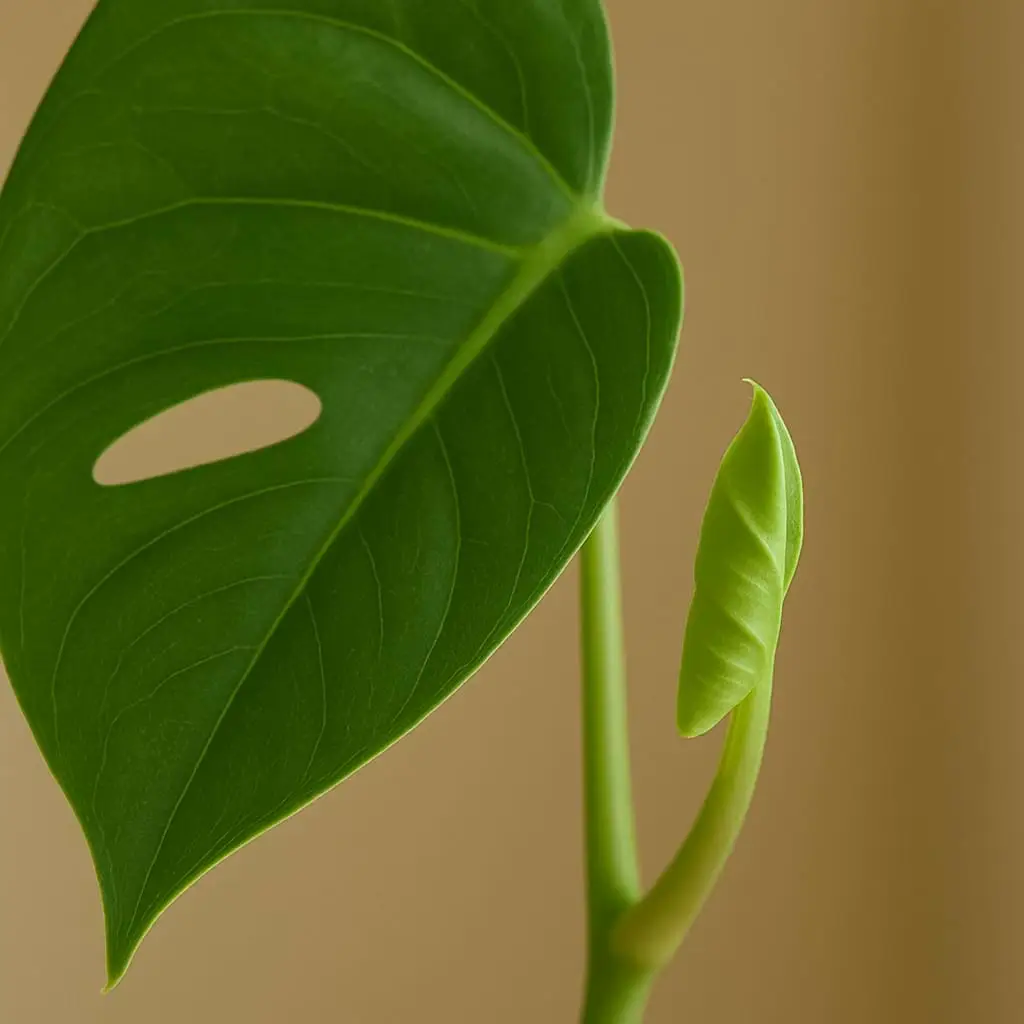
Small New Leaves
Are new leaves unfurling small and disappointing? Learn how to provide the resources needed for big, impressive growth.
Open guide →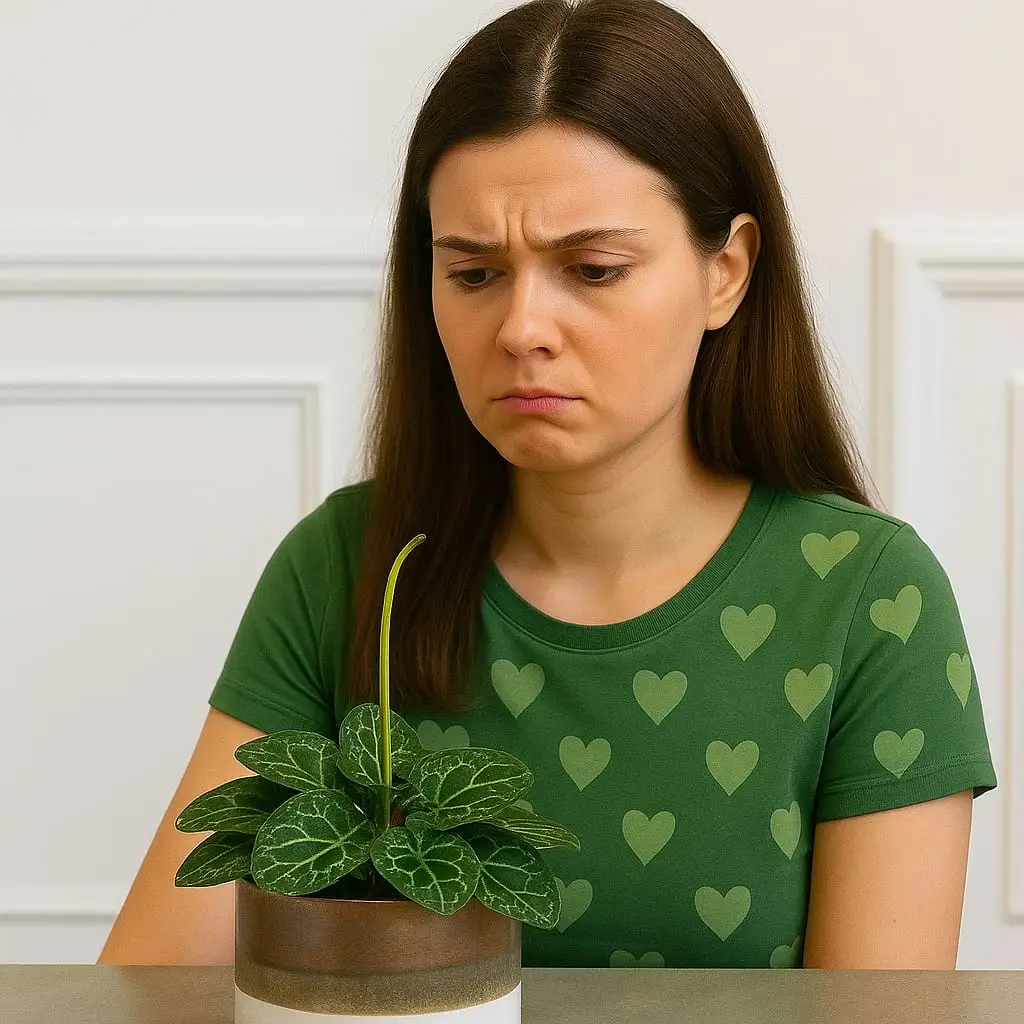
Failure to Bloom
Learn the top reasons for a failure to bloom-from lack of light to the wrong fertilizer-and how to encourage beautiful blossoms.
Open guide →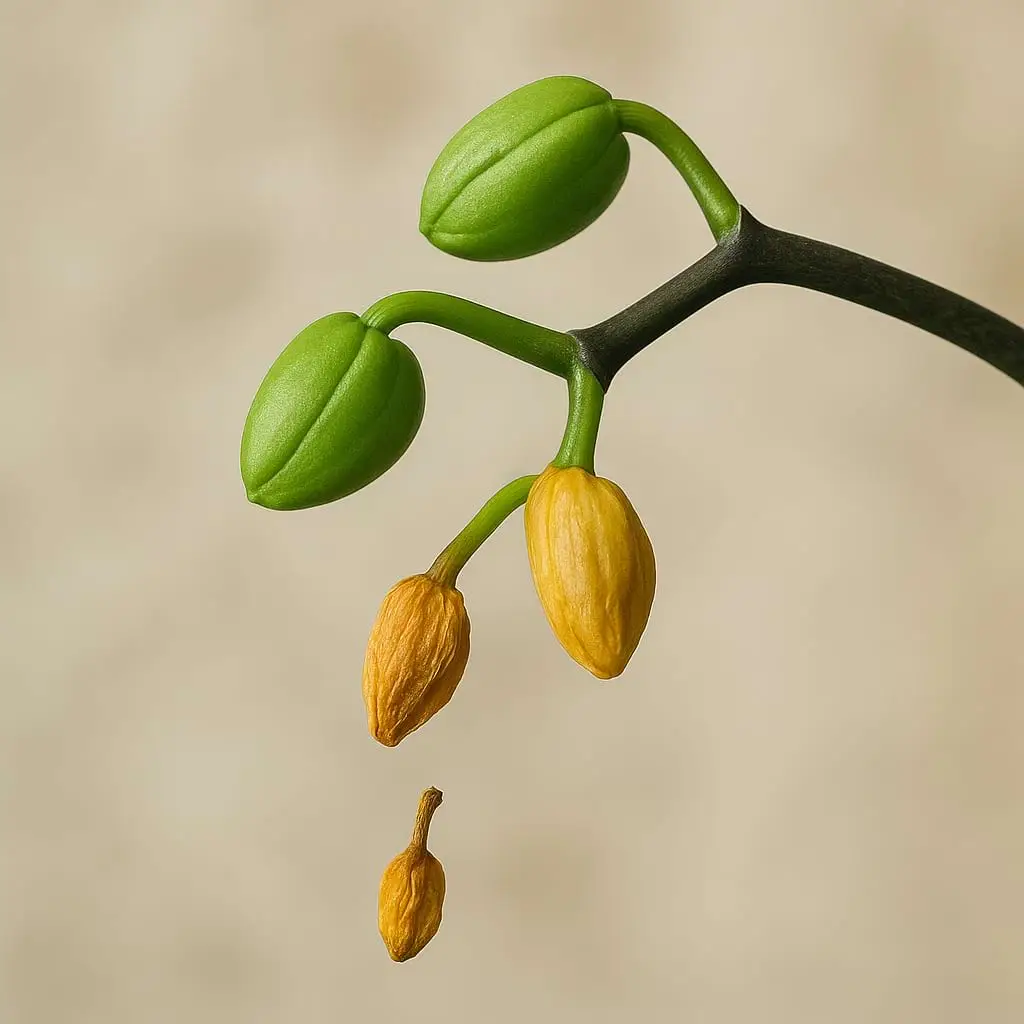
Bud Blast
Is your orchid or houseplant dropping its flower buds before they can open? This is bud blast. Learn the top causes-from shock to stress-and how to prevent it.
Open guide →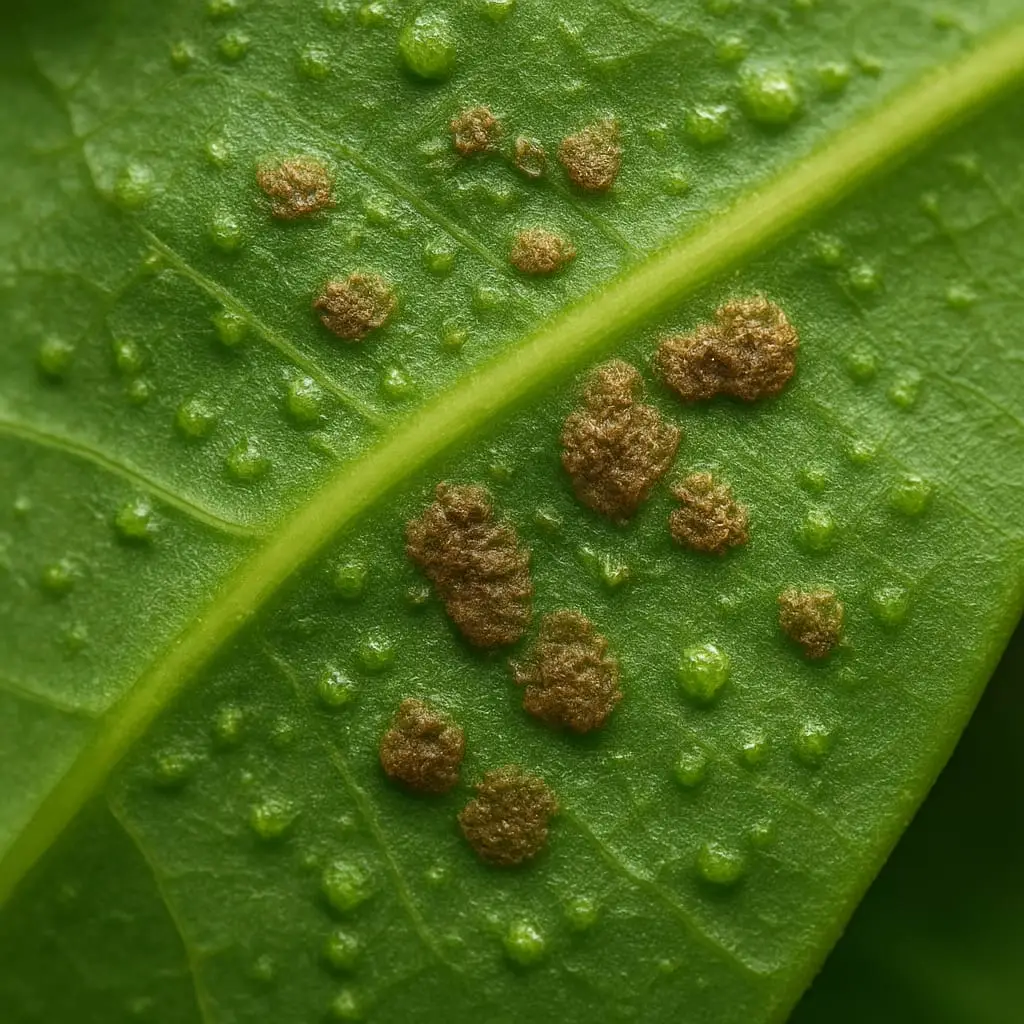
Edema
A physiological disorder that happens when the roots take up water faster than the leaves can release it. It's a water pressure problem.
Open guide →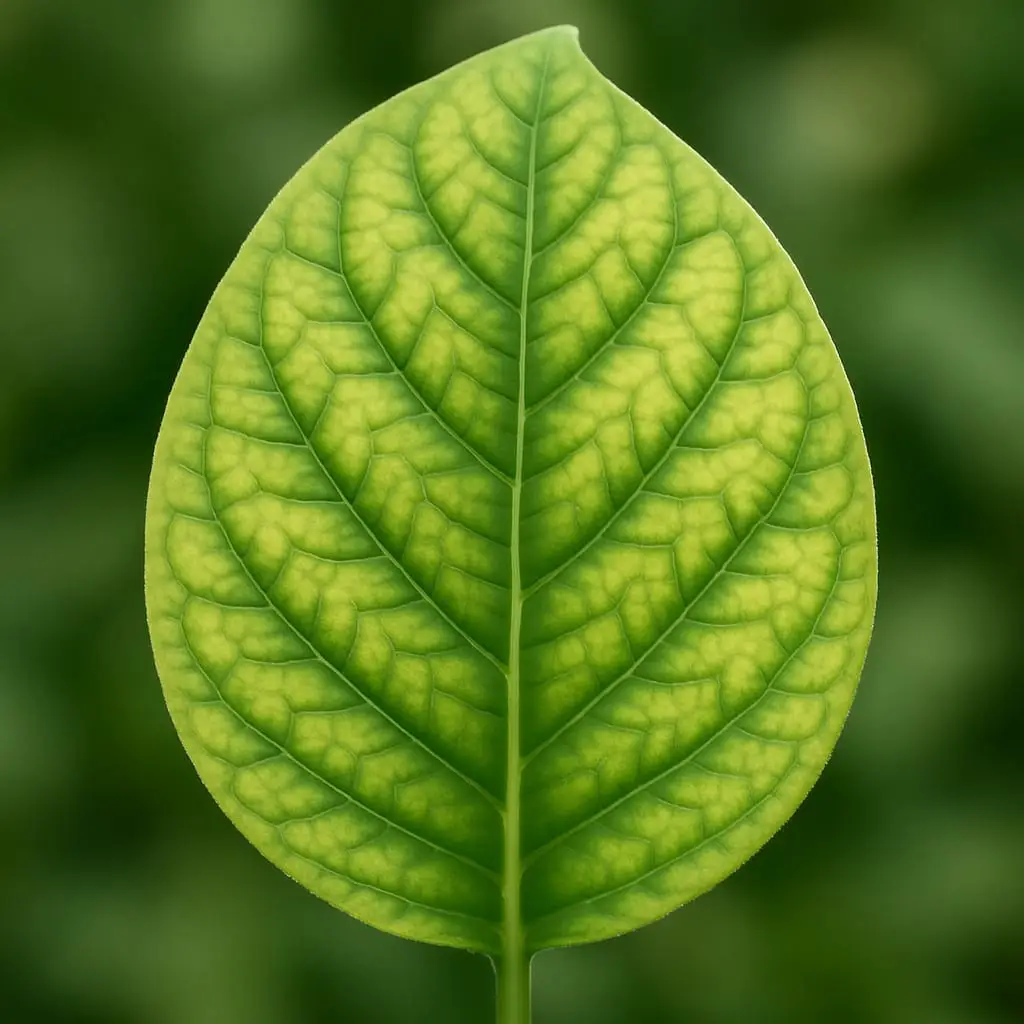
Nutrient Deficiency
Are your plant's leaves yellow, pale, or stunted? It could be a nutrient deficiency. Learn to spot the signs of nitrogen, iron, and other deficiencies and how to fix them.
Open guide →Critical issues to handle fast
These symptoms can spread or worsen quickly, so they deserve a direct troubleshooting path.
Root Rot
The #1 houseplant killer. Learn to spot the deceptive signs of a plant wilting in wet soil and perform a root-saving operation.
Open guide →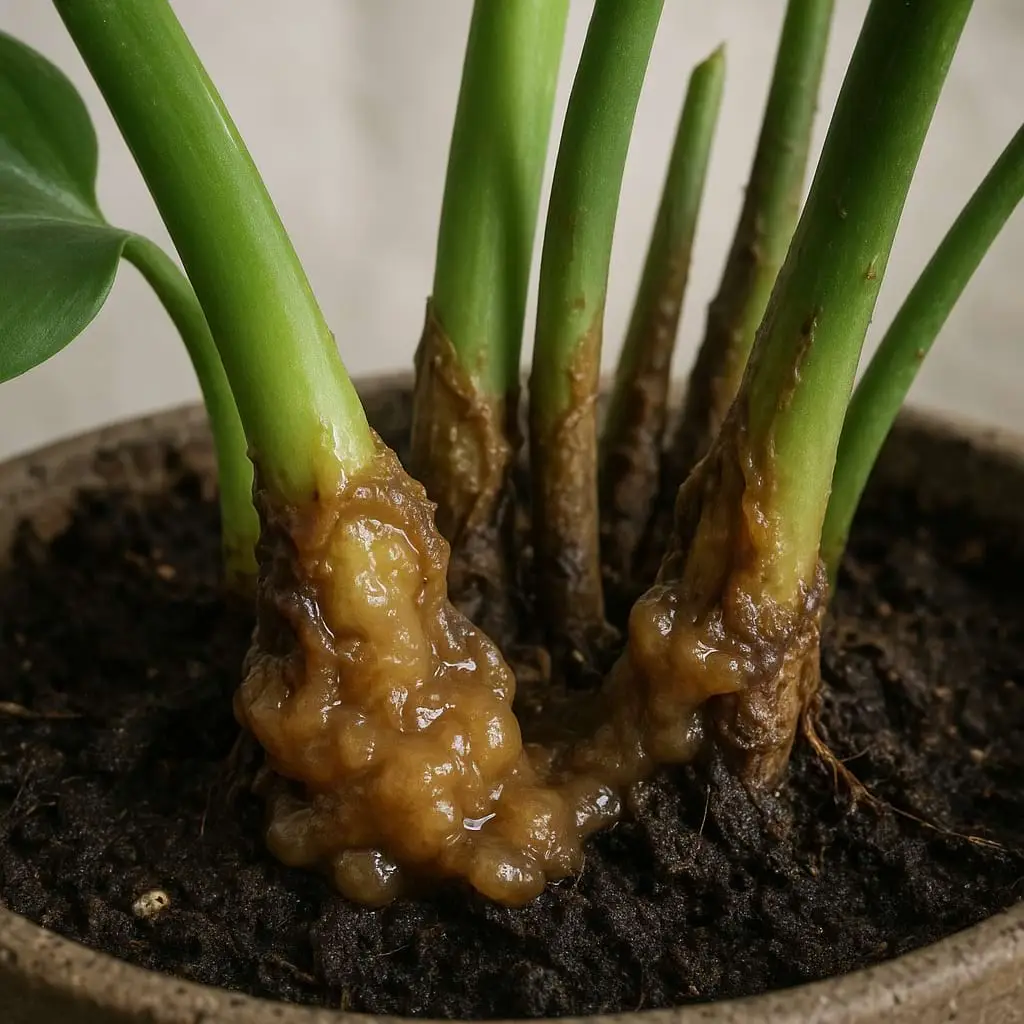
Mushy Stems
A mushy stem means the structural integrity of your plant is gone. This is not a 'wait and see' problem. The rot is spreading, and the only way to save your plant is to salvage the healthy parts.
Open guide →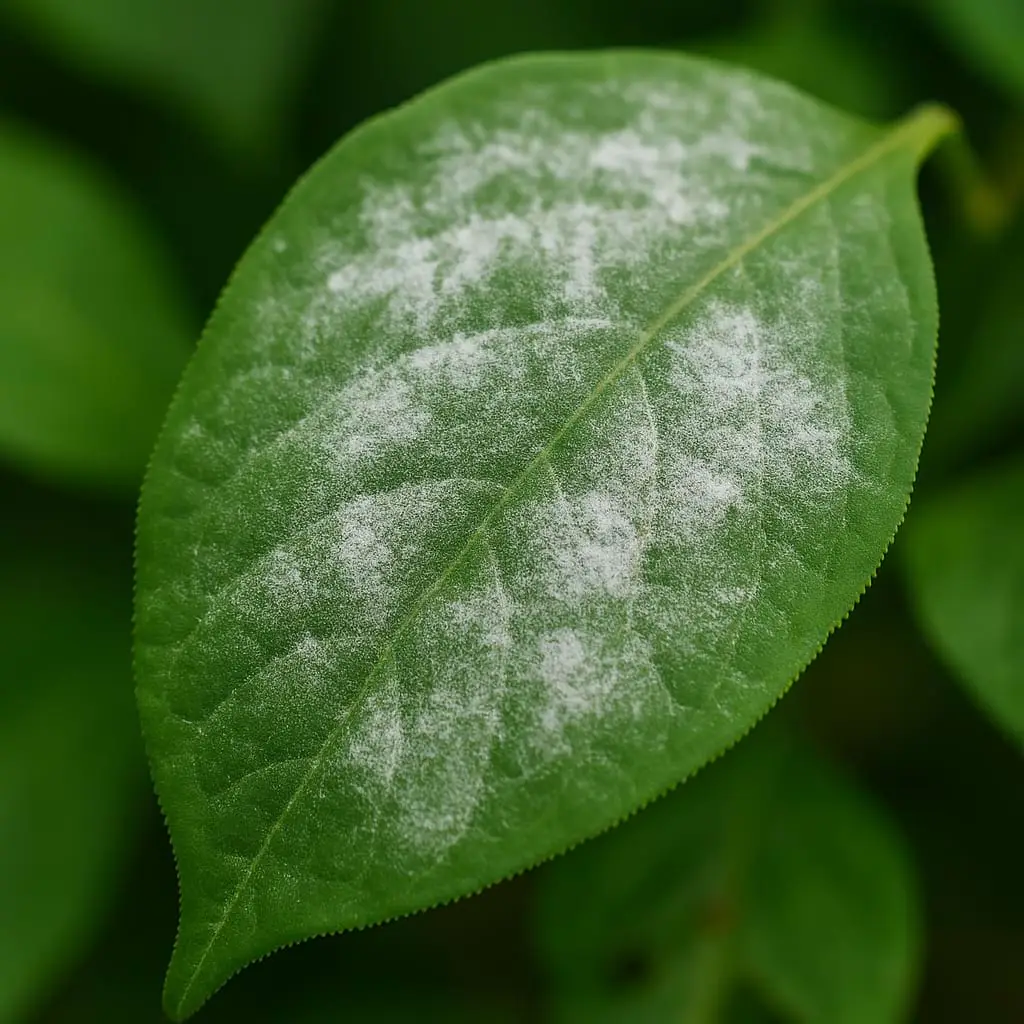
Fungal & Bacterial Diseases
Strange spots, powdery mildew, or rot can be caused by fungal or bacterial diseases.
Open guide →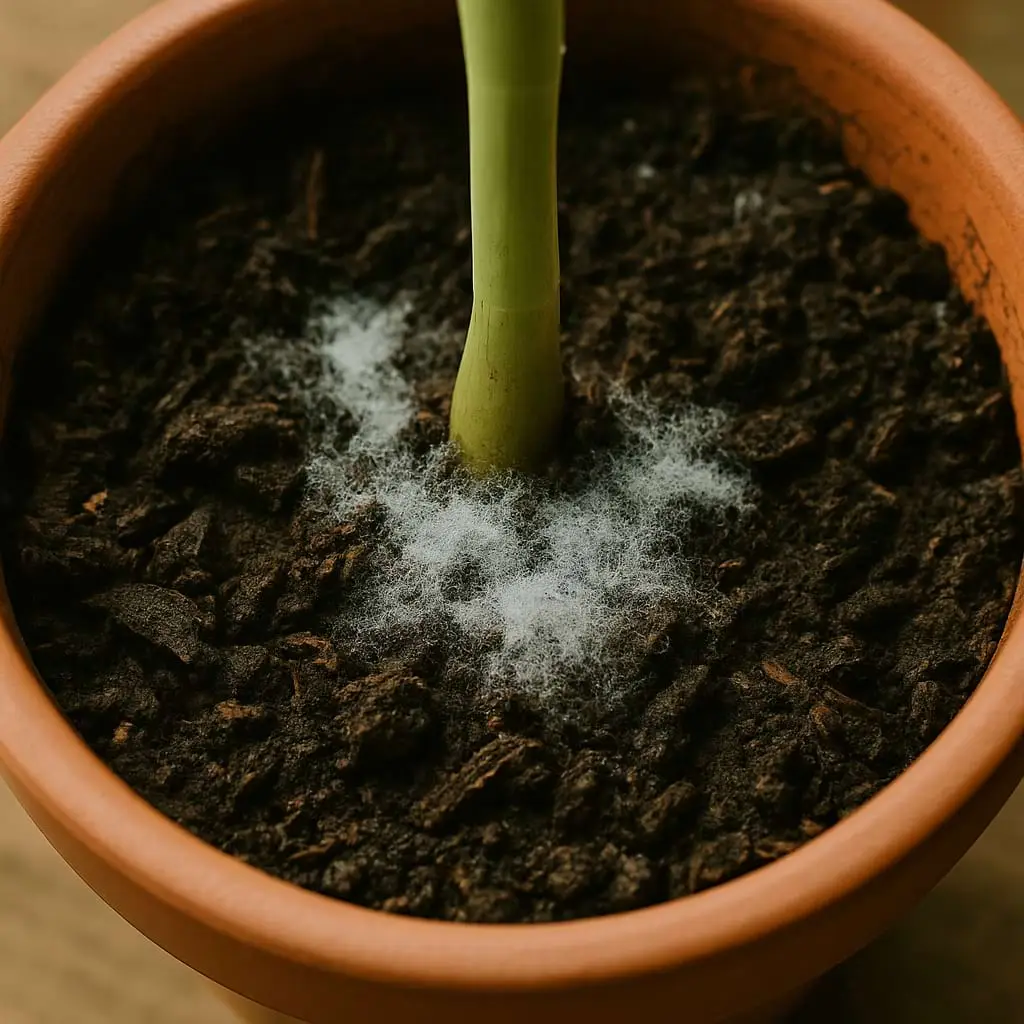
Mold on Soil Surface
That fuzzy white stuff on your topsoil. Learn why it's usually harmless but signals a problem with your watering or airflow.
Open guide →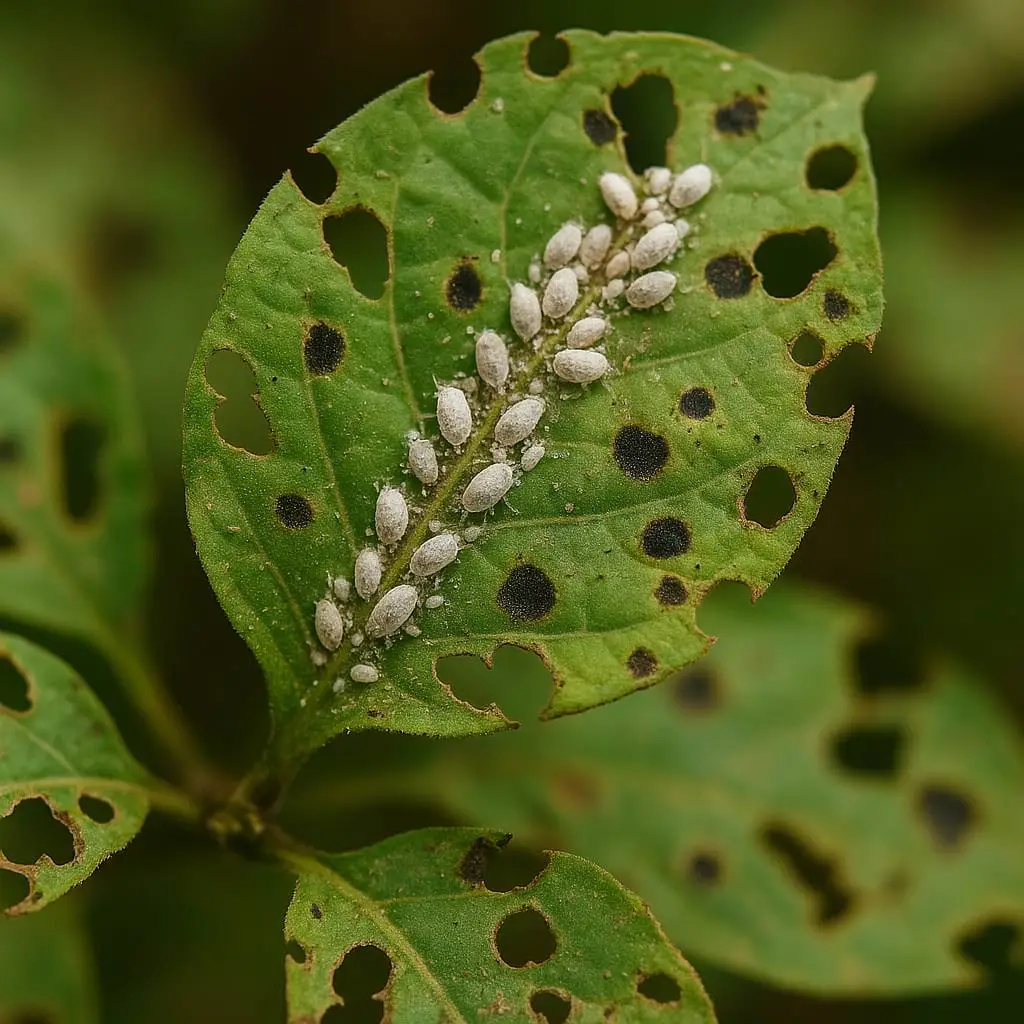
Pest Damage
Bugs, webbing, or sticky stuff on your plant can be caused by pests like mealybugs, spider mites, and scale.
Open guide →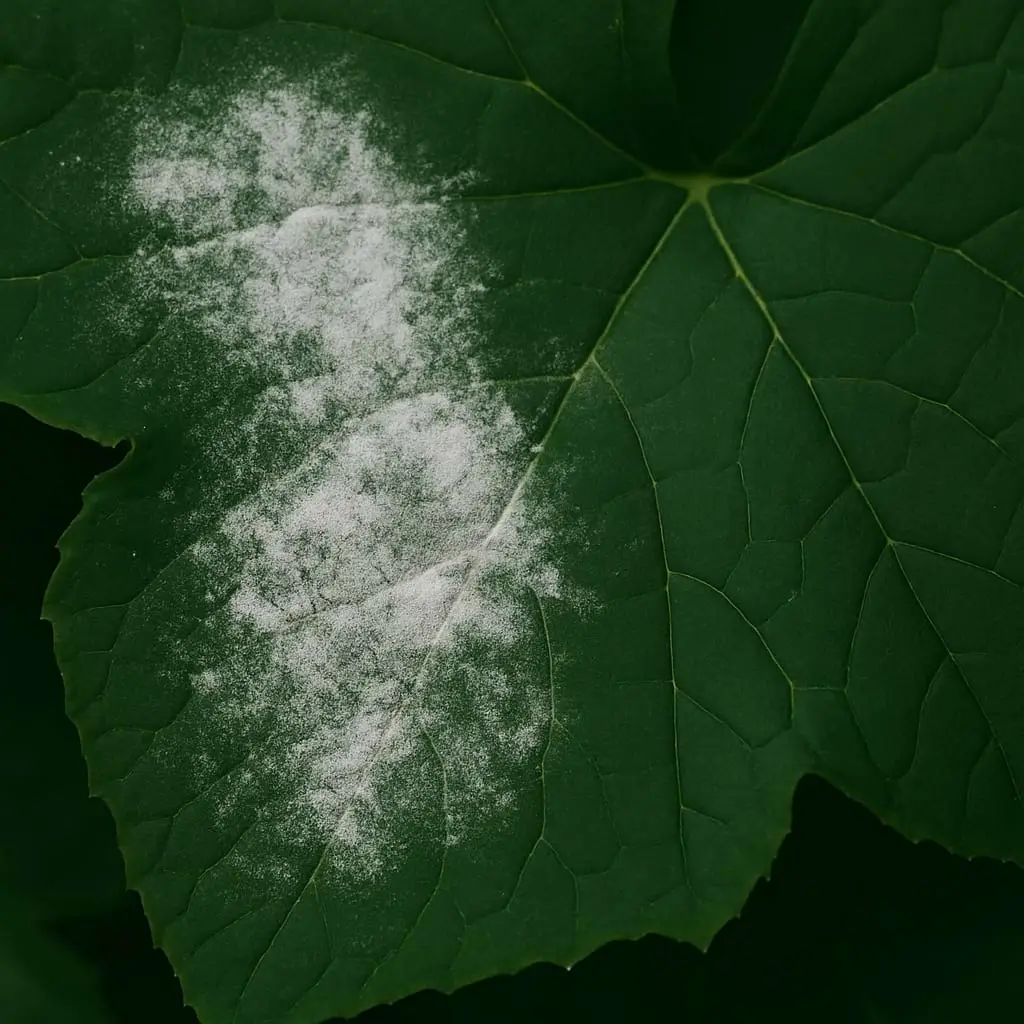
Powdery Mildew
Seeing a white, flour-like coating on your plant's leaves? It's likely powdery mildew. Learn how to identify, treat, and prevent this common fungal disease.
Open guide →Other Houseplant Hubs
Move to another hub when your plant question changes.
Other Hubs
