
🪴 In This Guide 🪴
🎯 Wilting Leaves? Let's Diagnose the Problem
Quick Diagnostic Chart
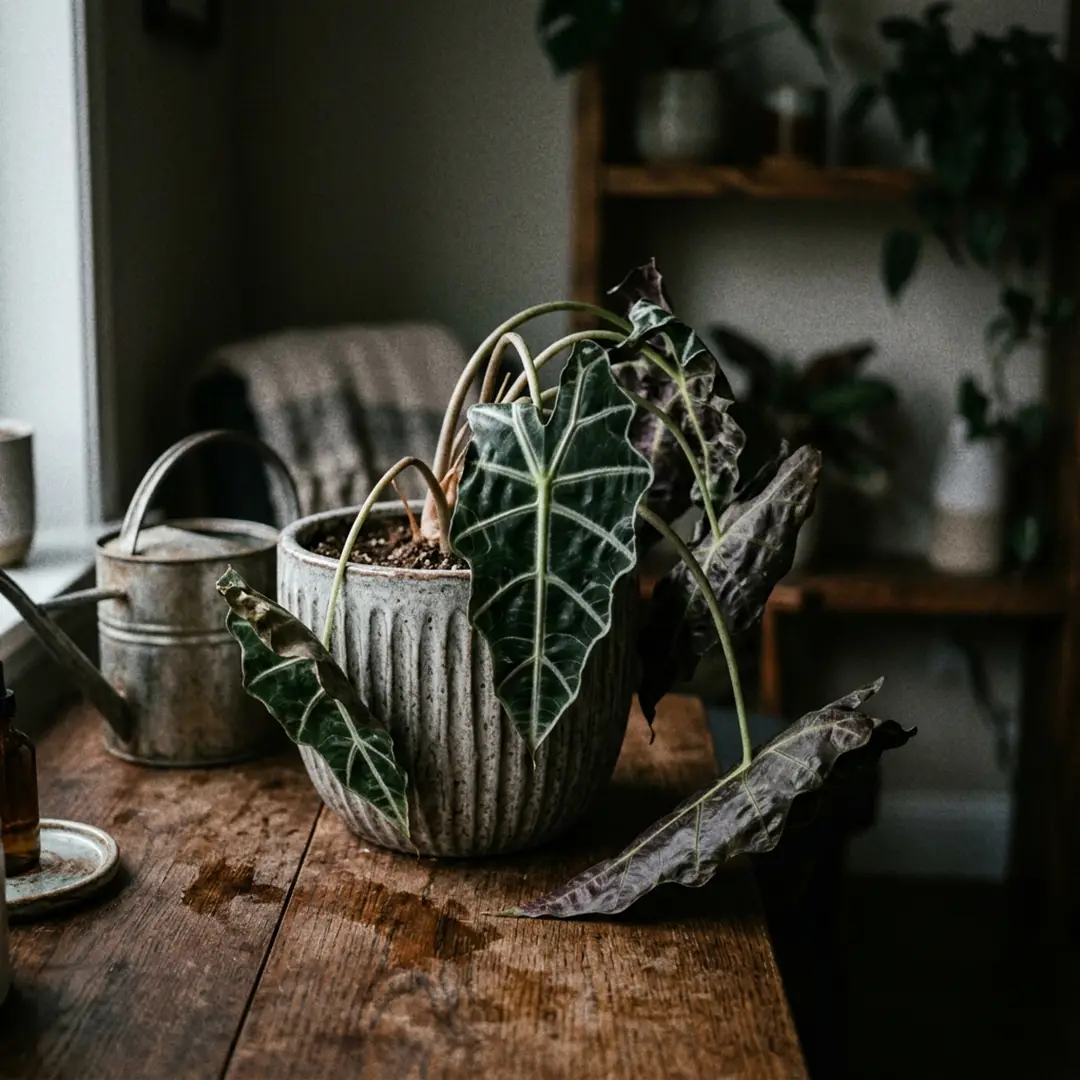
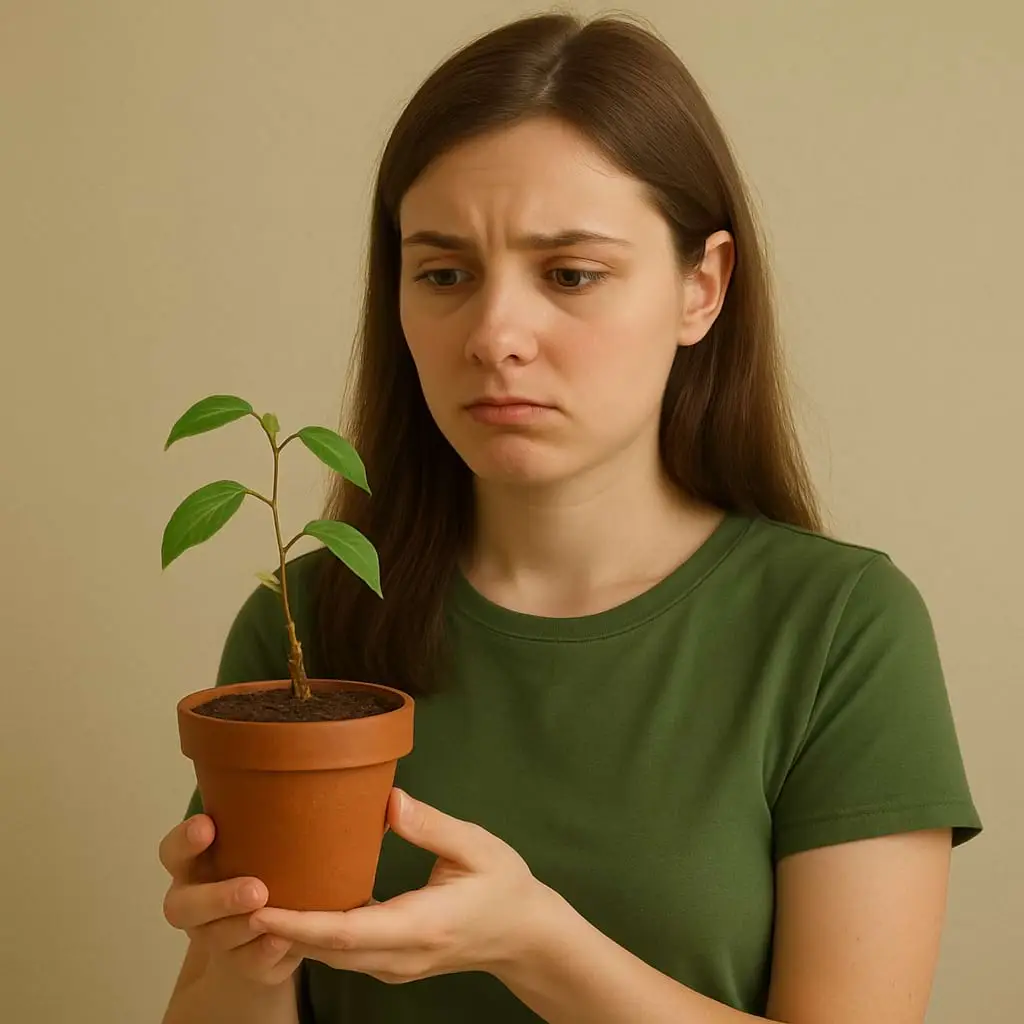
Hello, plant friends! Anastasia here. There's nothing more alarming than seeing your once-perky plant suddenly drooping and sad. Wilting is your plant's most dramatic cry for help, and it almost always points to a disruption in how water moves from the roots to the leaves.
But here's the tricky part: both too little and too much water can cause wilting. The key is to check the soil before you do anything else. Use this chart to quickly narrow down the likely culprit.
| If you see... | And the soil is... | It's likely... |
|---|---|---|
| Limp, drooping leaves; plant looks thirsty | Bone Dry / Hard | Underwatering (The Obvious Cause) |
| Limp, drooping leaves; lower leaves are yellow & soft | Soggy / Wet | Overwatering & Root Rot (Most Dangerous!) |
| Wilting shortly after being moved to a new pot | N/A | Transplant Shock |
| Sudden wilting on a very hot day or near a draft | N/A | Temperature or Environmental Stress |
| Wilting with crispy edges in tropical plants | Normal / Moist | Low Humidity / Transpiration |
| Wilting that doesn't improve, plus other symptoms | Any | Pests or Disease |
📺 Wilting & Drooping Video Guide

🚨 Emergency Triage: What to Do Right Now
Step-by-Step Checklist for a Wilting Plant
Found your plant wilting and not sure where to start? Work through this checklist in order before doing anything else.
- Don't water it yet. Your instinct will be to reach for the watering can. Resist it for now. Watering a plant with root rot will make things much worse.
- Pick up the pot. Is it surprisingly light? That points to underwatering. Still heavy? The soil is still wet, which rules out thirst.
- Stick your finger 2 inches into the soil. Dry all the way down = underwatering. Wet and soggy = overwatering risk.
- Check for a musty smell. A swampy or sour odor from the soil is a strong indicator of root rot. This is an emergency.
- Look at the leaves. Are the wilting leaves also soft and yellow (overwatering), or limp but still green (underwatering/heat stress), or are the leaf edges crispy (low humidity or heat)?
- Check the environment. Is the plant in direct, harsh sun? Near a radiator, AC vent, or drafty window? Did you just repot it?
- Inspect for pests. Check the undersides of leaves and the soil surface for any signs of pest damage, tiny insects, webbing, or sticky residue.
Once you have answers, head to the relevant cause below.
🤔 Why Do Plants Wilt?
The Science of Turgor Pressure
Think of plant cells like tiny water balloons. When they are full of water, they are firm and rigid, holding the leaves and stems upright. This internal water pressure is called "turgor pressure."
Wilting happens when the cells lose water and that pressure drops. The "balloons" deflate, and the plant's structure can no longer support itself, causing it to droop. This happens when the roots can't supply water to the leaves as fast as the leaves are losing it through transpiration-the process where water evaporates through tiny pores in the leaves called stomata.
Our job is to figure out what's disrupting that water supply line. Sometimes roots are dry. Sometimes they're rotting. Sometimes the air is stealing too much water from the leaves before the roots can keep up.
🌿 Top 6 Causes of Wilting or Drooping Leaves and How to Fix Them
Cause #1: Underwatering
This is the most straightforward cause of wilting and the easiest to fix.
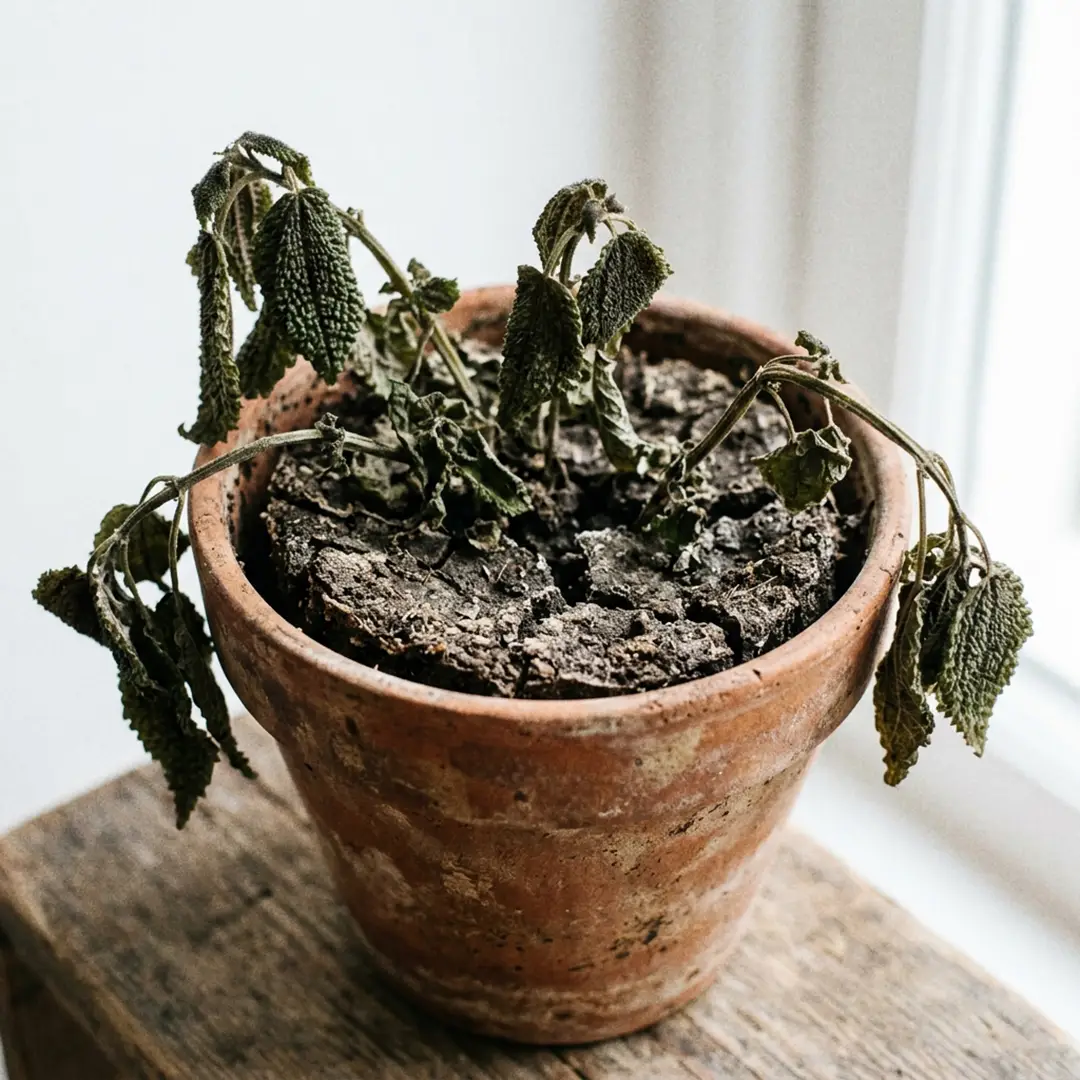
Why it happens: The soil has simply run out of water. There's nothing left for the roots to absorb and send to the leaves. The plant is dehydrated, and its cells have lost their turgor pressure.
How to check: The soil will be bone dry all the way through-not just on the surface. The pot will feel noticeably light when you lift it. The leaves may look limp and dull, and the lower ones might be starting to feel papery or getting crispy edges. You might also notice the soil pulling away from the edges of the pot.
The Fix: Water your plant immediately and thoroughly. For very dry, compacted soil, bottom watering is the best method-the dry soil can repel water from the top before it has a chance to soak in. Place the pot in a tray with a few inches of water and leave it for 30-60 minutes. The soil will draw up moisture from below and rehydrate fully. Then drain it completely.
Recovery Timeline: This one is satisfying. Most plants will perk back up within 1-4 hours of a good watering. By the next morning, they should be largely recovered. If leaves don't recover after 24 hours and the soil is now moist, there may be a secondary issue at play.
Cause #2: Overwatering & Root Rot
This is the most dangerous and deceptive cause of wilting-and unfortunately the most common.
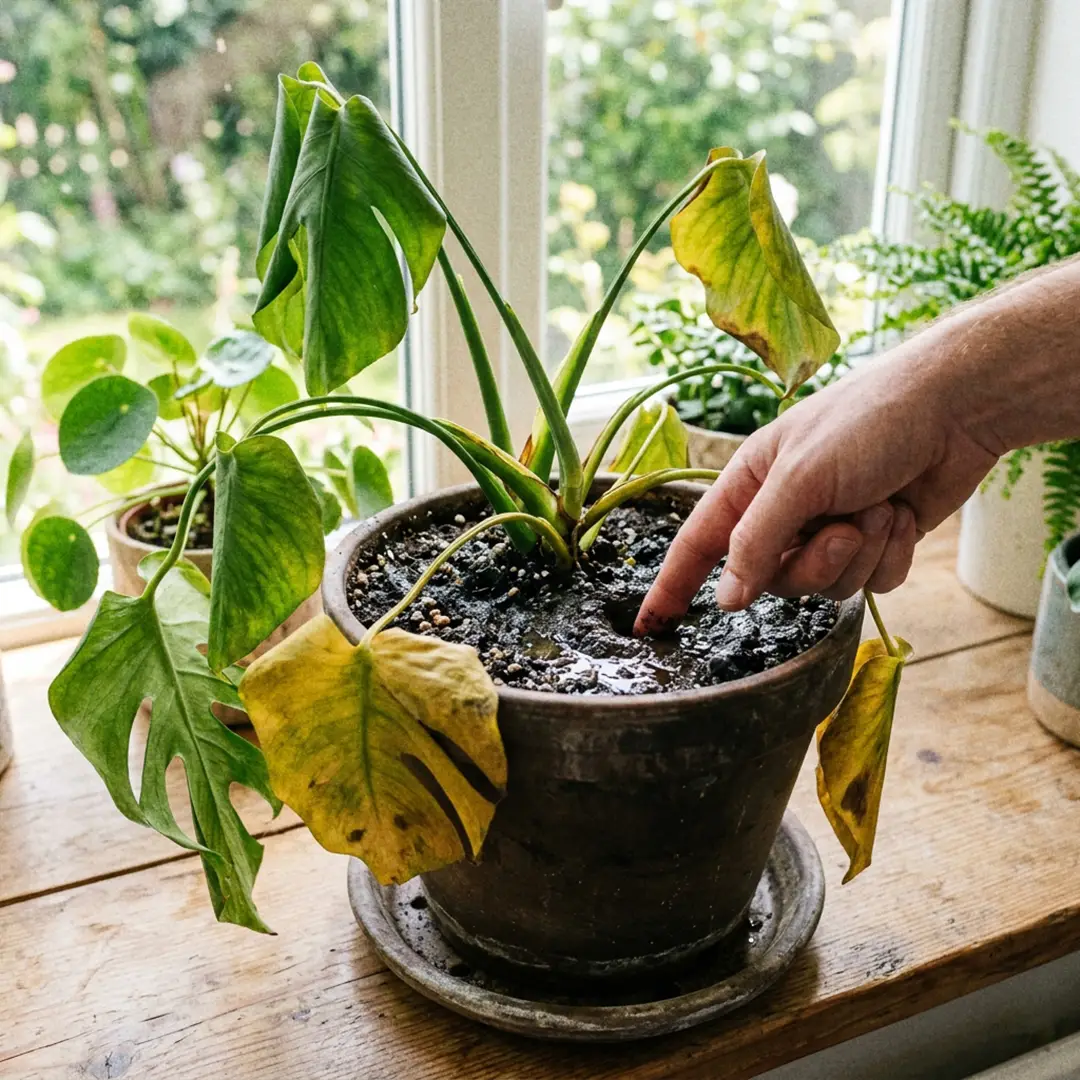
Why it happens: When soil is constantly waterlogged, the air pockets between soil particles disappear. Roots need oxygen to survive, and without it, they begin to suffocate and rot. These dead and dying roots are physically unable to absorb water. So even though the soil is soaking wet, the plant wilts from thirst. It's a cruel irony that fools a lot of people into watering more, which makes things worse.
How to check: The soil is soggy or wet to the touch, and the pot feels heavy. You'll often also see soft, yellowing lower leaves and may smell a musty, swampy odor from the soil. The wilting doesn't improve even after "watering." This is the key diagnostic sign: watering doesn't help, because the problem isn't the soil-it's the roots.
The Fix: This is an emergency. Stop watering immediately. Unpot the plant and inspect the roots carefully.
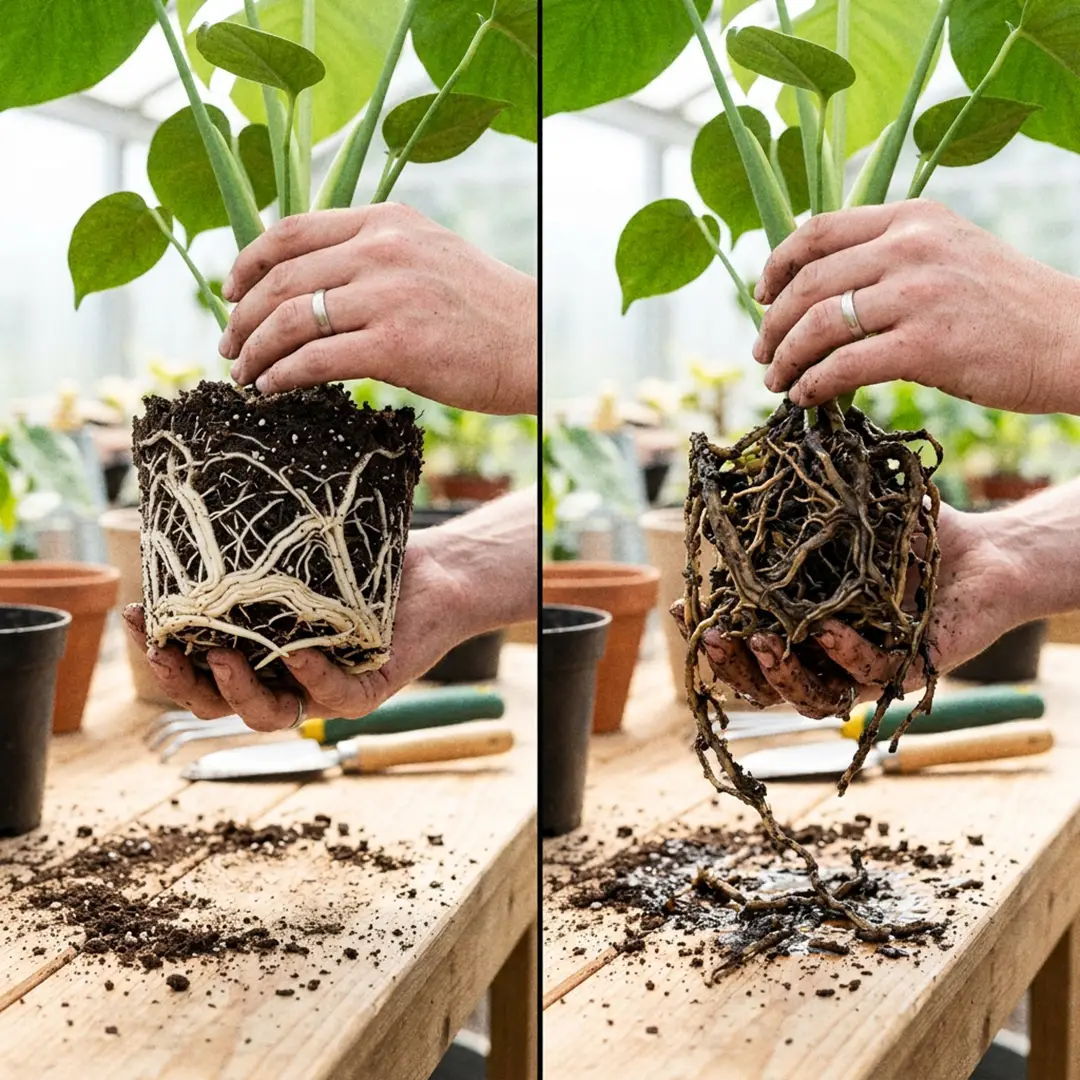
Healthy roots are firm and white or tan. Rotted roots are brown or black, soft, and mushy. Use sterile scissors or pruning shears to trim away every rotted root you can see-don't be shy about it. Then repot into fresh, well-draining soil in a pot with drainage holes, and water very lightly. Place the plant in bright, indirect light while it recovers. Do not fertilize.
Recovery Timeline: Root rot recovery is slow. If you caught it early (some roots still healthy), expect 3-6 weeks before you see real improvement. Severe root rot is often fatal, but taking stem cuttings to propagate the plant is always worth trying.
Cause #3: Transplant Shock
Plants really don't like moving house.
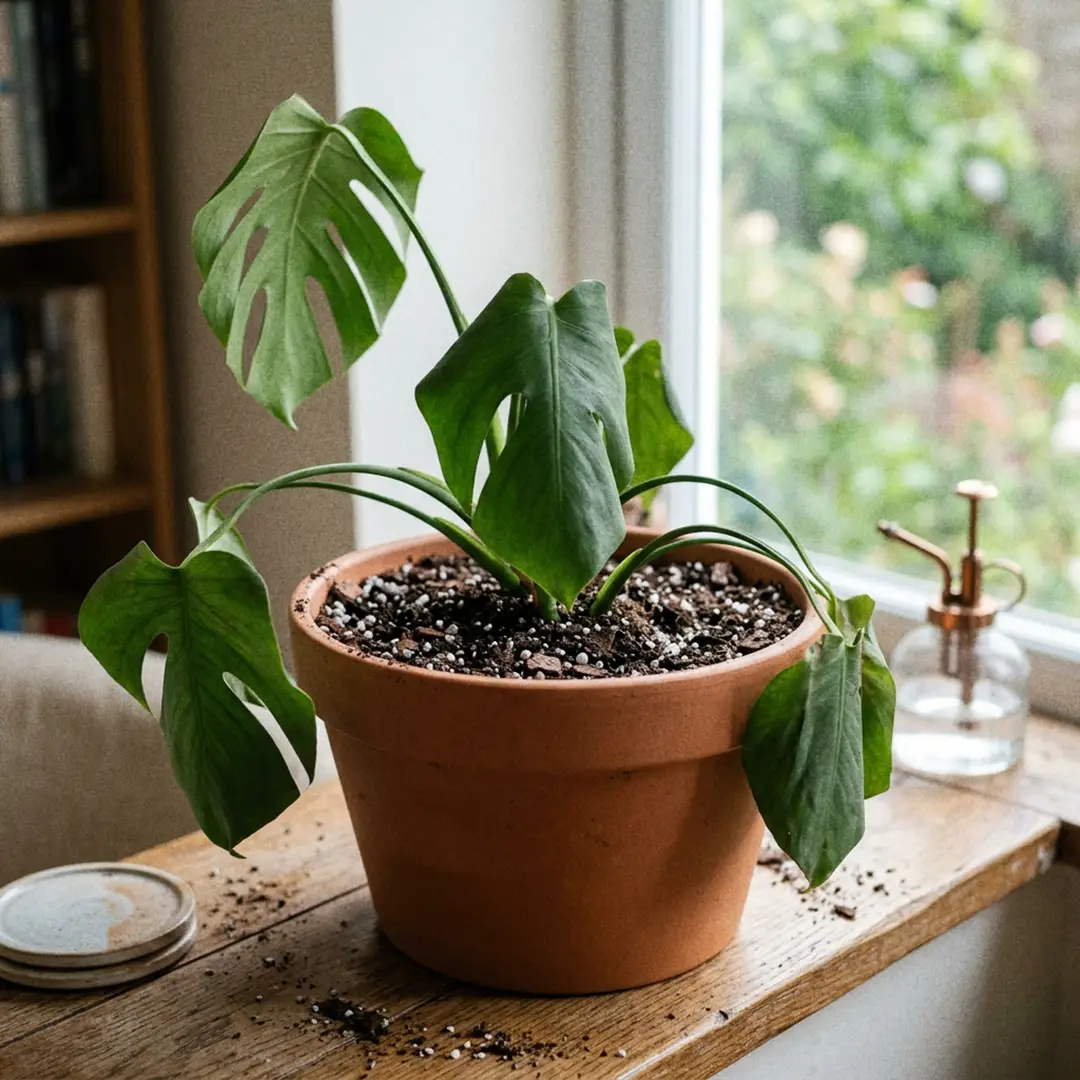
Why it happens: Repotting always damages some of the fine root hairs that handle the bulk of water absorption. In the days after repotting, the root system is in recovery mode and can't keep up with the leaves' water demands, causing temporary wilting. This is especially common if roots were disturbed, cleaned, or heavily pruned during the process.
How to check: Simple: did the wilting start within a day or two of you repotting the plant? That's almost certainly the cause. The soil moisture level will look fine.
The Fix: Be patient-this is usually temporary and self-resolving. Keep the plant out of direct sunlight for a week or two (bright indirect light is fine) and avoid fertilizing while it recovers. Keep the soil lightly and evenly moist, but not soggy. Don't repot it again. It should firm back up once the roots get re-established in their new home.
Recovery Timeline: Most plants bounce back from transplant shock within 1-2 weeks, sometimes less. Large plants with extensive root disturbance may take 3-4 weeks. As long as you're not seeing any yellowing or mushy stems, just give it time.
Cause #4: Temperature & Environmental Stress
A sudden change in environment can shock any plant.
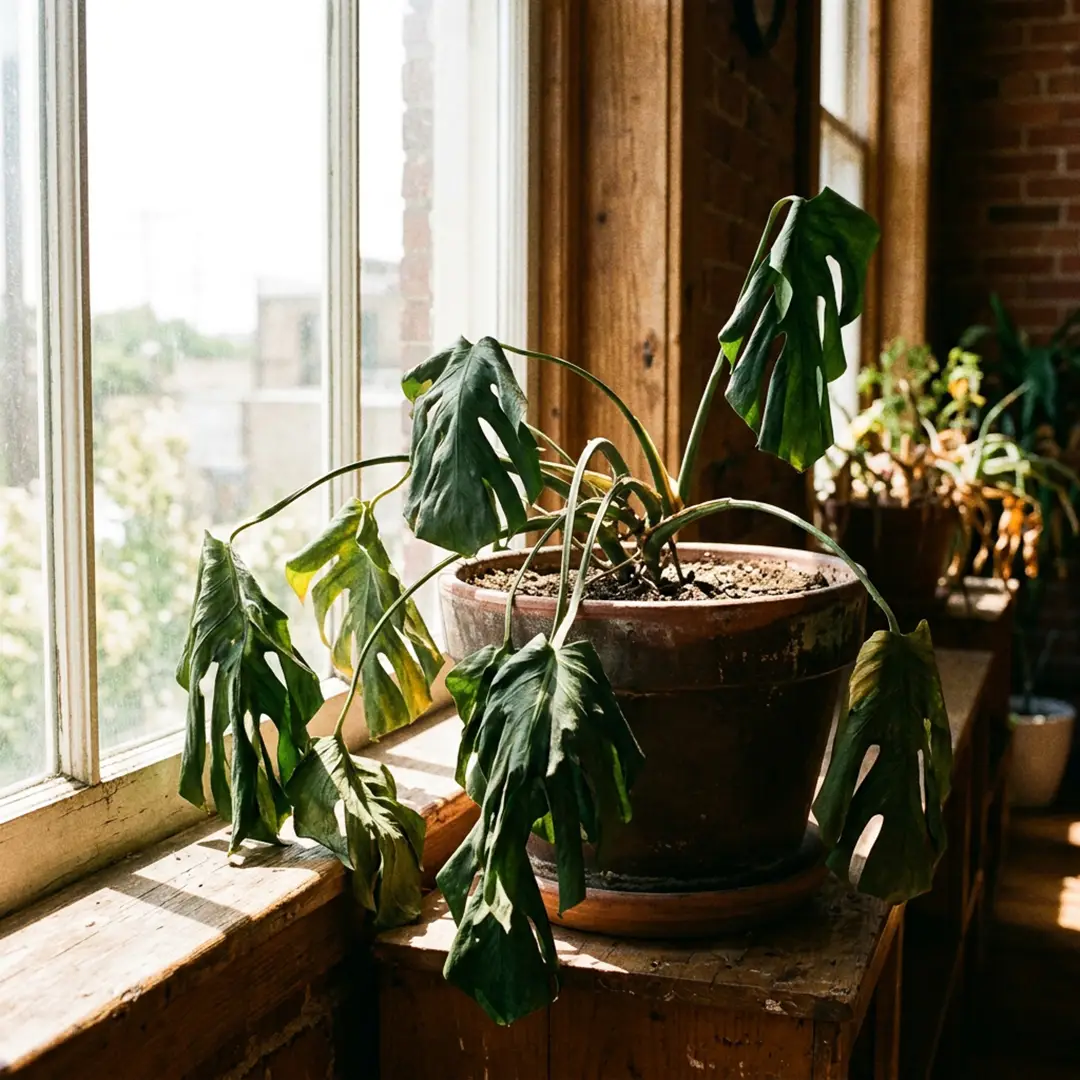
Why it happens:
- Extreme Heat: On a very hot day or in a hot, stuffy room, a plant loses water through its leaves much faster than its roots can absorb it. This is called transpiration overload-it's not a watering problem, but a physics one.
- Cold Draft: A blast of cold air from an open window, an AC unit, or a cold floor can shock the plant's vascular system and cause a sudden droop, even if the plant is otherwise healthy.
- Direct, Scorching Sun: Even sun-loving plants can wilt if they're suddenly moved into much more intense direct light than they're accustomed to.
How to check: Is the plant sitting in a hot, west-facing window in the afternoon? Right next to a radiator or heating vent? Near an AC that blasts directly on it? Did the weather suddenly get very hot or cold?
The Fix: Move the plant to a more stable location. If it's wilted from heat, move it to a shady spot and water it if the soil is dry. For cold shock, move it somewhere warmer and away from drafts. It should recover once its temperature stabilizes, usually within a few hours.
Recovery Timeline: Environmental stress wilting is usually fast to resolve-within a few hours to a day once the plant is in a better spot. No permanent damage is typical unless the exposure was extreme or prolonged (frost damage, for example, can be permanent).
Cause #5: Low Humidity / Transpiration Overload
This one catches a lot of people off guard, especially with tropical plants.
Why it happens: Tropical plants like Calatheas, ferns, and Peace Lilies evolved in high-humidity environments where the air holds a lot of moisture. In a dry indoor environment-especially in winter when heating dries out the air-these plants lose water through their leaves faster than their roots can replace it, even if the soil is perfectly moist. The leaves droop as a response to water stress that's happening at the leaf level, not the root level.
How to check: The soil is adequately moist, but the plant is still drooping. The leaf edges may be crispy or brown. The wilting is often worse in the afternoon when the air is driest, or in winter. You likely have a humidity-sensitive plant: Calathea, fern, Peace Lily, Maidenhair Fern, Nerve Plant, or similar.
The Fix: Increase the humidity around the plant. The most effective method is a room humidifier nearby. You can also place the pot on a pebble tray filled with water (keeping the pot above the waterline), group the plant with other humidity-lovers, or move it to a naturally more humid room like a bathroom. Avoid misting as a primary solution-it gives a very brief boost and can promote fungal issues if the leaves stay wet.
Recovery Timeline: Once humidity is improved, you should see improvement within 24-48 hours. The underlying issue (your home's dry air) will require a permanent solution-a humidifier-for plants that really need it.
Cause #6: Pests or Disease
An underlying infestation or infection can cause stubbornly persistent wilting that doesn't improve no matter what you do.
Why it happens: A severe infestation of root mealybugs-which live in the soil, not on the leaves-can damage the roots directly, impairing water absorption just like root rot does. Similarly, fungal or bacterial stem rot attacks the stem at or below the soil line, effectively severing the plant's water supply line. Neither of these will respond to changes in watering, which is the big clue.
How to check: Wilting persists despite proper watering, correct soil moisture, and stable temperatures. Unpot the plant and examine the roots-look for small white waxy masses clinging to the roots (root mealybugs) or any mushy, discolored sections. Check the stem at the soil line for soft or dark patches.
The Fix: For root mealybugs, wash the roots under running water to remove as many as possible, treat with an insecticidal drench, and repot in completely fresh soil in a clean pot. For stem rot, the prognosis is often poor-the damaged section can't be reversed. Your best bet is to take cuttings from any healthy growth above the damage and propagate them to save the plant's genetics.
Recovery Timeline: Root mealybug treatment takes several weeks of monitoring and often repeat treatments. Stem rot with significant damage has a low recovery rate, so act on cuttings quickly.
🪴 Which Plants Are Most Prone to Wilting?
Know Your Plant's Weaknesses
Some plants are dramatically more prone to wilting than others, either because of their root structure, their humidity needs, or their sensitivity to inconsistent watering.
Most dramatic wilters (underwatering):
- Peace Lily - one of the fastest wilters; will flop completely when thirsty, but recovers quickly
- Impatiens - wilts within hours in heat
- Basil - collapses in dry soil almost instantly
Most vulnerable to root rot wilting (overwatering):
- Monstera Deliciosa - often overwatered in its early stages
- Pothos / Golden Pothos - surprisingly sensitive to soggy soil
- African Violet - does not like wet feet
Most sensitive to low humidity wilting:
- Boston Fern - collapses in dry air
- Maidenhair Fern - the most demanding fern for humidity
- Calathea - a classic victim of dry winter air
🛡️ How to Prevent Wilting in the Future
Best Practices for Perky Plants
Most wilting is preventable with a few consistent habits.
- Ditch the watering schedule. The single biggest change you can make. Check the soil moisture with your finger (or a moisture meter) before every watering. Water based on what the plant needs, not what day of the week it is.
- Water thoroughly when you do water. Half-watering is worse than not watering. When it's time, water generously until it drains from the bottom. This ensures the whole root ball gets moisture, not just the top inch.
- Drainage is non-negotiable. Use pots with drainage holes and a well-draining soil mix. Water that can't escape is the root cause (literally) of most serious wilting problems.
- Stabilize the environment. Keep plants away from heat vents, radiators, and drafty windows or doors. Stability matters more to most plants than perfect conditions.
- Match the plant to your home's humidity. If you have a very dry home, choose plants that tolerate low humidity rather than fighting a losing battle with tropical species. Or invest in a good humidifier.
- Acclimate new plants gradually. When repotting or bringing a new plant home, give it time to adjust before putting it in full sun or resuming a heavy feeding schedule.
❓ Frequently Asked Questions
Why is my plant wilting even though the soil is wet?
This is a classic sign of overwatering and root rot. When roots are sitting in soggy soil, they suffocate and die. The dead roots can no longer absorb water to send to the leaves, so the plant wilts from thirst, even though it's in wet soil. You need to check the roots immediately.
Can wilted leaves recover?
Yes, often they can! If the wilting is due to simple thirst (underwatering) or mild temperature stress, leaves will usually perk up within a few hours of fixing the issue. If it's from severe root rot, recovery is possible but will take much longer and is not guaranteed.
How can I tell the difference between wilting from overwatering vs. underwatering?
Check the soil. If the plant is wilting and the soil is bone-dry and the pot is light, it's underwatering. If the plant is wilting and the soil is soggy, the pot is heavy, and the lower leaves are turning yellow and soft, it's overwatering.
How long does it take a wilted plant to recover?
It depends on the cause. A plant wilting from underwatering can perk up within 1-4 hours of a good watering. Transplant shock usually resolves in 1-2 weeks. Root rot recovery is the longest process-if you catch it early, expect 3-6 weeks of careful nursing before you see real improvement.
Should I cut off wilted leaves?
Not immediately. Give the plant a chance to recover first. Once you've addressed the root cause, wait a few days to see if the leaves firm back up. Only remove them if they remain limp, go yellow, or start to rot. Cutting healthy-but-stressed leaves adds extra shock to an already struggling plant.
My succulent is drooping-is that different?
Yes, often it is. Succulents droop for the opposite reason most houseplants do: overwatering. If a succulent's leaves are soft, translucent, and mushy, it has too much water. If the leaves are thin, shriveled, and wrinkled, it needs water. Always check the trunk or base first-a soft, mushy base on a succulent means root rot.
🪴 See also 🪴
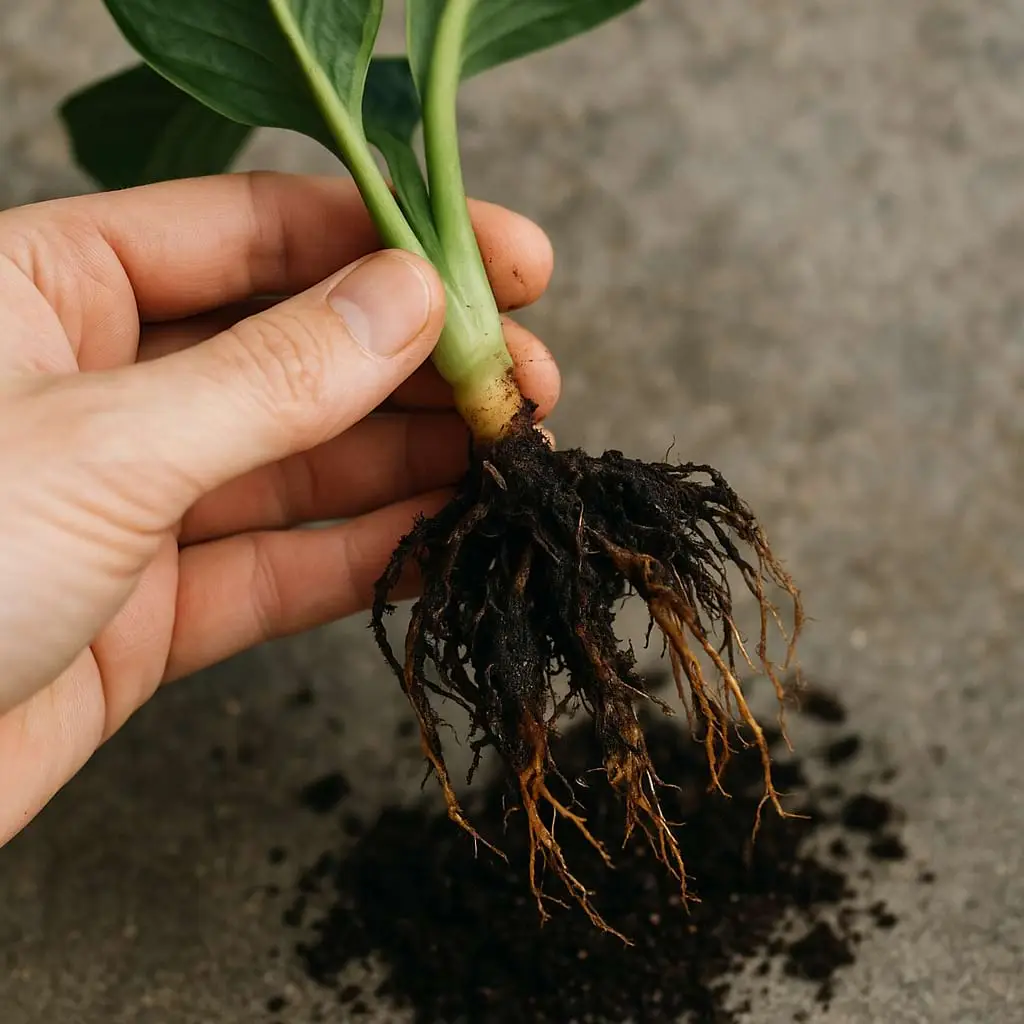
How to Spot and Fix Root Rot on Houseplants: A Step-by-Step Guide

Why Are My Plant's Leaves Turning Yellow? Top 7 Causes and How to Fix It
Common Winter Plant Problems (and How to Fix Them)
Common Autumn Houseplant Problems (and How to Fix Them)
Why Are My Plant's Leaves Pale or Faded? Top 5 Causes & Fixes
Why Are My Plant's Buds Falling Off? A Guide to Fixing Bud Blast
Why Are My Plant's Leaves Pale? A Guide to Nutrient Deficiency
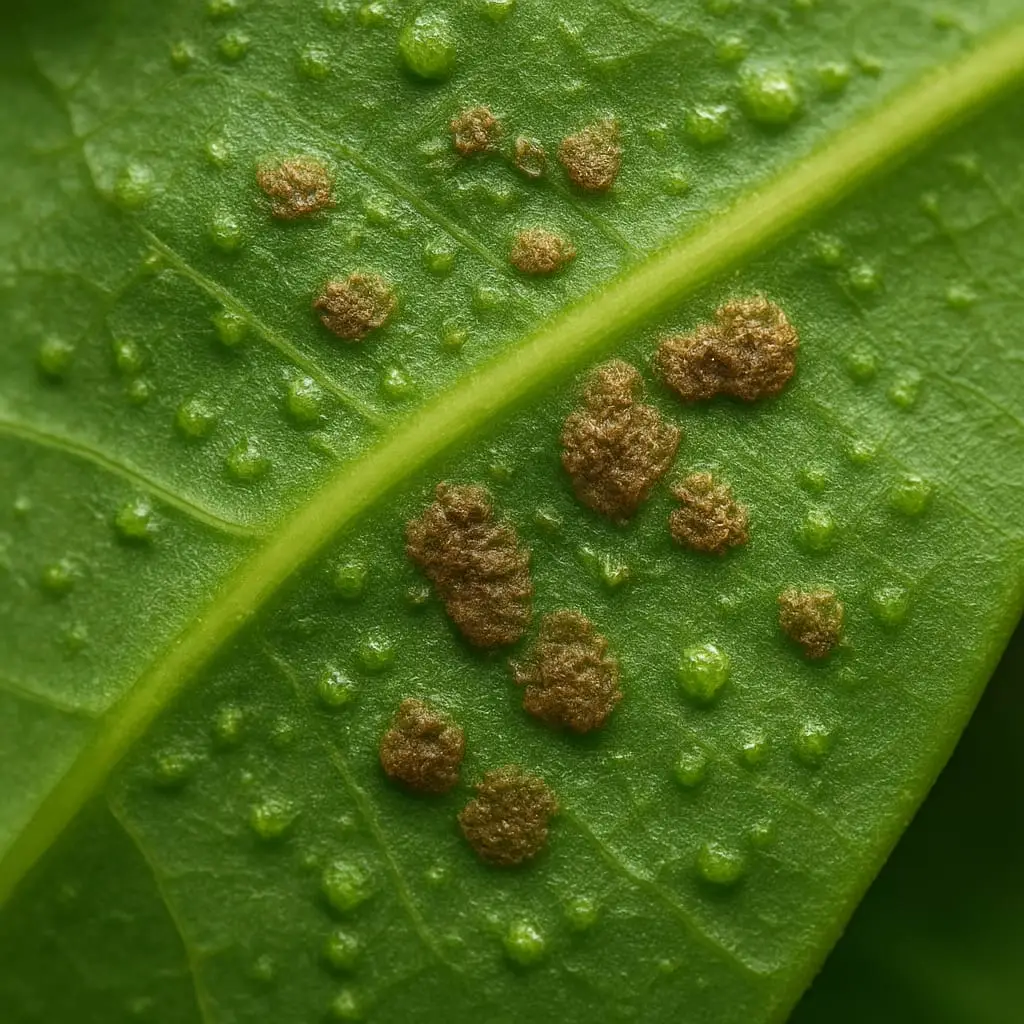
Why Does My Plant Have Bumps or Blisters? A Guide to Edema (Oedema)
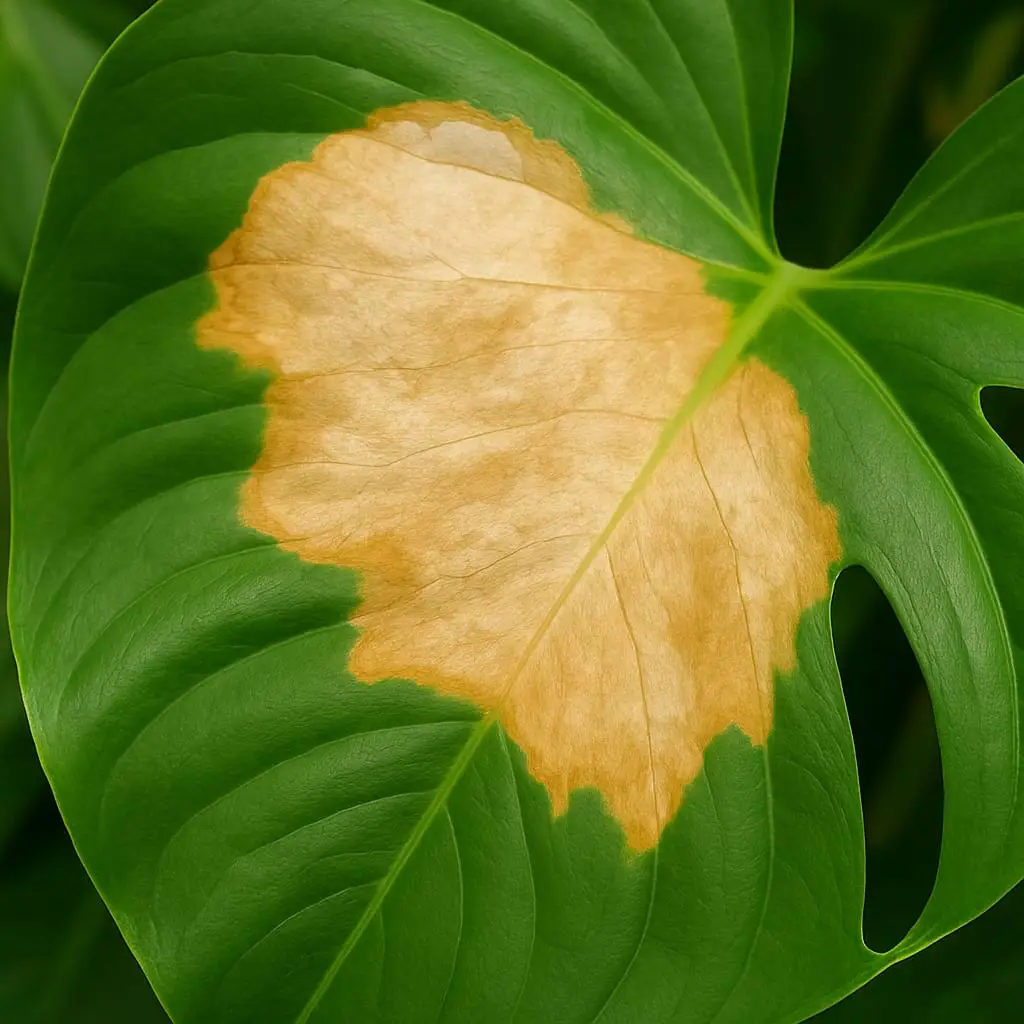
Why Does My Plant Have Burnt Leaves? A Guide to Sunburn and Leaf Scorch
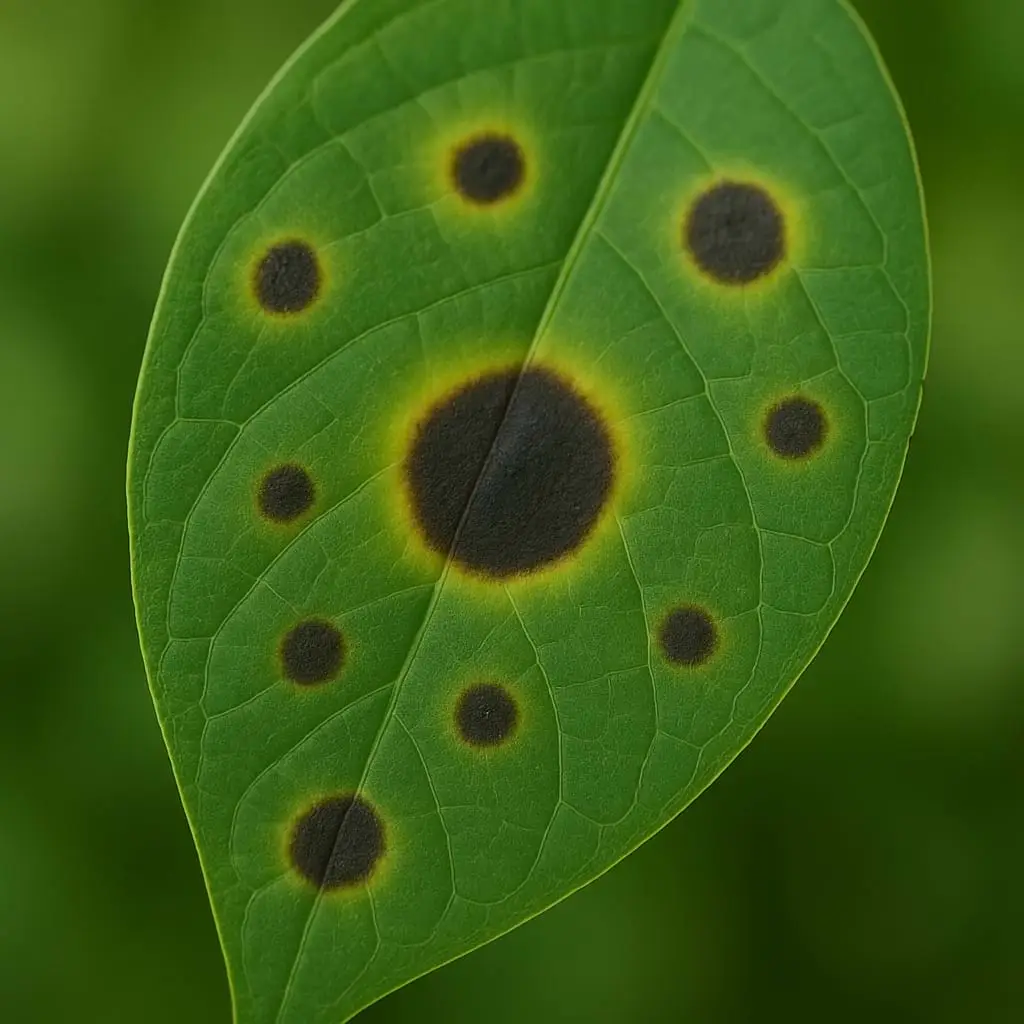
Why Does My Plant Have Brown or Black Spots? Top 5 Causes & Fixes
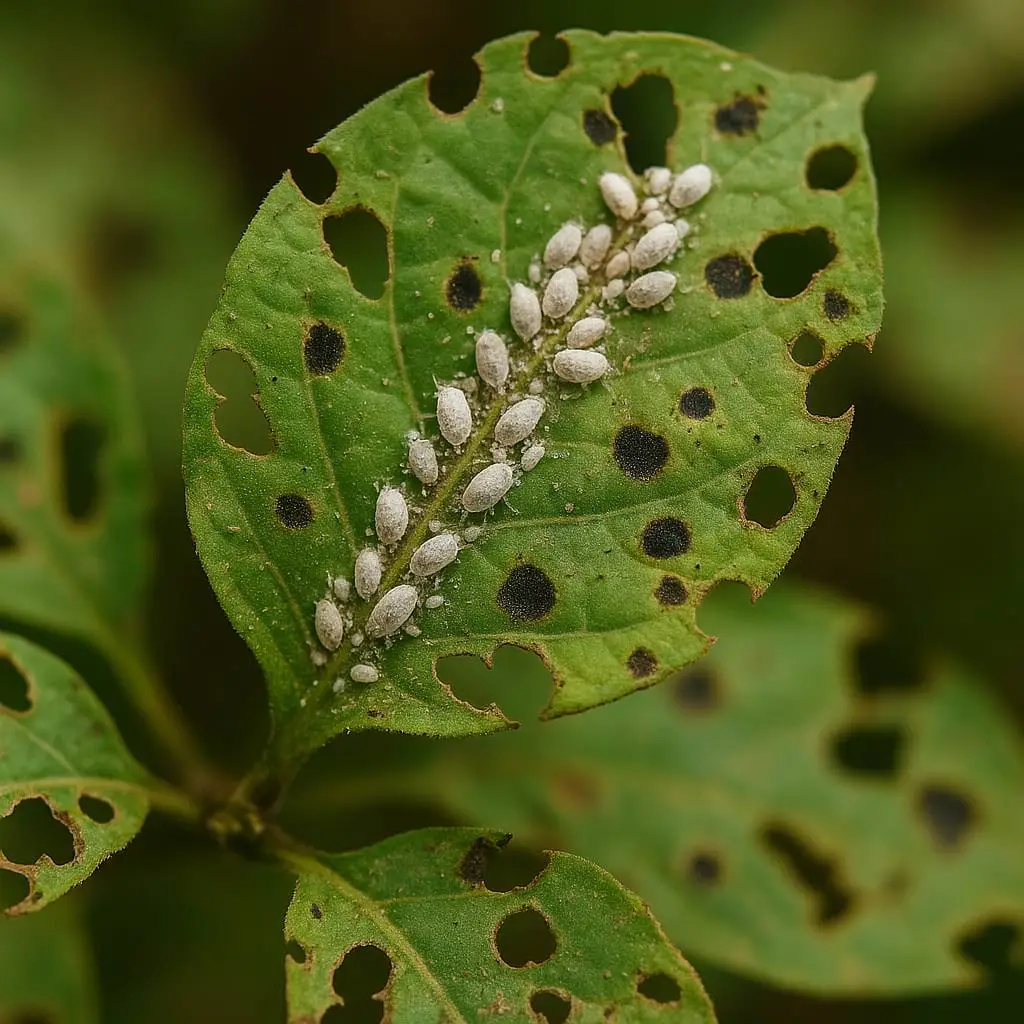
Why Does My Plant Have Bugs? A Guide to Identifying Common Houseplant Pests
Why Is My Plant Losing Its Variegation? How to Fix and Prevent Reversion
Why Is There White Powder on My Leaves? A Guide to Powdery Mildew
Why Does My Plant Have Spots? A Guide to Fungal & Bacterial Diseases
Why Is My Plant Dropping Leaves? Top 6 Causes and How to Fix It
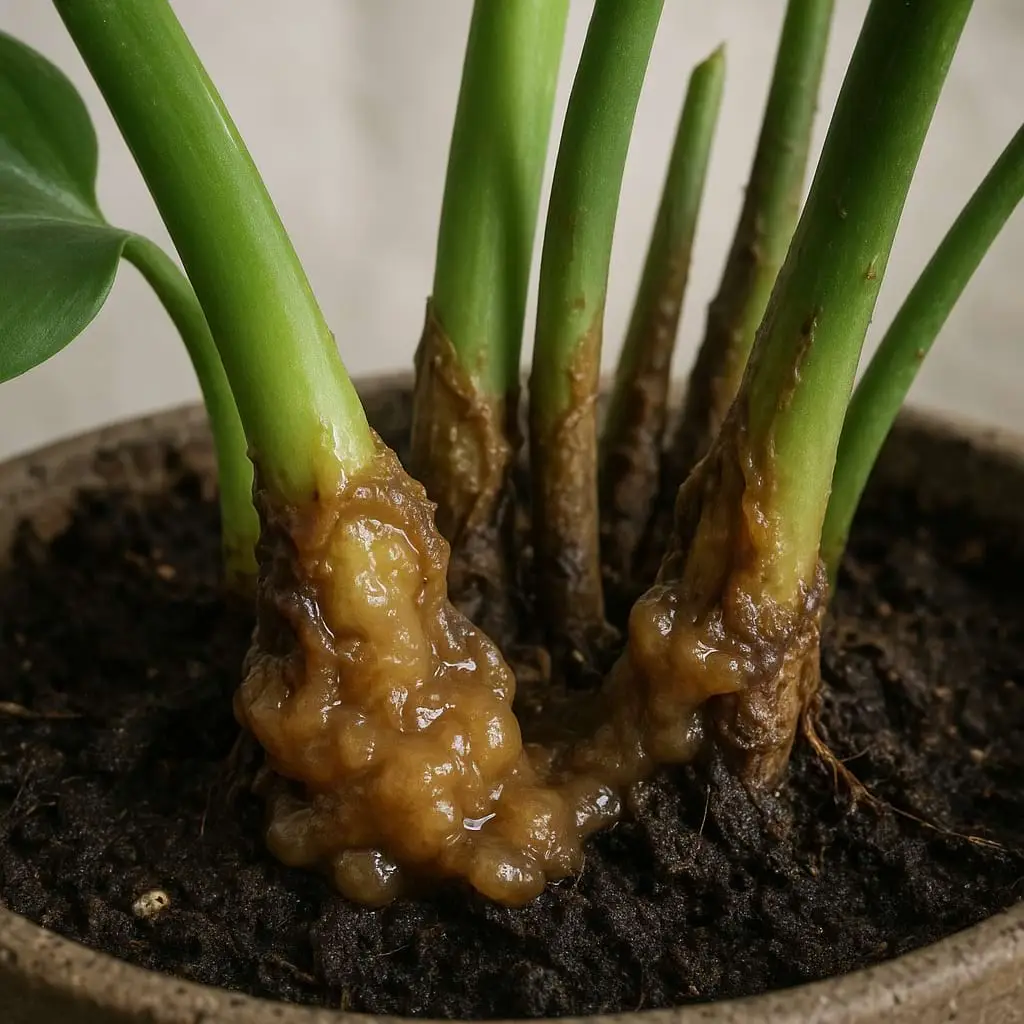
Why Is My Plant's Stem Mushy? A Guide to Fixing Stem Rot
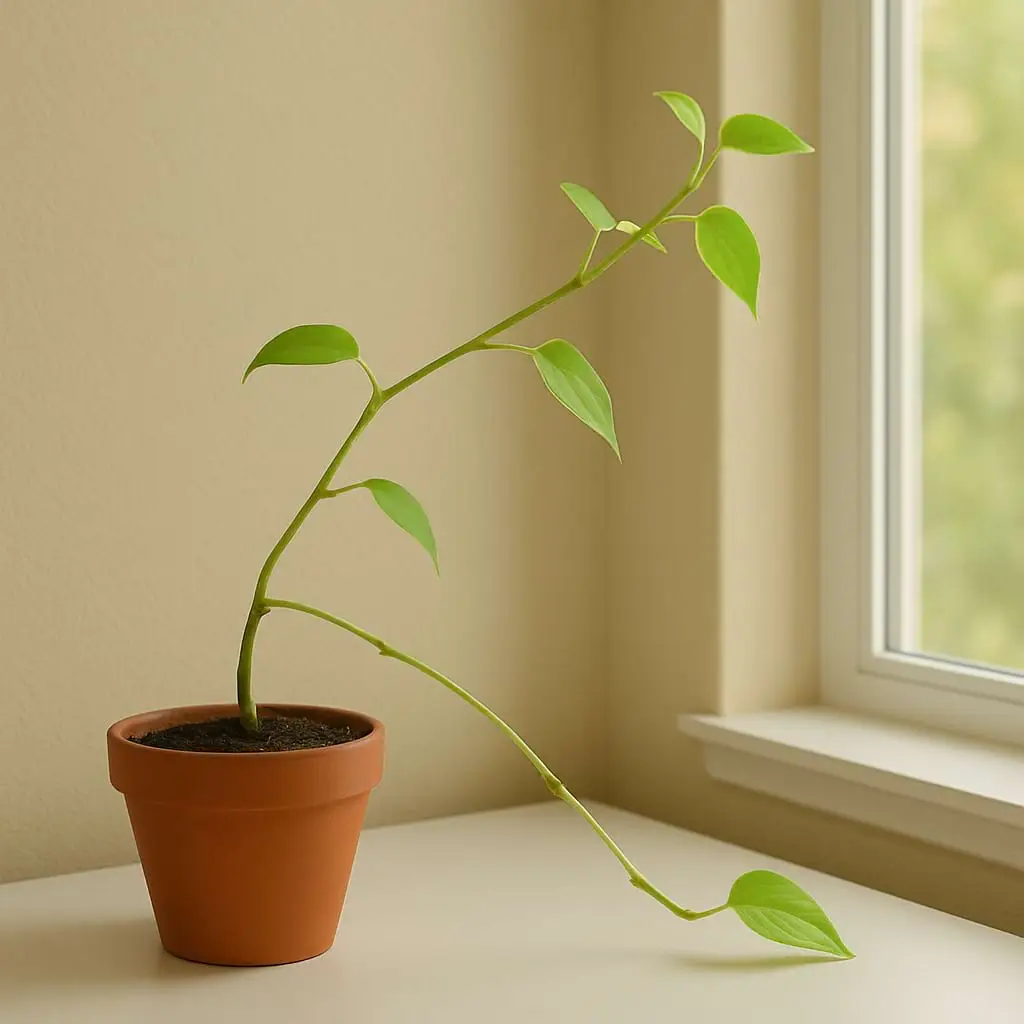
Why Is My Plant Leggy? How to Fix and Prevent Stretched Growth (Etiolation)
Why Is My Plant Not Blooming? Top 5 Causes and How to Fix It
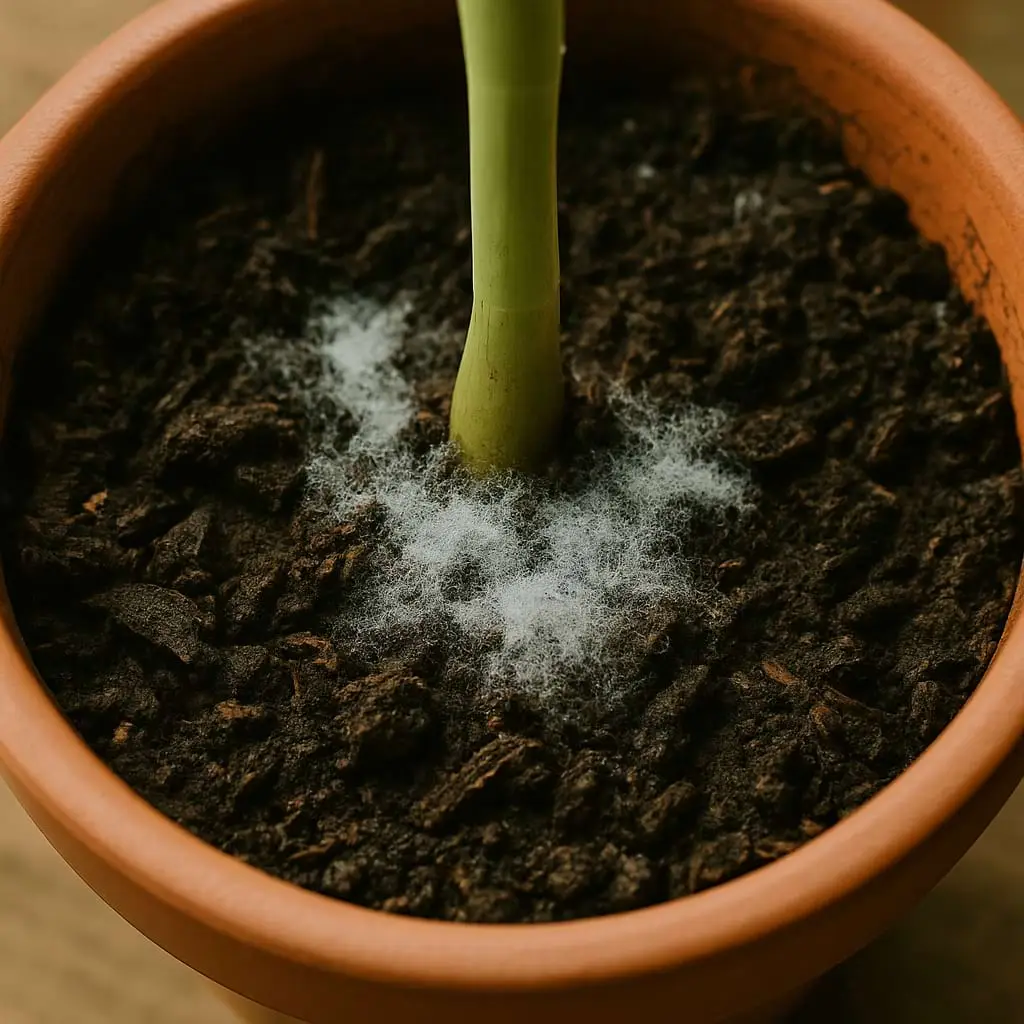
Why Is There White Mold on My Plant's Soil? Causes and Fixes
Why Are My Plant's Leaves Curling? Top 5 Causes and How to Fix It
Why Are My Plant's Leaves Getting Brown, Crispy Tips? Top 5 Causes and How to Fix It
Why Are My Plant's New Leaves So Small? Top 5 Causes and How to Fix It
Why Are My Variegated Leaves Turning Brown? A Guide to Fixing Browning

Houseplant101 Forum
Questions & Comments
Ask a question, share your plant experience, or help other plant owners.
Comments are temporarily unavailable.
Open the Houseplant101 ForumNo comments yet
Be the first to ask a question or share your experience about this page.
Log in or create an account
Comments use your Houseplant101 Forum account, but you can stay on this page.
Create a new account