
How to Use a Moisture Meter (and Never Overwater Again)
Take the guesswork out of watering with a soil moisture meter. Our simple guide shows you how to use and read this tool correctly to prevent overwatering for good.
Routine and Tools: Read meter results without trusting them blindly.
🪴 In This Guide 🪴

🤔 Why a Moisture Meter is a Game-Changer
A moisture meter doesn't magically make you a plant expert, but it's an incredible learning tool. If you're just starting out with plants, you might also find our beginner's essential tools guide helpful for building your plant care toolkit. The meter helps you:
- Eliminate Guesswork: It gives you a simple number instead of a vague feeling of "damp or not damp?"
- Prevent Overwatering: It's a reliable second opinion that will stop you from watering a plant whose soil is still wet at the root level, even if the top feels dry.
- Check Large Pots: It's the only practical way to know the moisture level deep down in a large pot where your finger can't reach.
- Learn Faster: By consistently checking the soil, you'll start to learn the rhythm of how quickly each of your plants dries out in your specific environment.
🔧 How to Use a Moisture Meter in 4 Simple Steps
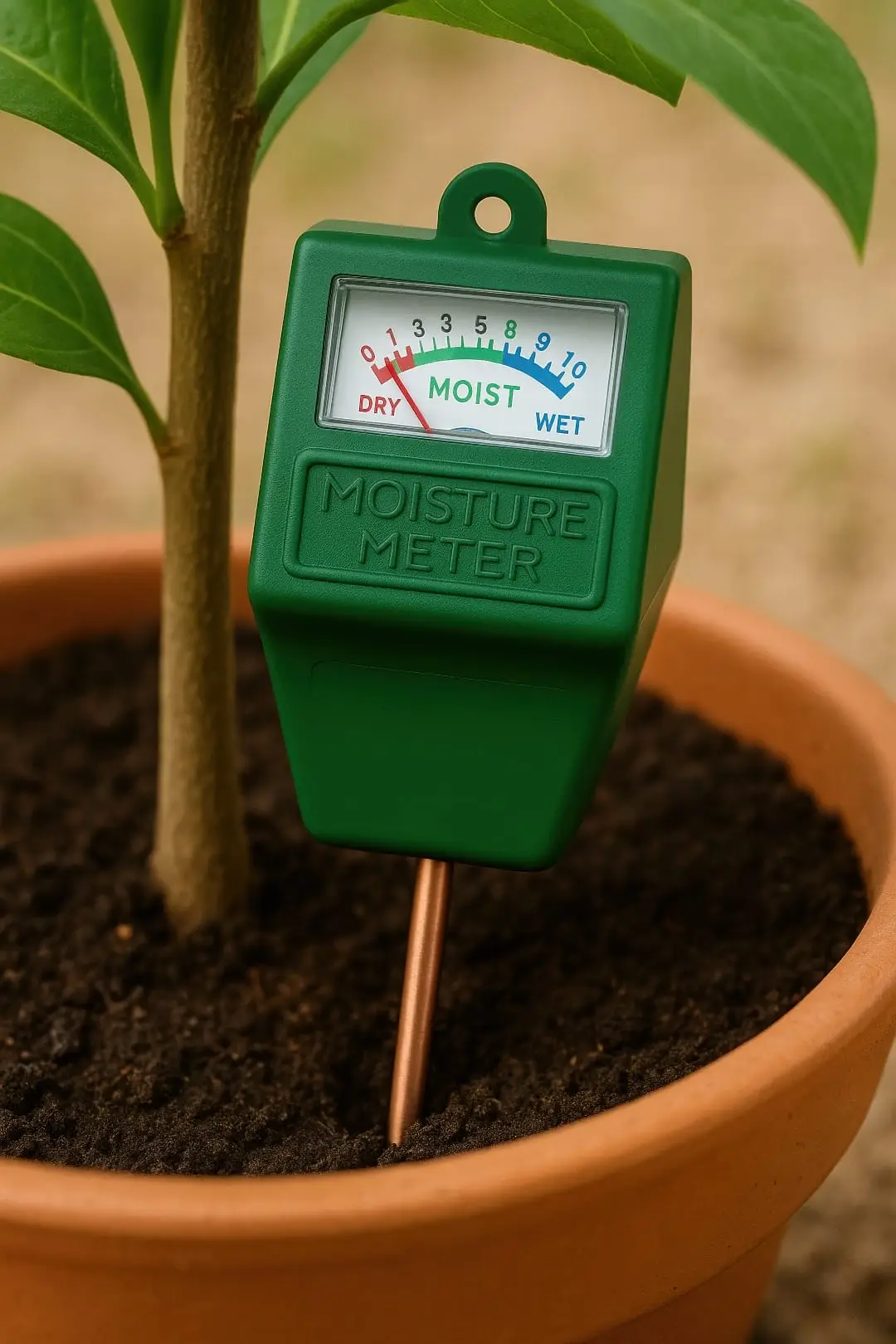
Most common meters are analog and don't require batteries. They work by measuring the electrical current between two metals in the probe-a current that flows easily through wet soil and poorly through dry soil.
Step 1: Insert the Probe Correctly
Gently insert the metal probe into the soil, aiming for a depth that is about two-thirds of the way down the pot. For placement, go about halfway between the plant's main stem and the edge of the pot. This avoids the dense central root ball and the quickly-drying soil at the very edge.

Step 2: Wait for the Reading to Settle
Don't trust the initial reading. The needle will often jump around at first. Leave the meter in the soil for about 60 seconds to allow the reading to stabilize and give you an accurate measurement.
Step 3: Read the Dial and Decide
The dial is typically numbered 1 (bone dry) to 10 (soaking wet). Use the chart below to interpret the results for your specific plant type.
Step 4: Remove and Clean the Probe
This is the most important step! After every use, pull the meter out and wipe the probe completely clean and dry with a cloth. This prevents corrosion on the sensor, stops you from transferring any soil pathogens between plants, and ensures your meter stays accurate for years.

📊 Interpreting the Results: What the Numbers Mean
Not all plants have the same thirst. Use this general guide to know when to water based on your meter's reading.
| Reading | Level | Plant Examples | Action |
|---|---|---|---|
| 1 – 3 | DRY | Cacti, Succulents, Snake Plants, ZZ Plants | Time to Water! These plants need to dry out completely between waterings. |
| 4 – 5 | MOIST | Monsteras, Philodendrons, Pothos, Fiddle Leaf Fig | Time to Water! This is the sweet spot for most common tropical houseplants. |
| 6 – 7 | MOIST | Ferns, Calatheas, Peace Lily, Alocasia | Check again soon. These plants prefer consistently moist (but not wet) soil. Water as the needle approaches 5 or 6. |
| 8 – 10 | WET | None (unless it's an aquatic plant) | DO NOT WATER! The soil is saturated. Check for drainage issues if it stays this high for more than a day. |
🪴 See also 🪴
How to Water Houseplants: The Ultimate Beginner's Guide
The Ultimate Guide to Houseplant Propagation: Create New Plants for Free!
How to Propagate Succulents from Leaves & Offsets
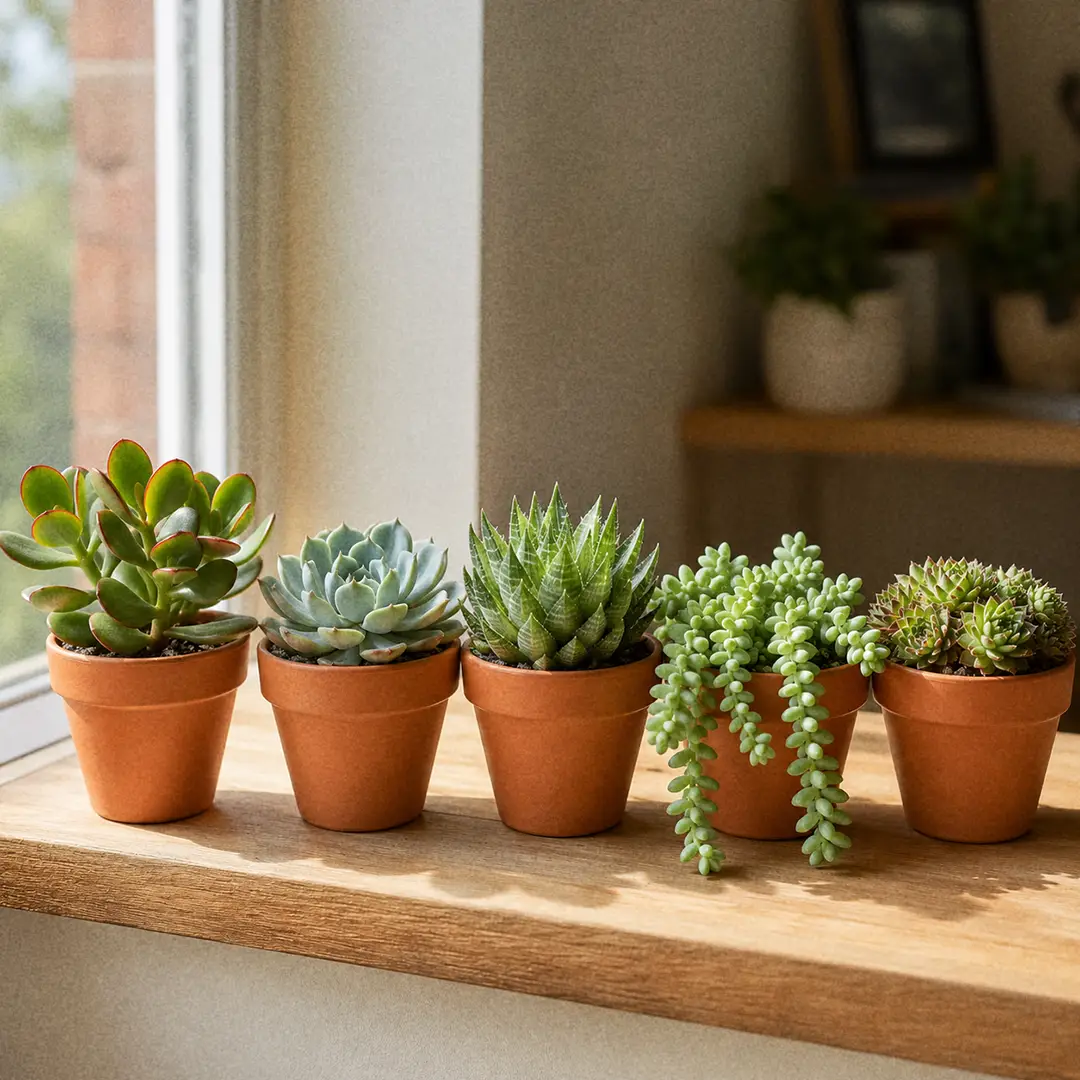
Succulent Care Indoors: How to Stop Killing Jade and Echeveria
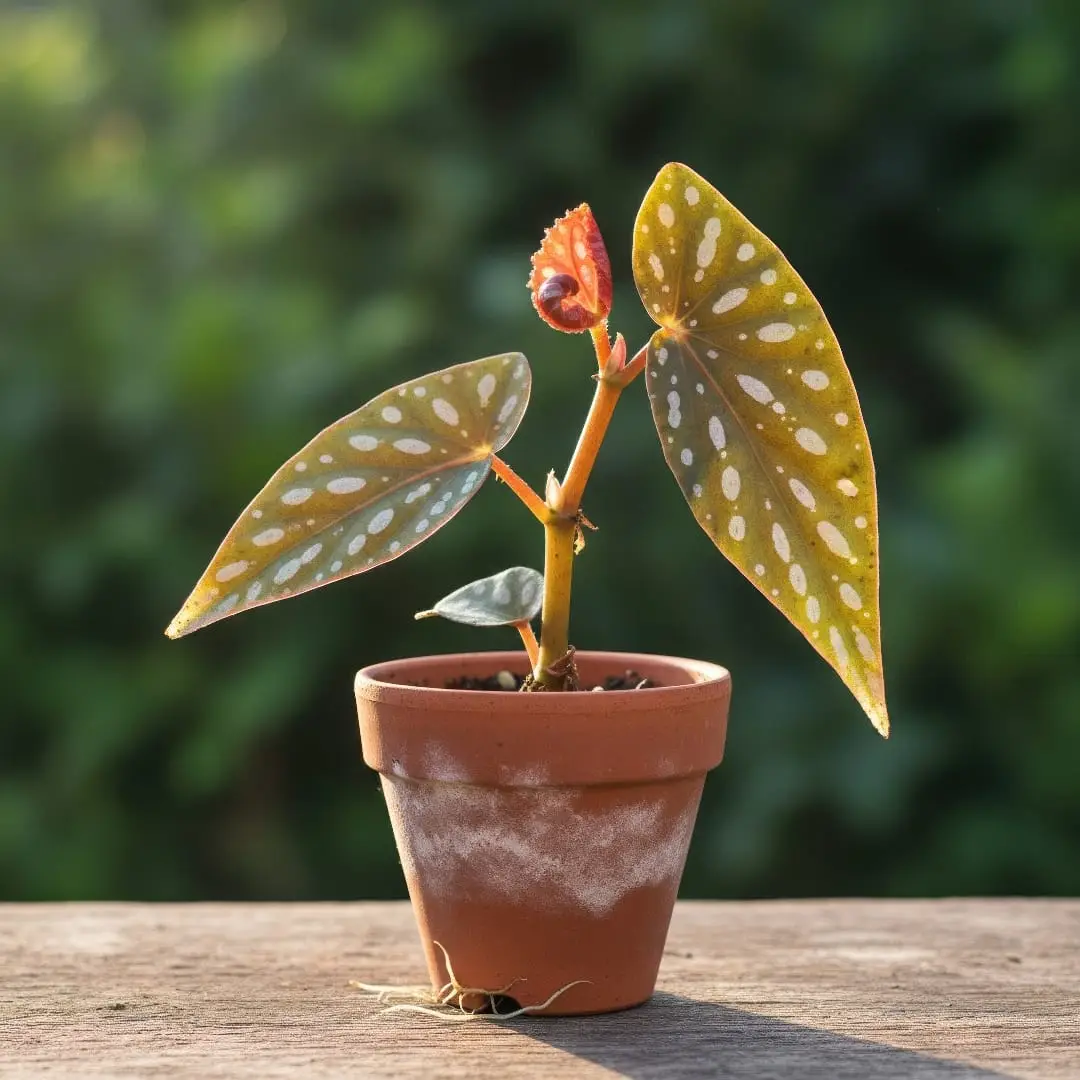
How to Propagate Plants Directly in Soil: A Beginner's Guide
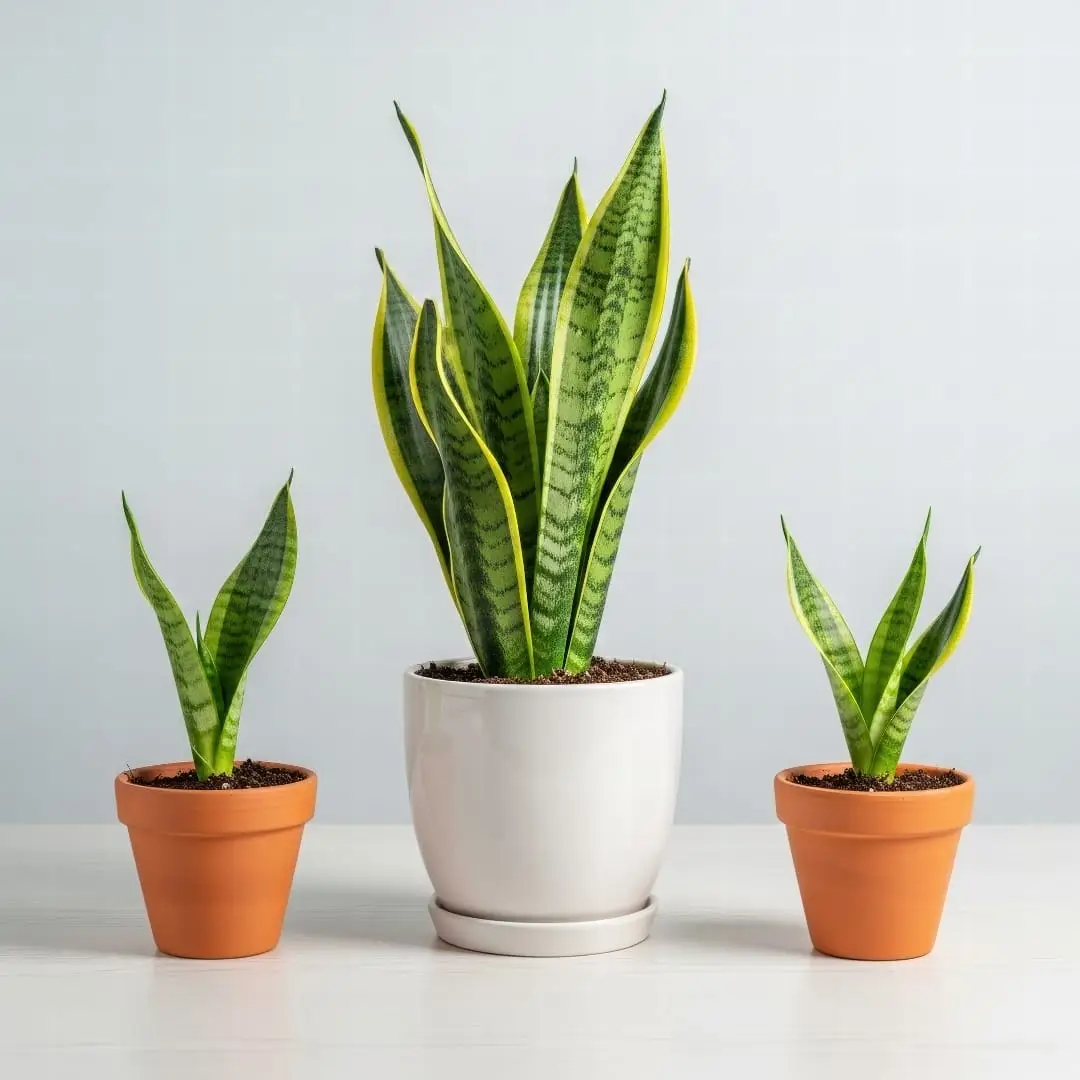
The Complete Guide to Dividing Houseplants: Refresh and Multiply
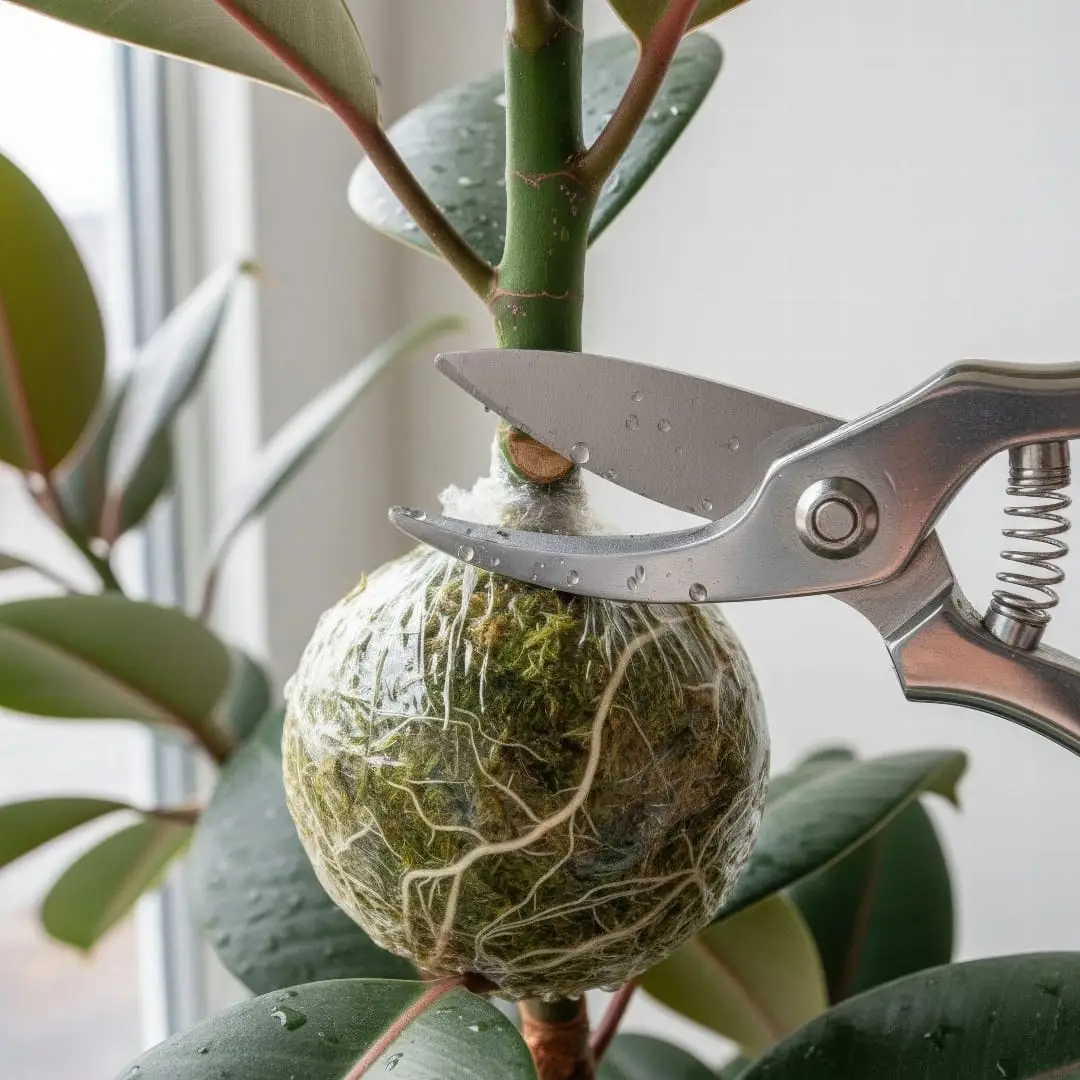
An Introduction to Air Layering for Indoor Trees
A Step-by-Step Guide to Propagating Plants in Water
How to Repot a Houseplant Without Killing It (Step-by-Step Guide)

Houseplant Light Guide: How to Find the Perfect Spot for Your Plant
Choosing the Right Potting Mix: A Beginner's Soil Guide
How to Fertilize Houseplants: A Simple Guide for Beginners

The Essential Houseplant Care Checklist & Routine

Houseplant101 Forum
Questions & Comments
Ask a question, share your plant experience, or help other plant owners.
Comments are temporarily unavailable.
Open the Houseplant101 ForumNo comments yet
Be the first to ask a question or share your experience about this page.
Log in or create an account
Comments use your Houseplant101 Forum account, but you can stay on this page.
Create a new account