
How to Bottom Water Houseplants (Step-by-Step Guide)
Tired of guessing how much to water your plants? Our complete guide to bottom watering shows you a better way to hydrate your houseplants for stronger roots and healthier growth.
Routine and Tools: Use a cleaner method for even moisture.
🪴 In This Guide 🪴

🤔 What is Bottom Watering?
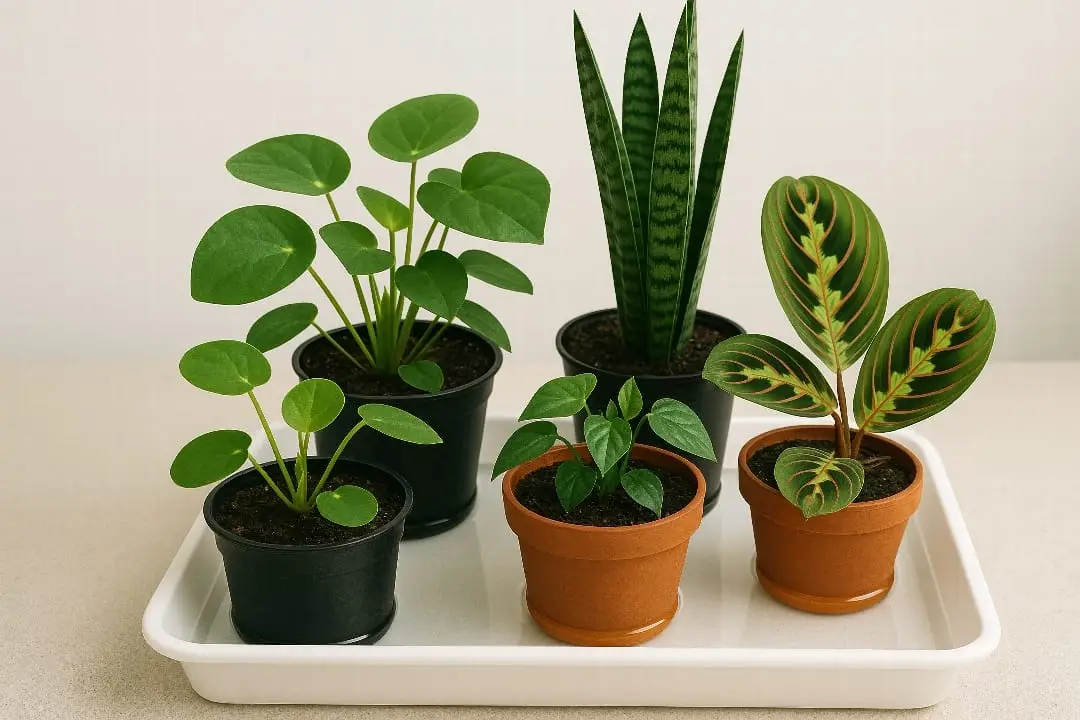
Bottom watering, sometimes called 'reverse watering,' is a method where you place your plant in a tray of water and allow it to soak up moisture through the drainage holes in its pot. Instead of pouring water over the top of the soil, the plant draws water upwards via capillary action, hydrating the roots directly and saturating the soil evenly from the bottom to the top.
This technique is praised by plant lovers because it reduces the risk of the #1 houseplant killer: overwatering.
👍 The Benefits of Bottom Watering
Switching to bottom watering can solve many common houseplant problems and offers several key advantages over traditional top watering.
1. Prevents Overwatering and Root Rot
With bottom watering, the plant absorbs only the water it needs, making it much harder to overwater. This prevents the soil from becoming waterlogged, which is the primary cause of root rot.
2. Encourages Stronger, Deeper Roots
As the water is drawn up from the bottom, the plant's roots are encouraged to grow downwards to seek out the water source. This creates a more robust and healthy root system compared to top watering where roots may stay shallow.
3. Keeps Foliage Dry
Some plants, like African Violets or Begonias, are susceptible to fungal spots or rot if their leaves get wet. Bottom watering ensures the leaves and delicate stems stay completely dry.
4. Deters Common Pests
Pests like fungus gnats thrive and lay their eggs in the moist top layer of soil. Because bottom watering leaves the surface of the soil relatively dry, it creates a less inviting environment for these annoying pests.
🔧 How to Bottom Water: A Step-by-Step Guide
Ready to give it a try? The process is incredibly simple.
Step 1: Check if Your Plant is Thirsty
First, confirm your plant actually needs water. Use the golden rule from our main watering guide: stick your finger 1-2 inches into the soil. If it feels dry, it's time to water.

Step 2: Prepare Your Watering Station
Find a container that is wider than your plant pot. A sink, bathtub, deep kitchen tray, or a plastic basin works perfectly. Fill it with 1-2 inches of room-temperature water. If it's feeding day, you can mix your water-soluble fertilizer into this water.
Step 3: Let Your Plant Soak
Place your plant-it must be in a pot with drainage holes-into the container of water. If you're unsure what kind of pot is best, check our repotting guide. Leave it to sit and absorb the water. You'll see the water level in your container go down as the plant "drinks."

Step 4: Know When to Stop
The process typically takes 10-20 minutes, but can vary. Check the plant every 10 minutes or so. It's done when the top of the soil is visibly moist to the touch. Once it is, your plant has had enough to drink.
Step 5: Drain the Excess
This is a crucial step! Remove the plant from the water and place it in an empty sink or on a draining rack for at least 15-30 minutes. Allow all the excess water to drip out of the drainage holes. Never let your plant sit in standing water.
🌿 Which Houseplants Love Bottom Watering?
While you can bottom water almost any plant in a pot with drainage, some benefit more than others:
| Plant Type | Examples | Why it Works |
|---|---|---|
| Plants with Fuzzy Leaves | African Violets, some Begonias | Keeps water off delicate leaves, preventing spots and rot. |
| Succulents & Cacti | Jade Plant, Echeveria, Desert Rose | Allows them to get a deep, thorough drink while minimizing the risk of stem rot from wet topsoil. |
| Tropical Moisture Lovers | Calathea Orbifolia, Maranta Leuconeura | Ensures the entire root ball is evenly and consistently moist, which these humidity-loving plants crave. |
| Plants Prone to Drying Out | Ferns, Peace Lilies | Perfect for rehydrating soil that has become very dry and pulled away from the pot's edges. |
| Top-Heavy or Dense Plants | Snake Plants, ZZ Plants | It can be physically difficult to reach the soil on these plants, making bottom watering a cleaner, easier option. |
For extra humidity support, see humidity hacks.
⚠️ Common Mistakes & How to Avoid Them
Bottom watering is nearly foolproof, but there are a couple of pitfalls to watch out for.
Mistake 1: Leaving the Plant in Water for Too Long
The Problem: Forgetting about your plant and leaving it to soak for hours can still lead to oversaturation and root rot.
The Fix: Set a timer for 15 minutes to remind yourself to check on the plant. Remove it as soon as the topsoil is moist.
Mistake 2: Never Top Watering
The Problem: Bottom watering continuously pulls water and nutrients up, which can cause minerals and salts from fertilizers to build up in the top layer of soil over time.
The Fix: Once every 4-6 waterings (or once every couple of months), water your plant thoroughly from the top. Let water flush freely through the drainage holes. This will wash away any accumulated salts.

Houseplant101 Forum
Questions & Comments
Ask a question, share your plant experience, or help other plant owners.
Comments are temporarily unavailable.
Open the Houseplant101 ForumNo comments yet
Be the first to ask a question or share your experience about this page.
Log in or create an account
Comments use your Houseplant101 Forum account, but you can stay on this page.
Create a new account