
Echeveria
Echeveria elegans
Mexican Snowball, Mexican Gem, White Mexican Rose, Mexican Rose, Hens and Chicks (loose use)


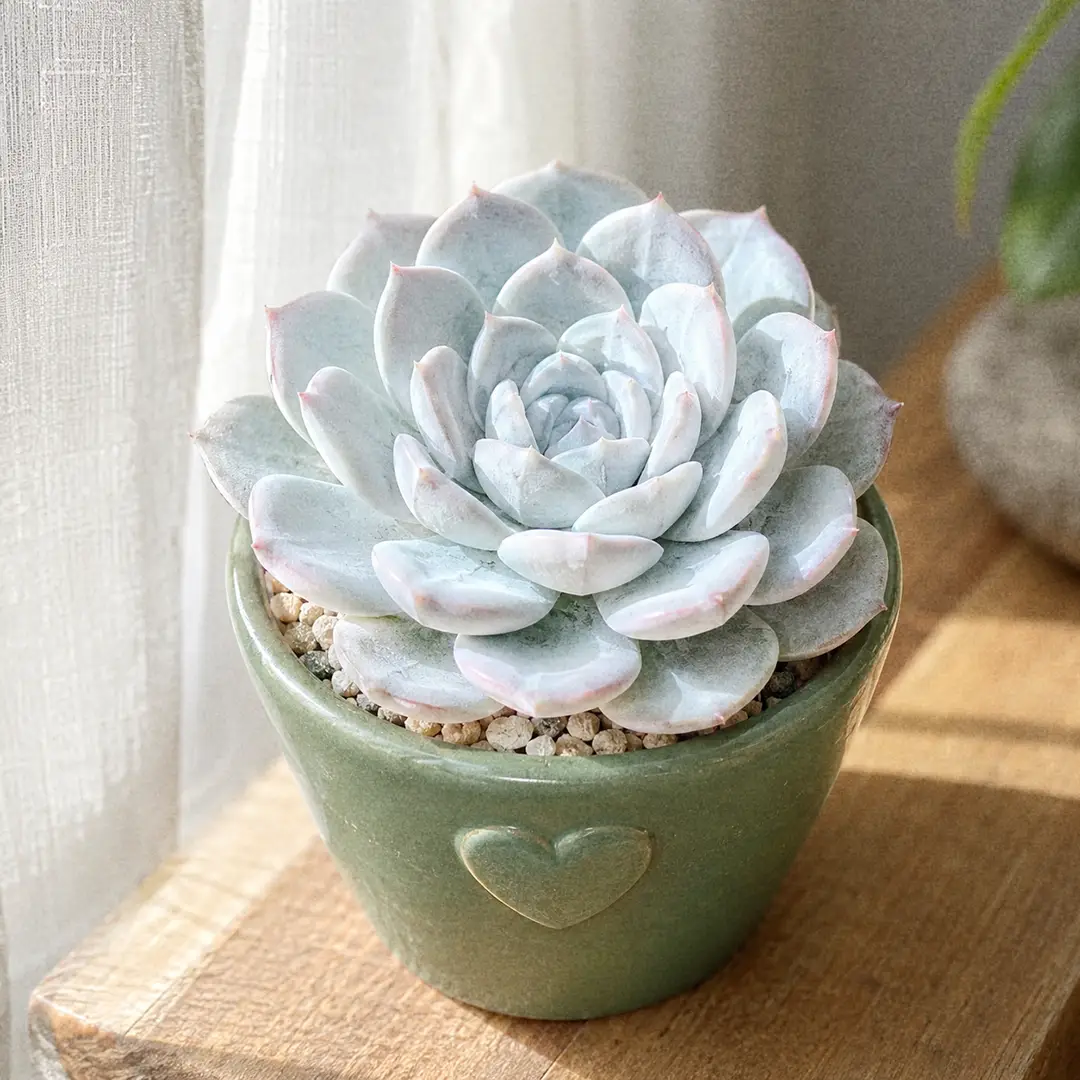
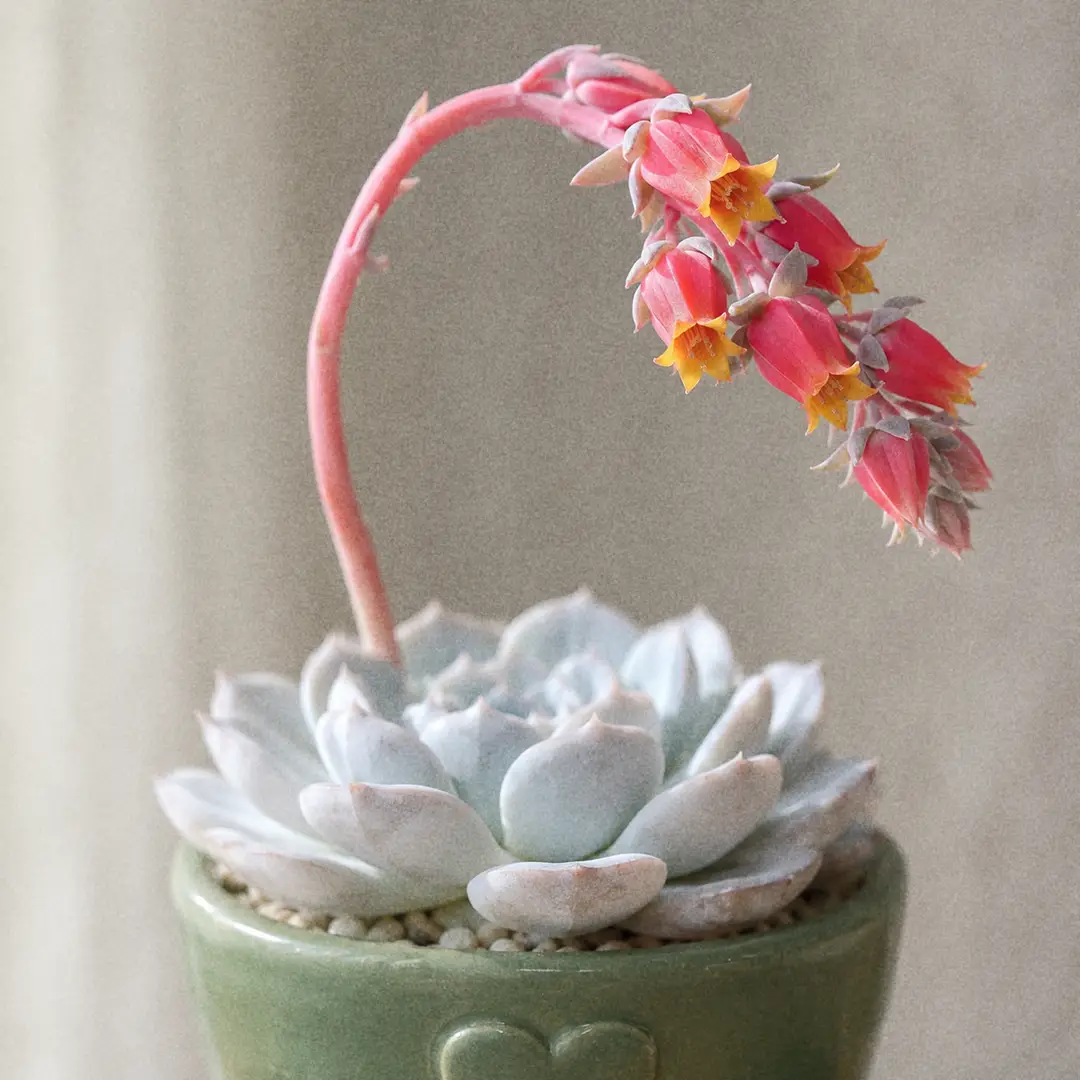
Echeveria (Echeveria elegans), better known as the Mexican Snowball, is the palm-sized rosette succulent with chalky bluish-white leaves that look dusted in fresh snow. Each spring a happy plant arches out a slender pink stem covered in coral-orange bells, which makes it one of the easiest beginner succulents to bloom on a sunny windowsill.
📝 Echeveria Care Notes
🌿 Care Instructions
⚠️ Common Pests
📊 Growth Information
🪴 In This Guide 🪴

📺 Echeveria Video Guide

☀️ Echeveria Light Requirements (Bright Direct Sun)
Light is the single biggest decision for an Echeveria. Get it right and the rosette stays tight, chalky, and slightly pink at the edges. Get it wrong and the plant stretches upward into a tall green pole with sparse leaves, and it almost never recovers its shape.
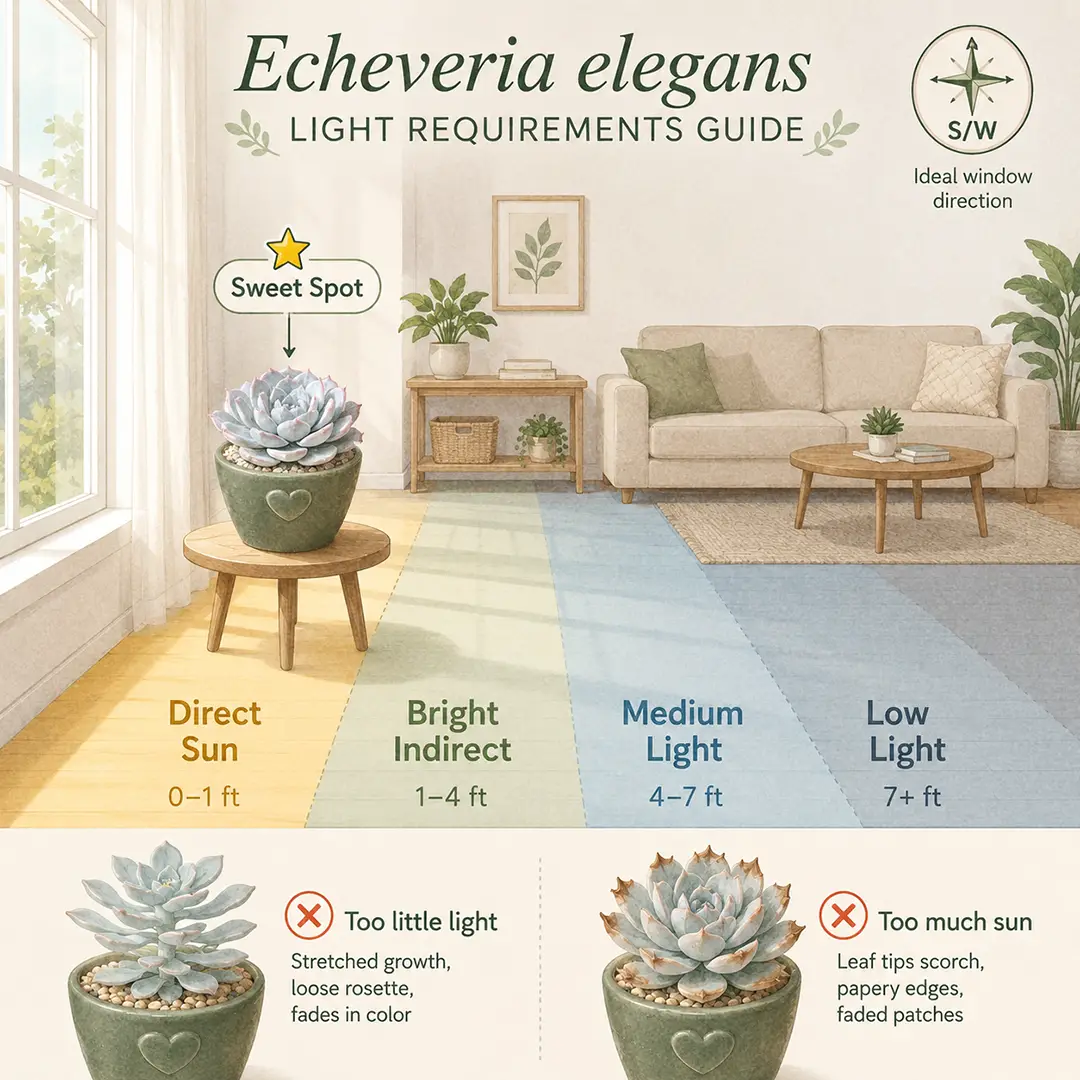
The Sweet Spot
A south or west window with four to six hours of direct sun a day is ideal. An unobstructed east window works well through the brightest months but often falls short through winter. Set the pot within a foot of the glass for most of the year, and pull it back two or three inches in July and August if the leaf tips start to scorch. In a dim apartment, a 12 to 14 hour full-spectrum grow light hanging six to eight inches above the rosette does the same job. See light for houseplants for the broader picture.
Too Little Light
This is the most common Echeveria problem indoors by a wide margin. A plant that does not get enough sun stretches upward from the center, the leaves space out further along a bare stem, and the rosette loses its tight cup shape. The pale blue color fades toward plain green, and the chalky bloom thins. Once a rosette has stretched, the stem itself will not recompress, but you can behead the top, re-root it, and start fresh in a brighter spot. The cut base often pushes out a cluster of new rosettes around the stub, which gives you free plants out of the recovery.
Too Much Light
A rosette moved straight from a low-light shop window to a south windowsill in midsummer can scorch on the side facing the glass, leaving the leaf tips yellow, beige, or papery and the upper surface speckled with tan freckles. Harden the plant into stronger sun over two weeks by moving it closer in stages, with a few hours of full sun a day at first and a sheer curtain for the brightest afternoons. A faint pink blush at the leaf edges is normal and shows the plant is happy, but a deep red flush across the whole rosette means the sun is briefly too strong.
💧 Echeveria Watering Guide (Soak and Dry)
Watering kills more Echeverias indoors than every other care mistake combined. The leaves themselves are storage tanks, so the plant is built to handle weeks of dry soil without complaint, and the chalky farina holds water against the leaf surface for far longer than it looks.
Watering Frequency
In spring and summer, water deeply only once the soil is completely dry from top to bottom. For a 4 inch terracotta pot in a sunny window, that lands roughly every 10 to 14 days. A glazed pot, a cooler spot, or a peatier mix stretches the interval out to three weeks. Push a thin wooden chopstick to the bottom of the pot to check; if it comes out cool or damp, wait a few more days. See watering houseplants for the broader technique.
In autumn and winter, cut watering way back. An Echeveria kept cool at 45 to 55°F (7 to 13°C) can stay almost bone dry for three months and reward you with a stronger spring flower spike. A plant in a warm 70°F (21°C) living room still wants a small drink every four to six weeks to stop the lower leaves from shrivelling.
How to Water
Pour room-temperature water around the base of the rosette until it drains out of the pot, wait ten minutes, then tip out the saucer. Never let the pot stand in water. Keep water off the rosette itself; drops that sit between the leaves smudge the farina and can cause cosmetic water marks that stay for the life of that leaf. Worse, water trapped in the rosette through a cool night invites fungal spotting at the center. Bottom watering is the cleanest option if your soil mix is gritty enough, because it keeps the leaves dry while the roots drink.
Signs of Trouble
A thirsty Echeveria starts wrinkling the bottom ring of leaves first, and the whole rosette feels a little softer than usual. One deep water plumps it back up within a day or two. An overwatered Echeveria looks the opposite: the lower leaves go translucent and yellow, then mushy and brown, and they peel away with no resistance. By the time the base of the stem feels soft, root rot has usually climbed into the rosette and the rescue is to behead the clean top and re-root it in dry grit.
🪴 Best Soil for Echeveria (Gritty and Fast-Draining)
After light, soil is the next biggest decision. A gritty mineral mix forgives the occasional heavy hand with the watering can, and it is the difference between a 10 year rosette and one that quietly rots in its first winter.
What the Soil Needs
A mix that drains in seconds, dries fully within a week, and holds very little water against the roots. Echeveria elegans grows on shaded limestone cliffs in central Mexico at around 5,500 to 9,000 feet, so the natural substrate is mineral chunks with a thin smear of organic matter. Aim to recreate that. Slightly acidic to neutral pH is fine; you do not need to chase a specific number.
DIY Soil Mix
- 1 part standard cactus and succulent mix
- 1 part coarse pumice (or perlite)
- 1 part coarse horticultural sand or fine gravel
Squeeze a damp handful of the finished mix; it should fall apart the instant you open your fingers. If it holds together as a clump, add more pumice. The same recipe works beautifully for a Jade Plant, a Haworthia, a Burro's Tail, or a Jelly Bean Plant sitting on the same shelf.
Pre-Made Options
Most bagged "cactus and succulent" mixes from a garden center are still too peaty for an Echeveria straight out of the bag. Cut them 50/50 with pumice or perlite before potting. Skip anything advertised as "moisture-retentive" or "premium" with added compost; those bags are pitched at general houseplants and will hold the roots too wet. See repotting for the broader picture.
🍼 Fertilizing Echeveria (Light Annual Feeds)
A slow grower from nutrient-poor habitat. Overfeeding pushes soft pale growth that stretches the rosette and ruins the tight shape, so when in doubt, feed less.
When and How Often
Feed only during active growth, from mid spring to late summer. Two or three feedings a year is plenty: one in late May, one in early July, and an optional last one in mid August. Skip the rest of the year, and never feed a freshly repotted plant for the first two months.
What to Use
Use a low-nitrogen cactus and succulent fertilizer (around 2-7-7 or 5-10-10) at half the label strength. Water with plain water first, then apply the diluted feed to damp soil. A quarter-strength liquid kelp is a gentle organic option that works just as well. See fertilizing houseplants for general dilution guidance.
Over-Fertilizing Signs
A white crust on the soil surface or around the pot rim means salt build-up. Flush the pot with two or three pot volumes of plain water, skip the next planned feeding, and dilute further next time. New growth that looks unusually green, soft, and stretched is the early warning that you are pushing the plant too hard, and the chalky bloom thins out before the rosette starts losing its tight shape.
🌡️ Echeveria Temperature Range
A forgiving plant on temperature. Normal household conditions feel mild to a species that handles cool mountain nights and hot afternoon sun in its native cliffs.
Ideal Range
Through spring, summer, and autumn, aim for 65 to 80°F (18 to 27°C). Normal indoor temperatures are perfect, and a hot south windowsill in July is no problem as long as you have hardened the plant into stronger sun first. Mature plants tolerate brief outdoor drops to around 25°F (-4°C) if completely dry at the root, but indoor plants should never see below 40°F (4°C).
Drafts and Heat Sources
A cool winter rest at 45 to 55°F (7 to 13°C) for eight to ten weeks is what triggers the heavy spring flower spike. An unheated bright porch, a cool spare room, or a windowsill behind a thermal curtain all work for this. Avoid cold drafts from open doors in winter, and keep the pot a clear foot away from any working radiator, because the dry blast melts the farina on one side and dries the soil unevenly.
💦 Echeveria Humidity Requirements
Ideal Humidity
Comfortable in normal household humidity, anywhere from 30 to 45 percent. No misting, no humidifier, no pebble trays, and absolutely no closed terrariums. The whole point of the chalky farina and the plump leaves is to thrive in dry mountain air, so anything that holds humidity above 60 percent for long is a real problem indoors.
Easy Humidity Boosters
You almost never need any. The only humidity-related risk is a damp, cool, still corner in late autumn before the heating kicks in, when stagnant air at low temperatures invites fungal spotting at the rosette center. A small clip-on fan running a few hours a day prevents it. Skip steamy bathrooms, kitchen sinks, and any spot where condensation collects on a nearby window in winter.
🌸 Echeveria Flowers (Coral Bells on Pink Stems)
The bloom is the reason most people end up buying a second Echeveria. It is unfussy, reliable on a mature plant, and visually nothing like the flowers on most other small succulents.
What the Flowers Look Like
Each flower is urn-shaped and about half an inch long, with five fused petals in vivid coral pink or red and a soft yellow tip. They hang in a one-sided arching cluster (a cyme) at the end of a slender pink stem that lifts 8 to 12 inches above the rosette. A mature plant often pushes two or three of these flower stems at once, and the display lasts four to six weeks. Hummingbirds love the bells if you set the plant outdoors in summer.
How to Trigger Bloom
Three things have to line up. The plant has to be mature, usually at least two years old and 3 inches across. It has to have spent the previous winter cool and almost dry, ideally at 45 to 55°F (7 to 13°C) for eight to ten weeks. And it has to be in strong direct light from early spring through summer. Move a winter-rested plant back into warmth and gentle watering in February and the flower stem usually appears within four to six weeks. The same recipe works for most leaf succulents in the same family.
If It Won't Bloom
If the plant is healthy and clearly mature but never flowers, the missing ingredient is almost always the cool dry winter rest. An Echeveria kept warm and watered year-round will live happily for years without ever forming a bud. Give it a proper rest, and it usually starts blooming the very next spring. See failure to bloom if you are still stuck after a full cycle.
🏷️ Echeveria Types and Varieties
Echeveria elegans is one species, but a handful of selected forms turn up in plant shops, and the genus as a whole is enormous. Knowing the close relatives makes shopping a lot easier.
Echeveria elegans (the standard form)
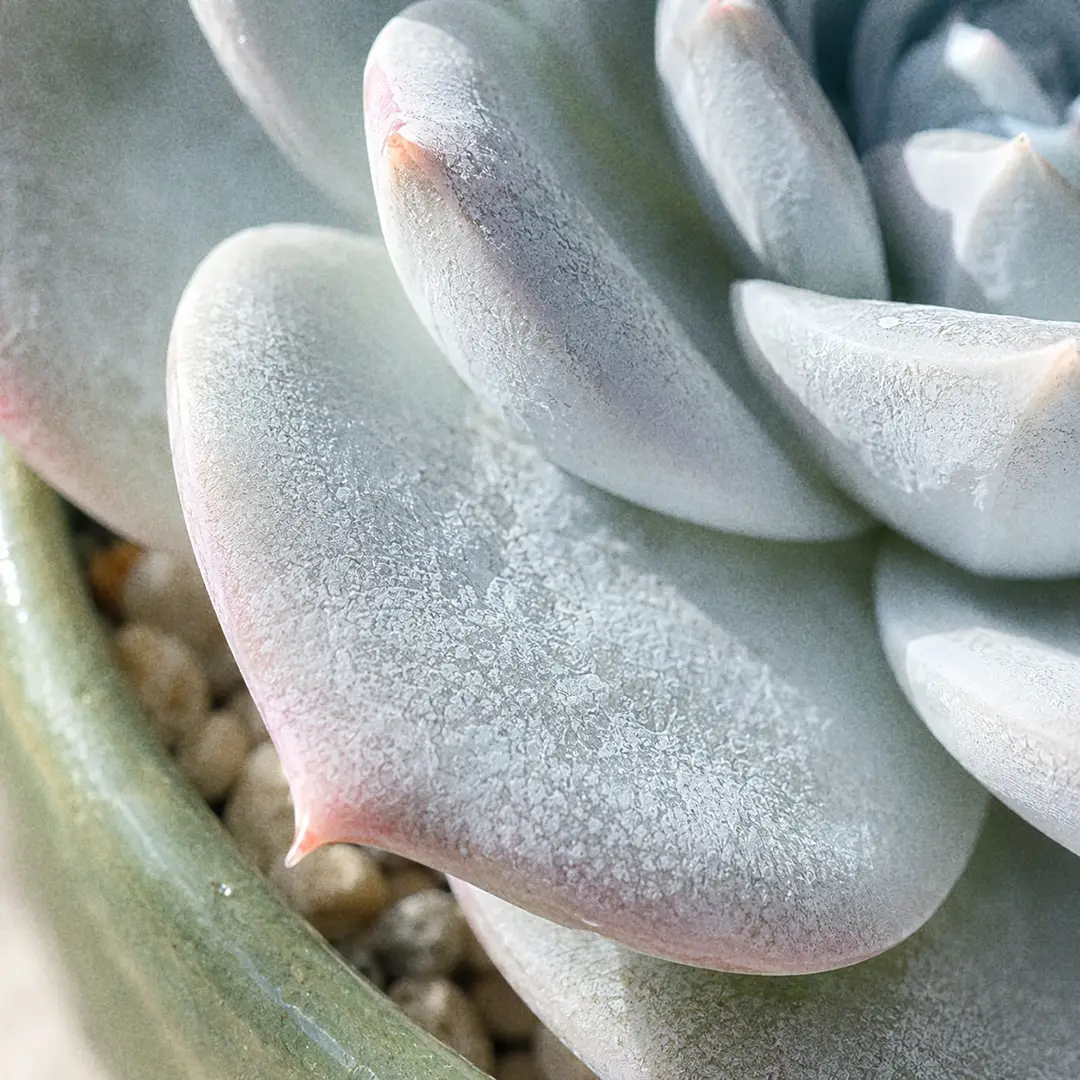
The classic Mexican Snowball. A tight stemless rosette 4 to 6 inches across, made of plump spoon-shaped leaves in pale silvery blue-green with a chalky white coat and a small translucent tip. Pinkish edges in strong sun. Slow grower, clumps slowly from the base, and reliably blooms in late spring with coral bells on pink stems.
Echeveria elegans 'Kesselringiana'
A smaller, more compact form with denser rosettes and slightly bluer leaves. Clumps more readily than the type and stays tidy even when several heads share a pot. A great pick for a shallow gravel bowl or a small dish garden.
Echeveria elegans 'Hercules'
A vigorous, larger-leafed selection that grows faster and reaches 5 to 7 inches across. Stays paler and chalkier than many hybrids and produces a bigger spring flower display. Often sold simply as "Echeveria 'Hercules'" without the parent species name.
Common Look-Alikes Worth Knowing
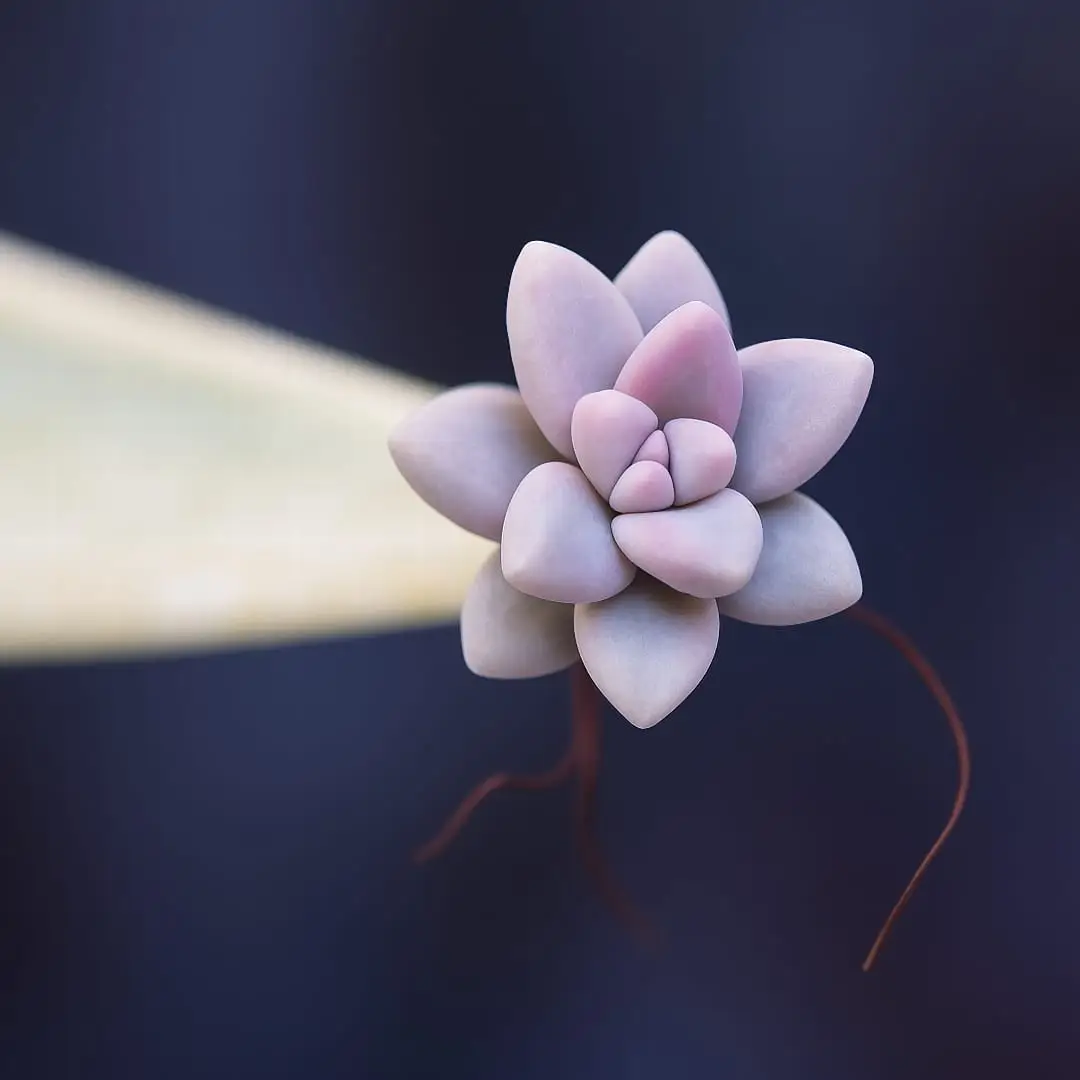
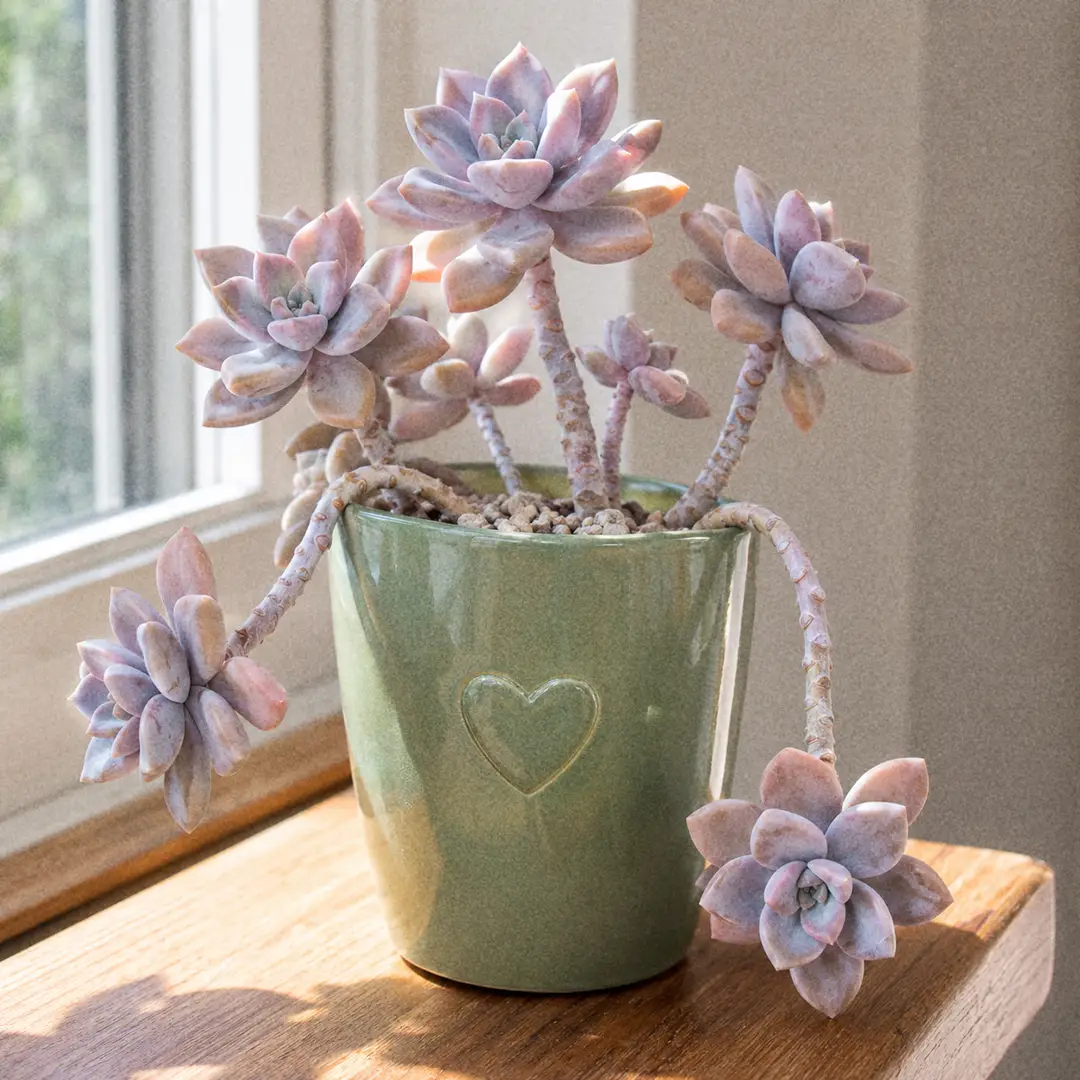
The Echeveria genus has dozens of similar pale rosette species and hundreds of hybrids. Echeveria 'Lola' is a pale pink-tinged hybrid with E. elegans in its parentage and slightly thicker leaves. Echeveria 'Perle von Nürnberg' is a darker dusky-pink and lavender hybrid that wants the same care but reads completely different on a shelf. Echeveria derenbergii (Painted Lady) has paler leaves with sharp red leaf tips. Echeveria setosa (Mexican Firecracker) is covered in fine white bristles instead of farina. The most common mix-up of all is not an Echeveria at all: the Ghost Plant (Graptopetalum paraguayense) is a near twin with the same chalky coating, and it gives itself away by carrying looser, more pointed rosettes on stems that sprawl and trail. All of them slot onto the same windowsill with the same gritty mix and the same soak-and-dry schedule.
Good Shelf Companions
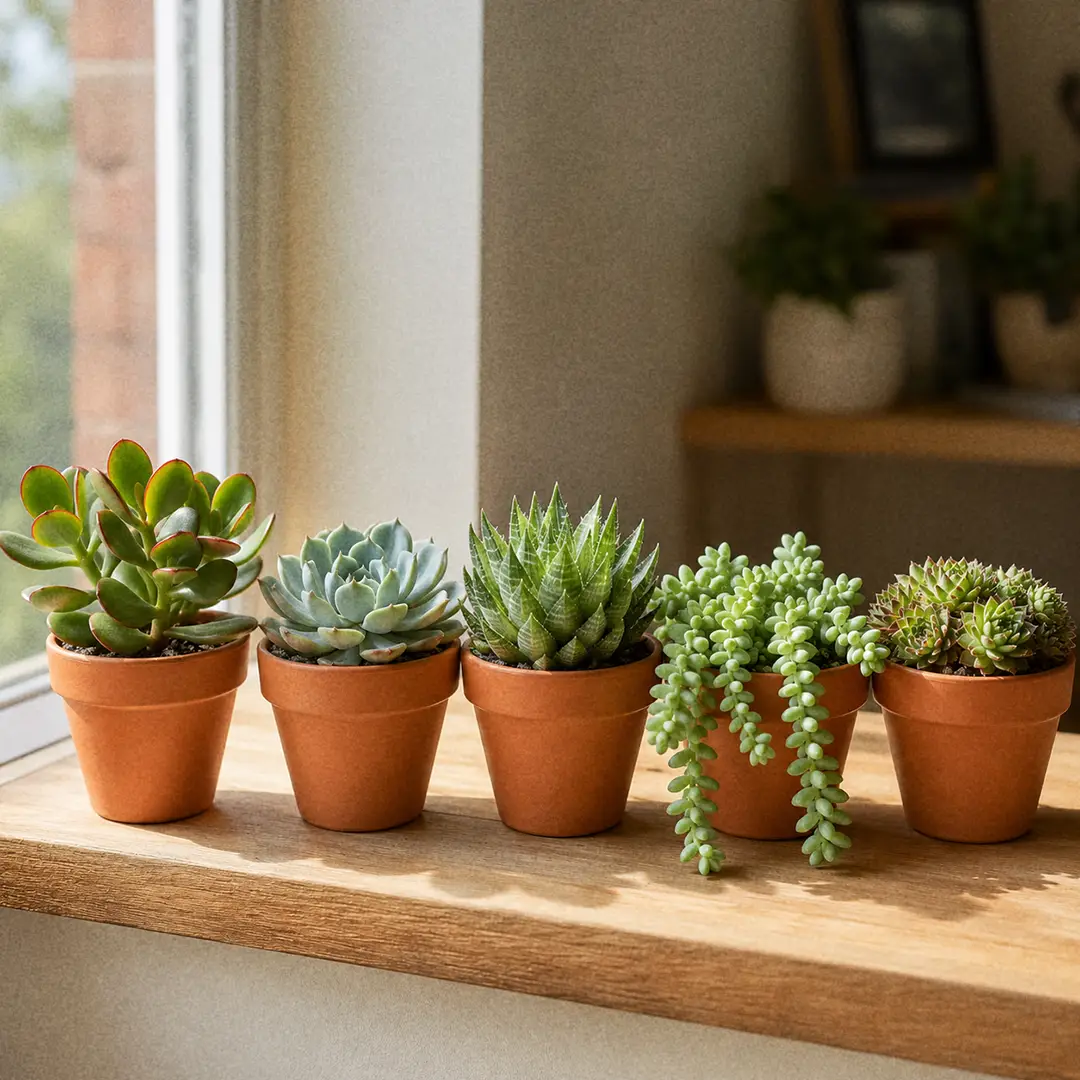
An Echeveria looks best beside plants with a strong silhouette of their own. A Jade Plant or a tree-form Aeonium gives height behind the low rosettes, though the Aeonium wants its water in the cool months rather than the warm ones. A Haworthia drops a pop of translucent green at the front. A trailing Burro's Tail or a silvery String of Coins pours over the edge of a shelf above. A patterned Jelly Bean Plant or a fuzzy Panda Plant adds texture, and a low Elephant Bush fills space between rosettes. Stick to matching clay-toned pots so the plants themselves stay the focus.
🪴 Potting and Repotting Echeveria
When to Repot
An Echeveria is a slow grower and prefers to be snug. Repot every two to three years, or only when the rosette has clearly outgrown the pot and you can see roots curling out of the drainage hole. Spring or early summer is the best window. Avoid repotting in autumn or winter unless you are rescuing a plant from rotted soil.
Choosing a Pot
A small terracotta pot one inch wider than the current one is the gold standard. Clay wicks moisture out of the mix and shortens the drying time, which protects the roots through any winter watering mistakes. The root system is shallow and spreads sideways, so a wider shallow pot is often better than a tall narrow one. Make sure there is at least one drainage hole, no exceptions, and skip any "cute" sealed planter that does not drain.
Step-by-Step Repotting
Let the soil dry completely for a week first; the root ball loosens cleanly when bone dry. Tip the plant onto your palm, gently tease away the spent soil, and inspect the roots for any soft brown patches. Trim those off with sterilised scissors. Settle the rosette into fresh dry gritty mix at the same depth as before, with the lowest leaves resting just above the soil line. Top-dress with a layer of pale gravel or fine pumice if you like, and then leave the plant bone dry for a full week before the first cautious water. That short dry pause is what stops opportunistic root rot from setting in through any cuts you made during the repot.
✂️ Pruning Echeveria
An Echeveria barely needs any pruning. The rosette is the plant, so the few cuts you make are for housekeeping rather than shaping.
When to "Prune"
Pull off shrivelled lower leaves at the base of the rosette as they dry; this is normal and not a sign of trouble. Snip spent flower stems at the base once the last bell drops, because a long dry pink stalk just slowly browns and looks tired. If a rosette has stretched badly from low light, behead the top with a clean sterilised blade and re-root it in dry grit; the cut base will usually push out a cluster of small new rosettes.
How to Prune
Use sterilised, sharp blades. Wipe the blade with rubbing alcohol before and between cuts. For a beheading, slice cleanly through the stem about an inch below the lowest leaves of the rosette and let the cut surface callus in a warm dry shaded spot for at least five days before potting it up.
Pinching for Bushiness
You cannot really "pinch" a rosette succulent into being bushier, but a beheaded plant will multiply on its own through the cut. A mature, well-rested rosette also produces offsets at the base without any help once it has had a proper cool dry winter and a strong sunny summer. Patience and the right conditions do the work that pruning shears cannot.
🌱 How to Propagate Echeveria
This is one of the easiest succulents in the world to multiply, which is good news, because an Echeveria collection is hard to stop at one. Most people end up with three or four within a year of starting.
Best Method
There are three reliable routes: single leaves, offsets at the base, and beheaded rosettes. Single-leaf propagation is the most fun for beginners and the most fool-proof, since a healthy leaf has a roughly 80 percent chance of producing a baby. Offsets give you a flowering plant fastest. Beheading is the rescue route for a stretched plant. See succulent propagation for the broader principles.
Step-by-Step Leaf Propagation
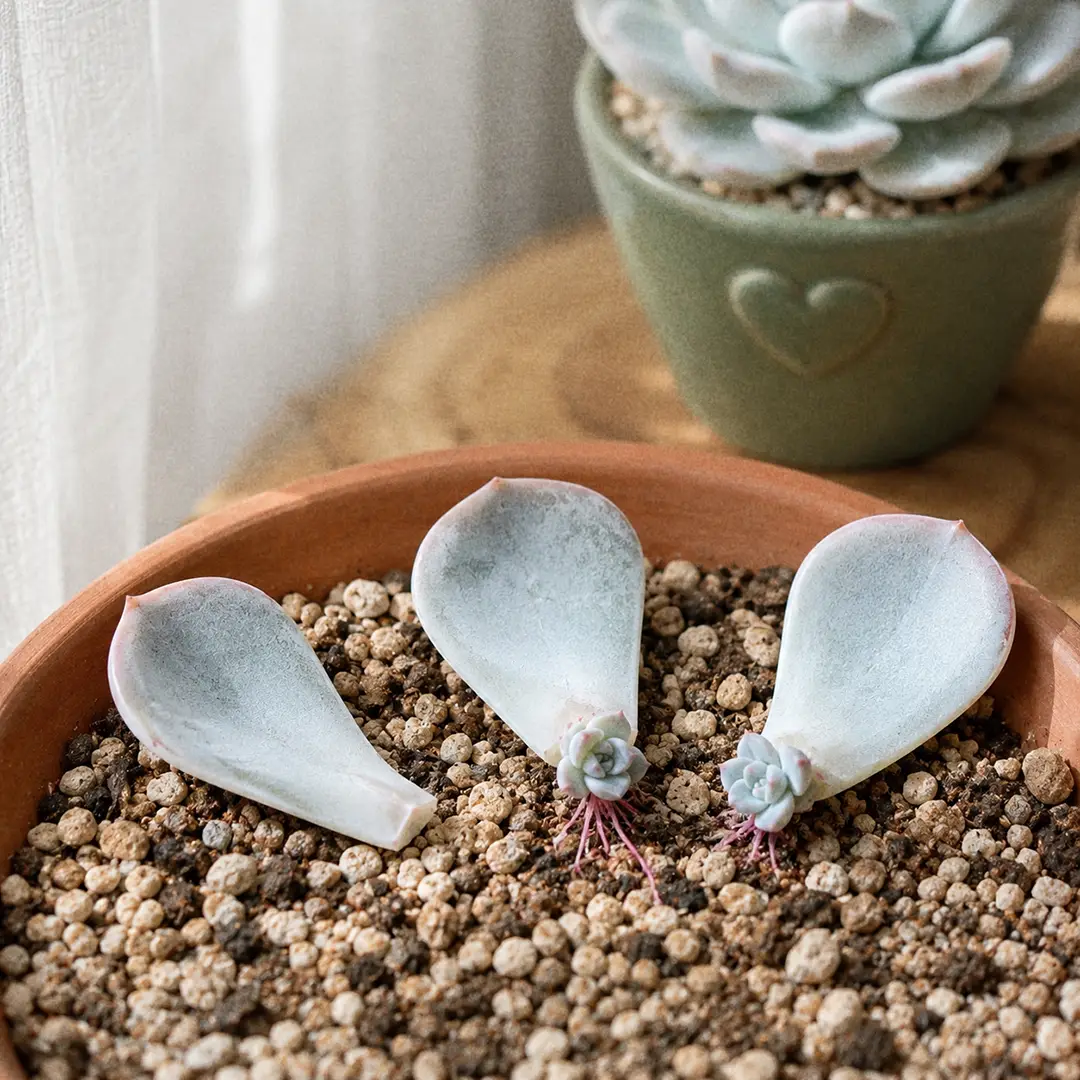
Wait for spring or early summer. Gently rock a plump, healthy lower leaf side to side until it pops off the rosette cleanly, with the small white nub at the base intact. A leaf torn in half will not work. Set the leaves on dry kitchen paper in a shaded warm spot for three to five days until the wound calluses over. Lay the calloused leaves flat on top of dry gritty mix in a shallow tray; do not bury them. Place the tray in bright indirect light, and from the second week onward, mist the soil very lightly once or twice a week. After three to six weeks, a tiny pink root pushes down and a miniature new rosette forms at the calloused end. Once the baby has its own roots and the parent leaf finally shrivels (often three to four months in), gently pot the new rosette into a thimble-sized pot of fresh gritty mix.
Tips for Success
Bright indirect light during rooting is better than full sun, which dries the leaves out before roots form. The single biggest mistake is watering too soon and too heavily; a leaf sitting on wet soil rots in 48 hours. The opposite mistake is bone-dry soil for too long, which lets the leaf shrivel before the baby has rooted. A faint mist once a week is the sweet spot. Offsets at the base of a mature plant come away with a gentle twist and can go straight into a tiny pot, with no callusing step needed if you twist rather than cut.
🐛 Echeveria Pests and Treatment
A healthy Echeveria on a bright sunny windowsill rarely has pest trouble, but the tight folds of the rosette are the perfect hiding spot for soft-bodied insects. A weekly check with a small hand lens, looking straight down into the center of the rosette, is the best prevention.
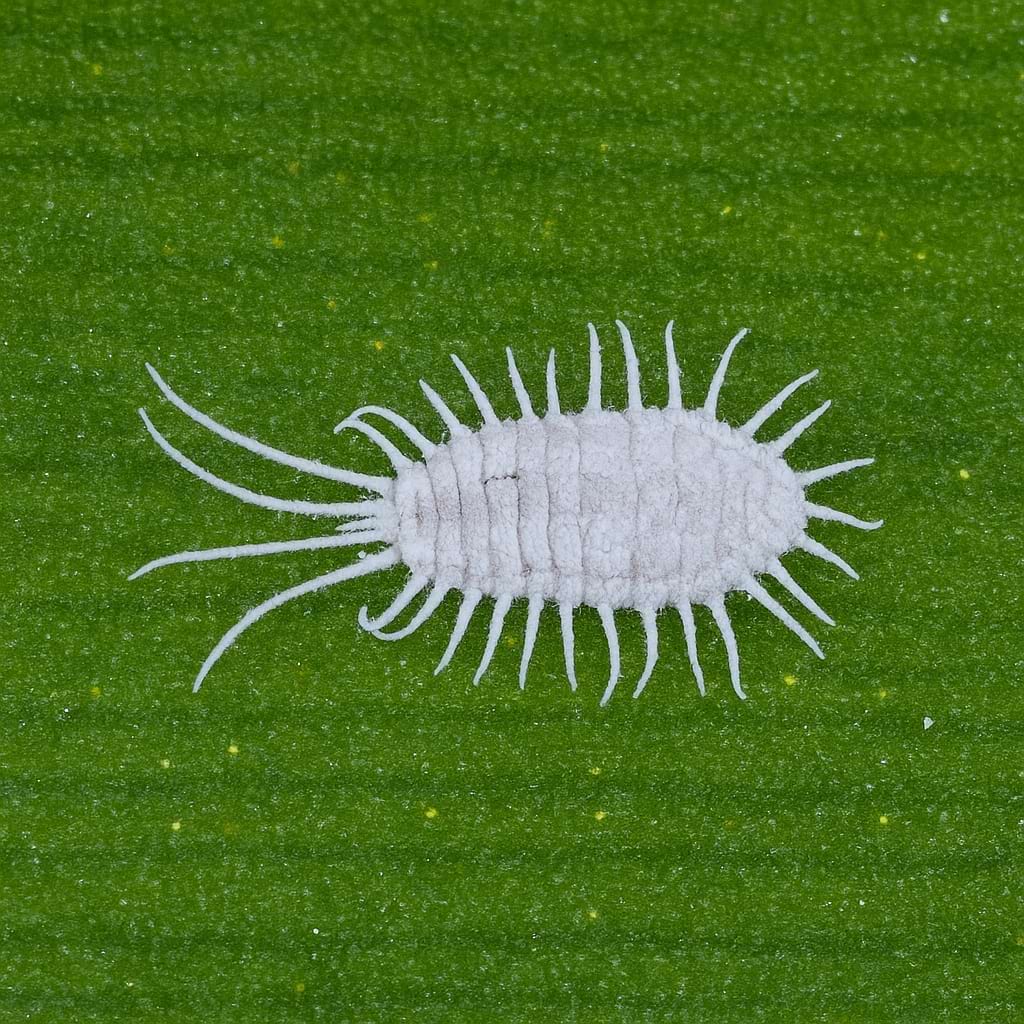
Mealybugs are by far the most common Echeveria pest. They look like tiny tufts of white cotton tucked into the joints between leaves, often right at the center of the rosette where they are easy to miss. Dab each one with a cotton swab dipped in 70 percent isopropyl alcohol, then repeat weekly until none reappear for a month. For a heavier infestation, a granular soil-applied insecticide clears the colony from the inside.
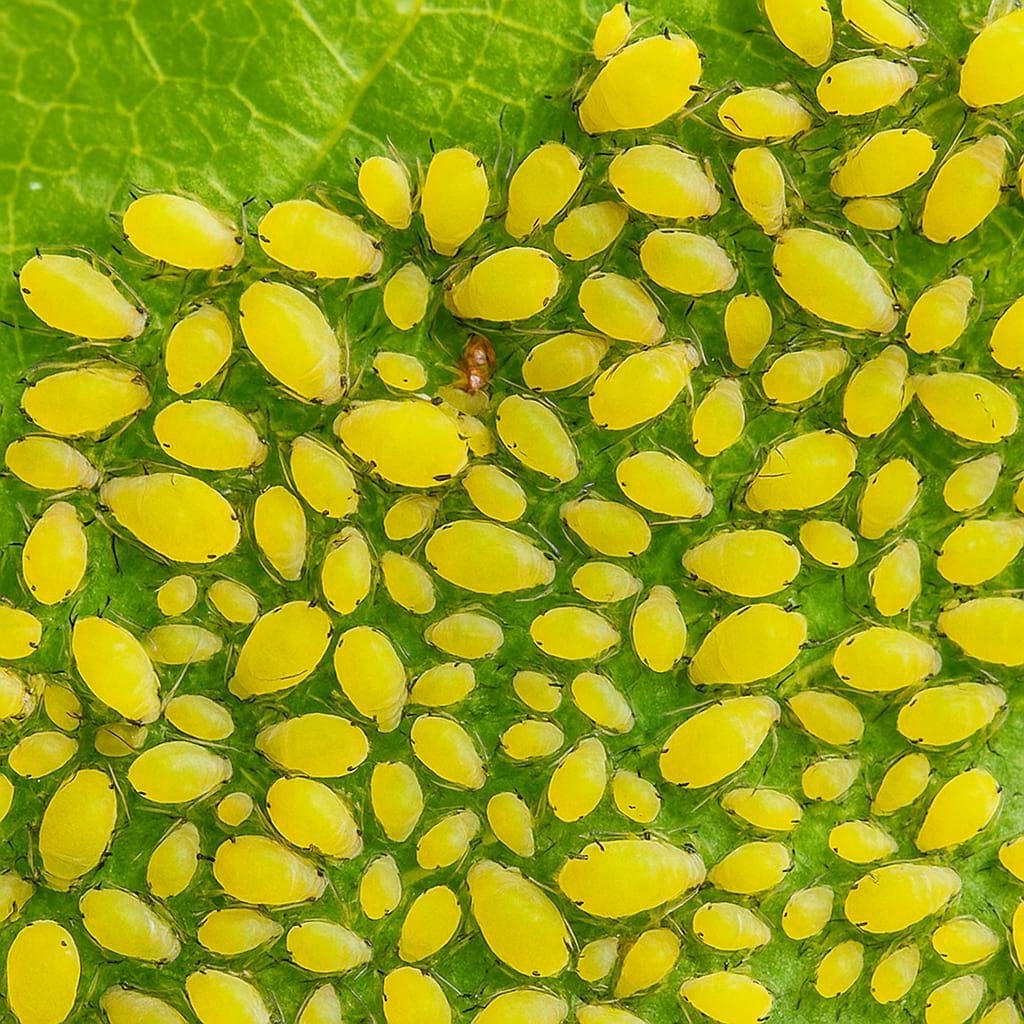
Aphids almost only attack the flower stem, where they cluster on the soft new growth in green or yellow drifts. A sharp blast of water aimed at the stem (and away from the rosette) usually clears them. A second pass with insecticidal soap a few days later finishes the job.
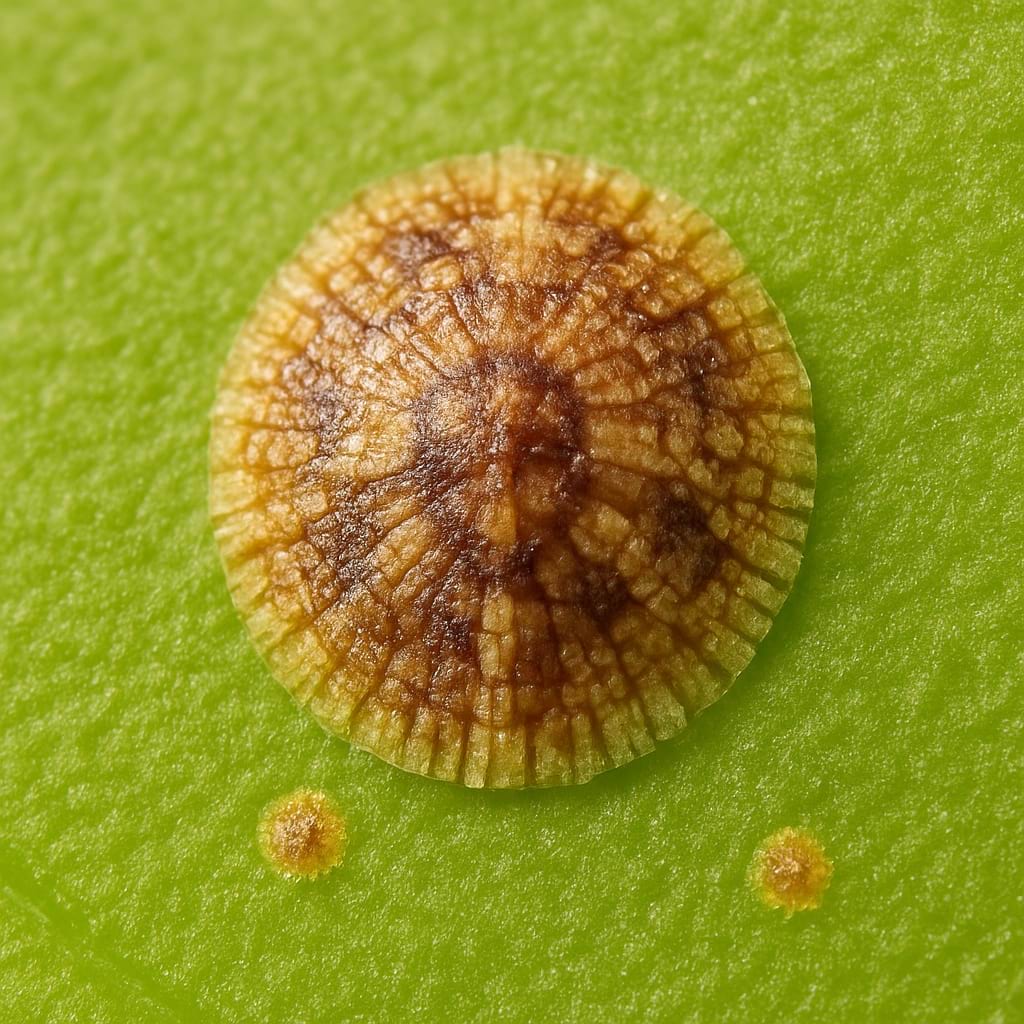
Scale insects are less common but harder to spot, showing up as small immobile brown or grey bumps stuck against the leaf surface. Scrape them off gently with a wooden toothpick and follow up with horticultural oil if more than a handful are present.
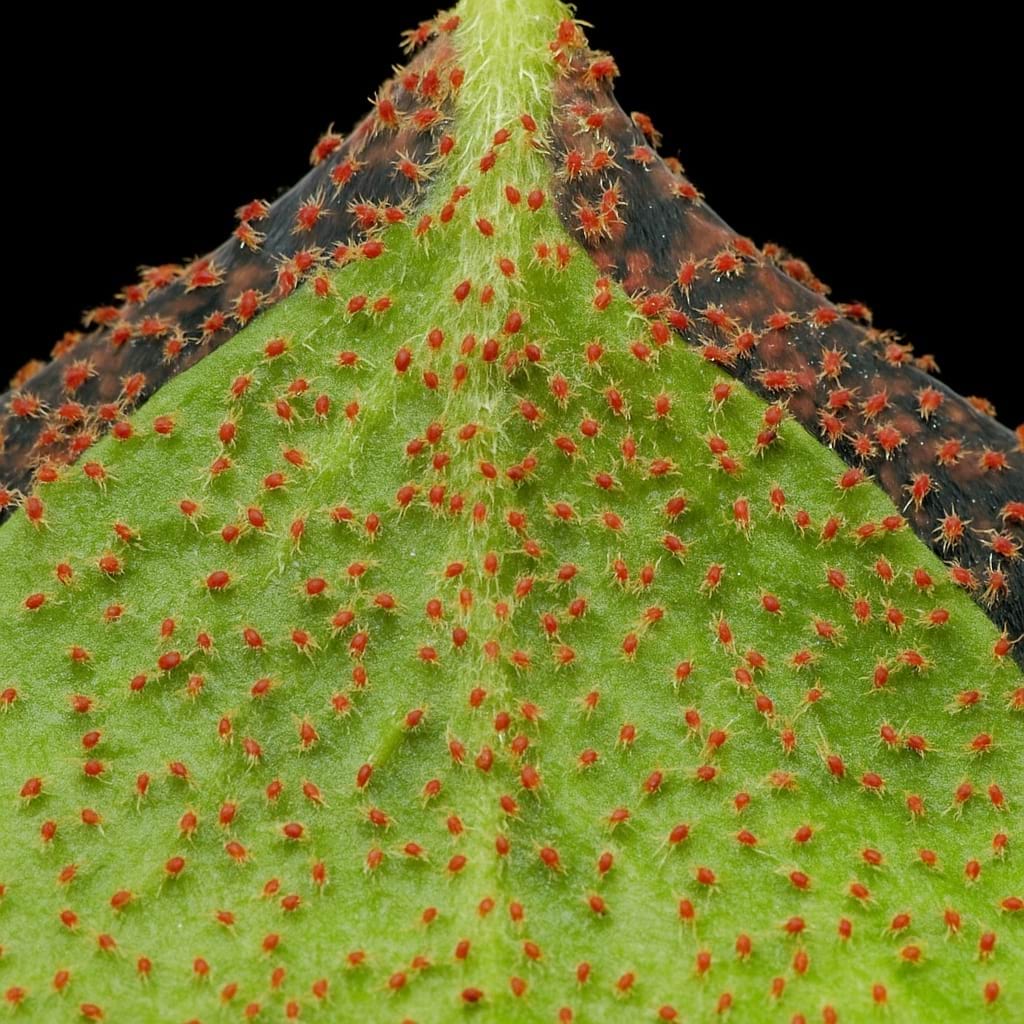
Spider mites appear in hot dry summers as tiny pale dots and fine webbing tucked between the leaves. A rinse with room-temperature water and a single application of insecticidal soap usually clears them.
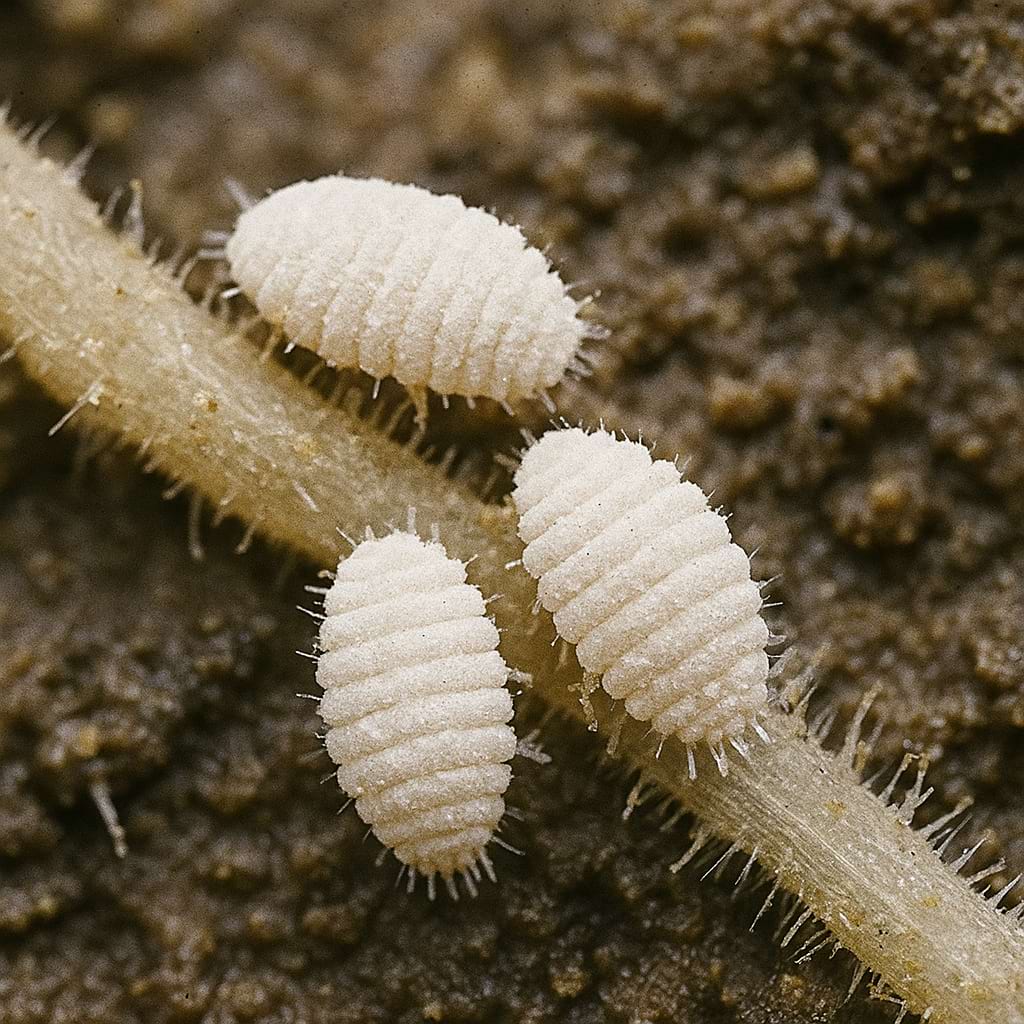
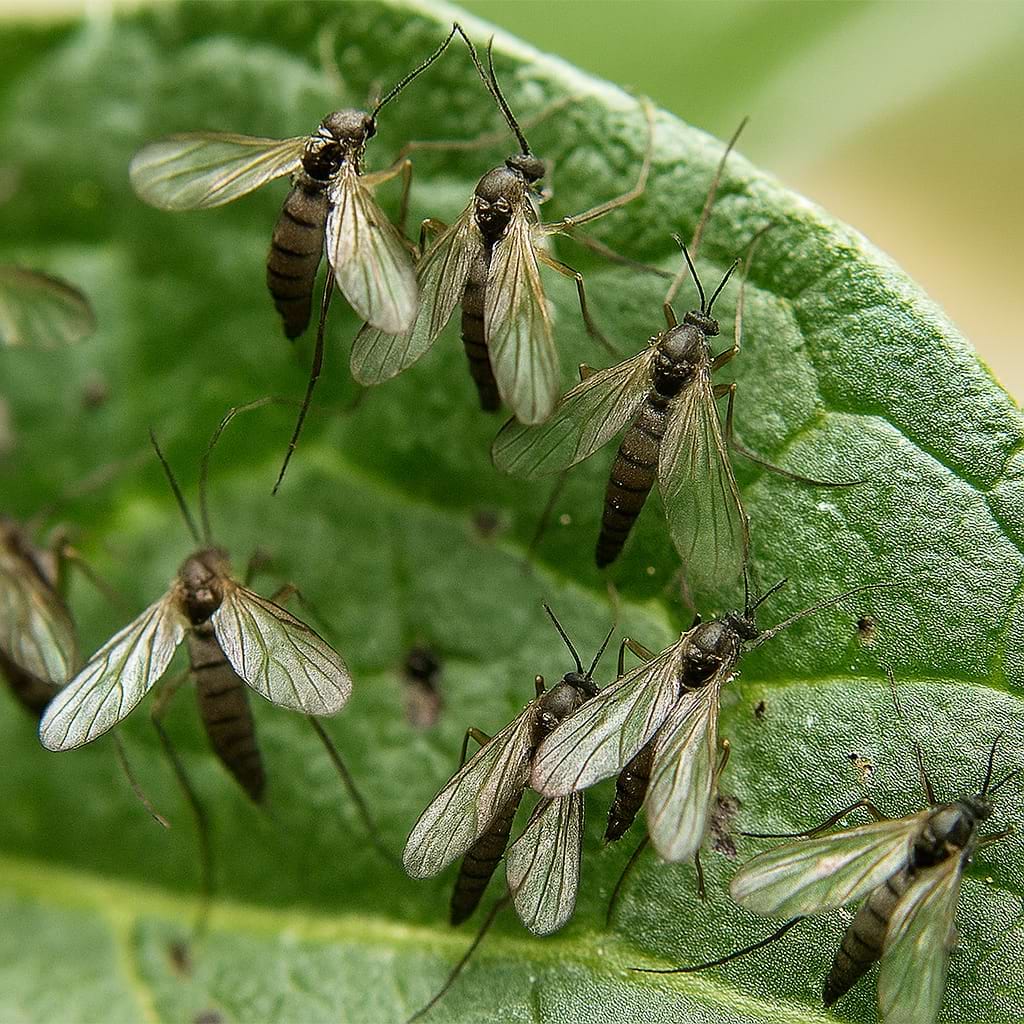
Root mealybugs hide below the soil line and look like flecks of white powder on the outer roots when you tip the plant out. They are the silent killer of long-lived succulent collections. Bare-root the plant, wash the roots clean, and repot in fresh dry gritty mix with a soil-drench insecticide. Fungus gnats only show up if the soil is staying wet too long, which is a watering problem first and a pest problem second; let the pot dry out and the gnats vanish.
🩺 Common Echeveria Problems
Almost every Echeveria problem traces back to one of three causes: too much water, too little light, or a sudden change in conditions. Get those three right and the plant rarely complains.
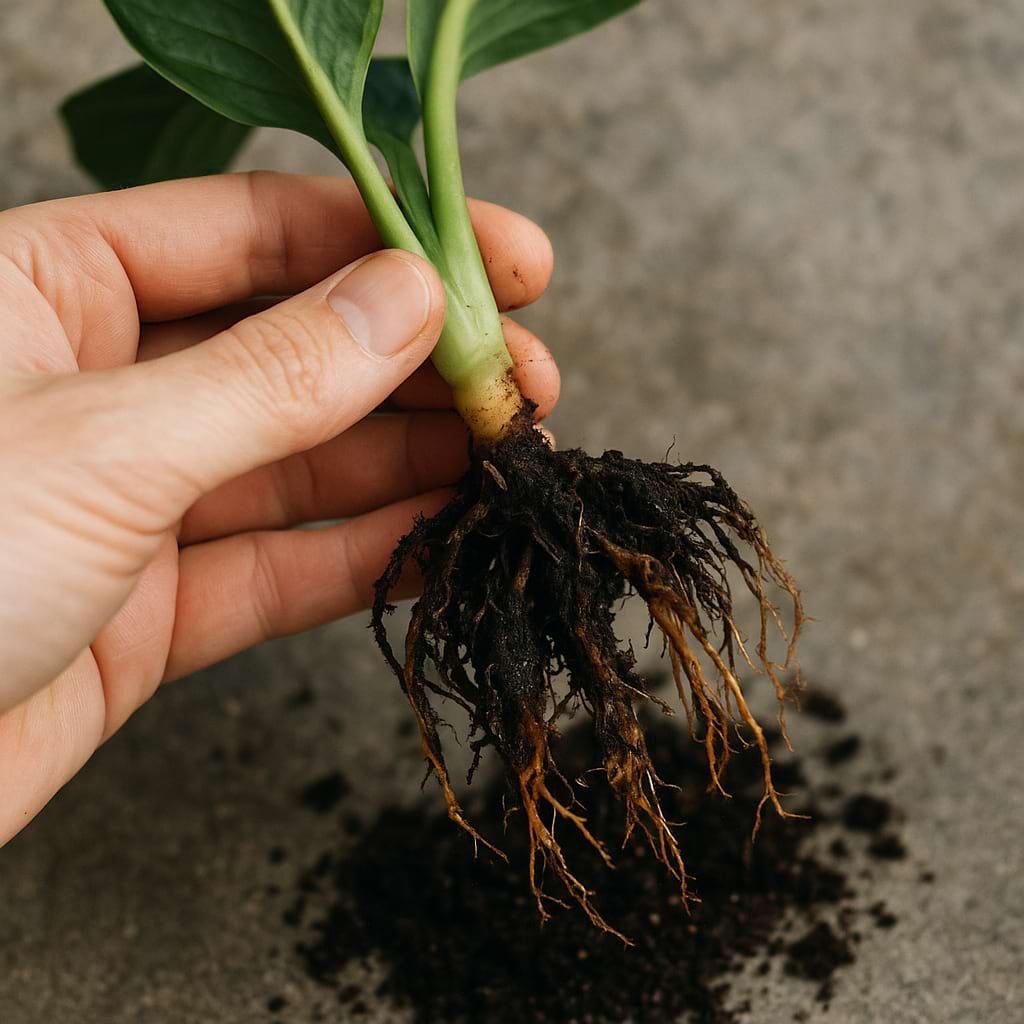
Root rot is the number one killer. The first warning is yellow translucent lower leaves and a faint sour smell at the soil surface. By the time the base of the stem feels soft, the rot has usually climbed past the roots into the rosette. The rescue is to behead a clean section above the damage, callus the cut for a week in a warm dry spot, and re-root the top in fresh dry grit. Catching it early means tipping the plant out, cutting away the brown soft roots, and replanting in fresh dry gritty mix.
Mushy stems usually follow root rot or a cold wet winter. Once the stem has gone soft, you cannot save the existing rosette, but a clean cut above the damage almost always callouses and re-roots into a perfect new plant. Prevention is gritty soil, a terracotta pot, and the discipline to skip a watering whenever you are unsure.
Leggy growth is the most common indoor complaint and a pure light problem. The rosette stretches upward, the stem lengthens, and the leaves space out into a loose tower. The stretched section will not recompress, but a beheaded top almost always settles into a tight new rosette in stronger light.
Sunburn and leaf scorch shows as tan, beige, or papery patches on the leaves facing the strongest sun, usually after a sudden move to a hotter window. The scar does not fade. Prevent it by hardening the plant into stronger light over two weeks.
Leaf drop of healthy upper leaves usually means a watering shock (cold water, drowning, or repeated drying out to the point of crisping). The lower ring of shrivelled leaves dropping off is normal and not a problem at all.
Yellowing of the upper rosette signals chronic overwatering or a salt-clogged pot. Flush the soil with plain water, ease back on feeding, and give the plant longer between waters.
Stunted growth on a plant that should be filling out is almost always a heavy, peaty soil that stays wet too long, or a pot far too large for the current root mass.
Failure to bloom on a mature rosette is almost always a missed winter rest. See the blooming section above.

🖼️ Echeveria Display and Styling Ideas
The Echeveria looks best when the rosette shape gets to do the talking. A simple pot, plenty of light, and a neutral background turn a $5 plant into a magazine shot.
Solo Setups
A single mature rosette in a small terracotta or matte stoneware pot, with the lowest leaves spilling just past the rim, is the classic look. Top-dress the soil with pale gravel, white pumice, or fine sand to reflect light back up onto the chalky leaves. Place it on a windowsill, a small wooden cube, or a slim bookshelf where the rosette reads from a few feet away.
Grouped Arrangements
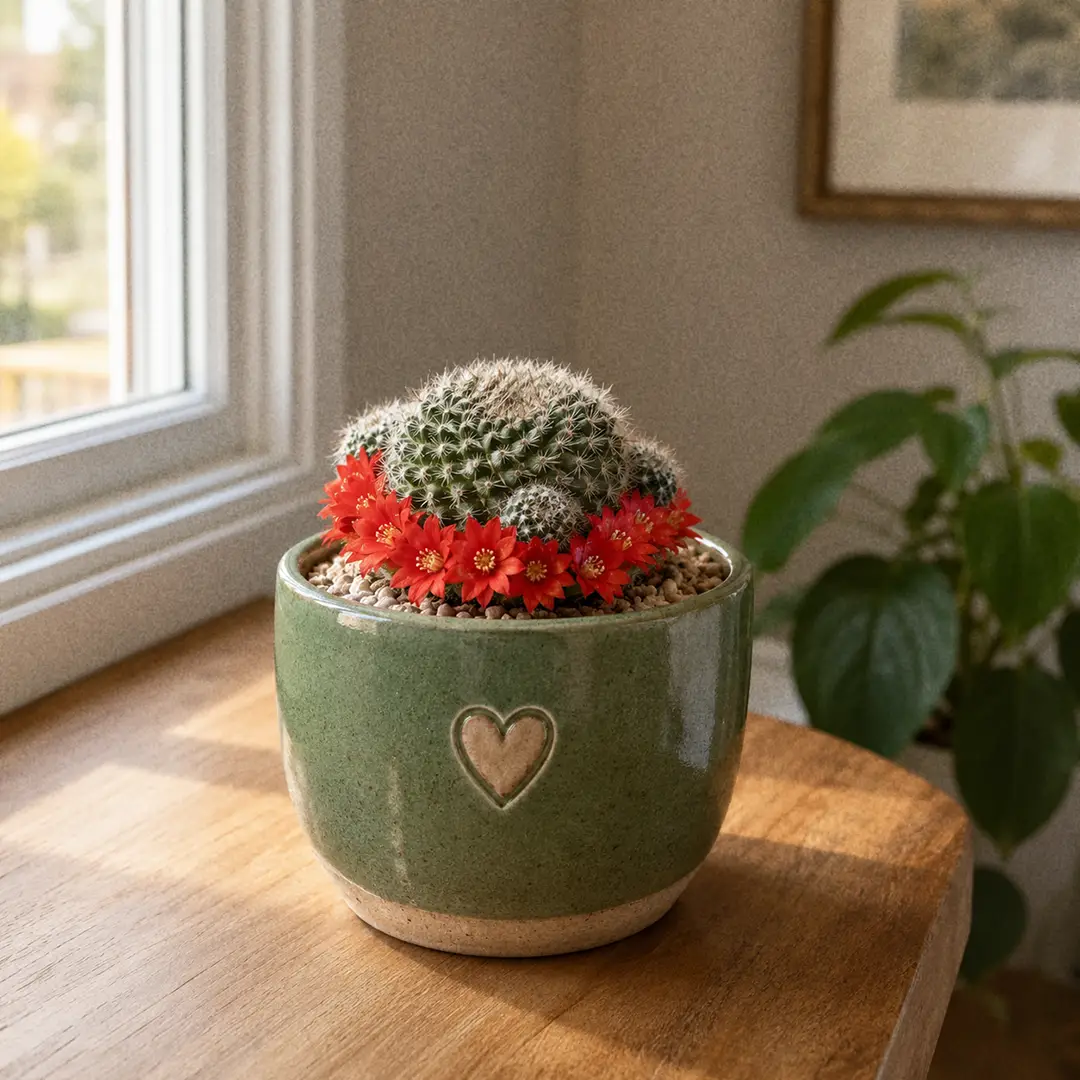
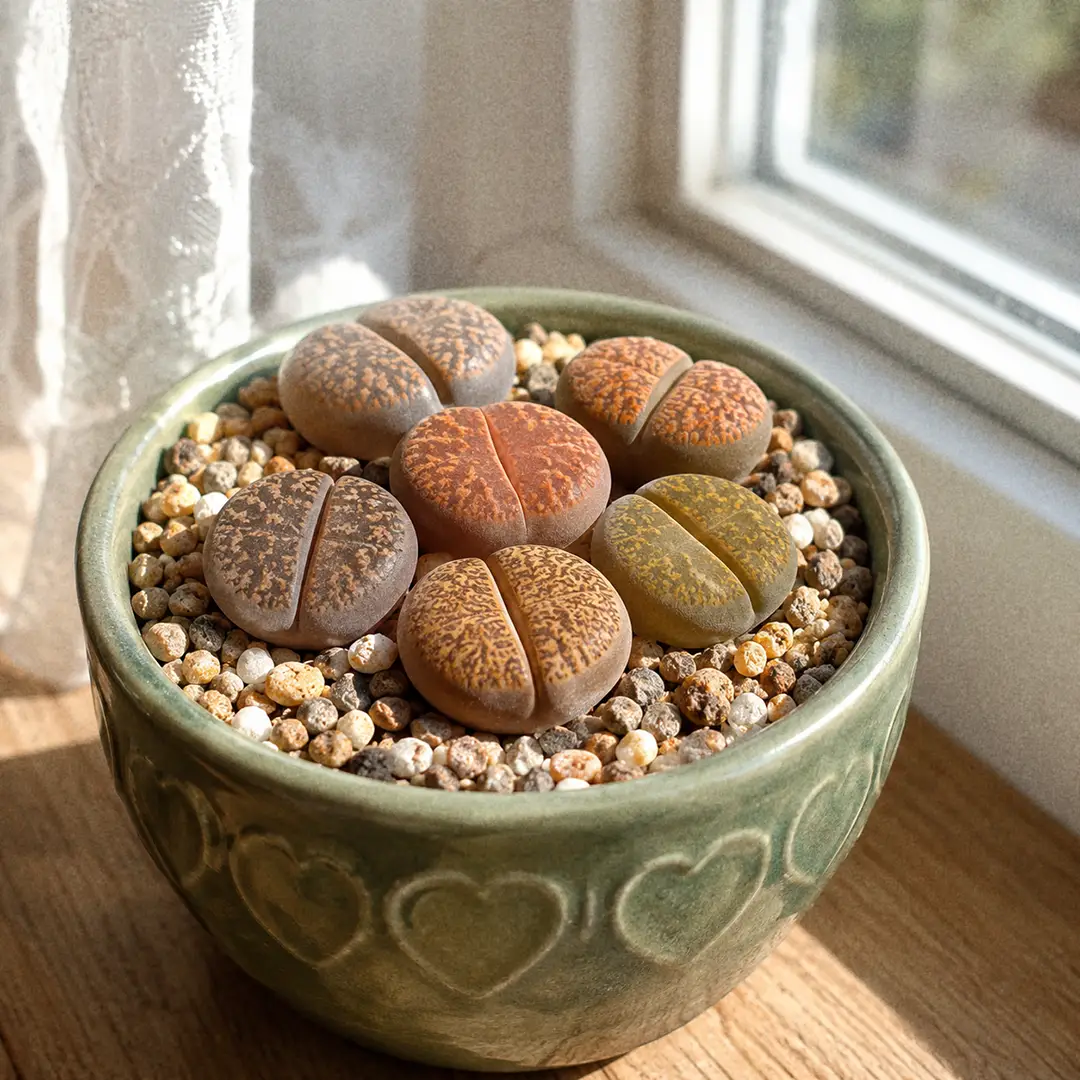
A trio of Echeverias in three matching pots makes a tidy row on a windowsill or a long mantel. For more variety, build a low gravel dish garden with several rosette succulents of different scales and colors: a green-and-pink Jelly Bean Plant trailing across the surface, a Haworthia at the back for a translucent dark green note, and an Elephant Bush for height. On a hotter, sunnier sill, a small bowl of Lithops topped with real pebbles adds a spot-the-living-stone party trick to the arrangement. For a stronger desert silhouette, set the Echeveria bowl alongside a Bishop's Cap Cactus or a single columnar Old Man Cactus to anchor the group. Stick to clay-toned pots and a single gravel color so the rosettes themselves stay the focus.
Where Not to Put It
Skip steamy bathrooms, dark hallways, sealed glass terrariums, and any spot more than four feet from a sunny window. A closed terrarium is a death trap, because still humid air against the rosette invites center rot within weeks. Anywhere a leaky window drips in winter or a humidifier mists nearby is also off limits.
🌟 Echeveria Pro Care Tips
- Lean dry, always. If you are not sure whether to water, wait three more days.
- Use a terracotta pot the first year you grow this plant; the clay wicks moisture out and gives you a generous safety margin.
- Top-dress with a layer of pale gravel or pumice; it reflects light back under the rosette and stops splash water hitting the lower leaves.
- Never wipe the chalky bloom off the leaves. The farina is the plant's sunscreen, and it does not grow back on a leaf that has already lost it.
- A cheap min-max thermometer near the plant tells you whether your winter rest spot really hits the 45 to 55°F window or just feels cold.
- Quarter-turn the pot once a week so the rosette grows evenly rather than leaning toward the light.
- Quarantine any new succulent for a month before placing it on a shelf with the rest of your collection, mostly because of root mealybugs.
- Save every plump leaf that falls off. Each one is an 80 percent chance at a free plant.
- Mark the date of every watering on a small calendar near the plant for the first year. The pattern teaches you the real drying rate in your home faster than any general rule.
- Take the plant outside for the summer if you have a sheltered balcony or porch. The light and the cool overnight air thicken the rosette and intensify the pink edge.
❓ Frequently Asked Questions
Why is my Echeveria stretching upward?
A stretched Echeveria is almost always a light problem. The plant is reaching for stronger sun, and the rosette will keep elongating until you fix the placement. Move the plant within a foot of a south or west window, or set up a grow light six to eight inches above the rosette. The stretched section does not recompress, but a beheaded top will form a tight new rosette in better light.
How often should I water an Echeveria indoors?
Roughly every 10 to 14 days in spring and summer for a 4 inch terracotta pot in a sunny window, and only every four to six weeks in winter (or not at all if you are giving the plant a cold rest). Always check the soil first; the schedule is a guide, not a rule.
Why are my Echeveria's lower leaves dying?
Lower leaves shrivelling and drying out is normal as the rosette grows new leaves at the center. As long as the dying leaves are crisp and dry, not soft and translucent, the plant is fine. Soft, mushy, yellowing lower leaves are a different problem and usually mean overwatering; let the soil dry out completely and check the base for root rot.
Is the Echeveria safe for cats and dogs?
Yes. The whole genus Echeveria is listed as non-toxic to cats, dogs, and humans by the ASPCA. A chewed leaf might cause a mild upset stomach simply because pets are not built to eat fleshy plant tissue, but the plant itself contains no toxic compounds.
Why does my Echeveria look chalky white?
That chalky white coat is called farina, and it is a layer of natural epicuticular wax the plant produces to reflect strong sun and seal in moisture. It is a sign of a healthy, happy plant grown in good light. Wiping the leaves removes the wax permanently from that leaf, so leave it alone.
How do I get my Echeveria to flower?
Give it three things: strong direct sun from early spring through summer, a mature rosette of at least 3 inches across, and a cool dry winter rest at 45 to 55°F (7 to 13°C) for eight to ten weeks. Most Echeverias that fail to flower indoors are kept warm and watered year-round; one proper rest cycle usually fixes that.
Can I grow an Echeveria outdoors?
In US hardiness zones 9 to 11 and equivalent climates, yes, as long as the plant is sheltered from heavy rain and given fast-draining gritty soil. Everywhere else, grow it as a houseplant on a sunny windowsill or move it outdoors for the summer only. A mature plant tolerates brief drops to 25°F (-4°C) outdoors if completely dry at the root, but indoor plants should never see below 40°F (4°C).
What is the difference between Echeveria and Sempervivum (true Hens and Chicks)?
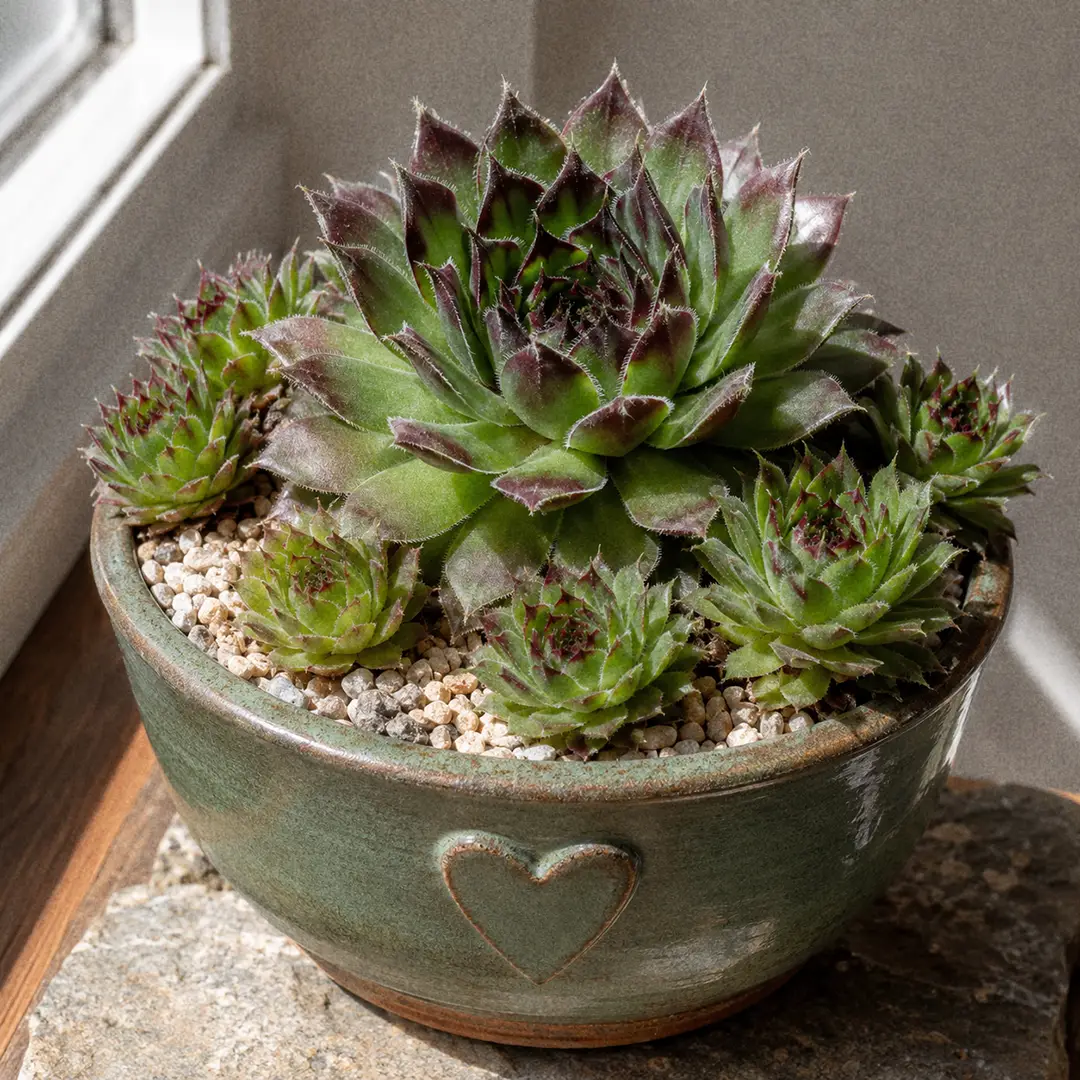
Both are rosette succulents that produce offsets, which is why people use "Hens and Chicks" loosely for both. The real difference is climate: Sempervivum is a cold-hardy alpine plant that wants frost in winter and sulks in a warm room. Echeveria is a Mexican plant that cannot survive a real freeze and is happiest as a houseplant or a sheltered patio container. If your "Hens and Chicks" came from a succulent shop and has a chalky bloom on the leaves, it is almost certainly an Echeveria.
How big does an Echeveria elegans get?
A single rosette stays small, usually 4 to 6 inches across and not much taller than 3 inches. Over the years, a happy plant produces offsets at the base and spreads into a low mound 8 to 12 inches across with multiple connected rosettes. Compare against a slow tree-form like the Jade Plant for scale; the Echeveria stays a low cushion forever.
Can I propagate an Echeveria from a broken leaf?
Only if the leaf came off cleanly with the small white nub at the base intact. A leaf snapped in half partway up will simply dry out and never produce a baby. Twist a healthy lower leaf side to side until it pops off cleanly, callus the wound for a few days, then lay the leaf flat on dry gritty soil in bright indirect light and mist lightly once a week.
ℹ️ Echeveria Info
Care and Maintenance
🪴 Soil Type and pH: Gritty, fast-draining cactus and succulent mix with added pumice, perlite, or coarse sand; neutral to slightly acidic pH.
💧 Humidity and Misting: Comfortable in low household humidity around 30 to 45 percent; dislikes damp, still air.
✂️ Pruning: Almost none; pull off shrivelled lower leaves and spent flower stems at the base.
🧼 Cleaning: Leave the chalky white farina alone; never wipe the leaves with a damp cloth, because the wax bloom is the plant's natural sunscreen and water repellent.
🌱 Repotting: Bump up one pot size in spring every 2 to 3 years, or whenever the rosette has clearly outgrown its container.
🔄 Repotting Frequency: Every 2-3 years
❄️ Seasonal Changes in Care: Active growth in spring and summer; cool dry winter rest sets the next spring's flower spike.
Growing Characteristics
💥 Growth Speed: Slow
🔄 Life Cycle: Perennial
💥 Bloom Time: Late spring to early summer on mature rosettes, often a second smaller flush in autumn
🌡️ Hardiness Zones: 9-11 outdoors; grown as a houseplant in all other zones
🗺️ Native Area: Central Mexico, mostly Hidalgo state, on shaded limestone cliffs at around 5,500 to 9,000 feet
🚘 Hibernation: Cool dry winter rest at 45 to 55°F (7 to 13°C) for eight to ten weeks for best flowering
Propagation and Health
📍 Suitable Locations: Sunny south or west windowsills, bright kitchens, sunrooms, plant shelves under strong grow lights, sheltered summer balconies
🪴 Propagation Methods: Very easy from single leaves, beheaded rosettes, and natural offsets at the base.
🐛 Common Pests: Mealybugs, Aphids, Scale Insects, Spider Mites, Root Mealybugs, Fungus Gnats
🦠 Possible Diseases: Root rot, mushy stems, fungal spotting from water sitting on the rosette
Plant Details
🌿 Plant Type: Small evergreen rosette succulent
🍃 Foliage Type: Tight stemless rosette of plump spoon-shaped leaves with a translucent thin point at the tip, each leaf coated in a chalky bluish-white epicuticular wax (farina)
🎨 Color of Leaves: Pale silvery blue-green with pinkish edges in strong sun
🌸 Flower Color: Coral pink to bright red urn-shaped bells with yellow tips, on arching pink stems
🌼 Blooming: Yes; very reliable on mature plants, especially after a cool dry winter rest
🍽️ Edibility: Not eaten; non-toxic but not a food plant
📏 Mature Size: 3-4 inches tall on a single rosette; flower stems reach 8-12 inches in bloom
Additional Info
🌻 General Benefits: Compact, beginner-friendly, pet-safe, reliable indoor bloomer, almost foolproof from a single leaf
💊 Medical Properties: None of significance for indoor growers
🧿 Feng Shui: A soft pale rosette for a sunny corner; the chalky bloom reads as quiet light and the pink flower stem as gentle, low-key joy
⭐ Zodiac Sign Compatibility: Taurus
🌈 Symbolism or Folklore: Patience, quiet beauty, and gentle persistence
📝 Interesting Facts: Echeveria elegans was first described by Joseph Nelson Rose in 1905 from plants collected on shaded limestone cliffs in the Mexican state of Hidalgo. The chalky white coat on each leaf, called farina, is a layer of natural epicuticular wax that reflects strong mountain sun and helps the plant hold onto water in dry mineral soil. The plant is a parent of dozens of popular hybrids, including Echeveria 'Perle von Nürnberg' and Echeveria 'Hercules', which inherit its tidy rosette habit and pink-coral bloom. The genus Echeveria takes its name from the 18th-century Mexican botanical artist Atanasio Echeverría y Godoy, who drew plants for the Real Expedición Botánica to New Spain.
Buying and Usage
🛒 What to Look for When Buying: Pick a plant with a tight compact rosette, an even chalky-blue color, and a stem so short it looks like the rosette is sitting directly on the soil. Avoid stretched plants where you can see bare stem between the leaves, leaves with a wiped-clean shiny look (the farina is gone), or any rosette with mushy lower leaves or a soft base.
🪴 Other Uses: Wedding bouquets and cake toppers, succulent dish gardens, bonsai-style mineral arrangements, beginner leaf propagation projects, gifts and party favors
Decoration and Styling
🖼️ Display Ideas: Solo in a small terracotta or stoneware pot, a trio of rosettes in matching pots for a tidy row, a low gravel bowl with mixed pet-safe rosettes, or a mineral garden with cacti and Haworthias
🧵 Styling Tips: Keep the pot one inch wider than the rosette so the leaves spill just past the rim, and top-dress with pale gravel or fine pumice to reflect light back up under the bluish-white coat.
🪴 See also 🪴
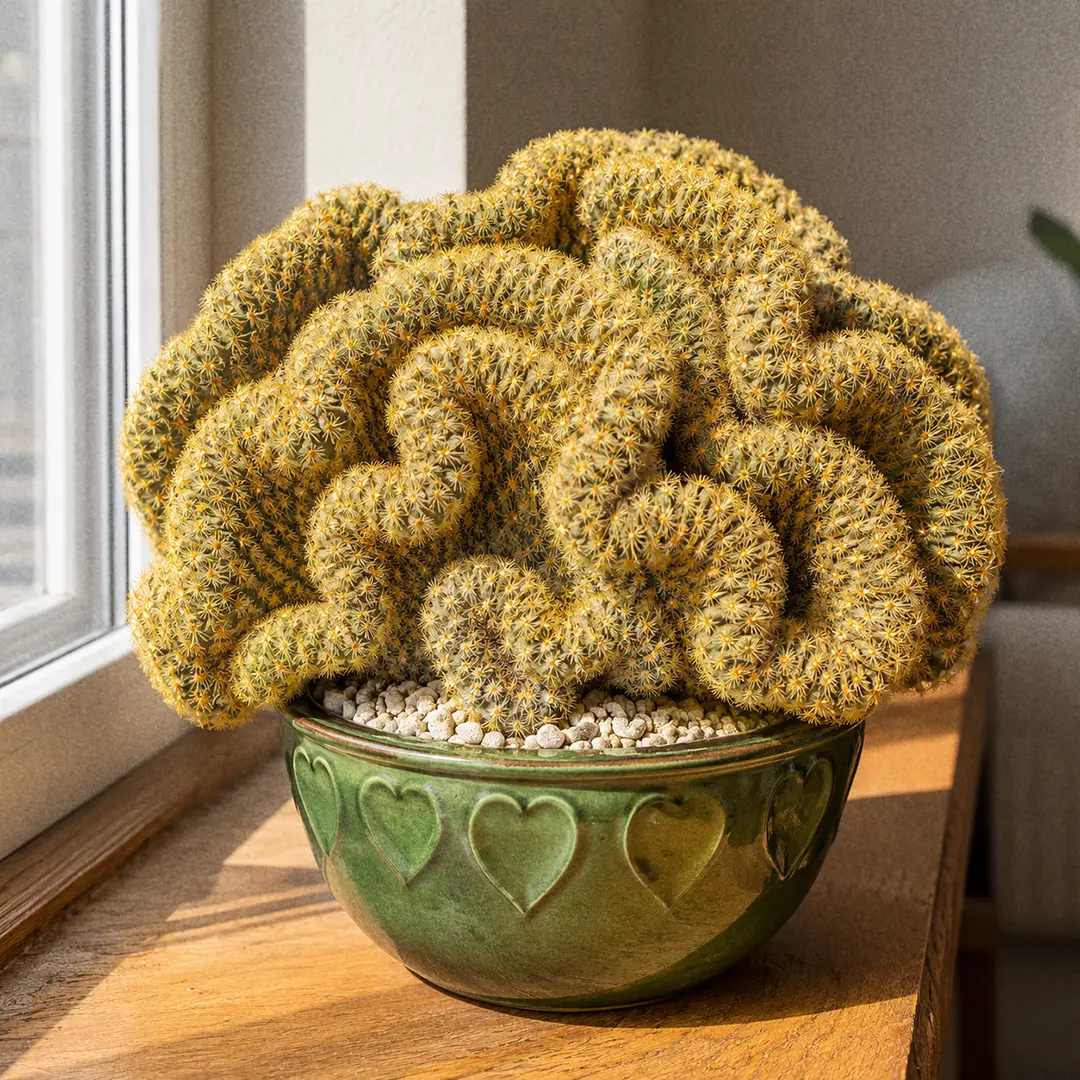
Complete Guide to Crested Brain Cactus Care and Growth
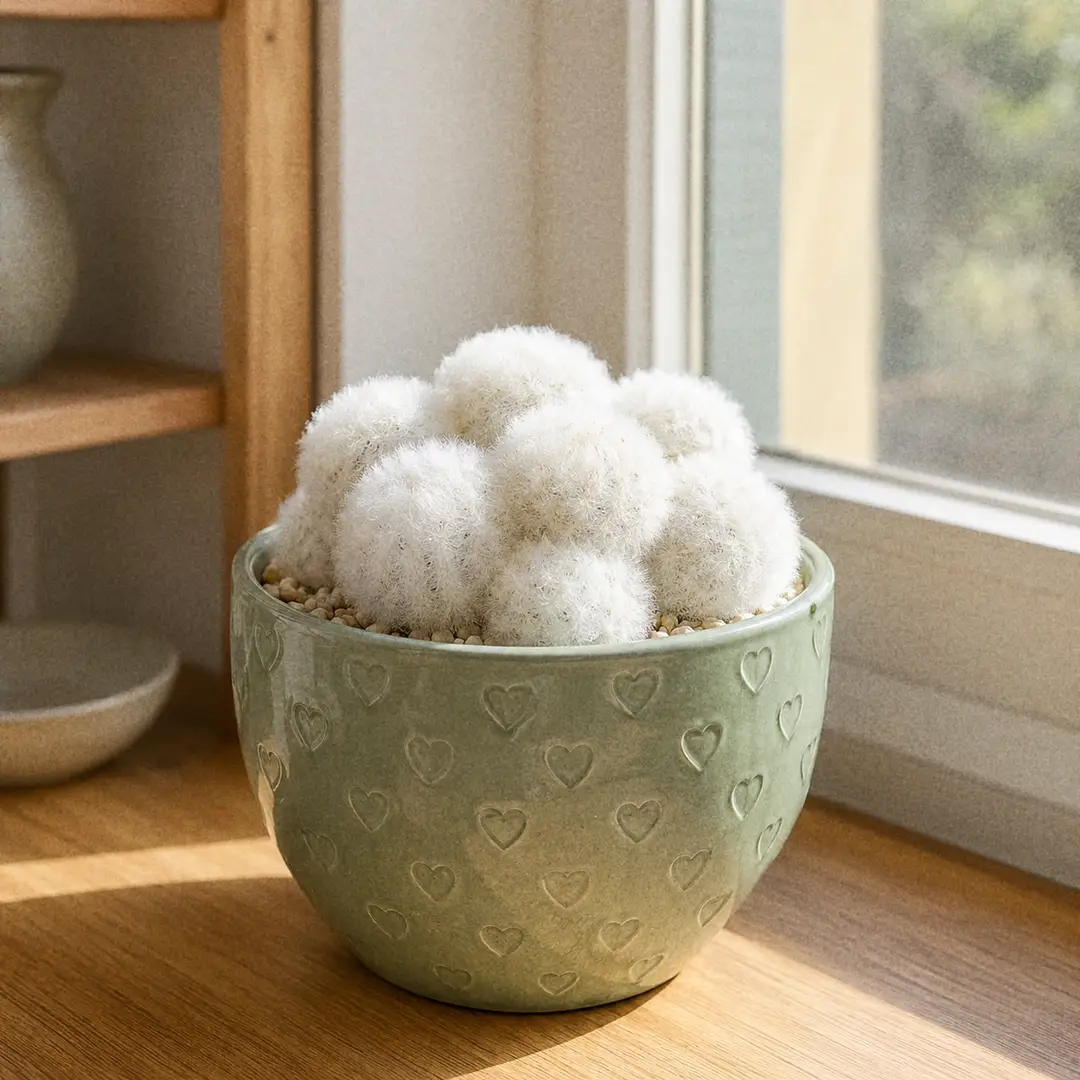
Complete Guide to Feather Cactus Care and Growth
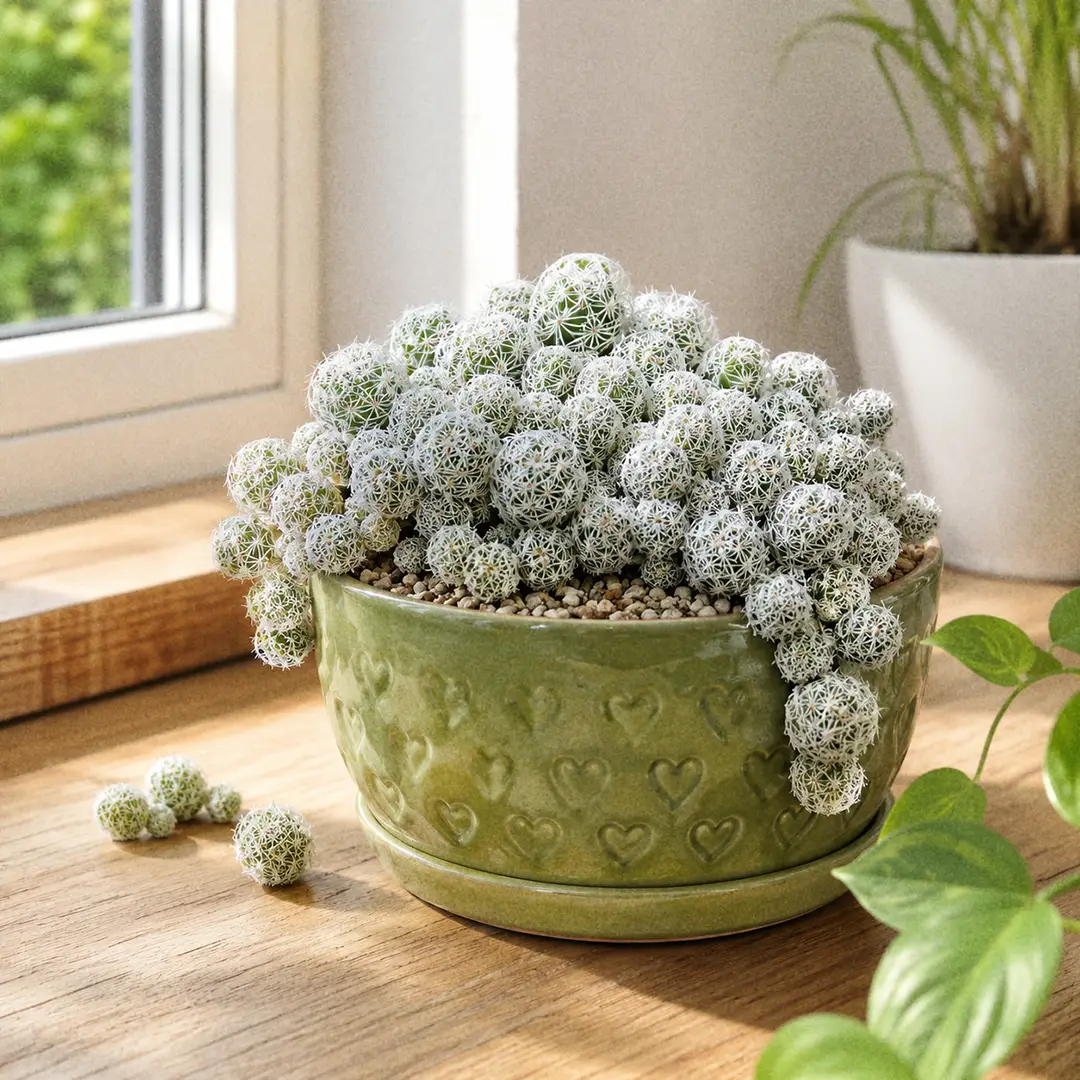
Complete Guide to Snowball Cactus Care and Growth
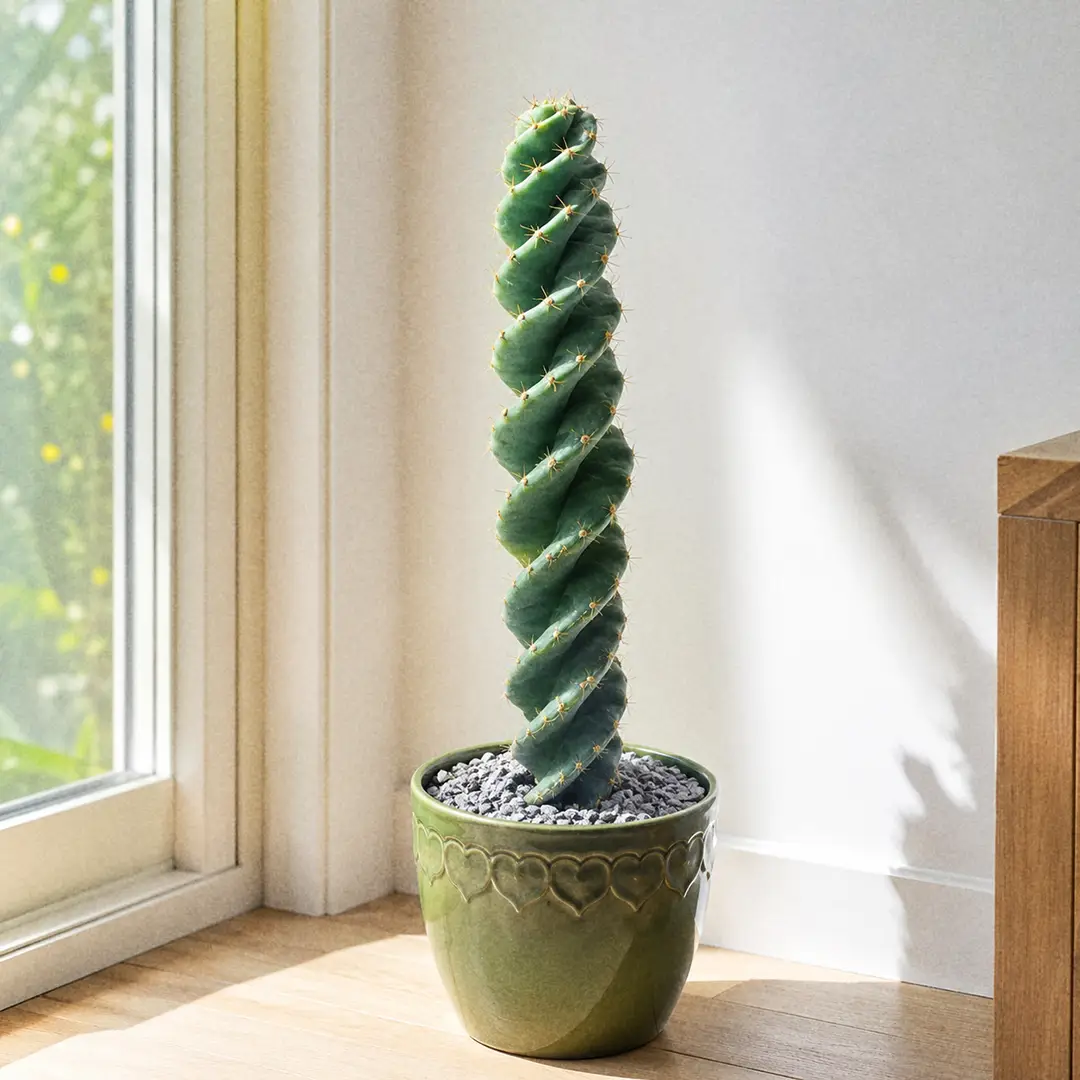
Complete Guide to Spiral Cactus Care and Growth
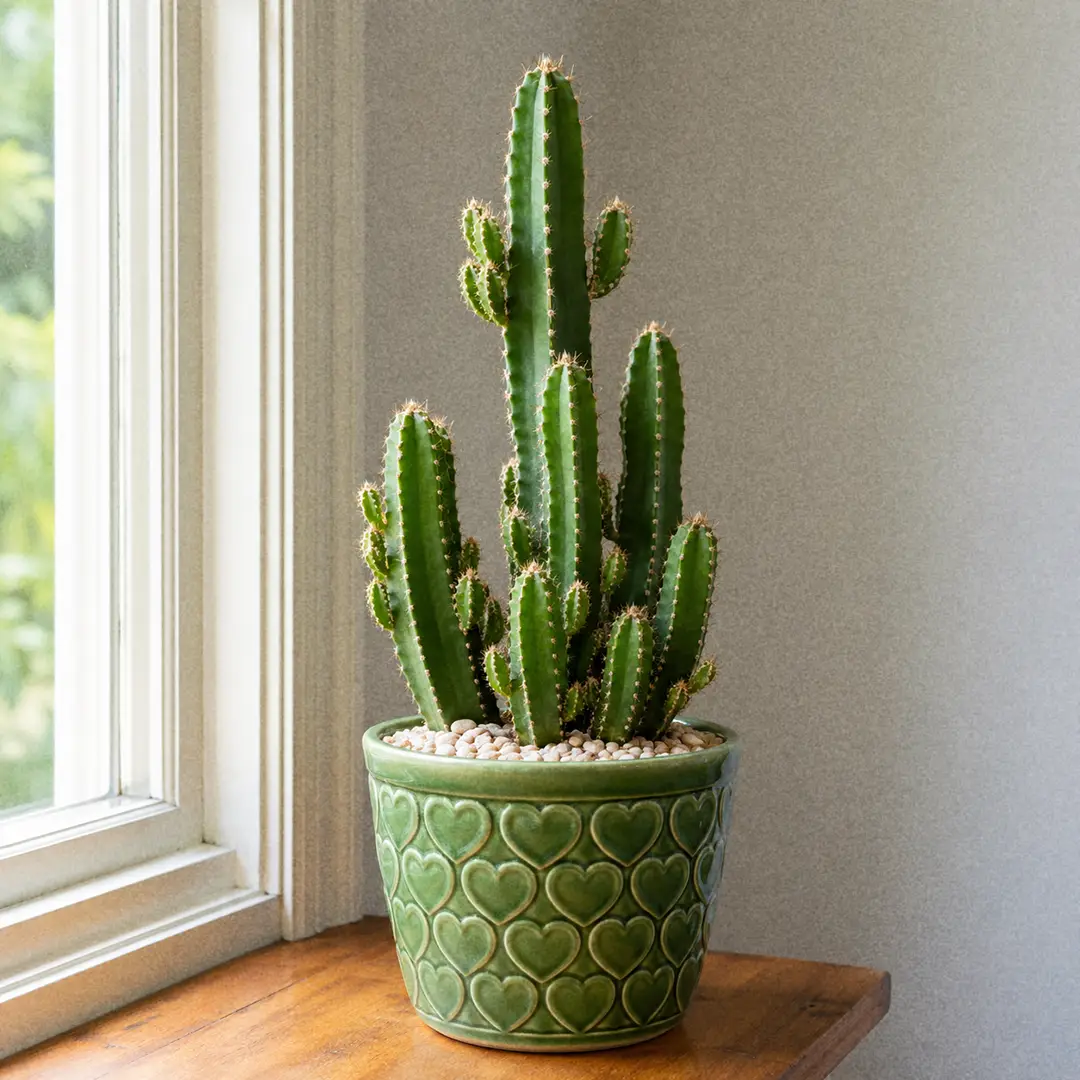
Complete Guide to Fairy Castle Cactus Care and Growth
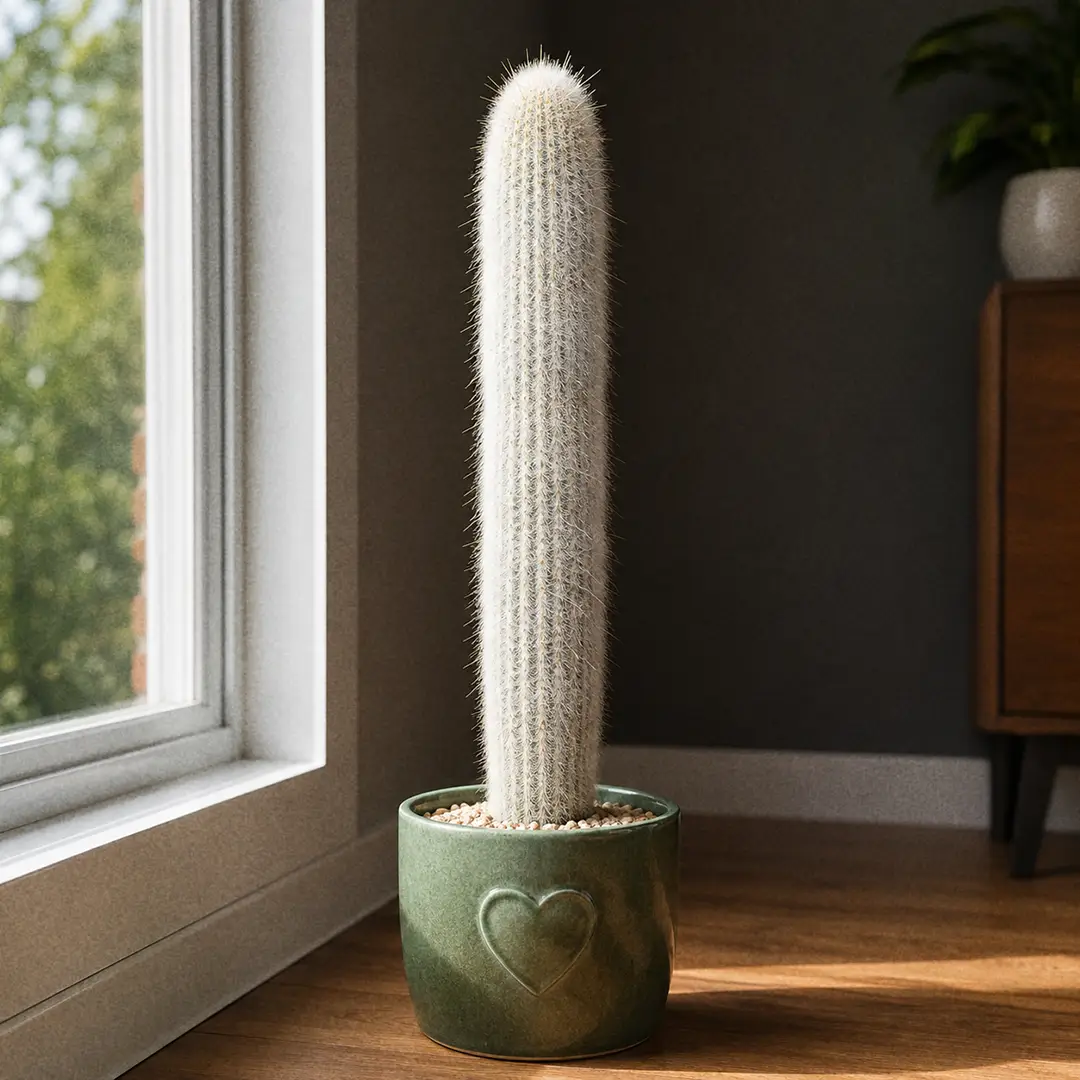
Complete Guide to Silver Torch Cactus Care and Growth
Complete Guide to Crown Cactus Care and Growth
How to Propagate Succulents from Leaves & Offsets
Succulent Care Indoors: How to Stop Killing Jade and Echeveria
Complete Guide to Lithops Care and Growth (Living Stones)
Complete Guide To Aloe Vera Care and Growth
Complete Guide to Burro's Tail Care and Growth
Complete Guide to Crown of Thorns Care and Growth
Complete Guide to Flaming Katy Care and Growth
Complete Guide to Jade Plant Care and Growth
Complete Guide to Sedum Adolphii Care and Growth
Complete Guide to Aeonium Care and Growth
Complete Guide to Queen of the Night Care and Growth
Complete Guide to Domino Cactus Care and Growth
Complete Guide to Easter Lily Cactus Care and Growth
Complete Guide to Peanut Cactus Care and Growth
Complete Guide to Rat Tail Cactus Care and Growth
Complete Guide to Ghost Plant Care and Growth
Complete Guide to Hens and Chicks Care and Growth
Complete Guide to String of Coins Care and Growth
Complete Guide to Silver Squill Care and Growth
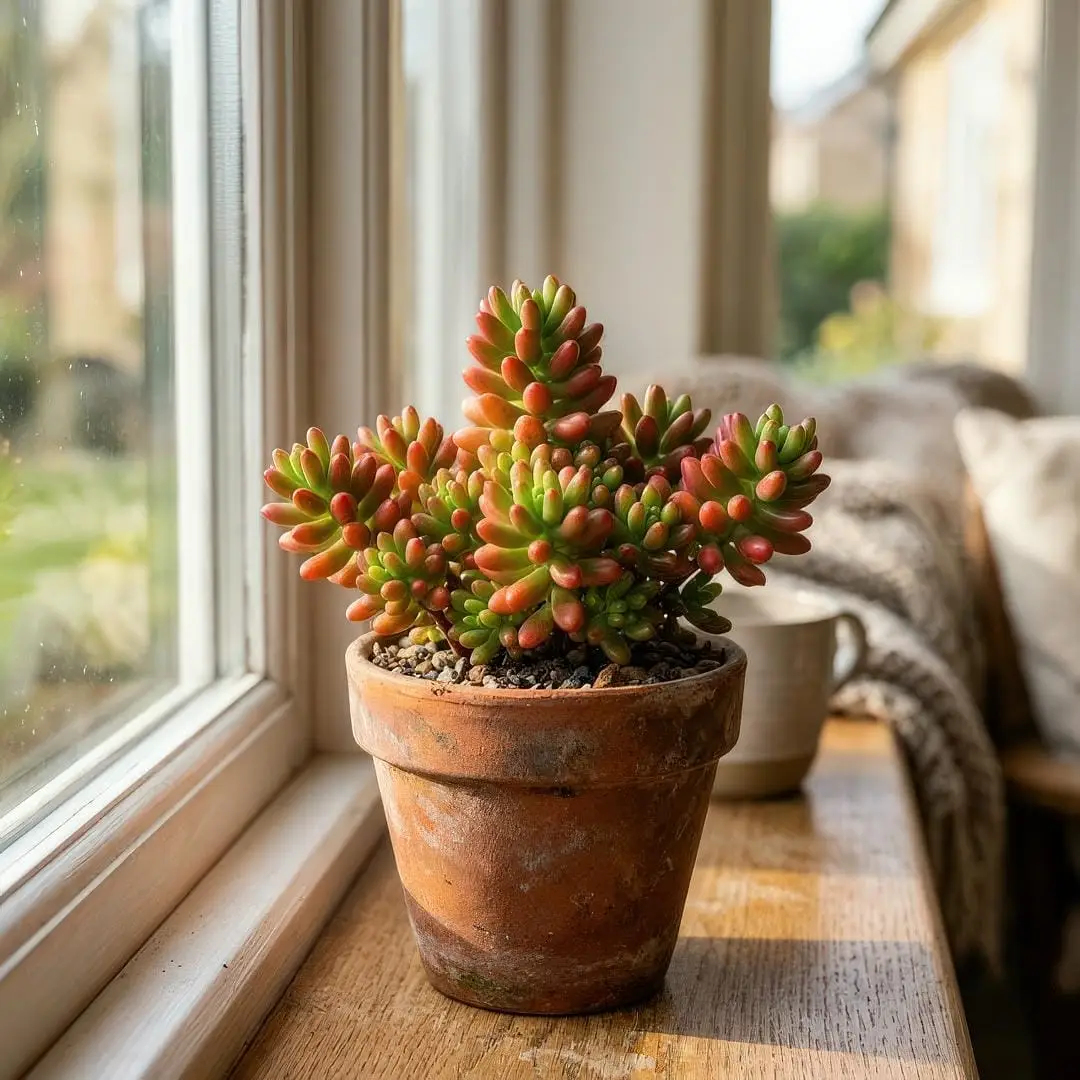
Complete Guide to Jelly Bean Plant Care and Growth
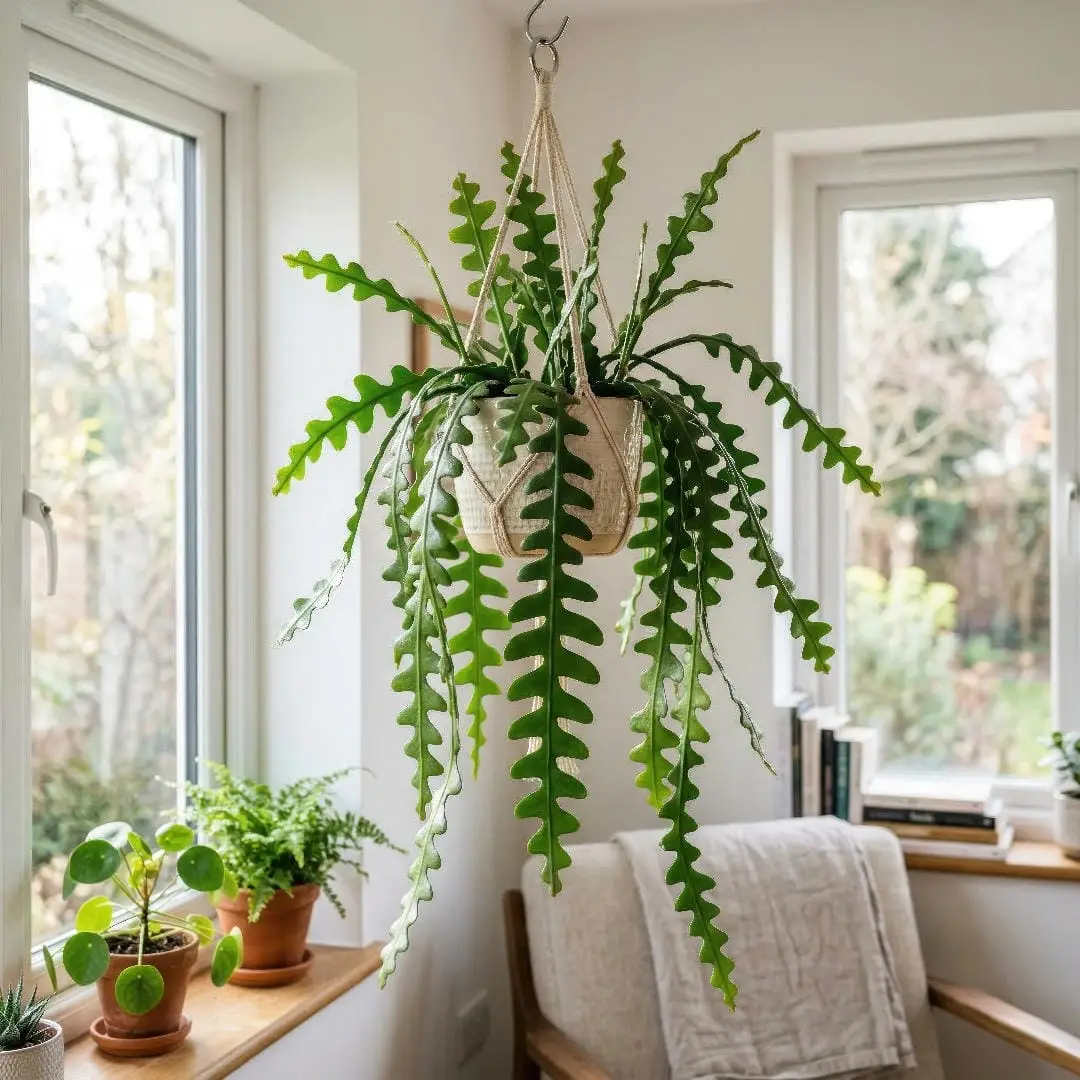
Complete Guide to Fishbone Cactus Care and Growth
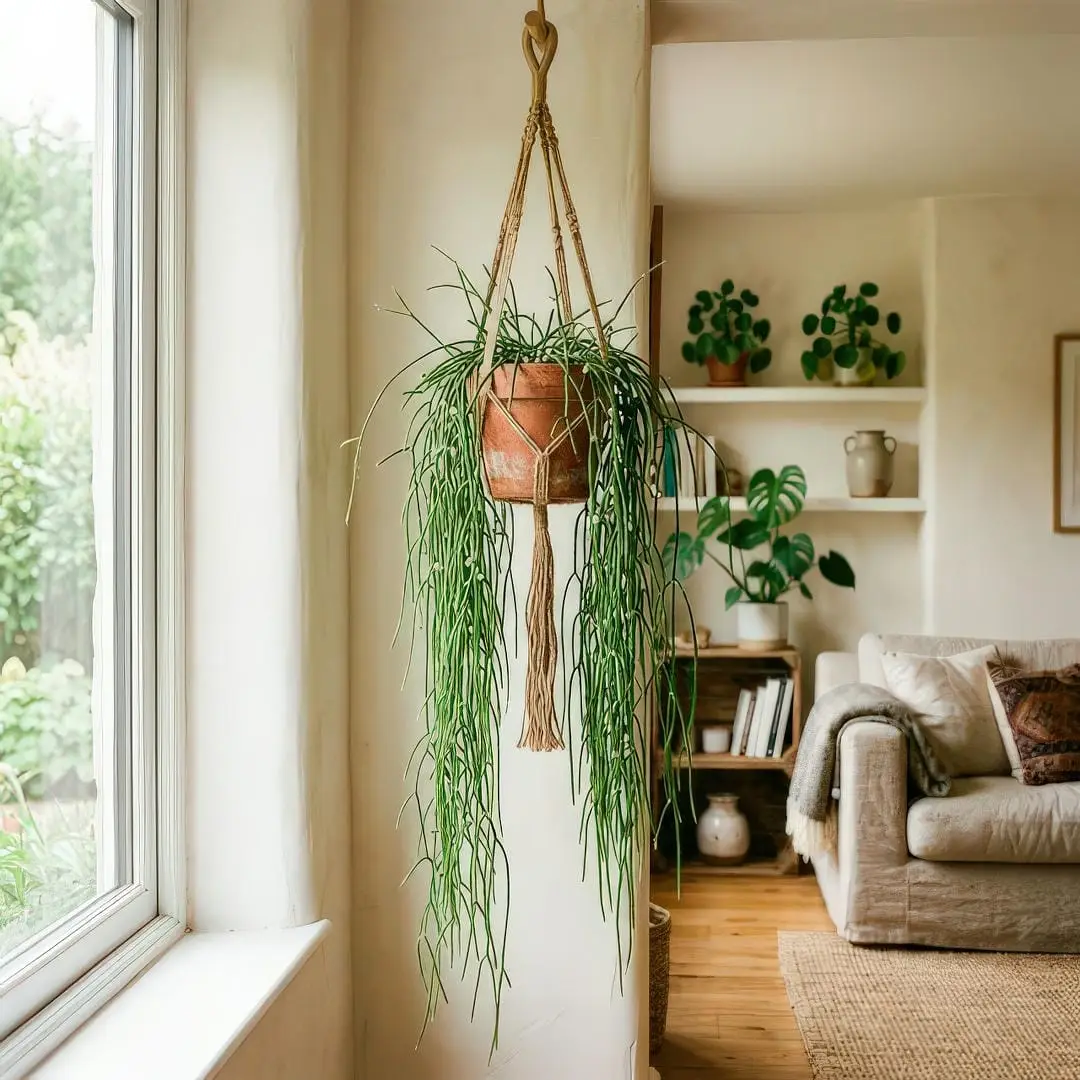
Complete Guide to Mistletoe Cactus Care and Growth
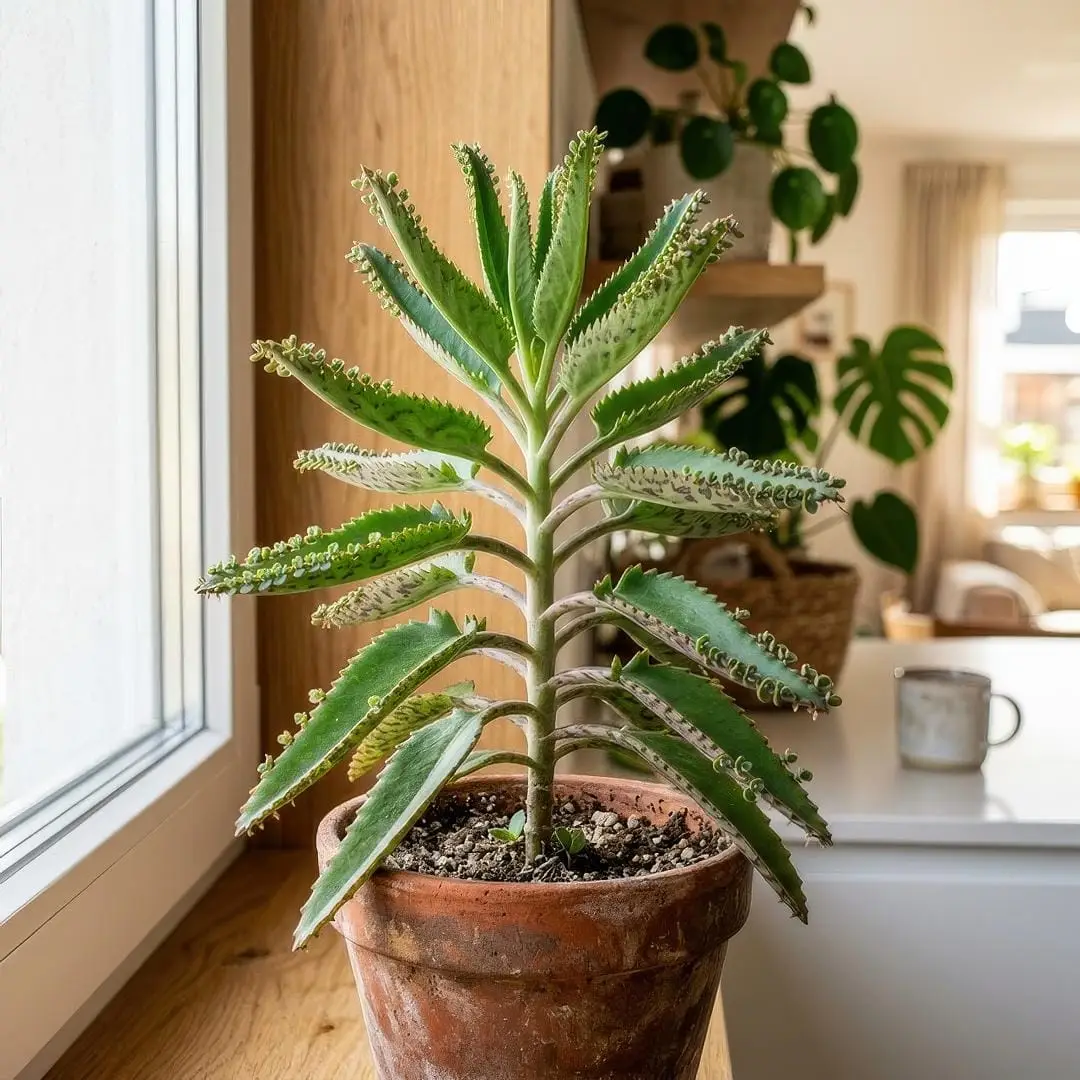
Complete Guide to Mother of Thousands Care and Growth
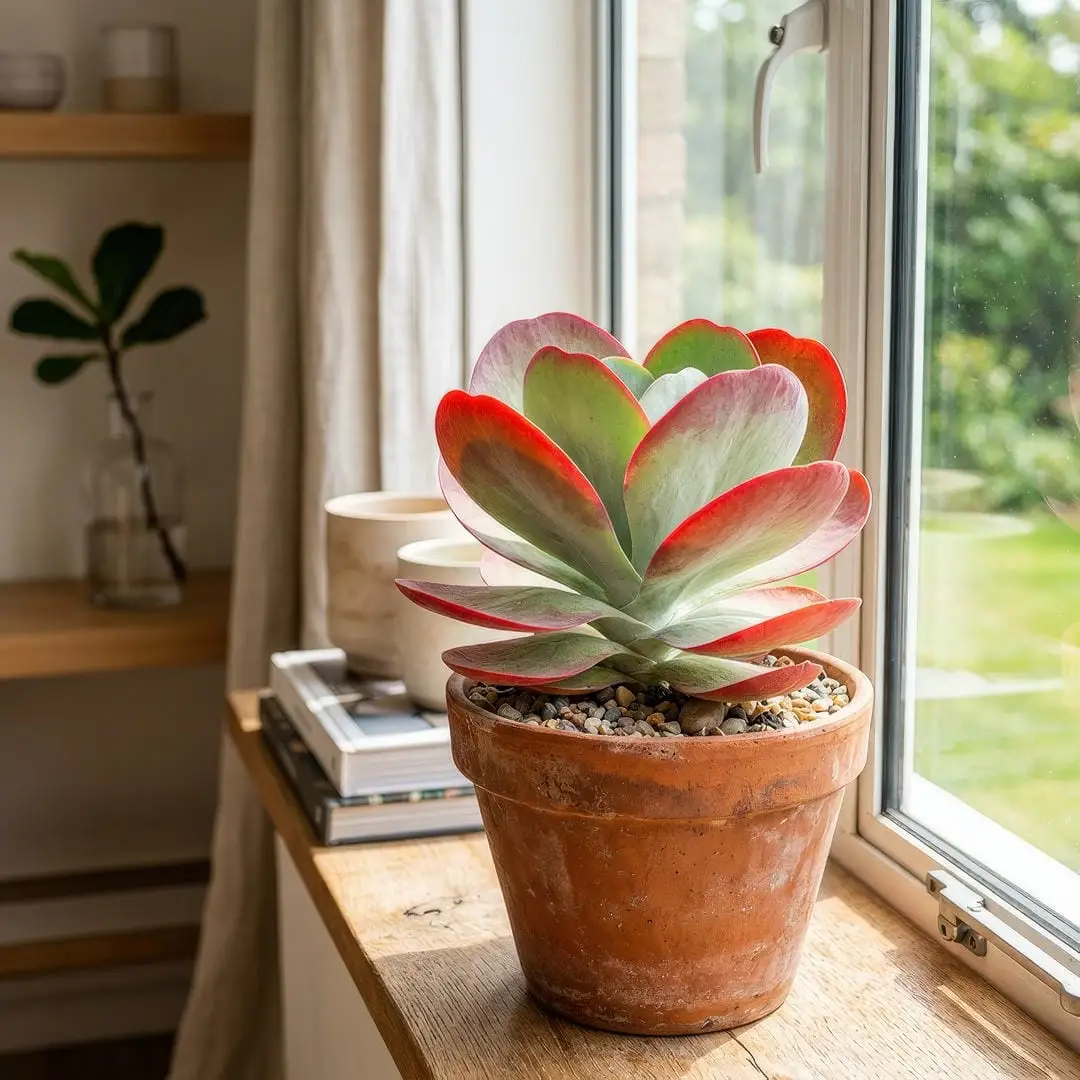
Complete Guide to Paddle Plant Care and Growth
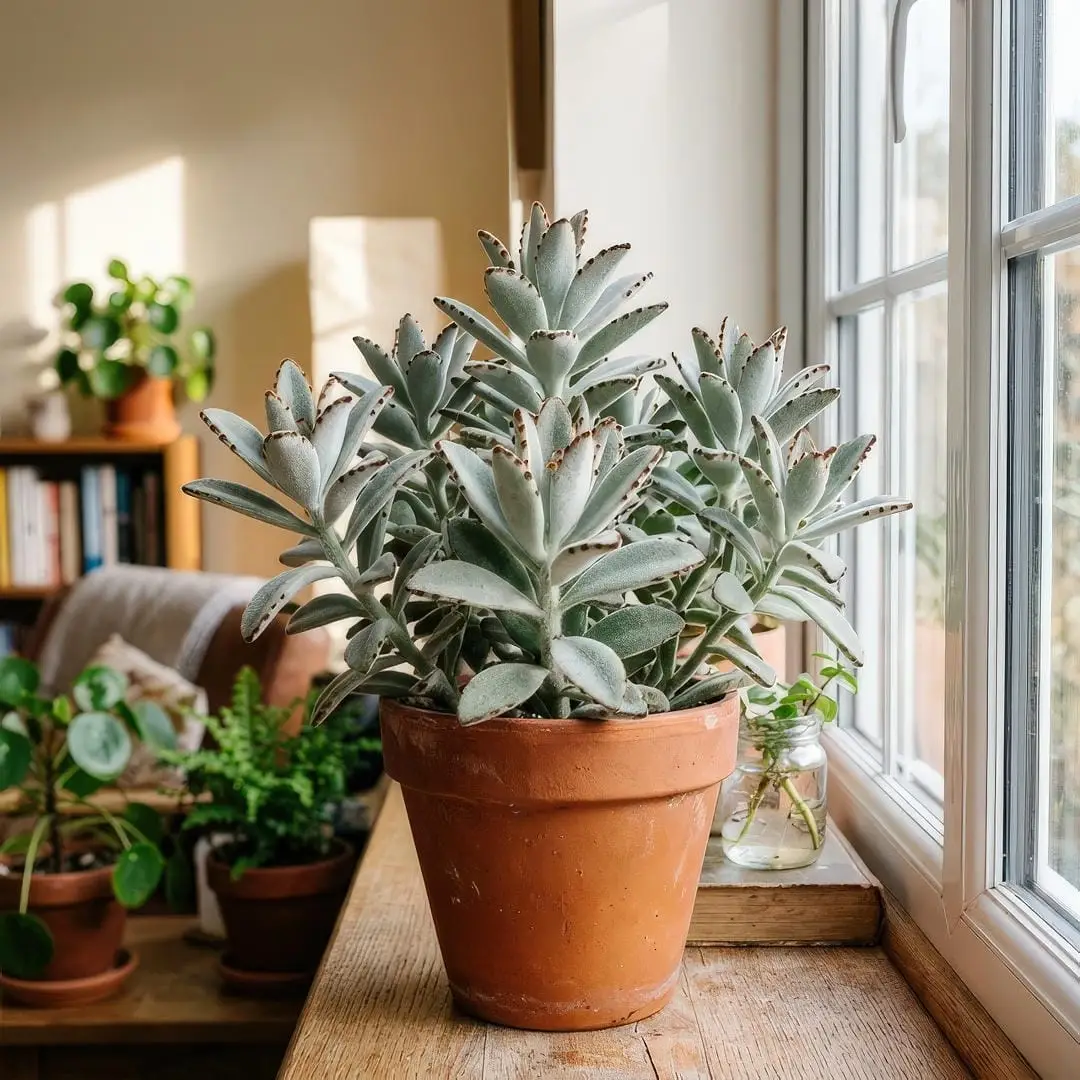
Complete Guide to Panda Plant Care and Growth
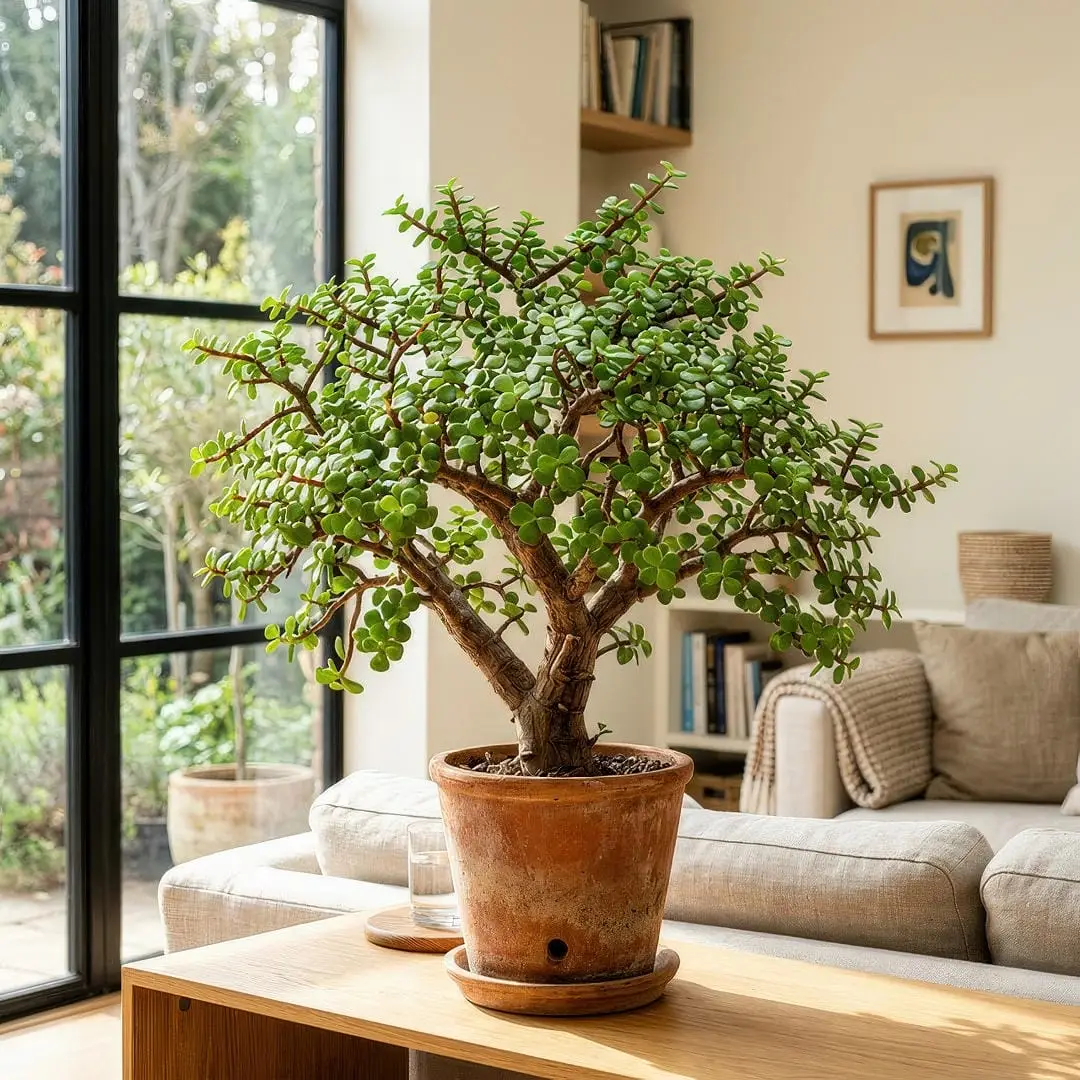
Complete Guide to Elephant Bush Care and Growth
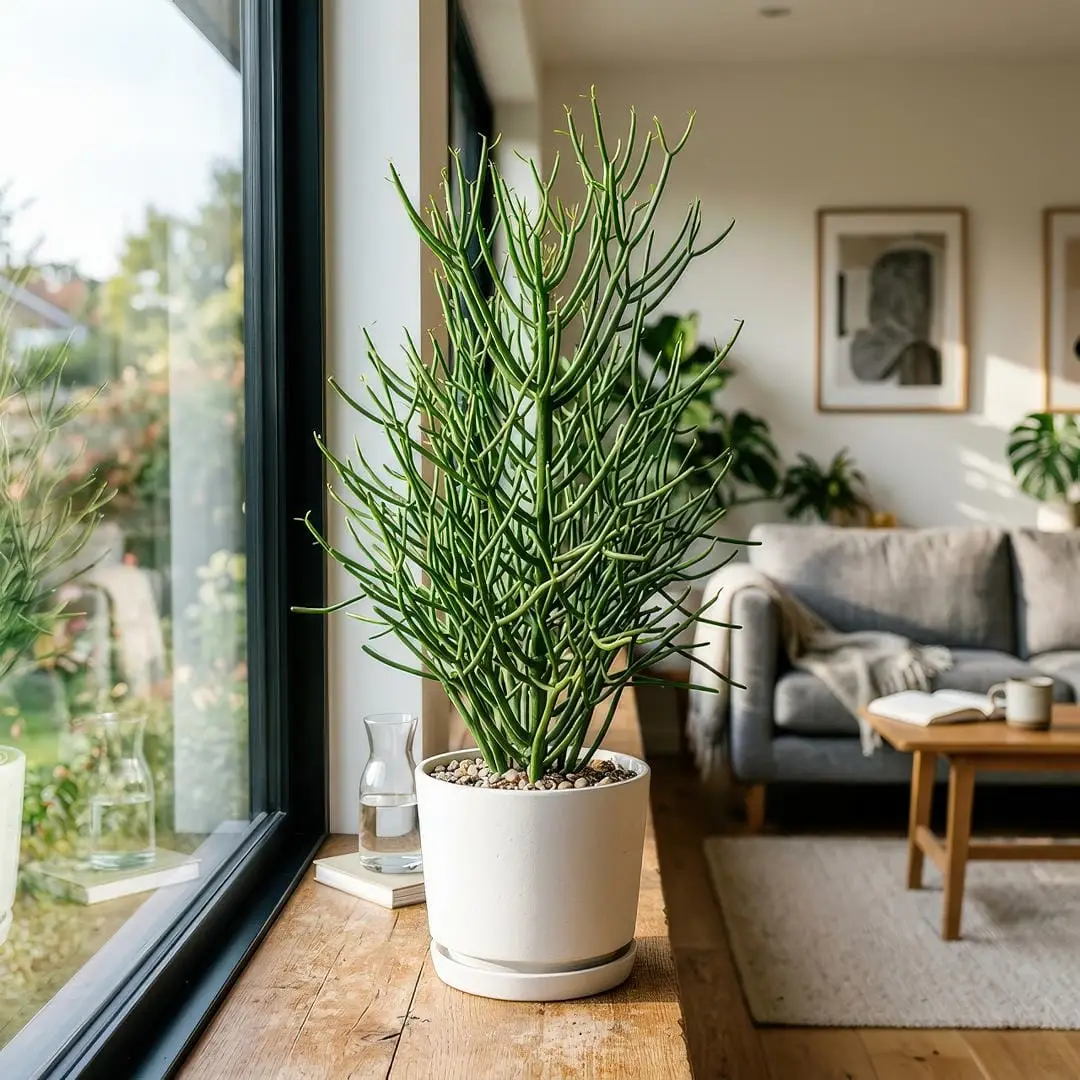
Complete Guide to Pencil Cactus Care and Growth
Complete Guide to African Milk Tree Care and Growth
Complete Guide to Gasteria 'Little Warty' Care and Growth
Ox Tongue Care

Houseplant101 Forum
Questions & Comments
Ask a question, share your plant experience, or help other plant owners.
Comments are temporarily unavailable.
Open the Houseplant101 ForumNo comments yet
Be the first to ask a question or share your experience about this page.
Log in or create an account
Comments use your Houseplant101 Forum account, but you can stay on this page.
Create a new account