
Old Lady Cactus
Mammillaria hahniana
Old Lady Pincushion, Birthday Cake Cactus, Hahn's Pincushion Cactus, Mexican Pincushion


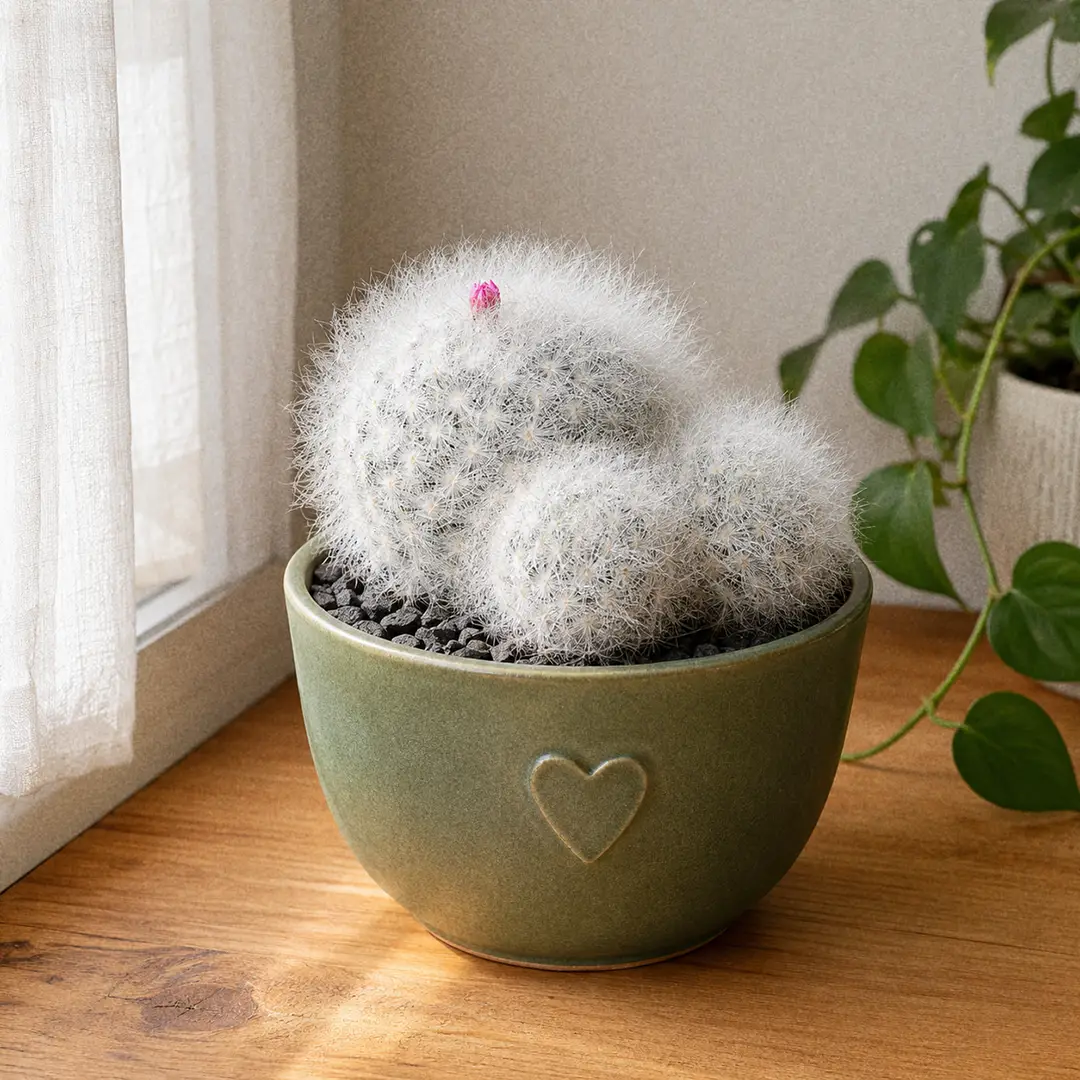
The Old Lady Cactus (Mammillaria hahniana) is the small clumping desert cactus that wraps itself in long fine white hair until the whole plant looks like a snowy wig sitting in a pot. Every spring a mature head crowns itself with a tidy ring of bright magenta-pink flowers, which makes this one of the most rewarding and beginner-friendly cacti you can keep on a sunny windowsill.
📝 Old Lady Cactus Care Notes
🌿 Care Instructions
⚠️ Common Pests
📊 Growth Information
🪴 In This Guide 🪴

☀️ Old Lady Cactus Light Requirements (Full to Bright Indirect Sun)
The long white hair on this species acts like a built-in sun hat, so the Old Lady Cactus takes more direct light than almost any leafy houseplant. Get the light right and the rest of the care almost takes care of itself.
The Sweet Spot
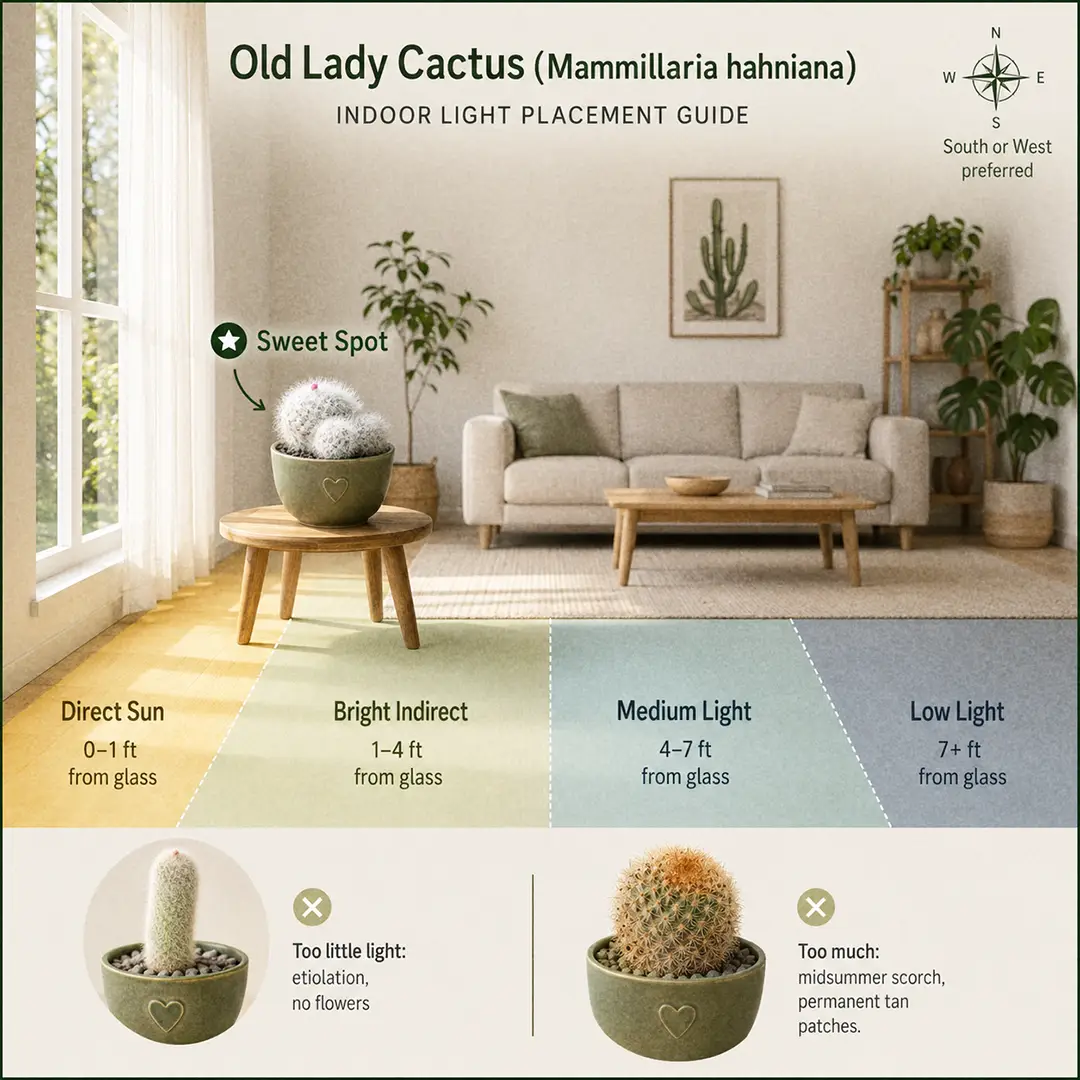
A south or west window with four to six hours of direct sun a day is ideal. An unobstructed east window works for younger plants and through the brightest months of summer. Set the pot within a foot of the glass for most of the year and pull it back two or three inches in July and August if the body underneath the hair starts to flush copper or red. In a dim apartment, a 12 to 14 hour grow light overhead does the same job, and many indoor Mammillaria growers in northern climates rely on one through winter. See light for houseplants for the bigger picture.
Too Little Light
An Old Lady Cactus that does not get enough light stretches upward from the crown, loses its tidy ball shape, and produces pale, sparsely-haired new growth at the top. The white hair itself thins out so the green body shows through in patches, and the next year's flower ring usually fails to form. Move the plant closer to the brightest available window or add a strong grow light directly above it. A stretched head rarely recovers its round shape, so catch the problem early.
Too Much Light
A plant moved straight from a low-light shop to a south window in midsummer can scorch on the side facing the glass, leaving the hair yellowed and the body underneath patched with tan scars that never fade. Harden the cactus into stronger sun over two weeks by moving it closer in stages. The white coat tolerates a lot of light, but once the body underneath is marked, the scar stays for life.
💧 Old Lady Cactus Watering Guide (Soak and Dry, Sparingly)
Watering kills almost every Old Lady Cactus that fails indoors. A few extra days of damp soil cause more harm than a few extra weeks of dry, and the long hair coat traps surface water for far longer than you would think.
Watering Frequency
In spring and summer, water deeply only when the soil is completely dry from top to bottom. For a 4 inch terracotta pot in a sunny window, that lands roughly every 10 to 14 days. A glazed pot or a cooler spot stretches that to three weeks. The classic skewer test works well: push a thin wooden chopstick to the bottom of the pot and if it comes out cool or dark, wait a few more days. See watering houseplants for the broader technique.
In autumn and winter, cut watering way back. An Old Lady Cactus kept cool at 45 to 55°F (7 to 13°C) can stay almost dry for three months and reward you with a thicker spring flower ring. A plant in a heated 70°F (21°C) living room still wants a small drink every four to six weeks to stop the body from shrivelling.
How to Water
Pour room-temperature water around the base until it drains out the hole, wait ten minutes, then tip out the saucer. Never let the pot sit in standing water. Keep water off the white hair itself, because drops trapped in the dense coat sit on the body for days and invite black fungal spots. Bottom watering is an excellent option if your soil mix is gritty enough, since it keeps the hair bone dry while the roots drink.
Signs of Trouble
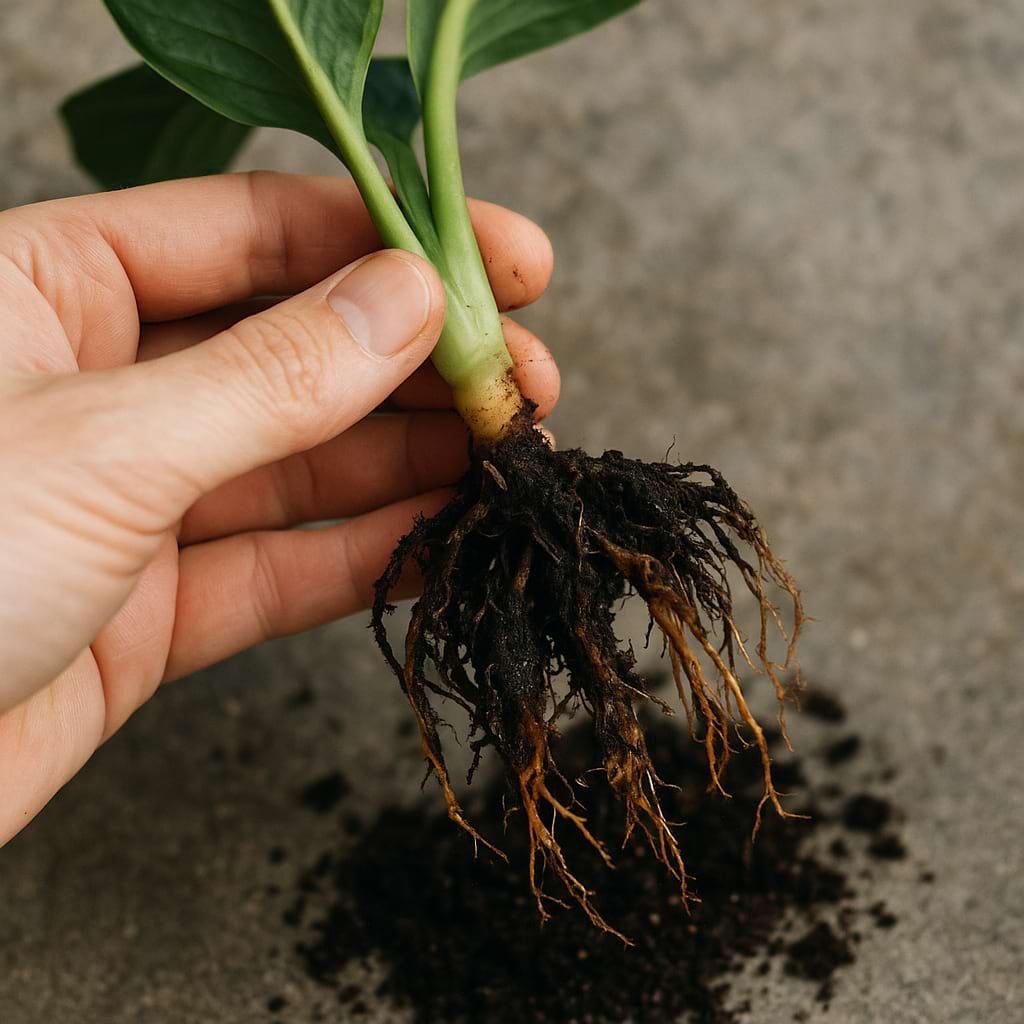
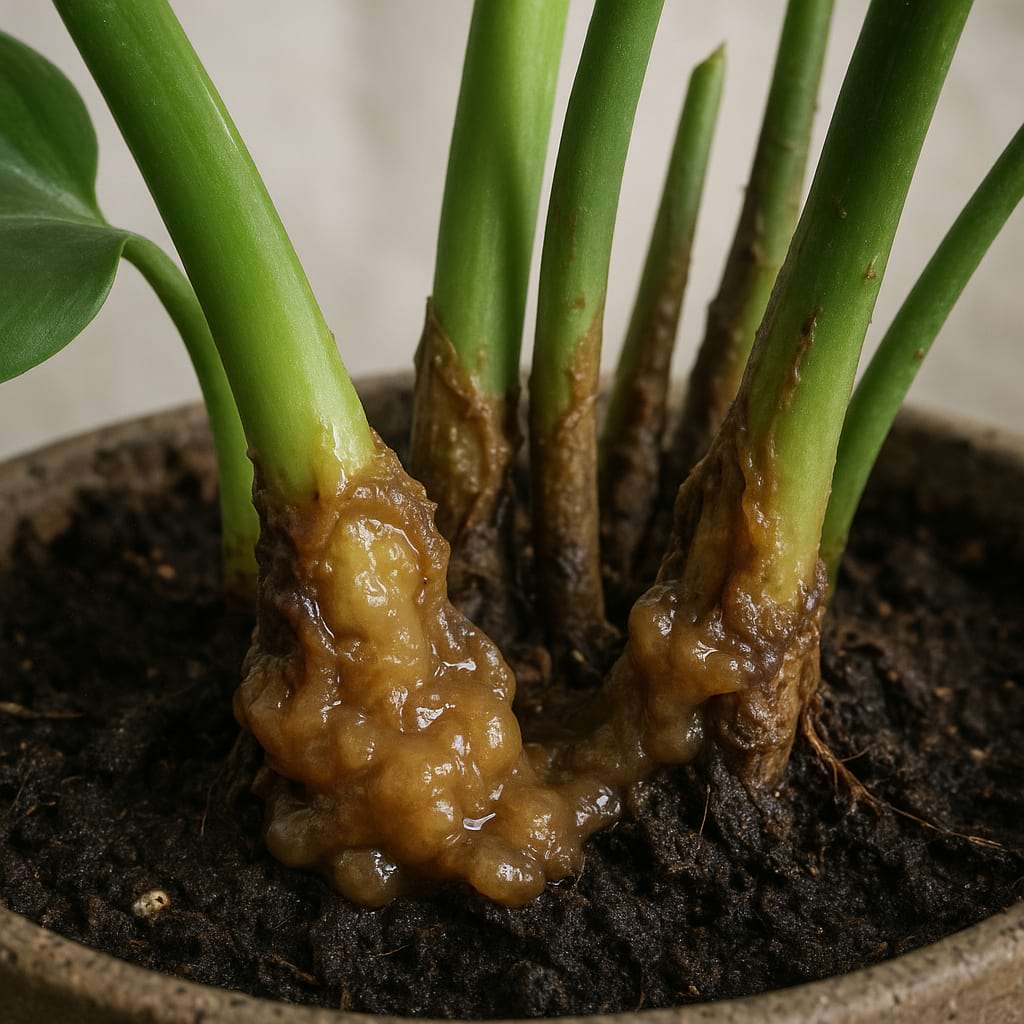
A thirsty Old Lady Cactus shrinks slightly, the body pulls inward under the hair, and the whole plant feels lighter than it should when you lift the pot. One deep water plumps it back up within a day or two. Overwatering looks very different: the base discolors from pale brown to dark mahogany, the body softens at the soil line, the hair around the base looks dingy and matted, and the whole clump may topple. Once root rot reaches the body, the only rescue is cutting well above the damage and re-rooting the clean top in dry grit.
🪴 Best Soil for Old Lady Cactus (Gritty and Mineral-Heavy)
Soil is the second-biggest decision after light. The right mix forgives the occasional heavy hand with the watering can and is the difference between a 20 year plant and one that quietly rots in its second winter.
What the Soil Needs
A mix that drains in seconds, dries fully within a week, and contains very little peat or compost. Mammillaria hahniana grows on rocky limestone in central Mexico at around 6,000 to 7,500 feet, so a pinch of crushed limestone or oyster shell nudges the pH where it likes it. Aim for a neutral to slightly alkaline result.
DIY Soil Mix
- 1 part standard cactus and succulent mix
- 1 part coarse pumice (or perlite)
- 1 part coarse horticultural sand or fine gravel
Squeeze a damp handful of the finished mix; it should fall apart the instant you open your fingers. If it holds together as a clump, add more pumice or grit. The same recipe works well for a Powder Puff Cactus, a Pincushion Cactus, a Bishop's Cap Cactus, or any other small globular cactus you grow alongside.
Pre-Made Options
Most bagged cactus mixes from a garden center are too peaty for an Old Lady Cactus straight out of the bag. Cut them 50/50 with pumice or perlite before potting. Avoid any mix advertised as "moisture retentive" or "premium" with added compost, because those bags are pitched at general houseplants and will hold the roots too wet. See repotting for the broader picture.
🍼 Fertilizing Old Lady Cactus (Light Annual Feeds)
A slow grower from nutrient-poor habitat. Overfeeding pushes soft pale growth that splits the body and ruins the tidy shape, so when in doubt, feed less.
When and How Often
Feed only during active growth, from mid spring to late summer. Two to three feedings a year is plenty: one in late May, one in early July, and an optional last one in mid August. Skip the rest of the year and never feed a freshly repotted plant for the first two months.
What to Use
Use a low-nitrogen cactus and succulent fertilizer (around 2-7-7 or 5-10-10) at half the label strength. Water the plant with plain water first, then apply the diluted feed to damp soil. Liquid kelp at a quarter strength is a gentler organic option. See fertilizing houseplants for general guidance on dilution and timing.
Over-Fertilizing Signs
A white crust on the soil surface or around the pot rim means salt build-up. Flush the pot with a few pot volumes of plain water, skip the next planned feeding, and dilute further next time. New growth that looks unusually green, soft, and stretched is the early warning that you are pushing the plant too hard, and once the body splits along a side from too-fast growth, the corky scar stays forever.
🌡️ Old Lady Cactus Temperature Range
A forgiving plant on temperature. Normal household conditions feel mild to a species that handles cool mountain nights and hot afternoon sun in the wild.
Ideal Range
Through spring, summer, and autumn, aim for 65 to 90°F (18 to 32°C). Normal indoor temperatures are perfect, and a hot sunny windowsill in July is no problem as long as you have hardened the plant into stronger sun first. Mature Old Lady Cacti tolerate brief outdoor drops to around 20°F (-7°C) if completely dry at the root, but indoor plants should never see below 45°F (7°C).
Drafts and Heat Sources
A cool winter rest at 45 to 55°F (7 to 13°C) for at least eight weeks is what triggers the heavy spring flower ring. An unheated bright porch, a cool spare room, or a windowsill behind a thermal curtain all work for this. Avoid sudden drafts from open doors in winter, and keep the cactus a clear foot away from any working radiator that dries out the body unevenly and can melt the hair on the heat side.
💦 Old Lady Cactus Humidity Requirements
Ideal Humidity
Comfortable in normal household humidity, anywhere from 30 to 45 percent. No misting, no humidifier, no pebble trays, and absolutely no closed terrariums. The whole point of the body's design (and that long hair coat) is to thrive in dry mountain air, so anything that bumps humidity above 60 percent for long is a problem.
Easy Humidity Boosters
You almost never need any. The only humidity-related risk is a damp, cool, still corner in late autumn before the heating kicks in, when stagnant air at low temperatures encourages black fungal spots in the hair. A small clip-on fan running a few hours a day fixes that. Avoid steamy bathrooms, kitchen sinks, and any spot where condensation collects on a nearby window in winter.
🌸 Old Lady Cactus Flowers (Magenta Crown of Spring Blooms)
This is the reason most people end up buying a second Old Lady Cactus. The bloom is brighter, larger, and more reliable than on most small Mammillaria, and it sits like a little crown on the snowy white body.
What the Flowers Look Like
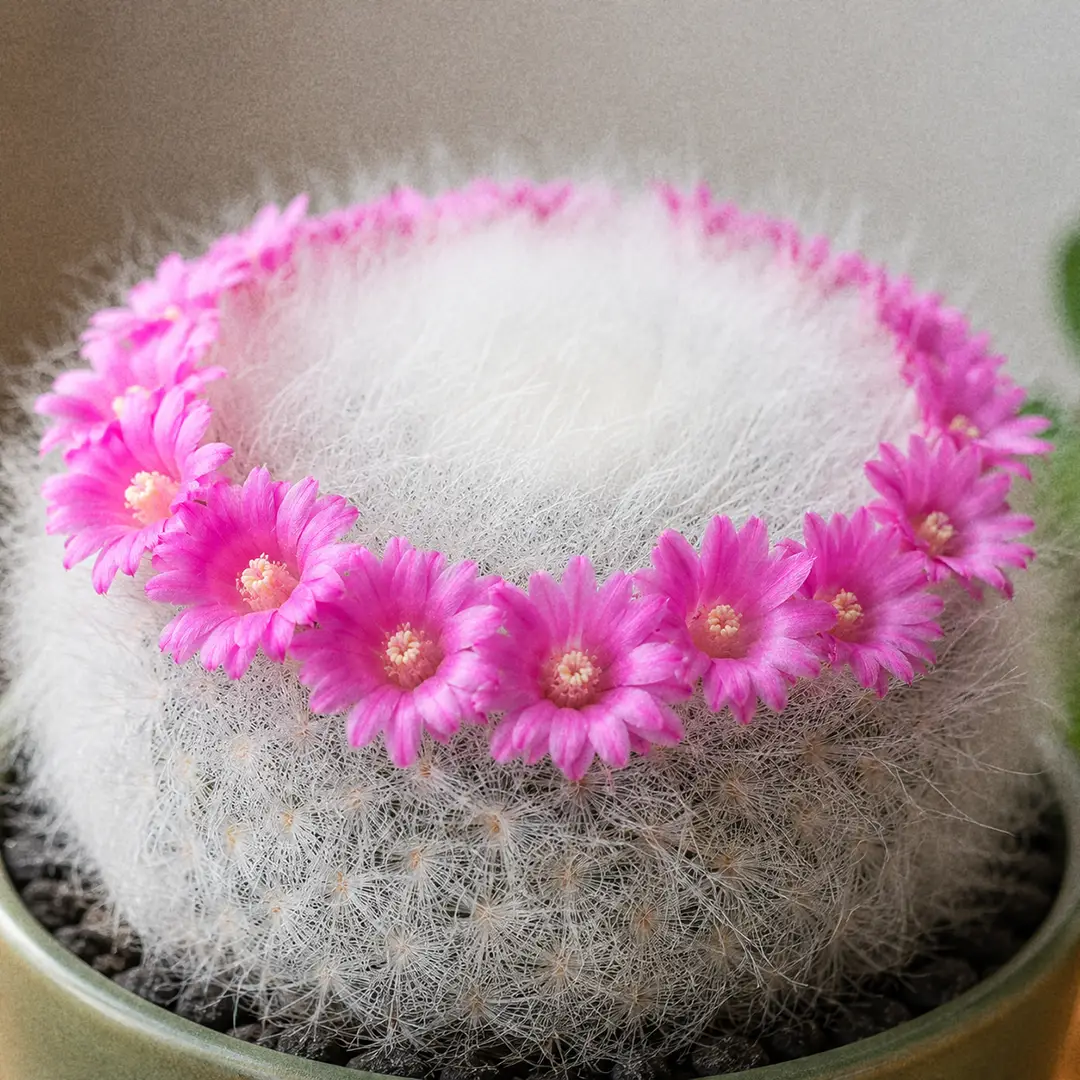
Each flower is funnel-shaped and about three quarters of an inch across, with petals in vivid magenta to deep pink. The flowers open together in a tidy ring around the top of each mature head, often two rings in a really good year, and stand out against the white hair like jewellery. The display lasts about two weeks, and many plants follow up with a smaller flush of buds later in the season.
How to Trigger Bloom
Three things have to line up. The plant has to be mature, usually at least three years old and around two inches across. It has to have spent the previous winter cool and almost dry, ideally at 45 to 55°F (7 to 13°C) for eight weeks or more. And it has to be getting strong direct or very bright indirect light from early spring through summer. Move a winter-rested plant back into warmth and gentle watering in February and the flower ring usually forms within four to six weeks. Because the species is self-fertile, a single plant can pollinate itself and follow the flowers with small pink-red club-shaped fruits a few weeks later.
If It Won't Bloom
If the plant is healthy and clearly mature but never flowers, the missing ingredient is almost always the cool dry winter rest. An Old Lady Cactus kept warm and watered year-round will live happily for decades without ever forming a bud. Once you give it a proper rest, it usually starts blooming the very next spring. See failure to bloom if you are still stuck after a full cycle.
🏷️ Old Lady Cactus Types and Varieties
Mammillaria hahniana is one species, but it has a couple of recognised subspecies and a few selected forms, and the "Old Lady" name shows up in plant shops on a handful of look-alikes worth knowing about.
Mammillaria hahniana (the standard form)
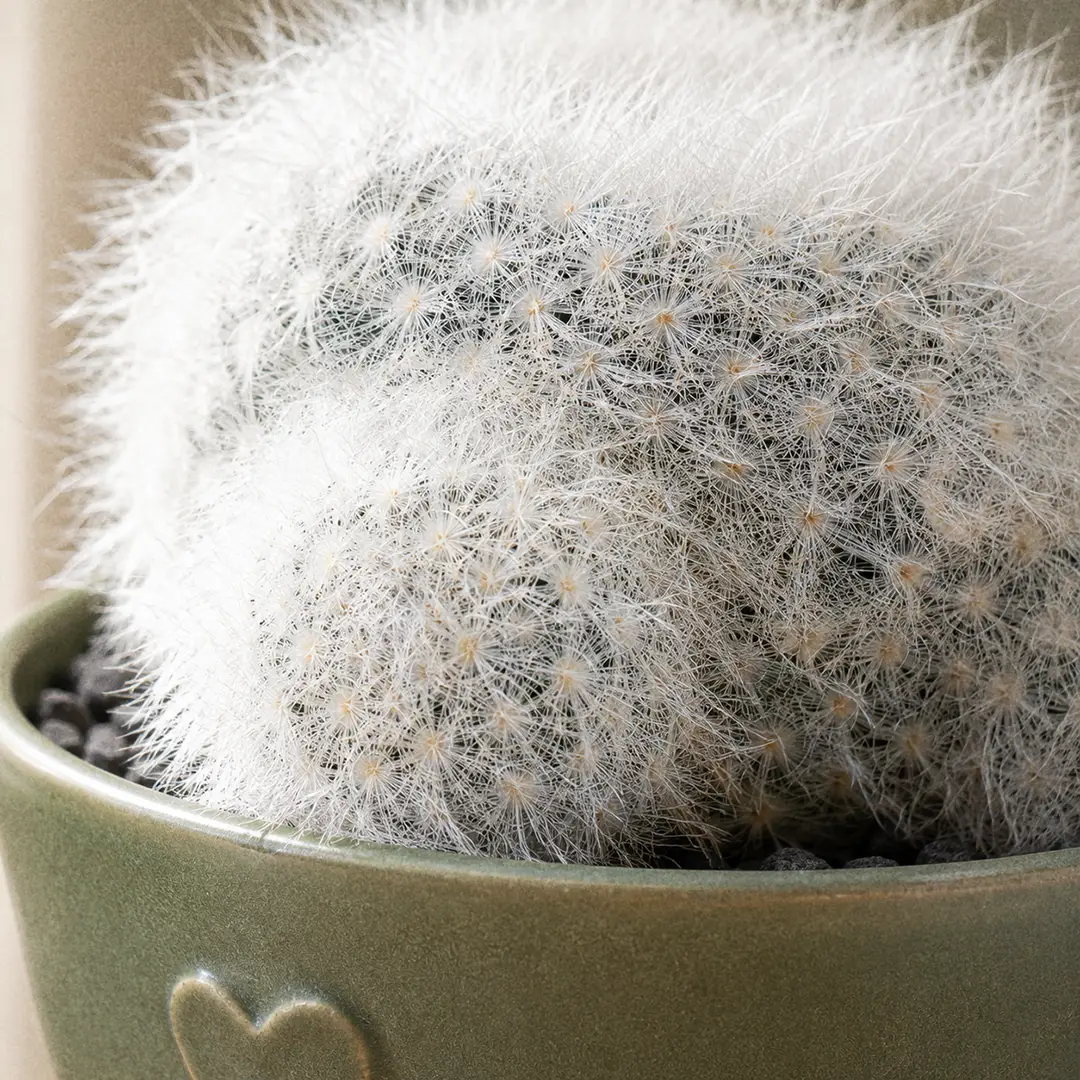
The classic Old Lady. Globular to slightly flattened bluish-green heads two to four inches across, almost entirely hidden under a coat of long pure-white silky hair, with short pale central spines tucked underneath. Bright magenta flower ring in spring, followed by small pink-red fruits. Clumps slowly into low mounds over many years.
Mammillaria hahniana subsp. mendeliana
A larger, more columnar subspecies with shorter hair, fewer offsets, and a stronger pink flower color. Often sold as a solo specimen rather than a clumping mound. Slightly more sun-tolerant than the type and a good pick for a hot west window.
Mammillaria hahniana subsp. woodsii
A wool-heavy form with even longer, finer hair than the type, almost obscuring the body. Slower-growing, slightly more sensitive to overwatering, and very prized by collectors. The flower ring is the same magenta pink, but slightly smaller.
Mammillaria hahniana 'Albidior'
A selected form with a fully white-flowered crown instead of magenta. Same hairy body and same easy care, but the bloom reads as a ring of soft white funnels with pale pink throats. A handsome contrast piece in a shelf full of magenta-flowered Mammillaria.
Close Relatives Sold as "Old Lady"
The name gets used loosely. The most common look-alike is Feather Cactus (M. plumosa), which has shorter feathery spines and does not produce the same magenta crown. The Powder Puff Cactus (M. bocasana) has shorter, wool-like spines with hidden hooked centrals underneath and cream-pink flowers. The taller, columnar Old Man Cactus and the denser-fleeced Peruvian Old Man Cactus both have long white hair too, but on a single upright column rather than a low clumping body. The Snowball Cactus (M. gracilis fragilis) is white too, but it is built from dozens of separate thimble-sized stems that fall off at a touch rather than one solid hairy globe. If you see a low, clumping ball with long silky hair AND a vivid magenta ring of flowers in spring, you almost certainly have a true M. hahniana.
Good Shelf Companions
An Old Lady Cactus looks best next to cacti with a strong silhouette of their own. The smooth spineless five-rib star of a Bishop's Cap Cactus gives the shelf a clean counterpoint to the soft white globes. A perfectly round green Golden Barrel Cactus and a flat sand-dollar Star Cactus round out the small-globe collection. For a tall woolly contrast behind the puff of hair, the towering Old Man Cactus reads beautifully. A grafted Moon Cactus adds a candy-bright pop of red or yellow alongside. And for an upright texture from the same genus, a clump of golden-fingered Lady Finger Cactus gives the shelf vertical lines without growing tall. If you enjoy the magenta crown, pair it with a Crown Cactus, which pulls the same trick upside down by opening its scarlet flowers in a ring around the base of the plant.
🪴 Potting and Repotting Old Lady Cactus
When to Repot
An Old Lady Cactus is a slow grower and prefers to be snug. Repot every two to three years, or only when the clump has clearly outgrown the pot and you can see roots at the drainage hole. Spring or early summer is the best window. Avoid repotting in autumn or winter unless you are rescuing a plant from rotted soil.
Choosing a Pot
A small terracotta pot one inch wider than the current one is the gold standard. Clay wicks moisture out of the mix and shortens the drying time, which protects the roots through any winter watering mistakes. The root system is shallow and spreads sideways rather than down, so a wider, shallower pot is often better than a tall narrow one. Make sure there is at least one drainage hole, no exceptions.
Step-by-Step Repotting
Let the soil dry completely for a week first, which makes the root ball loosen cleanly. Wrap the body in a folded strip of newspaper or a thick kitchen towel so you can lift the clump without flattening the hair. Slide it out of the old pot, gently tease away the spent soil, and inspect the roots for any soft brown patches. Trim those off with sterilised scissors. Settle the plant into fresh dry gritty mix at the same depth as before, then leave it bone dry for a full week before the first cautious water. That short dry pause is what stops opportunistic root rot from setting in through any cuts you made.
✂️ Pruning Old Lady Cactus
Cacti are not pruned the way leafy plants are. The body is the plant, so cuts are reserved for problems rather than shaping.
When to "Prune"
Reach for the scissors only to remove spent flowers, dry seed capsules, badly scarred heads, or a single rotted offset before damage spreads to the rest of the clump. Routine "tidying" is unnecessary on a healthy plant. If a head looks awkward or off-balance, ride it out for a season before deciding to cut, because crowns recover their shape more often than you think.
How to Cut
Use sterilised, sharp blades. Wipe the blade with rubbing alcohol before and between cuts. Make a clean horizontal slice well above any visible damage, then let the cut surface callus in a warm dry shaded spot for at least a week before doing anything else with the piece. Dust the wound with sulphur powder if you have it; it discourages fungus from settling in.
Encouraging Offsets
You cannot really "pinch" a cactus into being bushier, but a mature plant that has had a full cool dry winter and a strong sunny summer almost always produces offsets at the base on its own. Patience and the right conditions do the work that a pruning shear cannot.
🌱 How to Propagate Old Lady Cactus
This is one of the easiest cacti to multiply, which is good news because a Mammillaria collection is hard to stop at one.
Best Method
Pup separation is by far the easiest and most reliable route. A mature Old Lady Cactus clumps freely once it is happy, and each offset around the base is a fully formed mini cactus ready to root. Seed is also realistic because the species is self-fertile, but a pup gives you a flowering plant years sooner.
Step-by-Step Pup Separation
Wait for spring or early summer. Pick a pup that is at least half an inch across and shows a faint pale ring at the base, which is the start of its own root system. Wrap the parent plant in a folded strip of newspaper so you can hold it safely, then gently twist or cut the pup free with a sterilised blade. Set the offset on dry kitchen paper in a shaded warm spot for five to seven days until the wound calluses over. Plant the calloused pup into a thimble-sized pot of fresh gritty mix at the same depth, and water sparingly only once a week from the second week onward. Roots usually take hold within three to four weeks. See succulent propagation for the broader principles.
Tips for Success
Bright indirect light during rooting is better than full sun. Bottom heat from a seedling mat at around 75°F (24°C) speeds things up but is not essential. The single biggest mistake is watering too soon, which rots the calloused wound before the new roots get a chance to drink. Hold off until you see the body firm up and a faint plump return to the surface; that is the signal roots are working.
🐛 Old Lady Cactus Pests and Treatment
The long white hair makes pest scouting a little trickier than on a bare-bodied cactus, since the bugs hide inside the coat. A weekly hand-lens check is worth the effort.
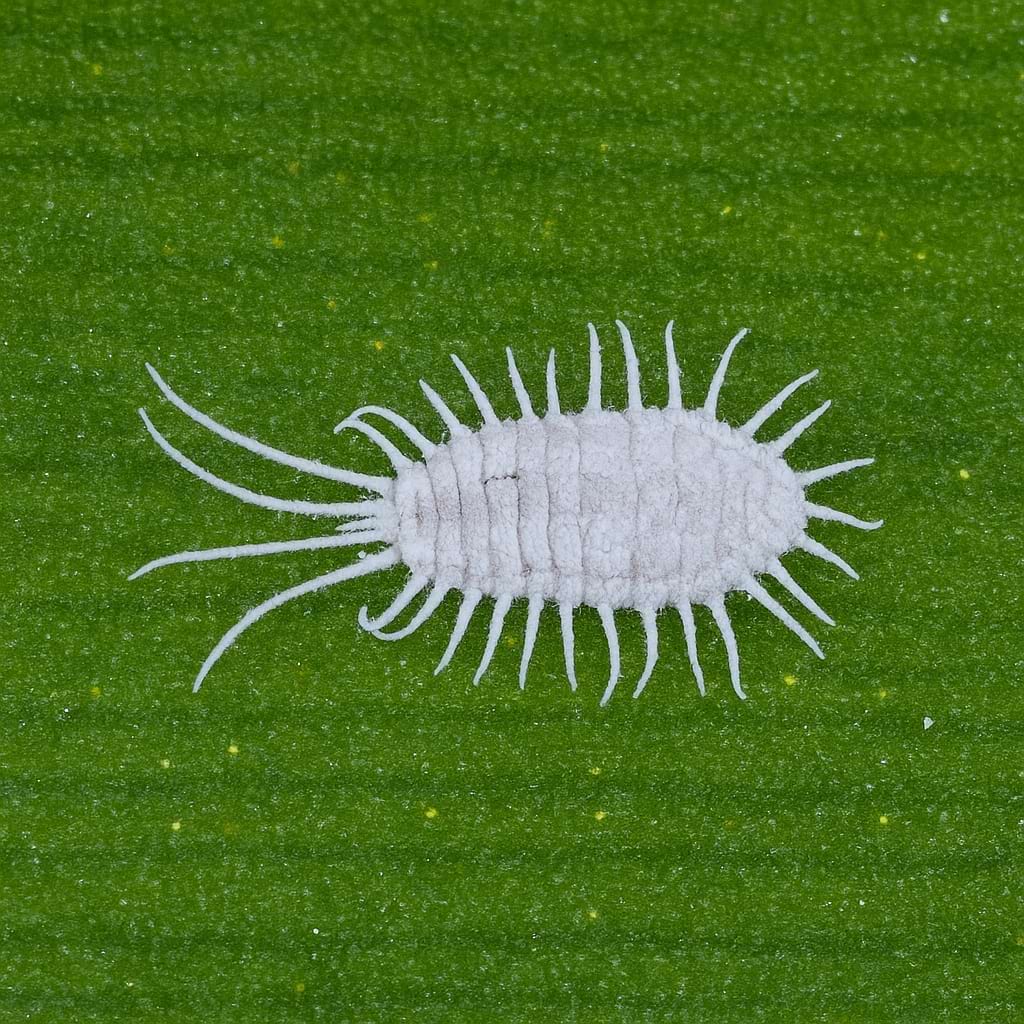
Mealybugs are the single most common pest. They look like tiny tufts of cotton tucked into the joints between tubercles and blend right into the white hair. Dab each one with a cotton swab dipped in 70 percent isopropyl alcohol, then follow up weekly until none reappear for a month. A bad infestation responds well to a systemic granular insecticide watered into the soil.
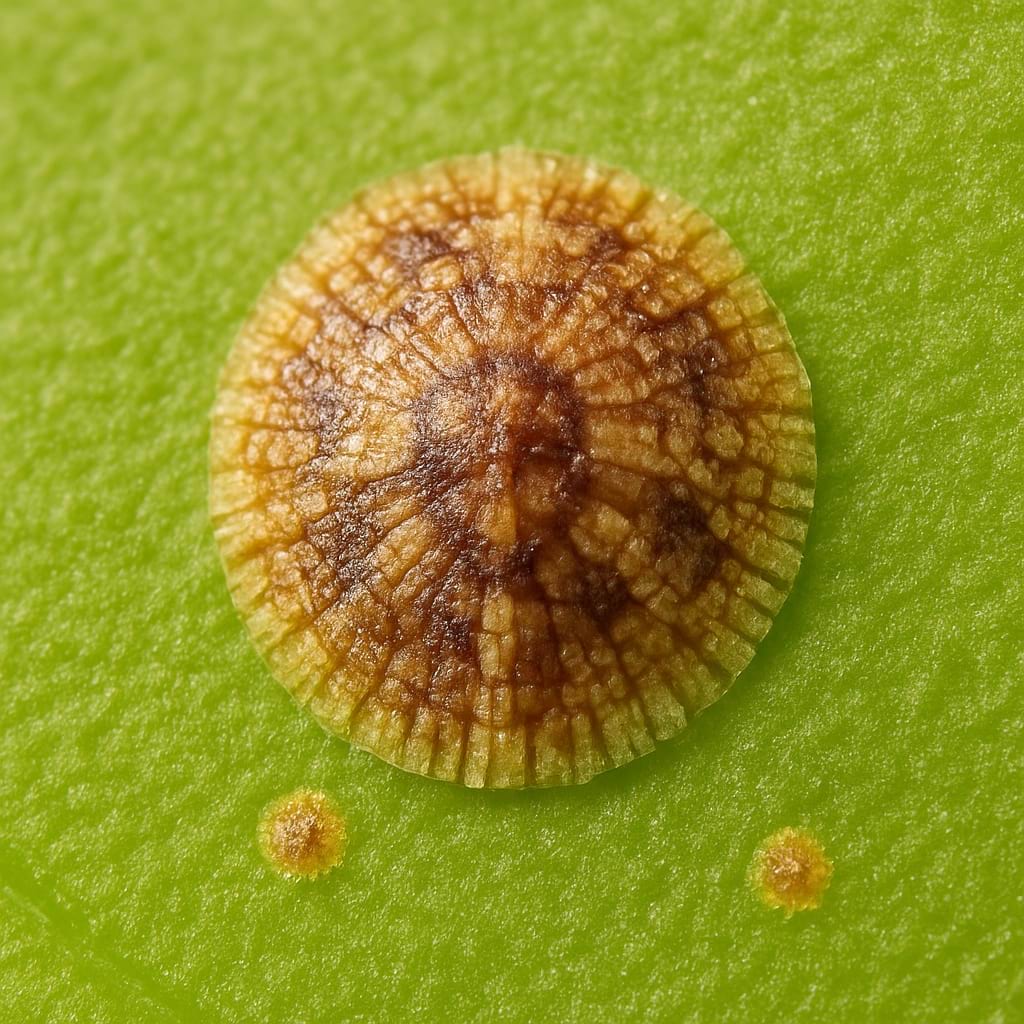
Scale insects are less common but harder to spot, showing as small immobile brown or grey bumps stuck against the green body underneath the hair. Scrape them off gently with a wooden toothpick and treat with horticultural oil if more than a handful are present. Avoid heavy sprays, because oil that sits on the hair stays wet for too long.
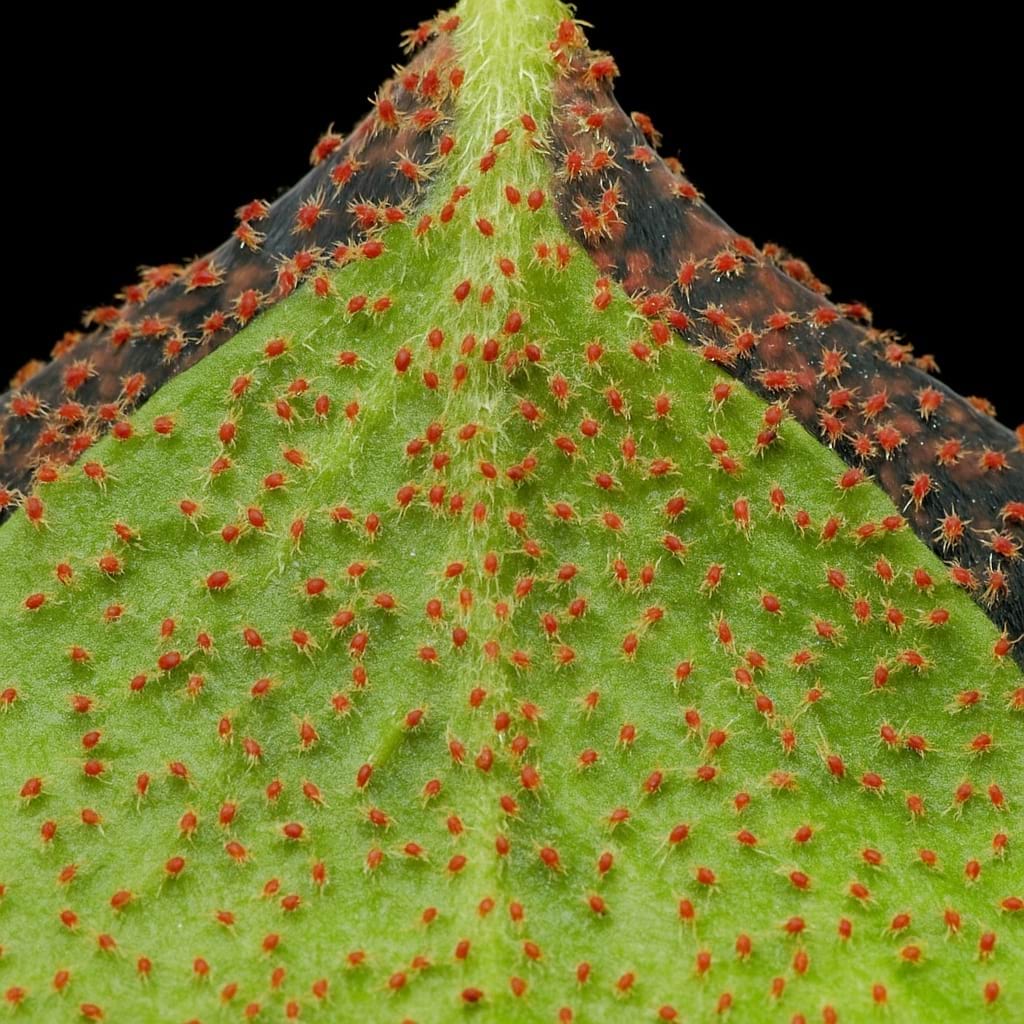
Spider mites appear in hot dry summers as tiny pale dots and fine webbing tucked into the top of the body. A few sharp blasts of room-temperature water followed by a single application of insecticidal soap usually clears them, but rinse the hair very lightly so it dries fast.
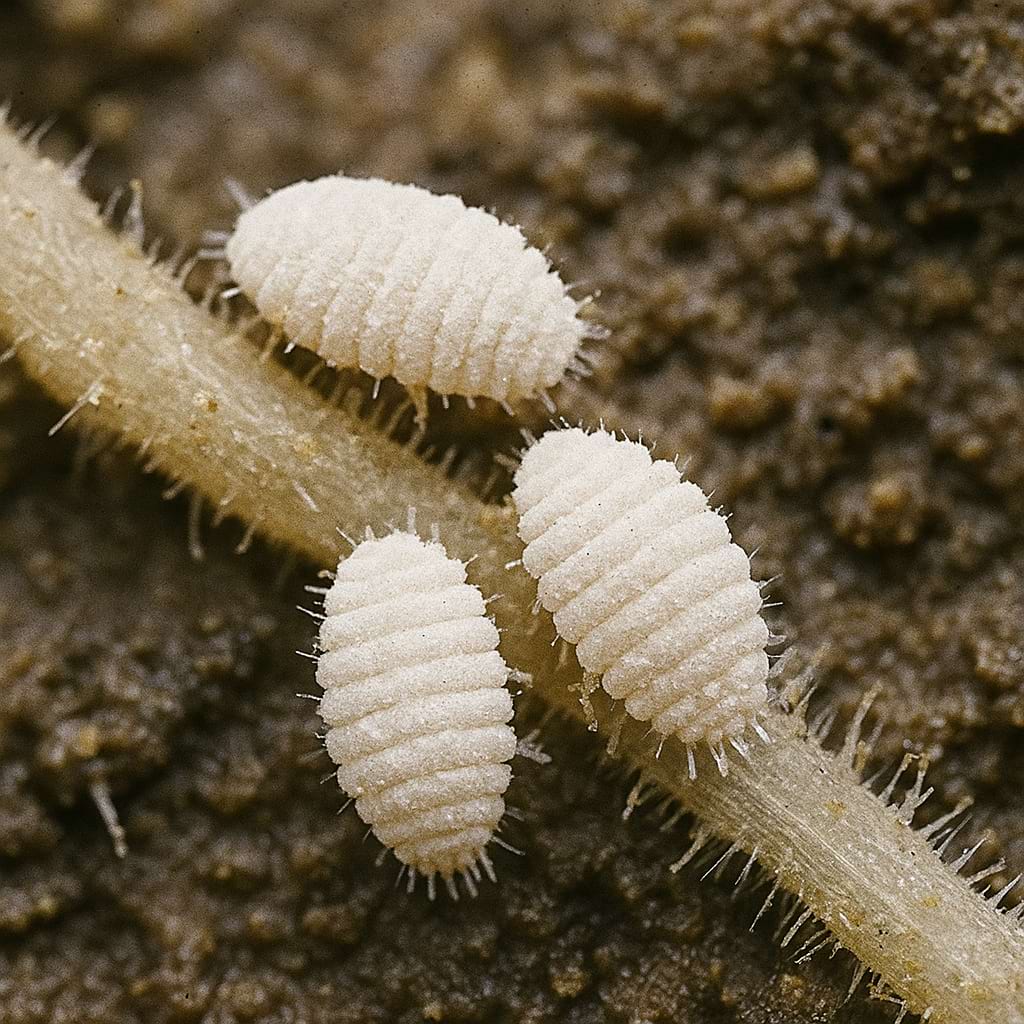
Root mealybugs hide below the soil line and look like flecks of white powder on the outer roots when you tip the plant out. They are the silent killer of slow-growing cacti collections. Bare-root the plant, wash the roots clean, and repot in fresh dry gritty mix with a drench of systemic insecticide.
🩺 Common Old Lady Cactus Problems
Almost every Old Lady Cactus problem comes back to one of three root causes: too much water, too little light, or a sudden temperature shock. Get those three right and the plant rarely complains.
Root rot is the number one killer. The first warning is a slightly soft base and a faint sour smell when you put your nose near the soil. By the time the body itself feels mushy, the rot has usually climbed past the roots into the lower stem and you are in salvage mode: cut well above the damage, callus the clean cut for a week, and re-root in dry grit. Catching the problem early means tipping the plant out, cutting away the brown soft roots, and replanting in fresh dry gritty mix.
Mushy stems often follow root rot or a cold wet winter. Once the body has gone soft, there is no rescuing the affected head; the only move is to cut a healthy section from above the damage, callus it, and start over. Prevention is a gritty mix, a terracotta pot, and the discipline to skip a watering whenever you are unsure.
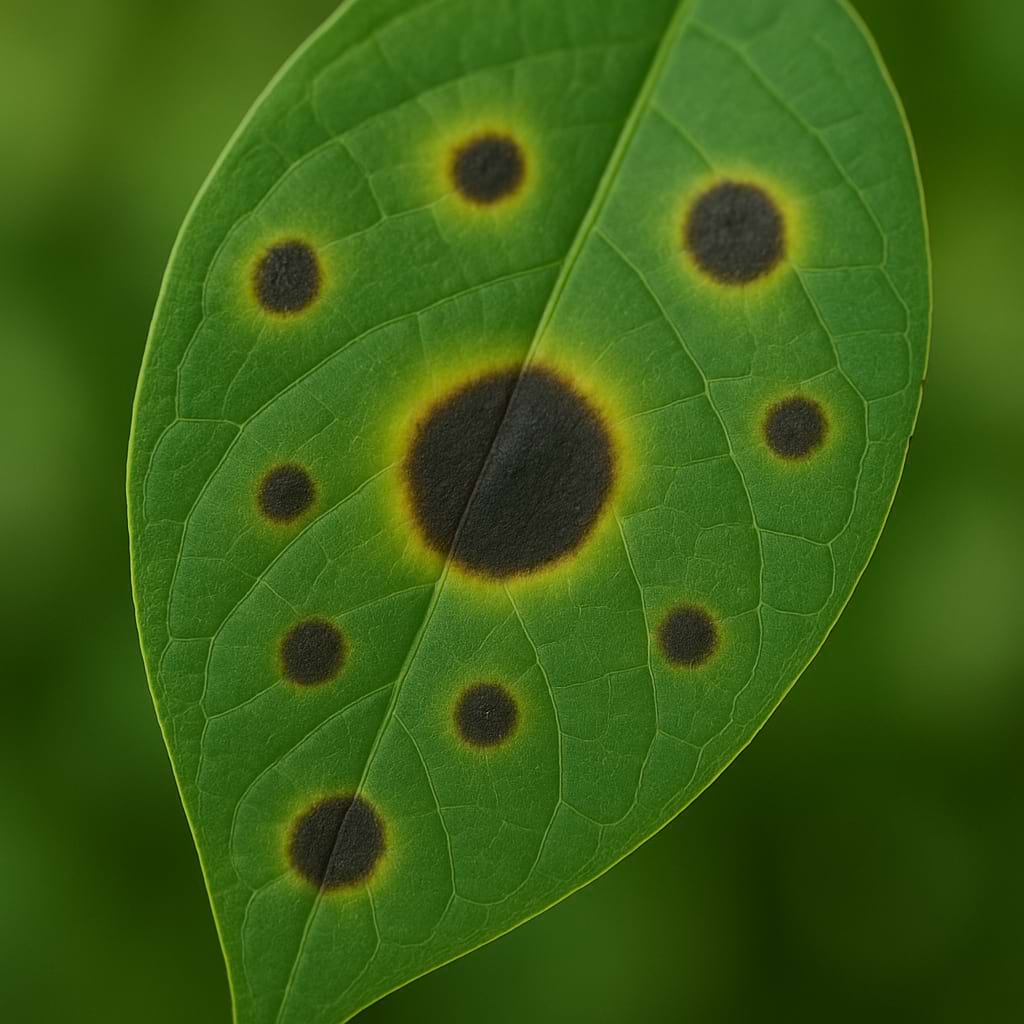
Brown or black spots on the body usually start as small fungal lesions where water sat in the hair against the green body. Improve airflow with a small fan, water from below, and dust off the hair with a soft dry brush rather than wiping it wet.
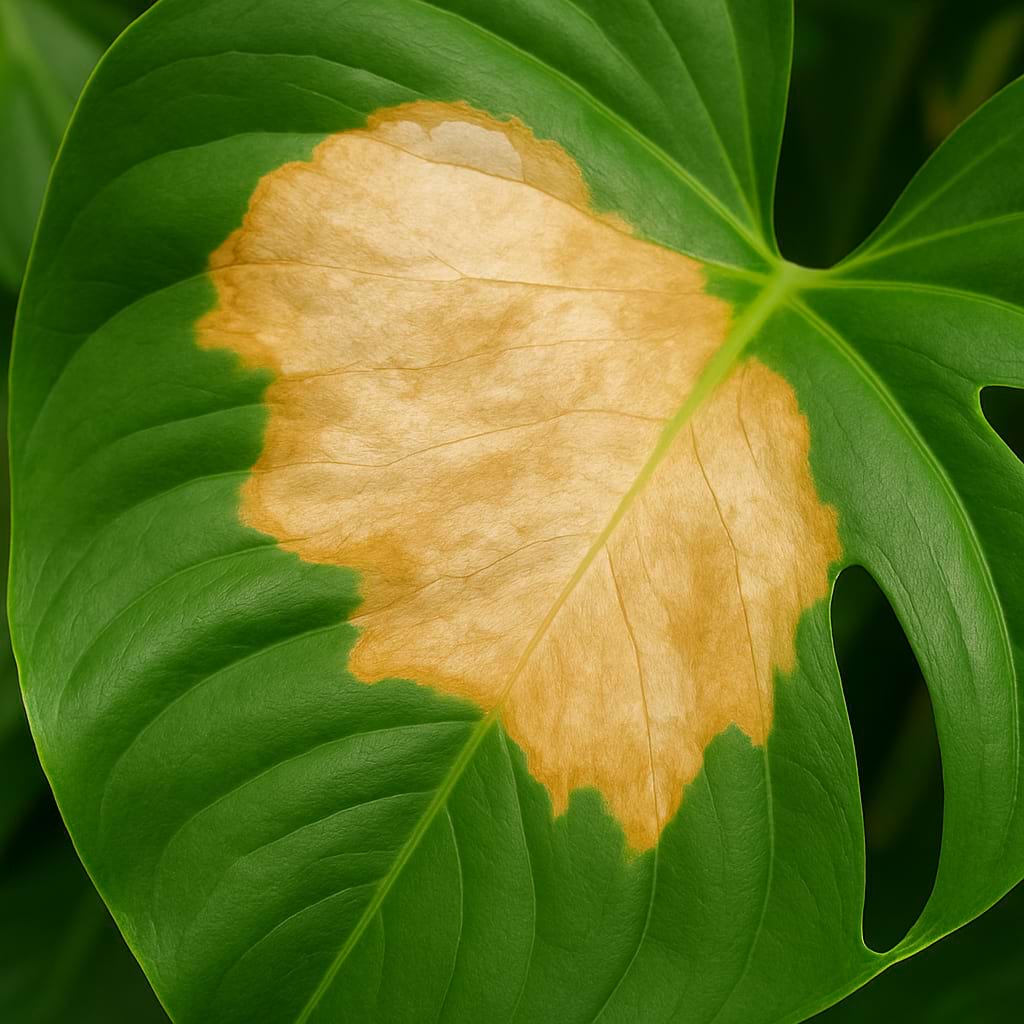
Sunburn and leaf scorch shows as tan or coppery patches on the side that faces the strongest sun. The scar does not fade. Prevent it by hardening the plant into stronger light over two weeks rather than moving it in one jump.
Yellowing of the body itself, rather than the hair, is rare but signals either chronic overwatering or a serious nutrient lock-out from a salt-clogged pot. Flush the soil with plain water and ease back on feeding.
Stunted growth on a plant that should be filling out usually traces back to a heavy, peaty soil that stays wet too long, or to a pot far too large for the current root mass.
Leggy growth where the body stretches upward and the hair thins is the classic light-starvation symptom. The stretched section will not recompress, but the new growth above it will normalise once you fix the light.
Failure to bloom on a mature plant is almost always a missed winter rest. See the blooming section above.

🖼️ Old Lady Cactus Display and Styling Ideas
The Old Lady Cactus does its best styling work when its silhouette is allowed to stand alone or play against very different shapes. The hair is the personality, so give it room to read.
Solo Setups
A single mature clump in a small terracotta or matte cream pot, with the white hair sitting just above the rim, is hard to beat. Top-dress the soil with a layer of dark gravel, black lava rock, or fine pebbles in a deep tone to make the snowy hair pop. Place it on a windowsill, a small wooden cube, or a slim bookshelf where the eye can take it in from across the room.
Grouped Arrangements
Cluster the Old Lady with cacti of contrasting shape and color rather than other fuzzy globes. A spineless five-rib Bishop's Cap Cactus gives a graphic counterpoint, a perfectly round green Golden Barrel Cactus adds scale, and a flat sand-dollar Star Cactus sits low at the front. A tall column of Old Man Cactus or Peruvian Old Man Cactus behind the group adds height. A grafted Moon Cactus drops a punch of red or yellow at the front. Stick to matching clay-toned pots so the plants stay the focus.
Where Not to Put It
Skip steamy bathrooms, dark hallways, and the top of working radiators in winter. A closed glass terrarium is a death trap, because still humid air against the white hair invites fungal spotting within weeks. Anywhere a leaky window drips in winter or a humidifier mists nearby is also off limits.
🌟 Old Lady Cactus Pro Care Tips
- Lean dry, always. If you are not sure whether to water, wait three more days.
- Use a terracotta pot the first year you grow this plant. The clay wicks moisture out and gives you a generous safety margin.
- Top-dress with a layer of dark gravel; it stops splash water hitting the lower hair and looks fantastic.
- A cheap min-max thermometer near the plant tells you whether your winter rest spot really hits the 45 to 55°F window or just feels cold.
- Dust the hair with a soft dry artist's brush once a month rather than wiping with a damp cloth.
- Quarantine any new cactus for a month before placing it on a shelf with the rest of your collection, mostly because of root mealybugs.
- Mark the date of every watering on a small calendar near the plant for the first year. The pattern teaches you the plant's real drying rate in your home faster than any general rule.
- Move the plant a quarter turn each week so the body grows evenly toward the light rather than leaning to one side.
- Never feed in autumn or winter, even if the plant looks like it could take it.
- Take photos from the same angle every month, because the bloom buds appear suddenly in the hair and you will spot them earlier in a side-by-side comparison than by eye.
❓ Frequently Asked Questions
Why is my Old Lady Cactus turning brown at the base?
A browning soft base almost always means root rot from soil that stayed wet too long. Tip the plant out, cut away the brown soft tissue, callus the cut for a week in a warm dry spot, and re-root in fresh dry gritty mix. Cut watering frequency in half once it is replanted.
How often should I water an Old Lady Cactus indoors?
Roughly every 10 to 14 days in spring and summer for a 4 inch terracotta pot in a sunny window, and only every four to six weeks in winter (or not at all if you are giving the plant a cold rest). Always check the soil first; the schedule is a guide, not a rule.
Why won't my Old Lady Cactus flower?
The most common reason is a warm wet winter. Mammillaria hahniana needs a cool dry rest at 45 to 55°F (7 to 13°C) for at least eight weeks before it sets the spring flower ring. A healthy mature plant that is kept warm year-round can live happily for decades without ever blooming.
Is the Old Lady Cactus safe for cats and dogs?
Yes, the plant itself is non-toxic. The real risk to pets is the spines and the fine hair, which can lodge in a paw or a mouth and need to be removed with tweezers. Keep the plant on a shelf out of reach of curious noses.
How big does an Old Lady Cactus get?
Individual heads stay small, usually two to four inches across and not much taller. The plant gets its size from clumping: a happy specimen forms a low mound that can spread eight to sixteen inches across over many years. Compare against a fast-growing tall column like the Peruvian Apple Cactus for scale.
Should I mist my Old Lady Cactus?
No. The white hair traps moisture against the body and invites fungal spotting. Normal household humidity is exactly what the plant wants, and the only "humidity" management you need is making sure the air around it is not damp and still in late autumn.
Can I grow an Old Lady Cactus outdoors?
In US hardiness zones 9 to 11 and the equivalent climates elsewhere, yes, as long as the plant is sheltered from heavy rain and given fast-draining gritty soil. Everywhere else, grow it as a houseplant on a sunny windowsill. Even a mature plant should never see indoor temperatures below 45°F (7°C).
Why does the body underneath the hair look red or copper?
That is sun blush, a stress color the body produces when it is getting strong light. A faint blush is fine and shows the plant is happy. A deep red flush across most of the body means the sun is too strong; pull the pot back a couple of inches or shade it with a sheer curtain through the hottest weeks.
How do I get my Old Lady Cactus to produce pups?
Give it three things: bright direct light, a cool dry winter rest, and patience. A mature plant in its third or fourth year almost always starts offsetting at the base on its own once it has had a proper rest cycle. Forcing pups by cutting or by extra feeding usually backfires.
What is the difference between Old Lady Cactus and Powder Puff Cactus?
The Old Lady Cactus (M. hahniana) has long silky hair, short pale central spines (no hooks), and a vivid magenta ring of flowers in spring. The Powder Puff Cactus (M. bocasana) has shorter wool-like hair with tiny hooked central spines hidden underneath, and cream-pink flowers. Both come from central Mexico and want the same conditions, but the Powder Puff is a touch faster-growing and the Old Lady is the bolder bloomer.
ℹ️ Old Lady Cactus Info
Care and Maintenance
🪴 Soil Type and pH: Gritty, fast-draining cactus mix with added pumice, perlite, or coarse sand; neutral to slightly alkaline pH.
💧 Humidity and Misting: Comfortable in low household humidity around 30 to 45 percent; dislikes damp, still air.
✂️ Pruning: Effectively none; pull off spent flower wisps and any damaged or shrivelled heads from the clump.
🧼 Cleaning: Dust the white hair with a soft dry artist's brush; never wipe with a wet cloth, because soaked hair stays damp for days and invites fungal spots.
🌱 Repotting: Bump up one pot size only when the clump has clearly outgrown the container, usually every 2 to 3 years.
🔄 Repotting Frequency: Every 2-3 years
❄️ Seasonal Changes in Care: Active growth in spring and summer; cool dry winter rest sets the next year's flower ring.
Growing Characteristics
💥 Growth Speed: Slow
🔄 Life Cycle: Long-lived perennial
💥 Bloom Time: Late winter through early summer on mature plants, often with a second smaller flush in autumn
🌡️ Hardiness Zones: 9-11 outdoors; grown as a houseplant in all other zones
🗺️ Native Area: Central Mexico, mainly Querétaro and Guanajuato states, on limestone hills at 6,000 to 7,500 feet
🚘 Hibernation: Cool dry winter rest at 45 to 55°F (7 to 13°C) for eight to twelve weeks for best flowering
Propagation and Health
📍 Suitable Locations: Sunny south or west windowsills, sunrooms, bright kitchens, plant shelves under strong grow lights
🪴 Propagation Methods: Very easy from offsets; reliable from seed because the species is self-fertile.
🐛 Common Pests: Mealybugs, Scale Insects, Spider Mites, Root Mealybugs
🦠 Possible Diseases: Root rot, fungal spotting under damp hair, corky scarring from cold wet air
Plant Details
🌿 Plant Type: Small clumping woolly desert cactus
🍃 Foliage Type: Small globular to slightly flattened heads covered in spirals of nipple-shaped tubercles, each wrapped in long fine white hair-like radial spines, with short pale central spines
🎨 Color of Leaves: Bluish-green body almost entirely hidden under a coat of pure-white silky hair
🌸 Flower Color: Bright magenta to deep pink funnels, occasionally pure white in selected forms
🌼 Blooming: Yes; very reliable on mature plants, especially after a cool dry winter
🍽️ Edibility: Produces small pink to red club-shaped fruits after flowering; technically edible but rarely eaten
📏 Mature Size: 2-4 inches per head; older clumps reach 4-6 inches tall
Additional Info
🌻 General Benefits: Compact, beginner-friendly, vivid indoor bloomer, pet-safe in terms of toxicity, very easy to propagate from pups
💊 Medical Properties: None of significance for indoor growers
🧿 Feng Shui: A soft-looking spiny accent for a sunny corner; the long white hair reads as gentle wisdom and the magenta crown as joyful energy
⭐ Zodiac Sign Compatibility: Capricorn
🌈 Symbolism or Folklore: Quiet wisdom, patient beauty, and a soft exterior with hidden strength
📝 Interesting Facts: Mammillaria hahniana was first described in 1929 by Werdermann, who named it after Friedrich Hahn, a German botanist who collected the species in central Mexico. The long white "hair" that gives the plant its old-lady look is actually a coat of fine, modified radial spines; underneath them sit short pale central spines that look almost transparent. The species is self-fertile, which means a single plant can set viable seed on its own, and the small pink-red club-shaped fruits that follow flowering can sit on the plant for many months. Several wool-heavy and white-flowered forms have been selected over the years, and the IUCN listed the species as Least Concern in its most recent assessment, though wild populations in Querétaro are protected.
Buying and Usage
🛒 What to Look for When Buying: Choose a plant where the body is firm and the white hair coat is bright and evenly distributed, with no yellowed or matted patches. The base should be a clean pale green and the plant should sit firmly upright in the pot. Avoid plants with brown soft spots near the soil line, mushy bases, or hair that looks dingy grey, since that usually means it has been damp for too long.
🪴 Other Uses: Mini desert dish gardens, beginner-friendly statement cactus, bright office desk accent, themed clay-pot collections, gifts and party favors
Decoration and Styling
🖼️ Display Ideas: Solo in a small terracotta pot that frames the white hair, a trio of fuzzy cacti for a textural shelf, or a low gravel bowl beside other globular cacti and a tall woolly column for height contrast
🧵 Styling Tips: Top-dress with dark gravel or red lava rock to make the snow-white hair pop, and keep the pot only slightly larger than the clump so the body sits proud of the rim.
🪴 See also 🪴
Complete Guide to Eve's Needle Cactus Care and Growth
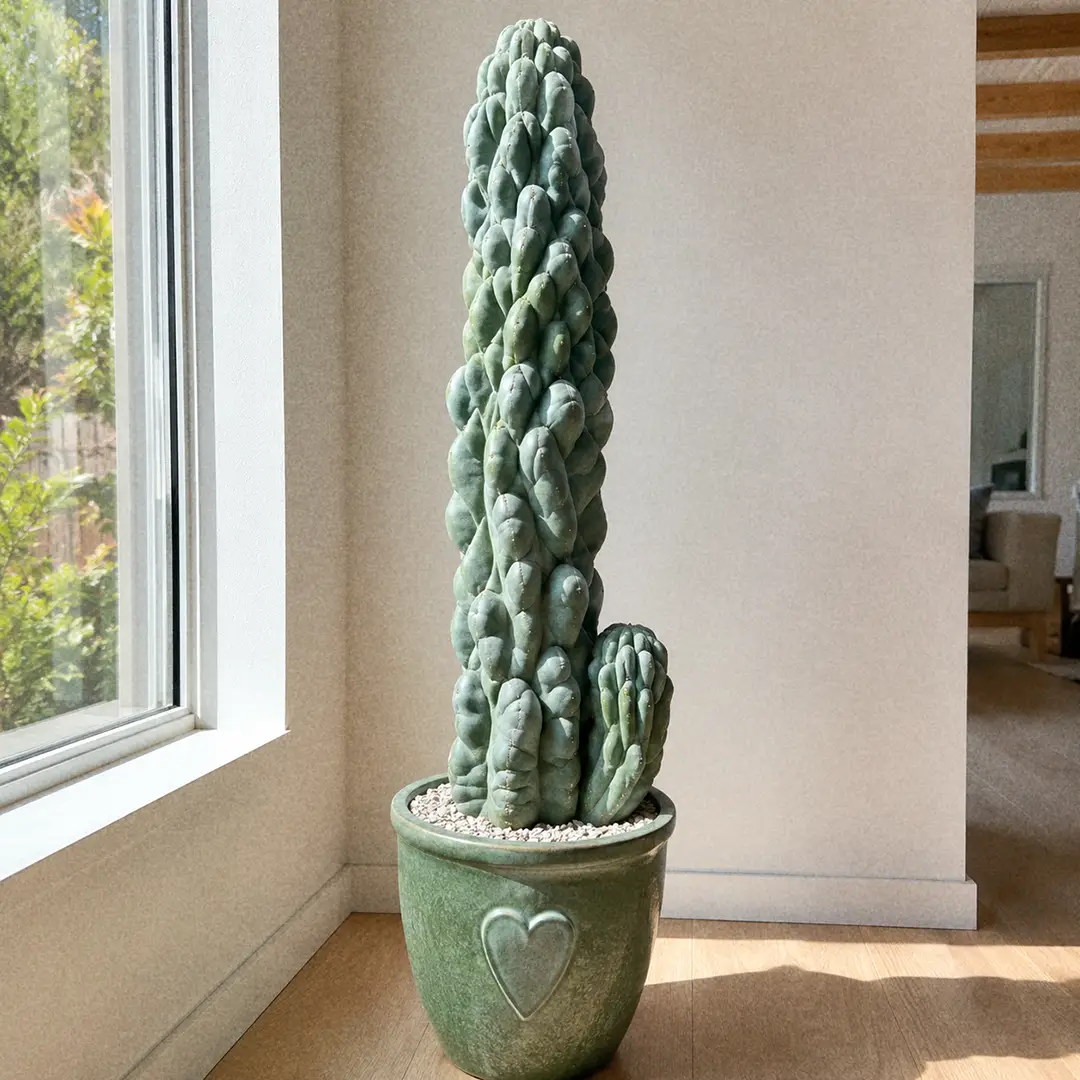
Complete Guide to Totem Pole Cactus Care and Growth
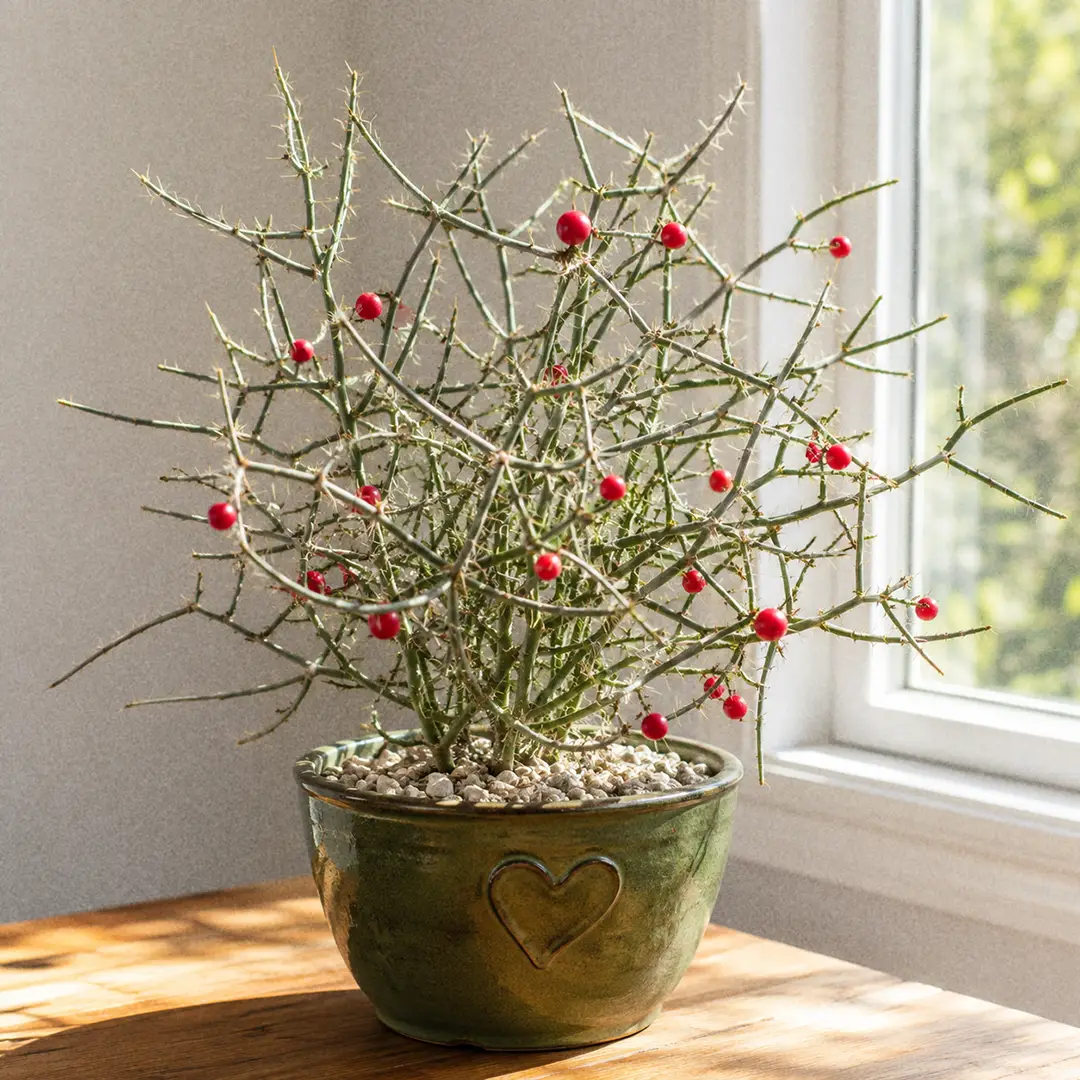
Complete Guide to Christmas Cholla Care and Growth
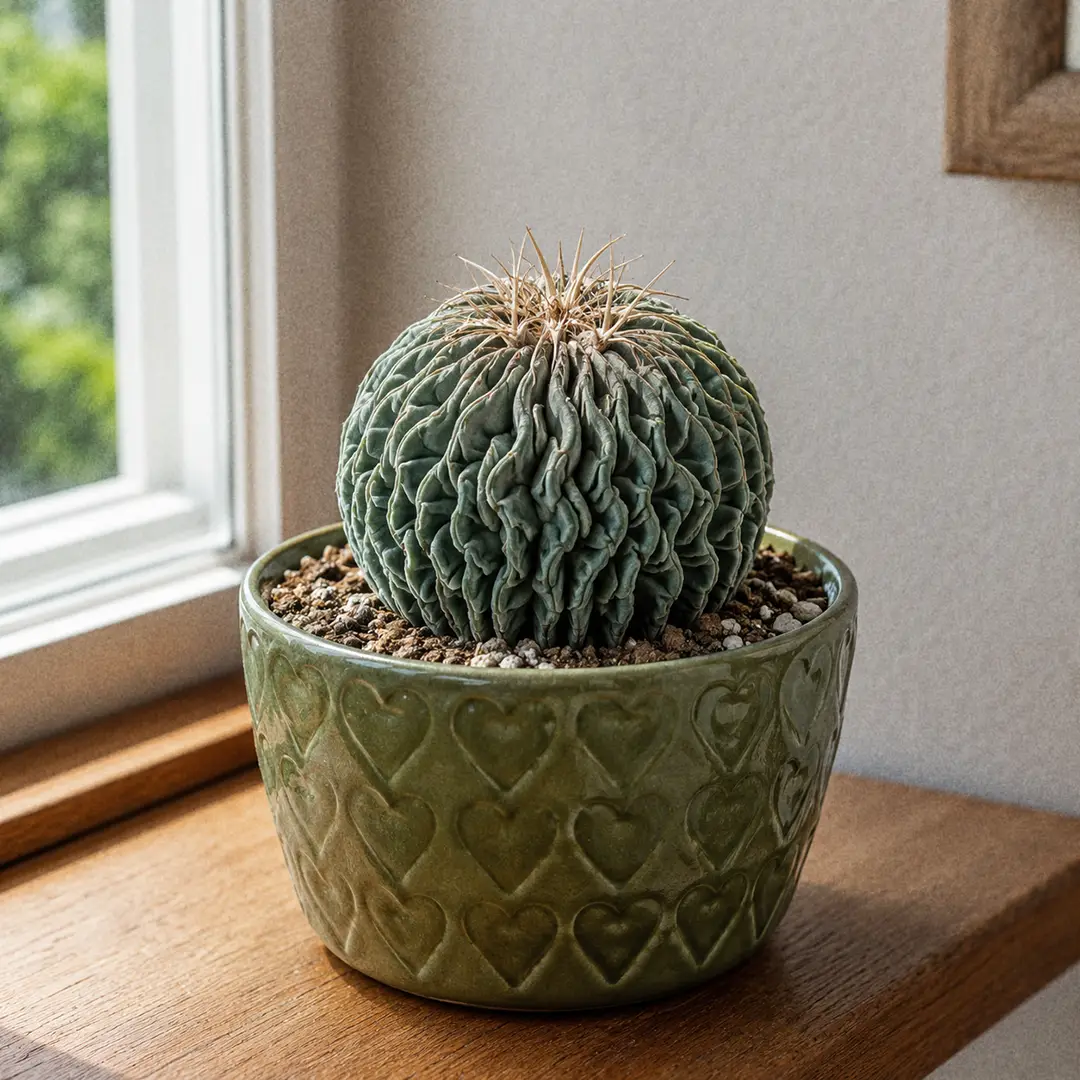
Complete Guide to Brain Cactus Care and Growth
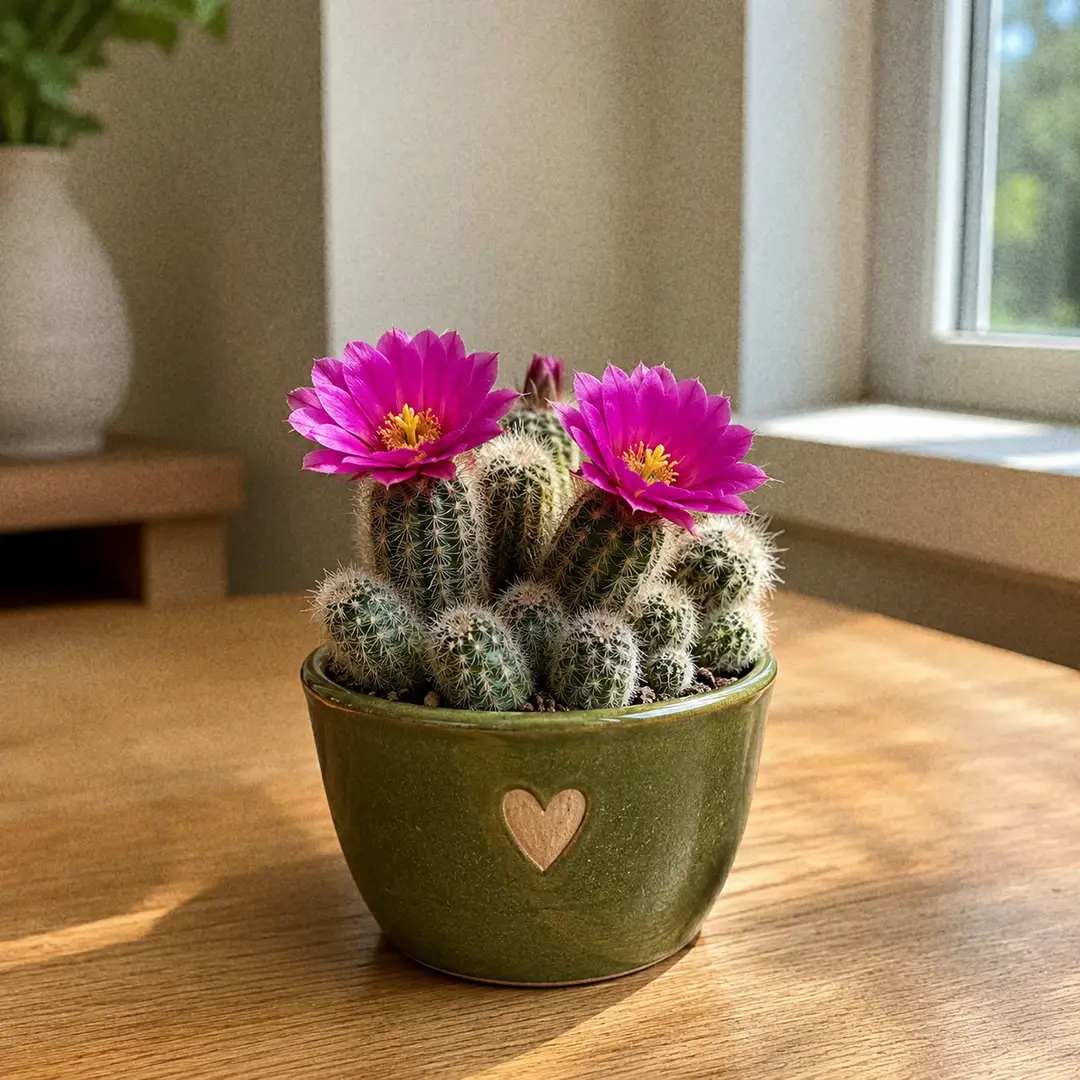
Complete Guide to Hedgehog Cactus Care and Growth
Complete Guide to Lady Finger Cactus Care and Growth
Complete Guide to Powder Puff Cactus Care and Growth
Complete Guide to Pincushion Cactus Care and Growth
Complete Guide to Peruvian Old Man Cactus Care and Growth
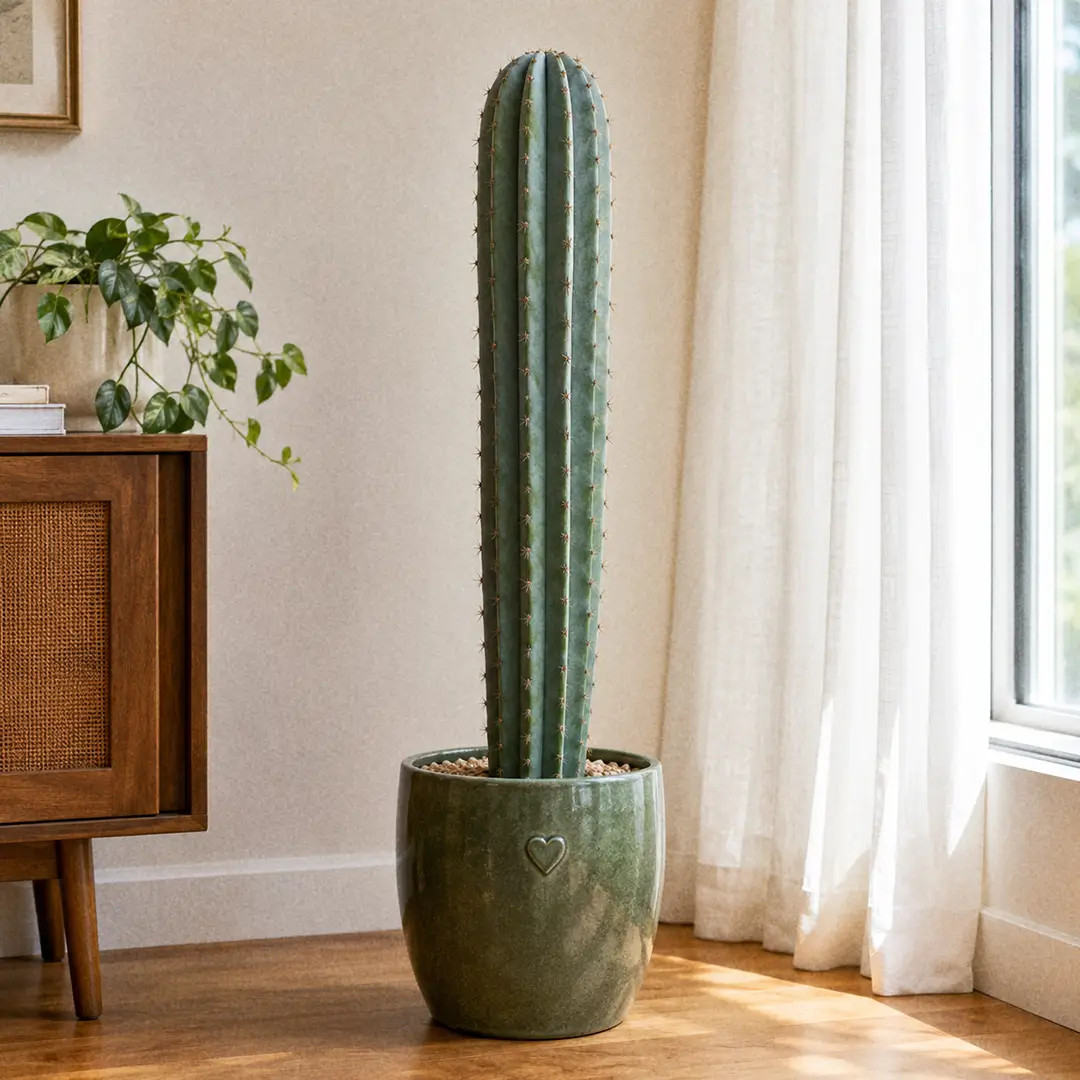
Complete Guide to Peruvian Apple Cactus Care and Growth
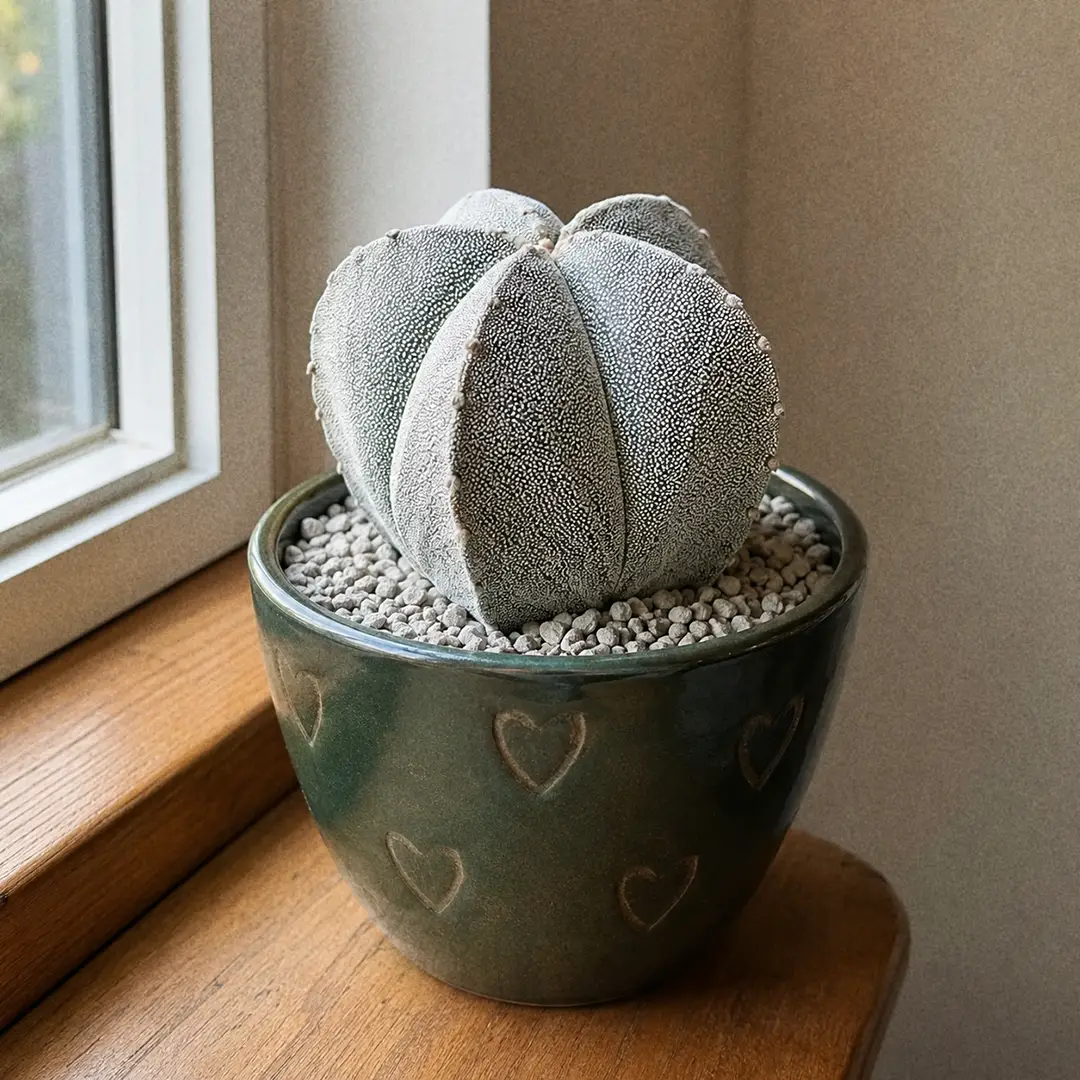
Complete Guide to Bishop's Cap Cactus Care and Growth
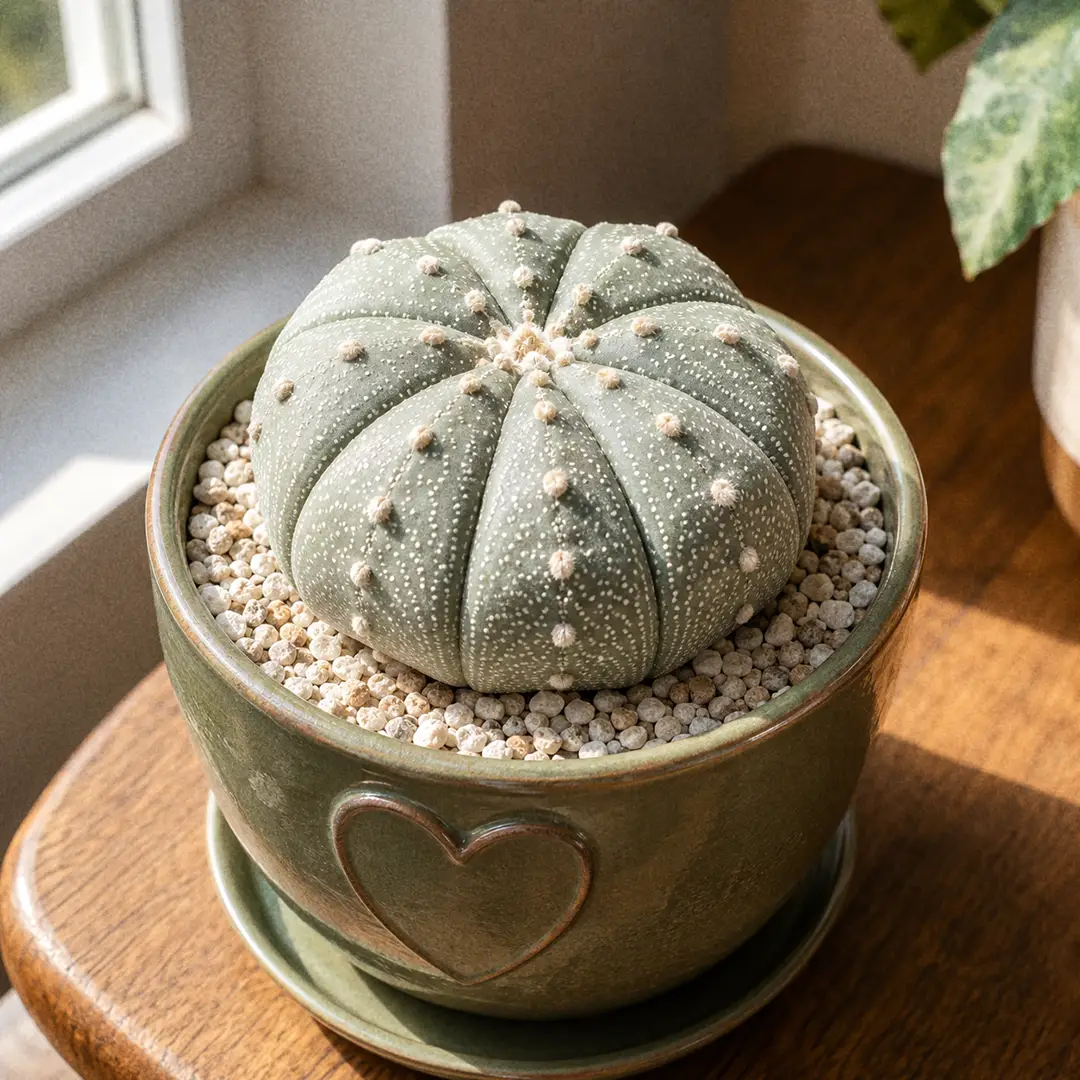
Complete Guide to Star Cactus Care and Growth
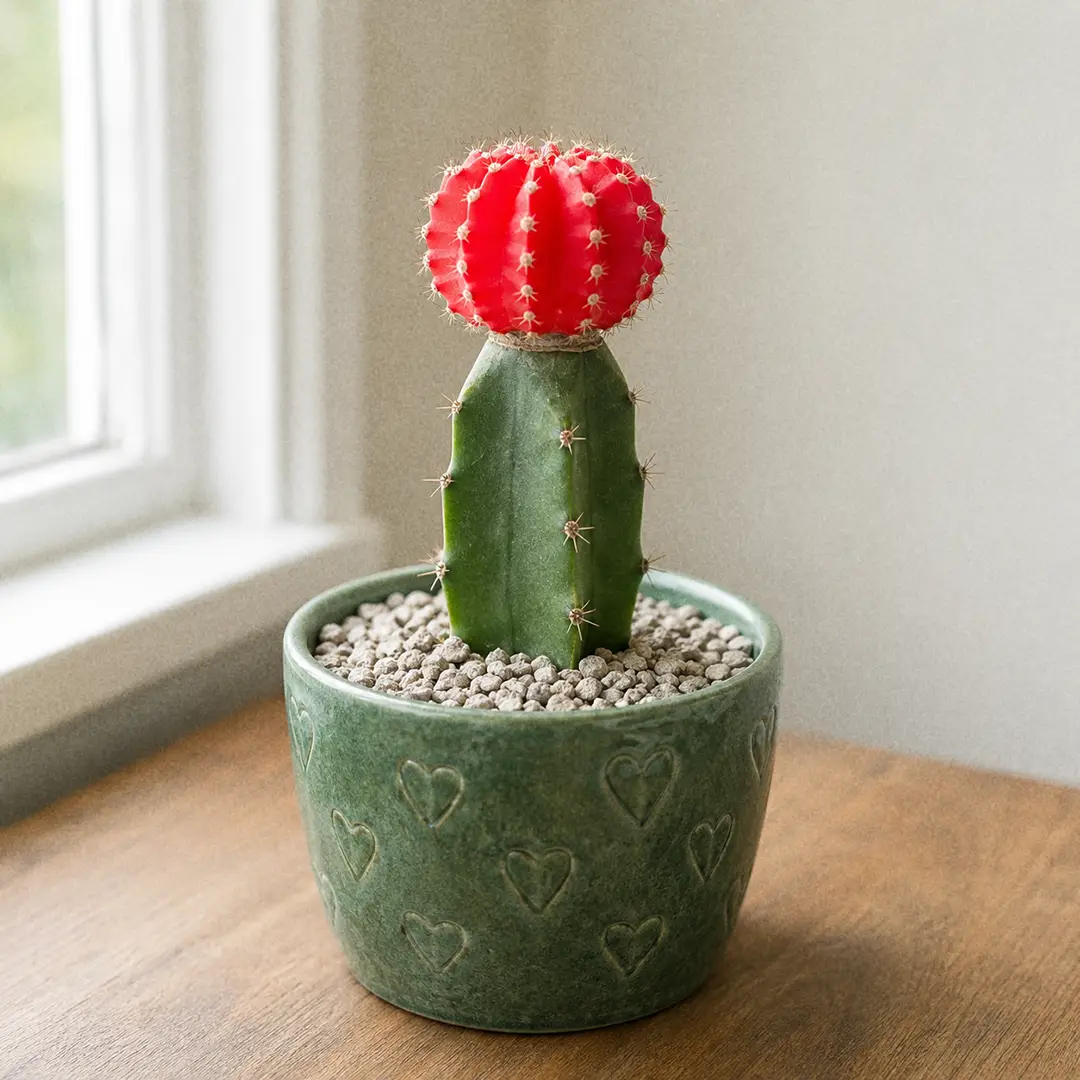
Complete Guide to Moon Cactus Care and Growth

Houseplant101 Forum
Questions & Comments
Ask a question, share your plant experience, or help other plant owners.
Comments are temporarily unavailable.
Open the Houseplant101 ForumNo comments yet
Be the first to ask a question or share your experience about this page.
Log in or create an account
Comments use your Houseplant101 Forum account, but you can stay on this page.
Create a new account