
Powder Puff Cactus
Mammillaria bocasana
Powderpuff Pincushion, Fishhook Powder Puff, Bocas Pincushion


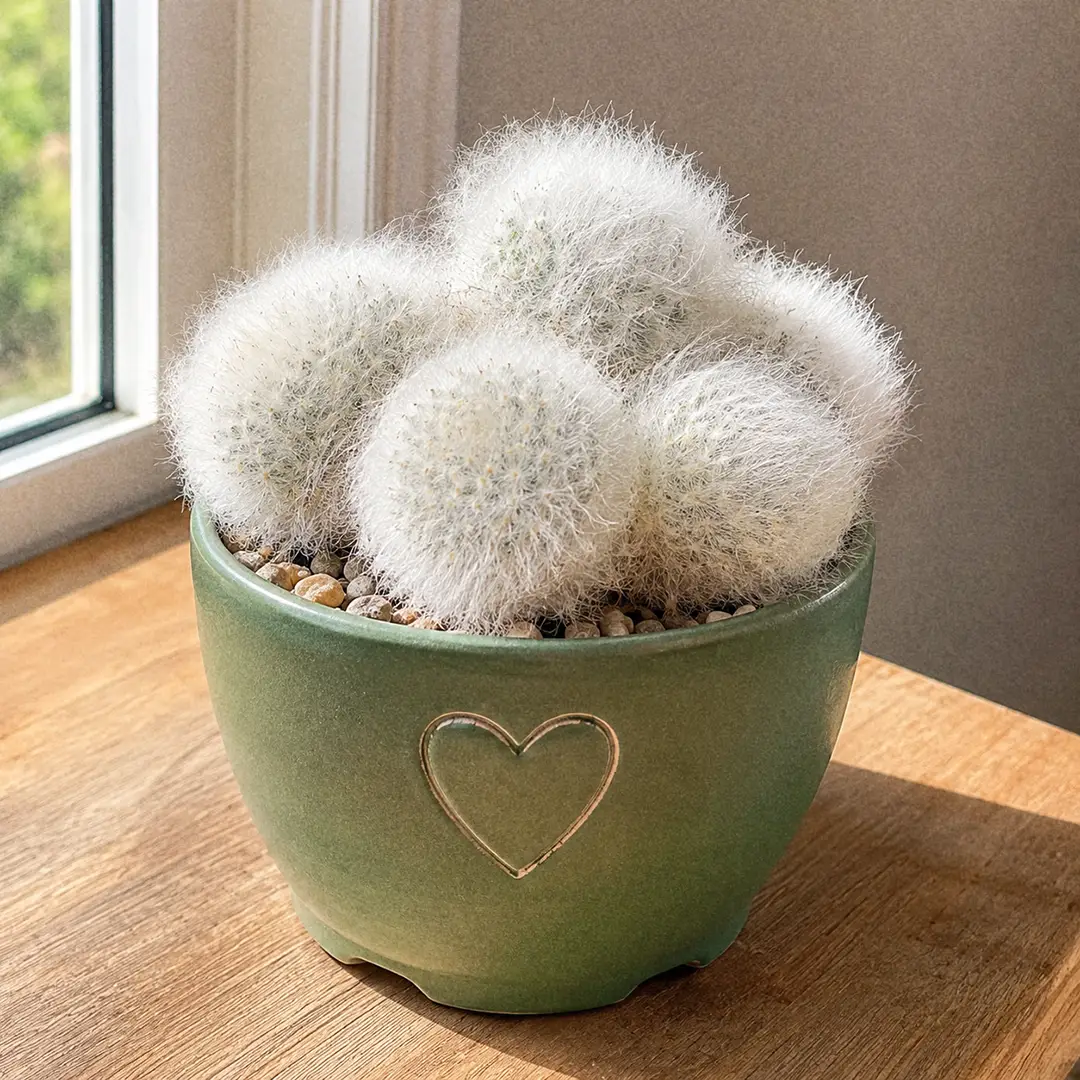
The Powder Puff Cactus (Mammillaria bocasana) is the small clumping desert cactus that wraps itself in dense, downy white hair until the whole plant looks like a cluster of fuzzy snowballs. Hidden under that soft coat are tiny hooked central spines and a yearly ring of cream-to-pink flowers, which makes this one of the most charming and reliable beginner cacti you can grow on a sunny windowsill.
📝 Powder Puff Cactus Care Notes
🌿 Care Instructions
⚠️ Common Pests
📊 Growth Information
🪴 In This Guide 🪴

☀️ Powder Puff Cactus Light Requirements (Full to Bright Indirect Sun)
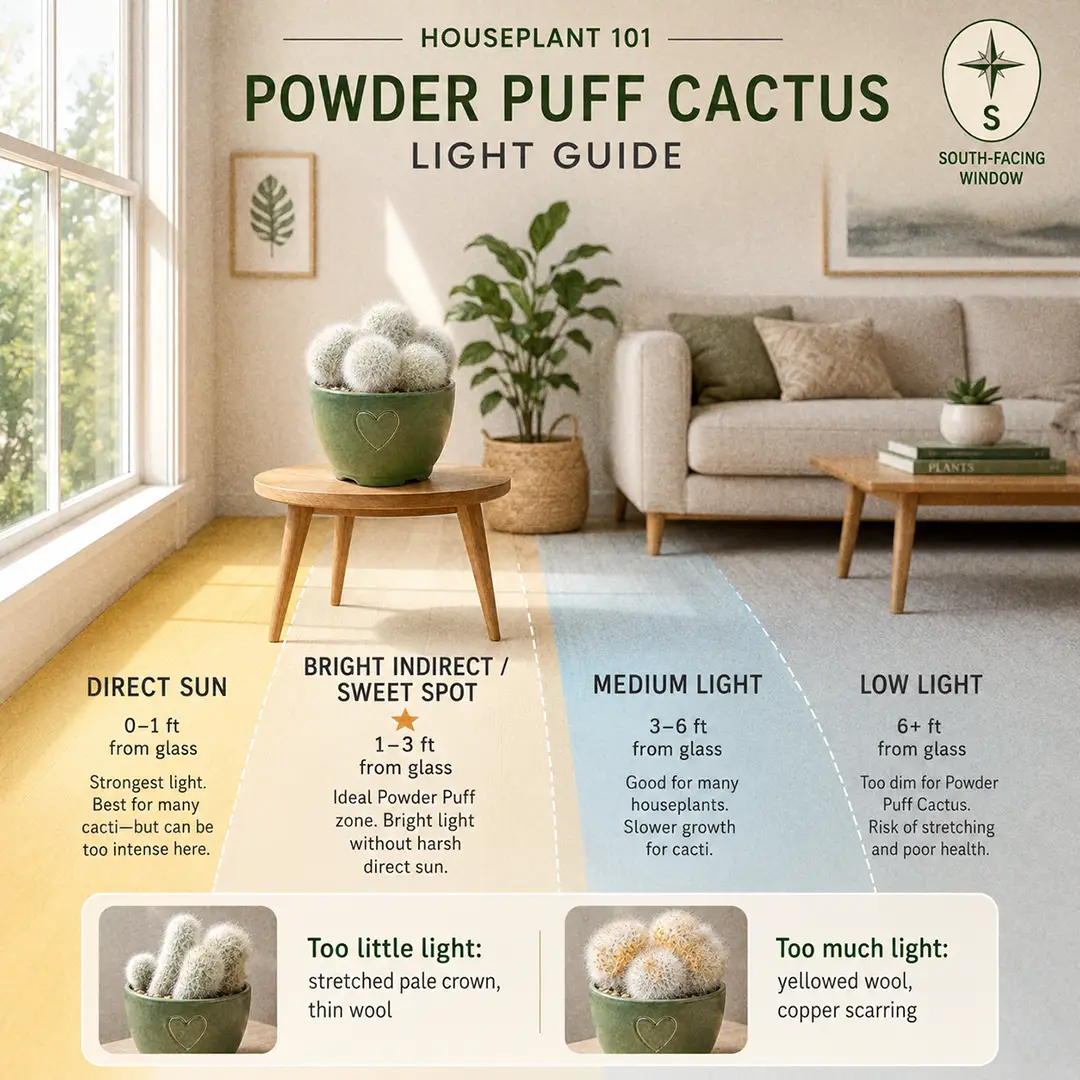
The dense white wool acts as a built-in sun hat, so this plant takes more direct sun than most houseplants. It still wants gradual hardening and a few hours of shade in the harshest part of summer.
The Sweet Spot
A south or west window with four to six hours of direct sun a day is ideal. An unobstructed east window works for younger plants and through the brightest months of summer. Set the pot within a foot of the glass for most of the year and pull it back two or three inches in July and August if the body underneath the wool starts to flush copper or red. In a dim apartment, a 12 to 14 hour grow light overhead does the same job, and many indoor Mammillaria growers in northern climates rely on one through winter. See light for houseplants for the bigger picture.
Too Little Light
A Powder Puff Cactus that does not get enough light stretches upward from the crown, loses its perfectly round shape, and produces pale, sparsely-wooled new growth at the top. The wool itself thins out so the green body shows through in patches. The next year's flower ring usually fails to form. Move the plant closer to the brightest available window or add a strong grow light directly above it.
Too Much Light
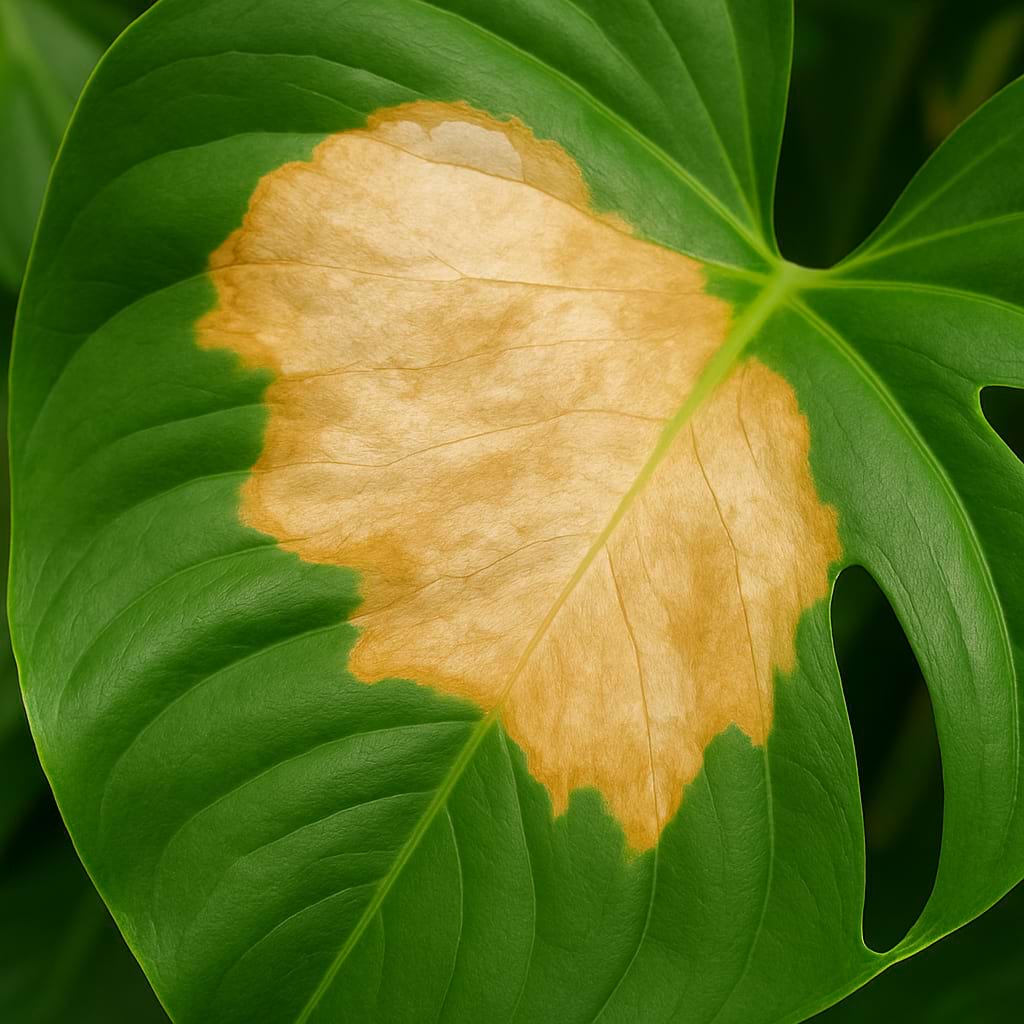
A plant moved straight from a low-light shop to a south window in midsummer can scorch on the side facing the glass, leaving the wool yellowed and the body underneath patched with permanent tan scars. Harden the cactus into stronger sun over two weeks by moving it closer in stages. The white coat tolerates a lot, but once the body underneath is scarred, the mark does not fade.
💧 Powder Puff Cactus Watering Guide (Soak and Dry, Sparingly)
Watering kills almost every Powder Puff Cactus that fails indoors. A few extra days of damp soil cause more harm than a few extra weeks of dry, and the wool coat traps water for far longer than you would think.
Watering Frequency
In spring and summer, water deeply only when the soil is completely dry from top to bottom. For a 4 inch terracotta pot in a sunny window, that lands roughly every 10 to 14 days. A glazed pot or a cooler spot stretches that to three weeks. The classic skewer test works well: push a thin wooden chopstick to the bottom of the pot and if it comes out cool or dark, wait a few more days. See watering houseplants for the broader technique.
In autumn and winter, cut watering way back. A Powder Puff Cactus in a cool 45 to 55°F (7 to 13°C) room can stay almost dry for three months and reward you with a thicker spring flower ring. A plant in a heated 70°F (21°C) living room still wants a small drink every four to six weeks to stop the body from shrivelling.
How to Water
Pour room-temperature water around the base until it drains out the hole, wait ten minutes, then tip out the saucer. Never let the pot sit in standing water. Keep water off the wool itself: drops trapped in the dense coat sit on the body for days and invite black fungal spots. Bottom watering is an excellent option if your soil mix is gritty enough, since it keeps the wool bone dry while the roots drink.
Signs of Trouble
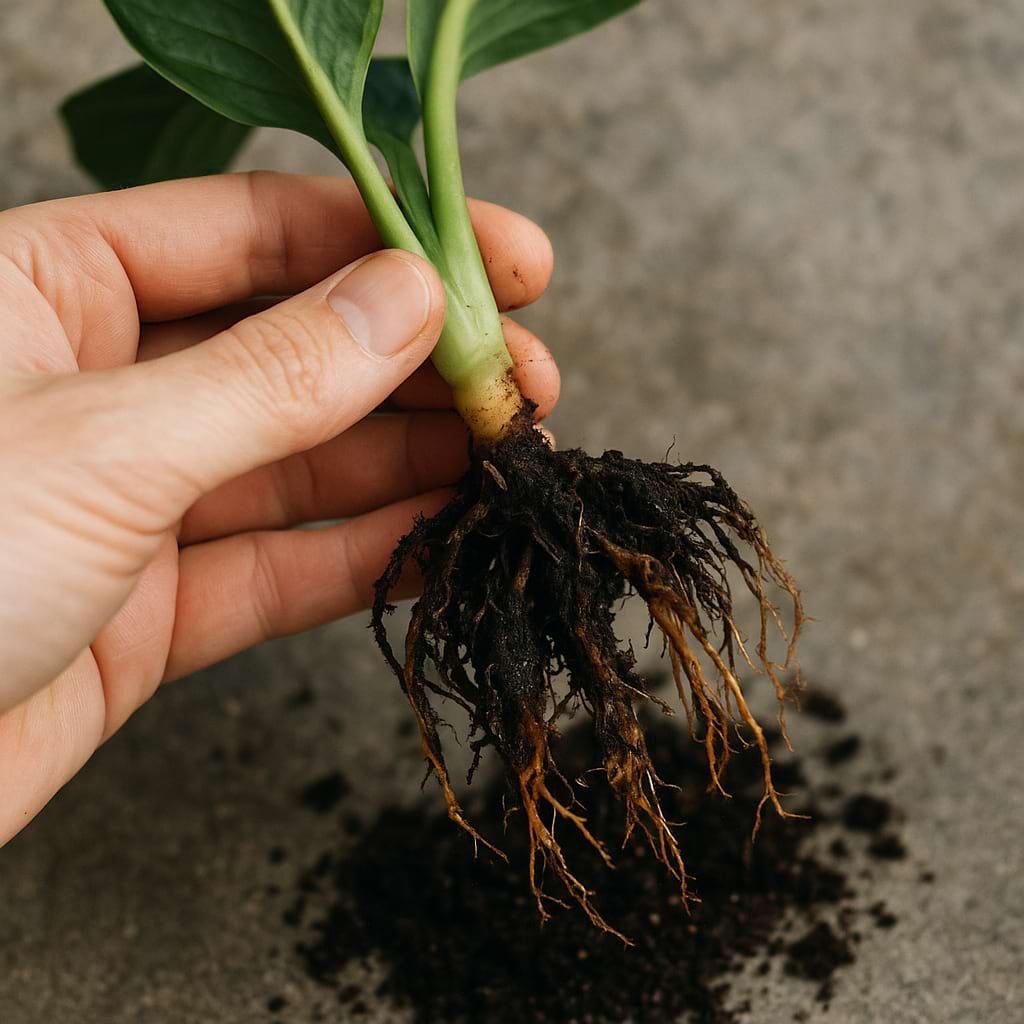
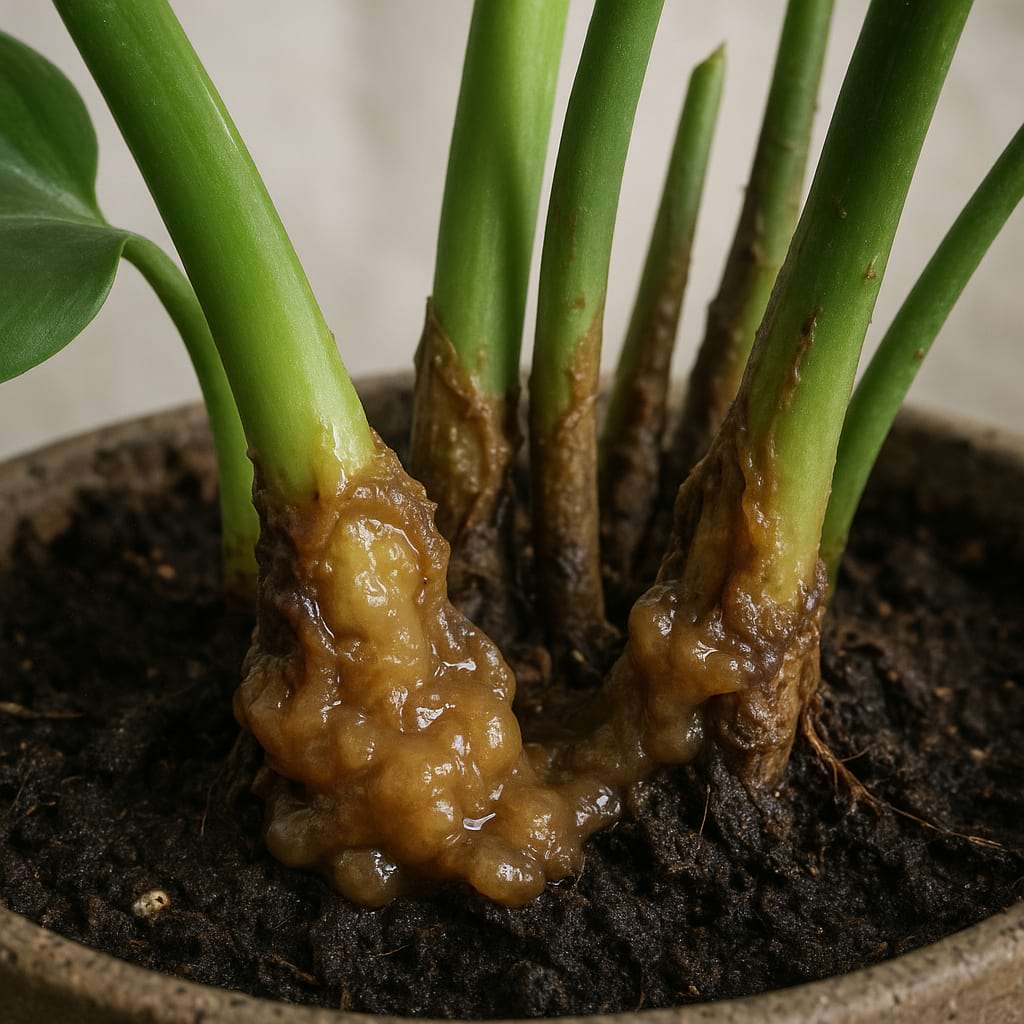
A thirsty Powder Puff Cactus shrinks slightly, the body pulls inward under the wool, and the whole plant feels lighter than it should when you lift the pot. A single deep water plumps it back up within a day or two. Overwatering looks very different: the base discolors from pale brown to dark mahogany, the body softens at the soil line, the wool around the base looks dingy and matted, and the whole clump may topple. Once rot reaches the body, the only rescue is cutting well above the damage and re-rooting the clean top in dry grit.
🪴 Best Soil for Powder Puff Cactus (Gritty and Mineral-Heavy)
Soil is the second-biggest decision after light. The right mix forgives the occasional heavy hand with the watering can.
What the Soil Needs
A mix that drains in seconds, dries fully within a week, and contains very little peat or compost. Mammillaria bocasana grows on rocky limestone in central Mexico, so a pinch of crushed limestone nudges the pH where it likes it.
DIY Soil Mix
- 1 part standard cactus and succulent mix
- 1 part coarse pumice (or perlite)
- 1 part coarse horticultural sand or fine gravel
Squeeze a damp handful of the finished mix; it should fall apart the instant you open your fingers. If it holds together as a clump, add more pumice or grit. The same recipe works well for a Pincushion Cactus, a Bishop's Cap Cactus, or any other small globular cactus you grow alongside.
Pre-Made Options
Most bagged cactus mixes from a garden center are too peaty for a Powder Puff Cactus straight out of the bag. Cut them 50/50 with pumice or perlite before potting. Avoid any mix advertised as "moisture retentive" or "premium" with added compost; those bags are pitched at general houseplants and will hold the roots too wet. See repotting for the broader picture.
🍼 Fertilizing Powder Puff Cactus (Light Annual Feeds)
A slow grower from nutrient-poor habitat. Overfeeding pushes soft pale growth that splits the body and ruins the tidy shape.
When and How Often
Feed only during active growth, from mid spring to late summer. Two to three feedings a year is plenty: one in late May, one in early July, and an optional last one in mid August. Skip the rest of the year and never feed a freshly repotted plant for the first two months.
What to Use
Use a low-nitrogen cactus and succulent fertilizer (around 2-7-7 or 5-10-10) at half the label strength. Water the plant with plain water first, then apply the diluted feed to damp soil. Liquid kelp at a quarter strength is a gentler organic option. See fertilizing houseplants for general guidance on dilution and timing.
Over-Fertilizing Signs
A white crust on the soil surface or around the pot rim means salt build-up. Flush the pot with a few pot volumes of plain water, skip the next planned feeding, and dilute further next time. New growth that looks unusually green, soft, and stretched is the early warning that you are pushing the plant too hard.
🌡️ Powder Puff Cactus Temperature Range
A forgiving plant on temperature. Normal household conditions feel mild to a species that handles cool nights and hot afternoons in the wild.
Ideal Range
Through spring, summer, and autumn, aim for 65 to 90°F (18 to 32°C). Normal indoor temperatures are perfect, and a hot sunny windowsill in July is no problem as long as you have hardened the plant into stronger sun first. Mature Powder Puff Cacti tolerate brief outdoor drops to around 25°F (-4°C) if completely dry at the root, but indoor plants should never see below 45°F (7°C).
Drafts and Heat Sources
A cool winter rest at 45 to 55°F (7 to 13°C) for at least eight weeks is what triggers the heavy spring flower ring. An unheated bright porch, a cool spare room, or a windowsill behind a thermal curtain all work for this. Avoid sudden drafts from open doors in winter, and keep the cactus a clear foot away from any working radiator that dries out the body unevenly and can melt the wool on the heat side.
💦 Powder Puff Cactus Humidity Requirements
Ideal Humidity
Comfortable in normal household humidity, anywhere from 30 to 45 percent. No misting, no humidifier, no pebble trays, and absolutely no closed terrariums. The whole point of the body's design (and that thick wool coat) is to thrive in dry air, so anything that bumps humidity above 60 percent for long is a problem.
Easy Humidity Boosters
You almost never need any. The only humidity-related risk is a damp, cool, still corner in late autumn before the heating kicks in, when stagnant air at low temperatures encourages black fungal spots in the wool. A small clip-on fan running a few hours a day fixes that. Avoid steamy bathrooms, kitchen sinks, and any spot where condensation collects on a nearby window in winter.
🌸 Powder Puff Cactus Flowers (Ring of Cream and Pink Blooms)
This is the headline feature of the species after the wool itself, and it is the reason so many beginners end up with a whole shelf of Mammillaria.
What the Flowers Look Like
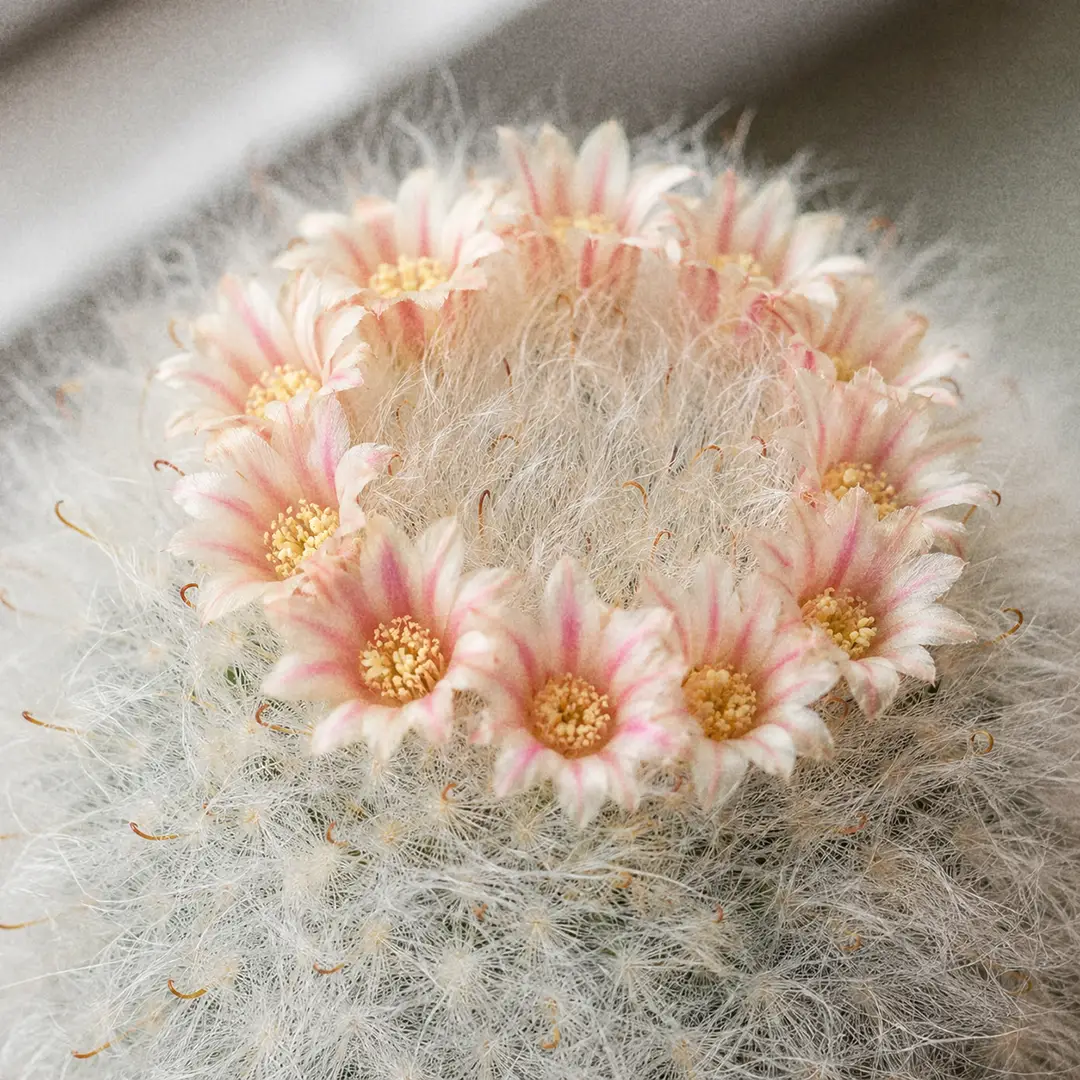
Each flower is small, funnel-shaped, and about three quarters of an inch across. Petals are cream to pale pink with a soft pink mid-stripe down the center. The flowers open together in a tidy circle around the top of each mature head, like a small floral crown sitting in the wool. The bloom lasts about a week, and many plants produce a second smaller flush later in the season.
How to Trigger Bloom
Three things have to line up. The plant has to be mature, usually at least two years old and around 1.5 inches across. It has to have spent the previous winter cool and almost dry, ideally at 45 to 55°F (7 to 13°C) for eight weeks or more. And it has to be getting strong direct or very bright indirect light from early spring through summer. Move a winter-rested plant back into warmth and gentle watering in February and the flower ring usually forms within four to six weeks. Because the species is self-fertile, a single plant can pollinate itself and follow the flowers with small pink "chilitos" fruits a few weeks later.
If It Won't Bloom
If the plant is healthy and clearly mature but never flowers, the missing ingredient is almost always the cool dry winter rest. A Powder Puff Cactus kept warm and watered year-round will live happily for decades without ever forming a bud. Once you give it a proper rest, it usually starts blooming the very next spring.
🏷️ Powder Puff Cactus Types and Varieties
Mammillaria bocasana is one species, but collectors have selected several distinct forms, and the "Powder Puff" name gets used loosely on a couple of look-alikes.
Mammillaria bocasana (the standard form)
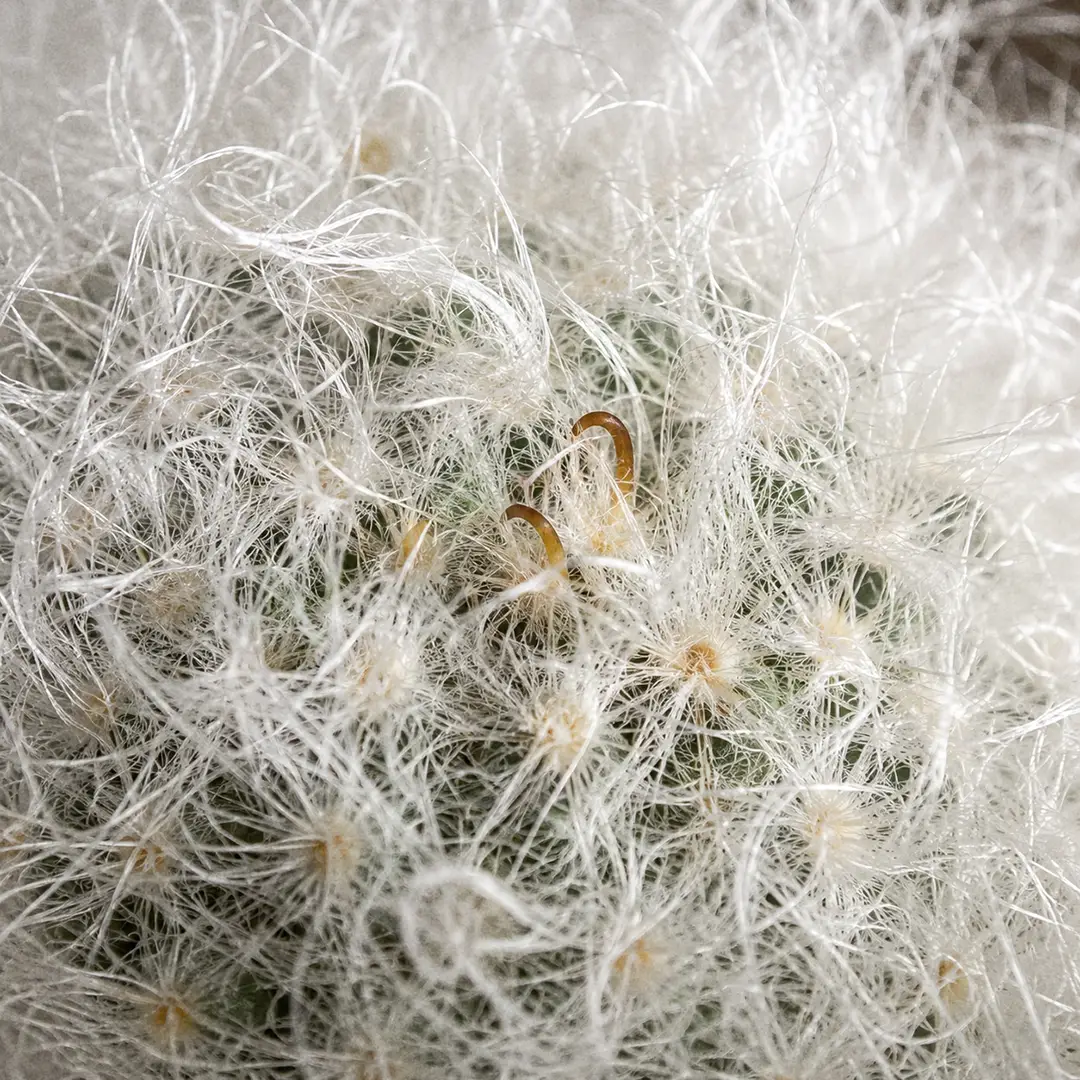
The classic Powder Puff. Globular bluish-green heads two to three inches across, almost entirely hidden under a coat of pure-white fine wool, with tiny amber hooked central spines underneath. Cream-and-pink flowers in spring, followed by pink "chilitos" fruits. Clumps freely into small mounds.
Mammillaria bocasana 'Fred'
A spectacular crested cultivar with brain-like undulating growth instead of separate spherical heads. The wool coat is the same snow-white, but the body twists into ridges and folds. Slower-growing and harder to find, but a centerpiece plant for a Mammillaria collection.
Mammillaria bocasana 'Roseiflora'
A selected form with deeper pink flowers and a slightly thicker wool coat than the type species. The bloom ring is noticeably more colorful, which is why this form often shows up in florist shops at Valentine's Day.
Mammillaria bocasana 'Multilanata'
A wool-heavy selection with an even denser white coat that almost completely hides the green body, even on the newest growth. Looks more like a tight ball of snow than a cactus. Slower to clump than the type.
Close Relatives Sold as "Powder Puff"
The name "Powder Puff" gets used loosely in shops. The most common look-alike is Feather Cactus (M. plumosa), which has a similar snowy coat but with feathery (not hair-like) spines and no hooked centrals underneath. The Old Lady Cactus (M. hahniana) wears a longer, silkier coat of pure white hair and crowns itself with a vivid magenta flower ring instead of cream-pink, and the classic Pincushion Cactus (M. crinita) is also sometimes mis-labeled. Shops sometimes hang the name "Snowball" on both this plant and the Snowball Cactus (M. gracilis fragilis), which is easy to separate once you touch it: that one is a mat of loose thimble-sized stems that drop off in your hand, with no wool and no hooks. If you see hooked central spines just under the wool, you almost certainly have a true M. bocasana.
Good Shelf Companions
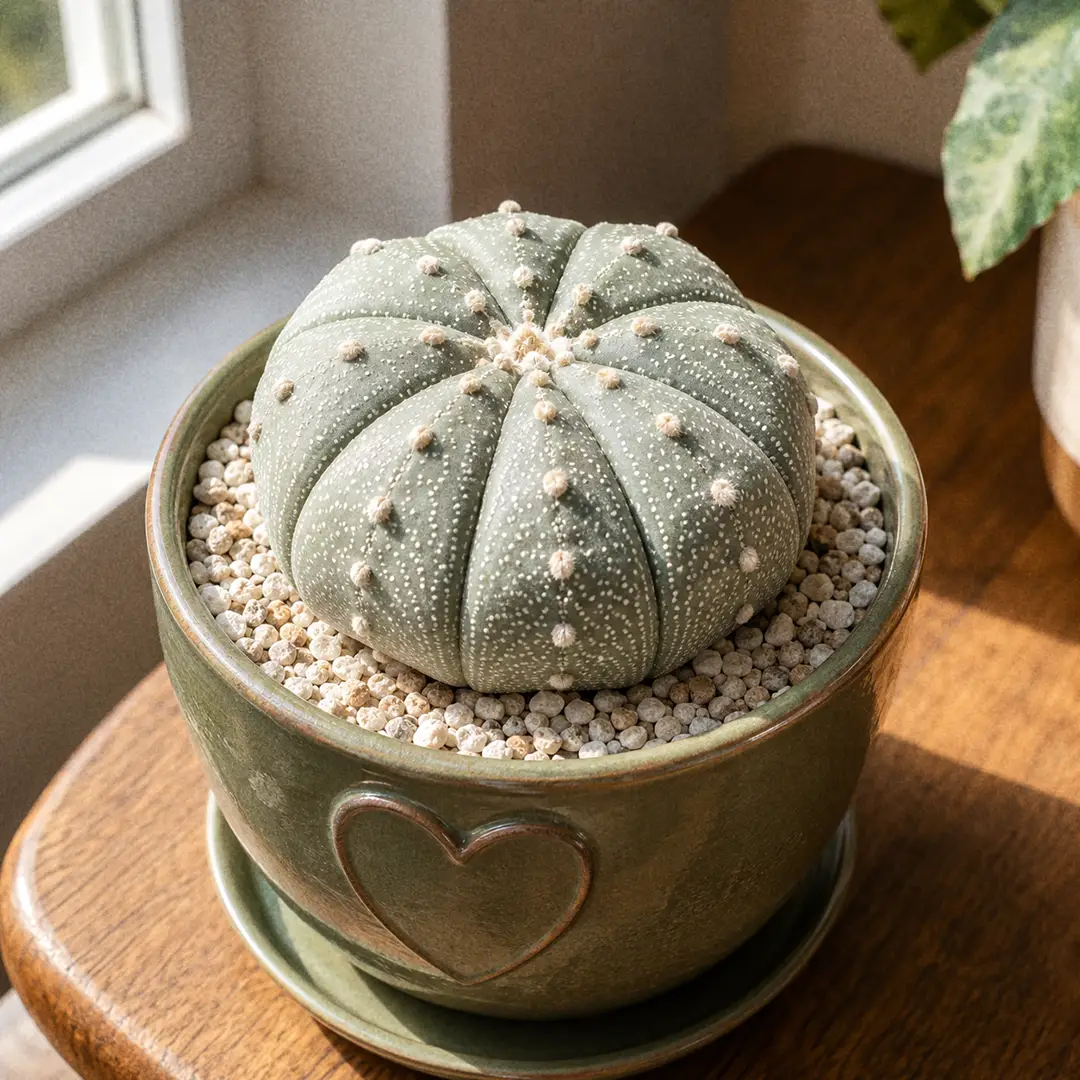
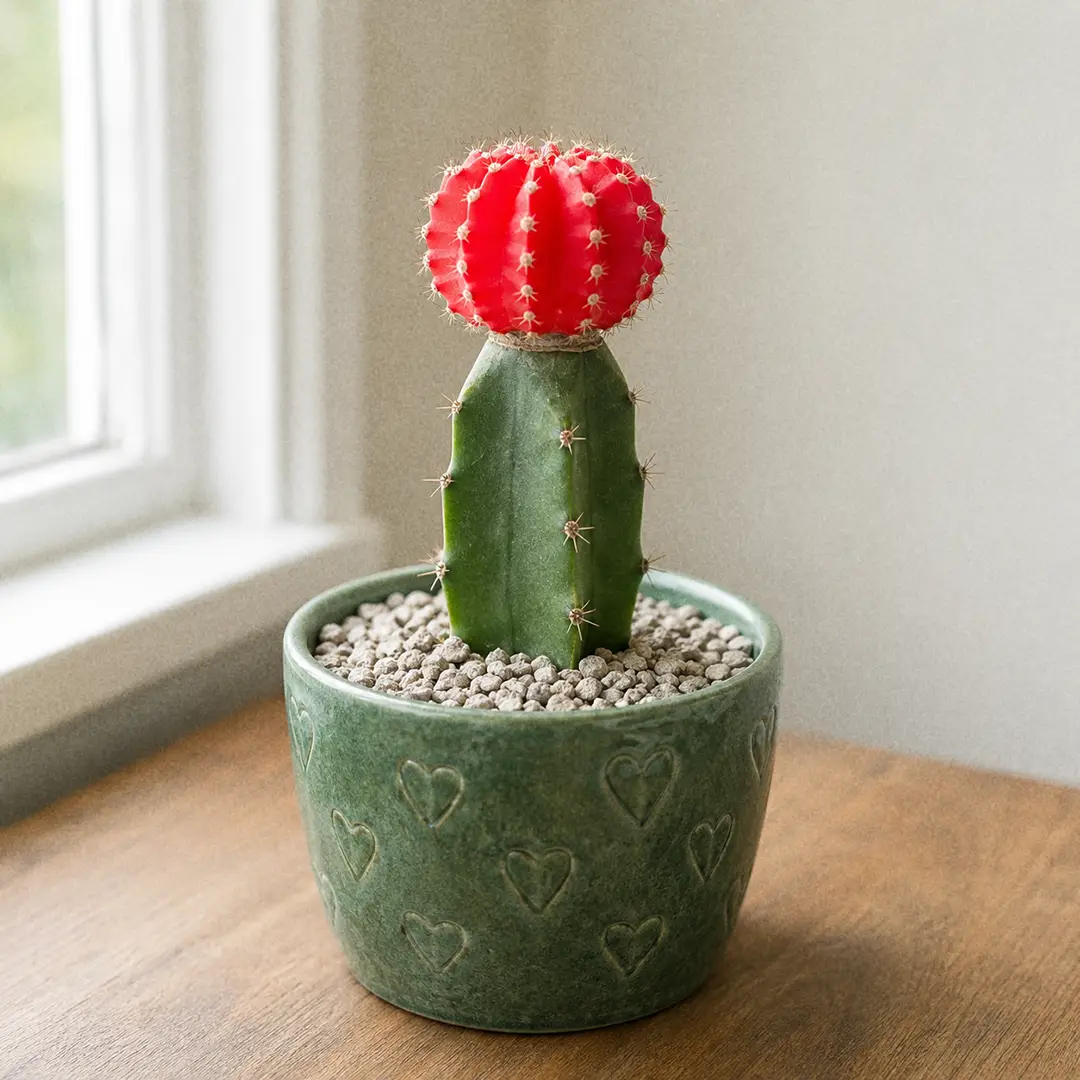
A Powder Puff Cactus looks best next to cacti with a strong silhouette of their own. The smooth spineless five-rib star of a Bishop's Cap Cactus gives the shelf a clean counterpoint to the soft white globes. A perfectly round green Golden Barrel Cactus and a flat sand-dollar Star Cactus round out the small-globe collection. For a tall woolly contrast behind the puffs, the towering Old Man Cactus or its denser-fleeced Andean cousin the Peruvian Old Man Cactus read beautifully. A grafted Moon Cactus adds a candy-bright pop of red or yellow alongside, and the spiky counterpoint from the same genus is the Lady Finger Cactus (M. elongata), whose slim golden fingers make the soft white puffs look even softer. For a splash of hot color at the same small scale, add a Crown Cactus, whose scarlet flowers ring the foot of the plant instead of crowning the top like the Powder Puff's.
🪴 Potting and Repotting Powder Puff Cactus
When to Repot
A Powder Puff Cactus is a slow to moderate grower and prefers to be snug. Repot every two to three years, or only when the clump has clearly outgrown the pot and you can see roots at the drainage hole. Spring or early summer is the best window. Avoid repotting in autumn or winter unless you are rescuing a plant from rotted soil.
Choosing a Pot
A small terracotta pot one inch wider than the current one is the gold standard. Clay wicks moisture out of the mix and shortens the drying time, which protects the roots through any winter watering mistakes. The root system is shallow and spreads sideways rather than down, so a wider, shallower pot is often better than a tall narrow one. Make sure there is at least one drainage hole; no exceptions.
Step-by-Step Repotting
- Wait until the soil is bone dry. A dry plant is lighter and the rootball pops out cleanly.
- Wrap the body loosely in a folded paper towel or use kitchen tongs to protect your fingers. The wool looks soft, but those hidden hooked centrals will grab skin like Velcro.
- Tip the pot sideways, gently slide the rootball out, and shake off the old mix.
- Inspect the roots. Trim any black, mushy, or hollow ones with sterile scissors. Healthy roots are firm and pale tan.
- Set fresh gritty mix in the new pot. Place the cactus at the same depth as before; burying any of the body in the soil is a fast route to rot, especially under wool.
- Tamp the mix lightly with a chopstick and top-dress with a thin layer of red lava rock or dark grit to make the white coat pop.
- Do not water for one full week so any nicked roots can callus over.
✂️ Pruning Powder Puff Cactus
Why Pruning Is Rare
The plant does not need shaping. Each head grows from a single point at the top, and cutting that point off exposes the inner tissue to fungal infection. Pruning is almost always a mistake.
When You Might Need to Cut
The only time a knife comes into play is rescue work. If the base of a head has rotted, slice across the body in a clean horizontal cut well above any visible discoloration, dust the cut surface with cinnamon or sulfur powder, and rest the top piece on dry grit for two weeks. Once a hard callus has formed, set it on fresh dry mix and treat as a rooted plant, watering only after another two weeks.
Tidying Old Flowers and Fruits
Spent flowers shrink to papery wisps and the pink fruits wither into raisin-like husks. Pluck them off with tweezers if you prefer a cleaner look, but most growers leave the "chilitos" alone since they look like a tiny crown of berries sitting on the wool.
🌱 How to Propagate Powder Puff Cactus
Best Method: Offsets (Pups)
This is one of the easiest cacti to propagate. Mammillaria bocasana offsets generously at the base, producing a ring of small pups around the parent head. Within a season or two, what started as a single head becomes a small clump. Separating those pups is the standard way to grow new plants, share with friends, or rescue a partially-rotted parent.
Step-by-Step Pup Propagation
- Wait until the pup is at least half an inch across and has clearly developed its own coat of white wool and (often) its own small root threads at the base.
- Slide a clean knife or thin metal nail file between the pup and the parent and ease them apart with a small twist. Most pups separate cleanly with very little force.
- Set the pup aside on a dry paper towel out of direct sun for five to seven days. The cut surface must form a hard callus before it touches damp soil. Skip this step and you almost guarantee rot.
- Once callused, set the pup base-down on the surface of dry gritty mix in a small pot. Do not bury it.
- Wait two more weeks, then give a light first water around the edge of the pot.
- Roots usually grow within four to six weeks and the pup begins visibly fattening on top.
Seed Propagation
Because Mammillaria bocasana is self-fertile, a single mature plant produces viable seed without needing a partner. Sow seeds on the surface of sterile gritty mix in spring, mist lightly, cover with a clear lid until germination, then gradually expose the seedlings to room air. See succulent propagation for the broader technique. Seed-grown plants take three to four years to reach flowering size, so most growers stick with pups.
Tips for Success
Callus the pup before potting, use dry mix for the first two weeks, and keep new propagations out of direct sun until they have rooted. The wool does not protect freshly cut tissue, so moisture trapped against the cut surface causes trouble fast.
🐛 Powder Puff Cactus Pests and Treatment
The dense white wool gives insects a perfect hiding place, and a small infestation can go invisible for weeks if you do not actively check.
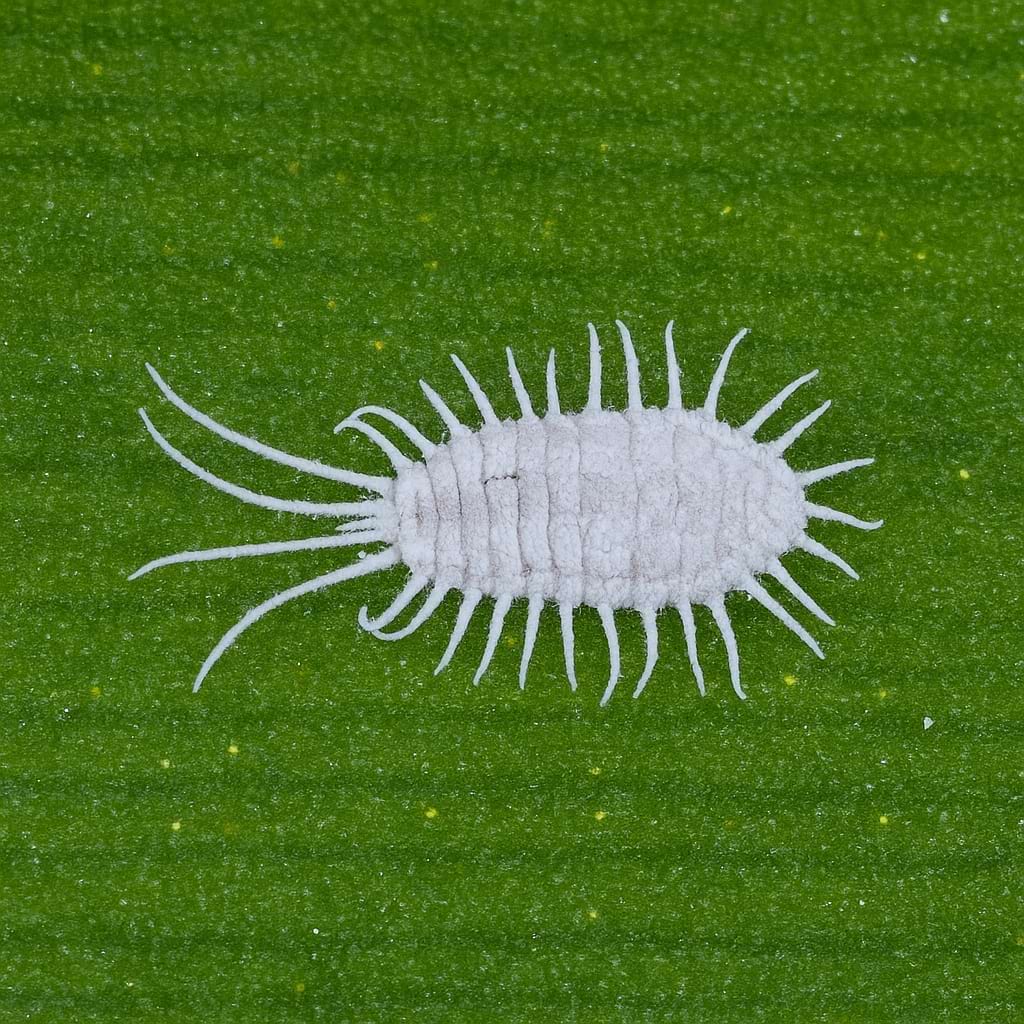
- Mealybugs: The most common pest, and the trickiest one because their cottony white tufts blend right into the wool. Look for slightly off-color clumps that move when you breathe on them. Dab each one with isopropyl alcohol on a cotton swab every five to seven days for three weeks. For heavy infestations, a soil drench with a systemic insecticide works.
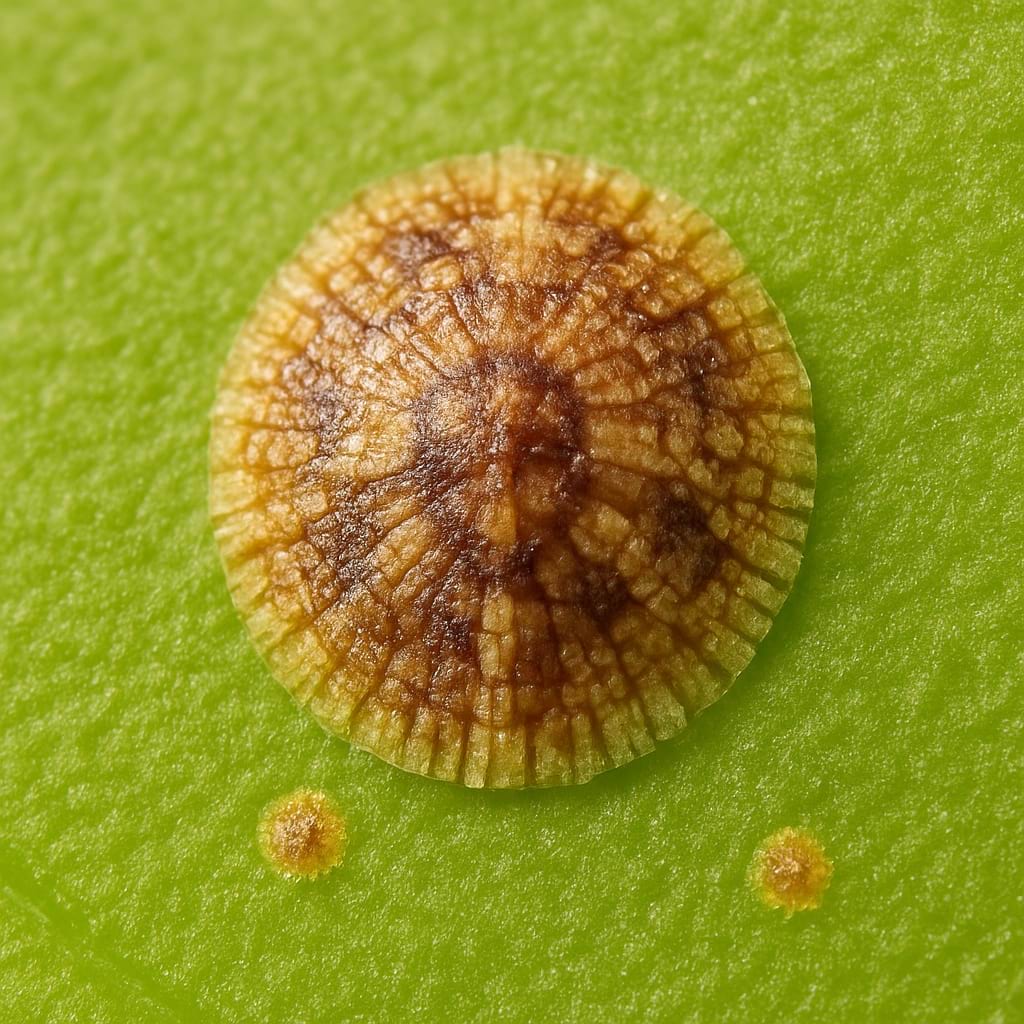
- Scale Insects: Small flat brown or tan shells stuck to the body under the wool or against the spines. Scrape off carefully with a wooden toothpick and follow up with neem oil. Use a small brush to part the wool when you inspect.
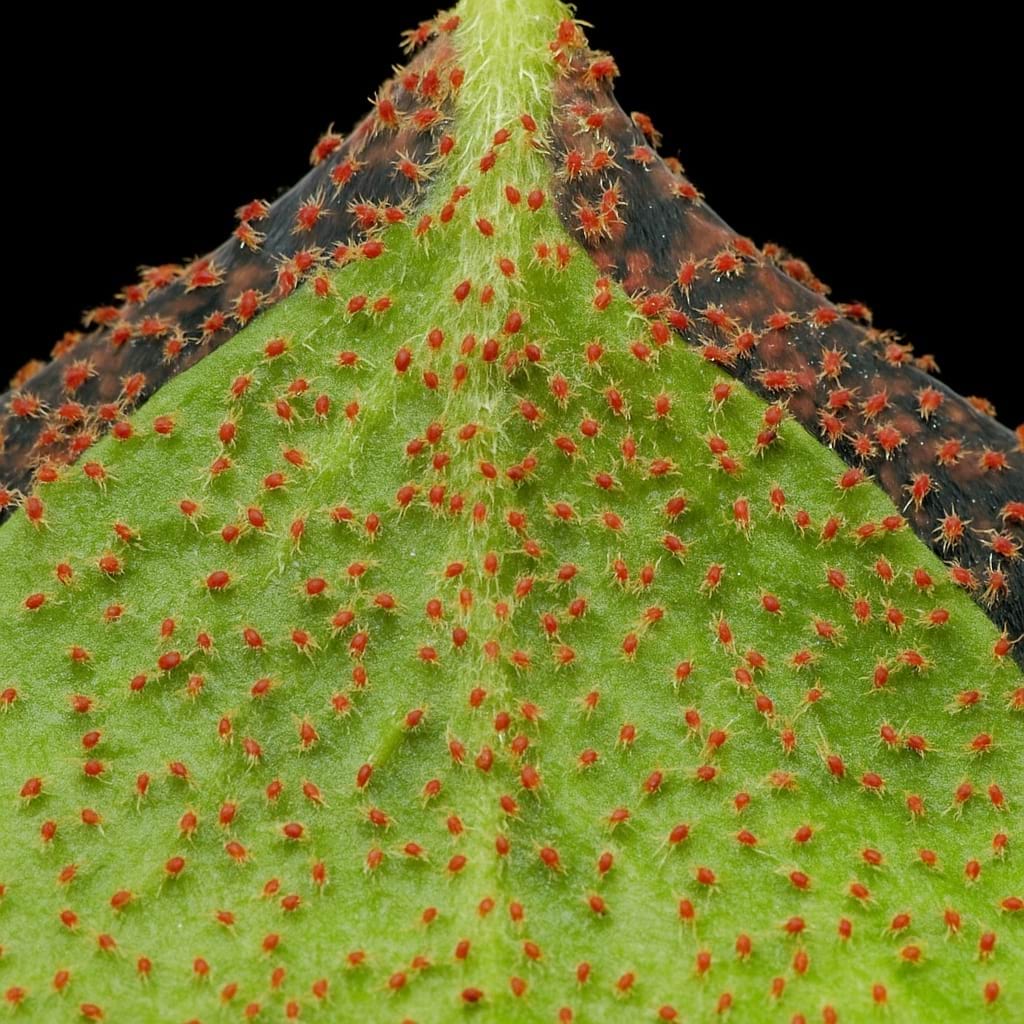
- Spider Mites: Fine webbing between the wool strands, especially in warm dry indoor air in winter. Brush the body gently with a soft dry brush and treat with a mild horticultural soap, keeping spray off the wool wherever you can.
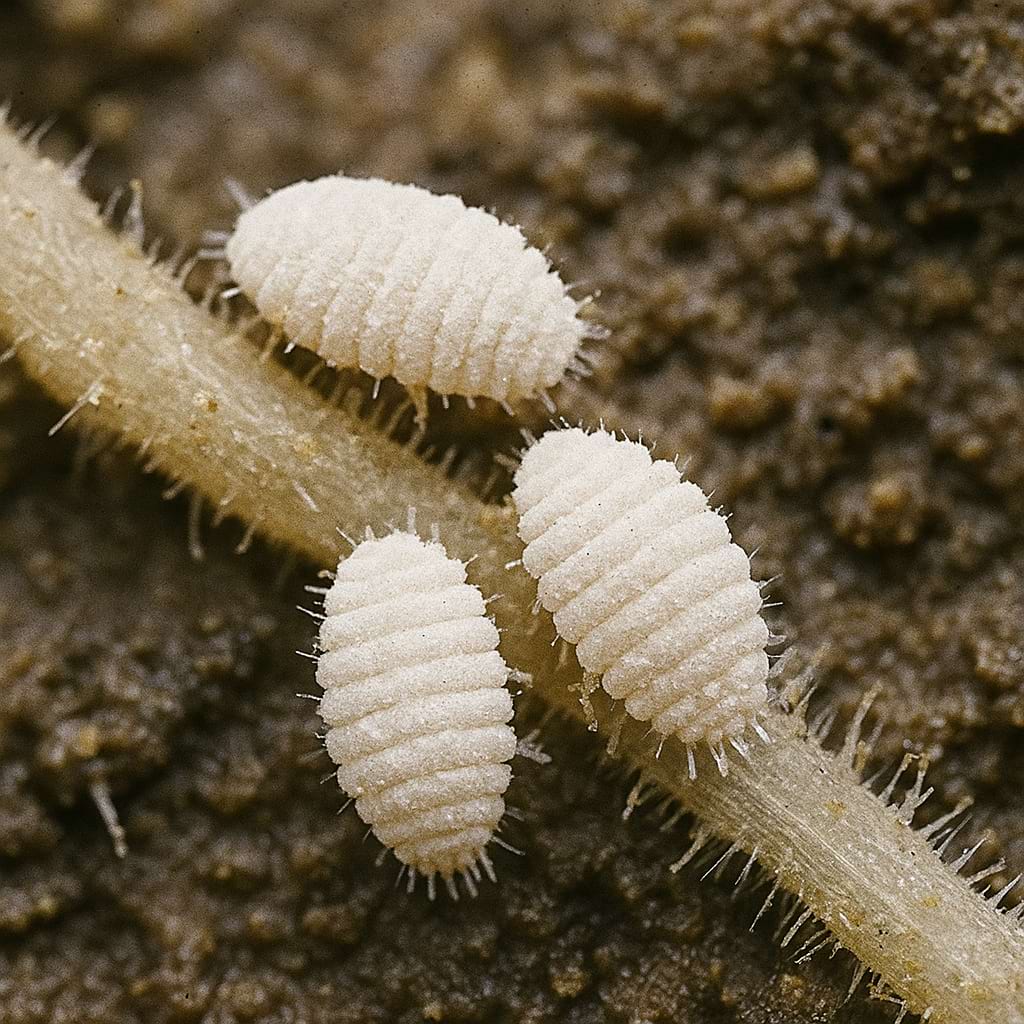
- Root Mealybugs: White powdery clusters on the roots, invisible until you unpot. Wash the roots clean under running water, repot in fresh dry mix, and skip watering for two weeks.
When treating, never let liquid sprays pool in the wool or in the crown of the cactus. Trapped wet wool is what causes the black fungal spots in the next section, and pesticide carriers often make this worse, not better.
🩺 Common Powder Puff Cactus Problems
Almost every problem traces back to wet wool, cold damp air, or strong sun on an unhardened plant.
- Root rot and mushy base: The single biggest killer. The base discolors brown then black, the body softens near the soil, the wool around the base looks dingy and matted, and the clump may topple. Once advanced, slice the body well above the rot and re-root the clean top in dry grit. Prevent it with very gritty soil and patient watering.
- Brown-black spots on the body: Cool damp air plus water trapped in the wool coat. Improve airflow with a small fan, keep water at the soil only, and dust spots with sulfur powder to stop the spread.
- Sunburn / bleaching: Tan or coppery patches on the side facing strong midday sun, or yellowed scorched wool on a plant moved suddenly from low to high light. Harden into stronger sun over two weeks next time.
- Yellowing body: A whole-body yellow cast with softening is overwatering. A flat yellow flush from the top down in summer is often sun stress on an unhardened plant. Check the wool coat too: yellowed wool itself usually points to sun scorch.
- Mushy stems at the soil line: Same root cause as root rot. Act fast; once a head has gone soft, only the clean top above the damage is worth saving.
- Wilting or shrivelling body: Almost always thirst, especially in summer. The wool hides the early signs, so test by gently squeezing the body through the coat. A firm head is fine; a soft one is thirsty.
- Stunted growth: Old exhausted soil, an undersized root system, or simply a normal slow year. Many Powder Puff Cacti add only half an inch of height a year.
- Failure to bloom: No cool winter rest, or the plant is still too young. Give it a proper cool dry winter and wait one more cycle.



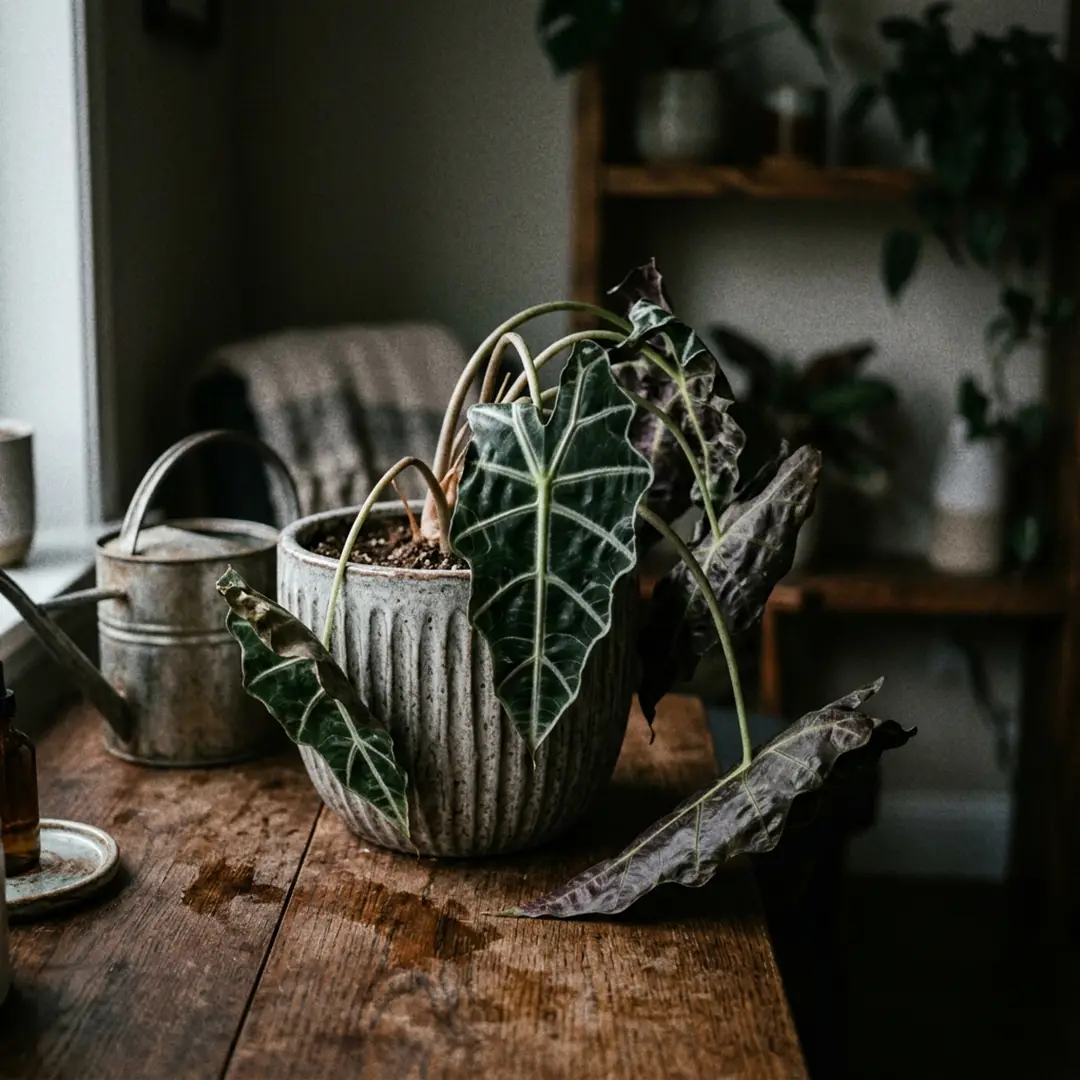
🖼️ Powder Puff Cactus Display and Styling Ideas
Small, sculptural, and reliably flowering. The snow-white coat practically demands a colorful or textured backdrop.
Solo Setups
My favorite single setup is a mature clumping Mammillaria bocasana in a small terracotta pot, top-dressed with red lava rock or dark slate chips so the white wool pops by contrast. A pale gravel top dressing looks flat and washed-out beside this plant. Keep the pot one inch wider than the clump for best visual proportion, and tuck the pot against a darker wall or a wood-toned shelf to make the wool read crisp white rather than dingy cream.
Grouped Arrangements
A trio of fuzzy cacti in matched pots looks like a small textural museum case. Pair a Powder Puff with a tall Old Man Cactus for the columnar version of the same idea, and a Feather Cactus (M. plumosa) for a third, feathery variation. Keep the pots identical and let the body shapes carry the visual difference. The three together cover three different "fuzzy" textures and three different growth habits.
Desert Dish Garden
For a small desert dish garden, set a Powder Puff Cactus alongside a young Golden Barrel Cactus, a low Aloe Vera, and a small Bishop's Cap Cactus. Mulch with bare grit, skip moss and bark, and keep the planting deliberately sparse. The fuzzy white globes read as the "soft" plant in the bowl and balance the spiny silhouettes around them.
Where Not to Put It
Skip closed terrariums and steamy bathrooms; both are far too wet for the wool. Skip dim corners of bedrooms; the body etiolates within months and the wool thins out. Skip kitchen window shelves directly above a stovetop, where rising steam keeps the wool damp for hours every day. A bright kitchen windowsill away from the burners, a sunny office desk, or a sunroom shelf are the natural homes for this plant.
🌟 Powder Puff Cactus Pro Care Tips
✅ Treat the cool dry winter as the secret to flowering. Eight to twelve weeks at 45 to 55°F (7 to 13°C) with almost no water is what turns a healthy plant into a blooming one.
☀️ Harden into strong sun gradually. Move from a low-light shop to a south window over two weeks, not two days, or the wool yellows and the body underneath scars.
💧 When in doubt, wait. A Powder Puff Cactus will sit happily dry for an extra week. A wet one for an extra week is in trouble, and the wool coat hides the damage until it is too late.
🪴 Pick a small terracotta pot. The clay does half the watering work for you and shortens the dry-out time.
🪶 Brush, never wipe. A soft dry artist's paintbrush dusts dirt out of the wool without matting it. A damp cloth flattens the coat for days.
🧤 Respect the hidden hooks. The white coat looks soft and pet-friendly, but the tiny amber central spines underneath grab skin and clothing like Velcro. Use tongs lined with paper towel for any repotting work.
🌸 Look for the flower ring in late winter. February and March are when buds appear, often as tiny pink dots peeking through the wool. Resist the urge to water hard at that moment; light watering keeps the buds steady.
🌶️ Enjoy the chilitos. Because the species is self-fertile, even a single plant produces small bright pink fruits after flowering. They sit on the wool for months and many growers consider them as much of a display as the flowers.
🪺 Let pups stay. A single Mammillaria head is fine, but a clump of fuzzy globes is a small living sculpture. Resist the urge to separate every offset for at least the first two years.
🔥 Keep it off the radiator. A working radiator within a foot of the plant dries the wool unevenly and can melt the coat on the heat side. Move the pot a clear foot away in winter.
❓ Frequently Asked Questions
Why is my Powder Puff Cactus turning brown at the base?
A brown softening base is almost always the start of root rot from wet soil. Unpot the plant, trim away any black or mushy tissue with a sterile blade, dust the cut with sulfur powder or cinnamon, and re-root the clean top in dry gritty mix after a week of callusing. Always switch to a grittier soil mix going forward, and water the soil only, never the wool.
How often should I water a Powder Puff Cactus?
In spring and summer, every 10 to 14 days for a 4 inch terracotta pot in a sunny window, but only once the soil is completely dry from top to bottom. In winter, almost not at all if the plant is in a cool room, or a small drink every four to six weeks if it is in a heated room.
Is the Powder Puff Cactus toxic to pets?
No. Mammillaria bocasana is not toxic if a curious pet takes a nibble. The bigger risk is mechanical: those tiny hooked central spines hidden under the wool catch on paws, noses, and tongues. Keep the plant out of reach of cats and small dogs, especially climbing cats.
Why does the wool look so soft if the plant has spines?
The white "wool" is actually a coat of very fine modified radial spines, soft enough to brush against without hurting. The real defensive weapons are tiny amber central spines hidden underneath the wool, with small hooks at their tips that grab skin and clothing. A casual touch is fine; a firm grip is not.
Why isn't my Powder Puff Cactus flowering?
The most common reason is a warm wet winter. Mammillaria bocasana needs a cool dry rest at 45 to 55°F (7 to 13°C) for at least eight weeks to set buds. The plant also has to be mature, usually around two years old and 1.5 inches across. A young or warm-wintered plant simply has nothing to bloom from.
What are the pink berries on my Powder Puff Cactus?
Those are "chilitos", the small bright pink fruits that follow the flowers. Mammillaria bocasana is self-fertile, so a single plant pollinates itself and forms these fruits without needing a partner. They are lightly sweet and edible in small quantities, and they can sit on the plant for many months as a second display after the petals close.
Can I grow a Powder Puff Cactus from a single pup?
Yes, and this is the easiest way to propagate one. Wait until the pup is at least half an inch across and has its own ring of wool, twist or slice it off cleanly, let it callus on dry paper towel for five to seven days, then set it on dry gritty mix and wait two more weeks before the first light water.
Does a Powder Puff Cactus need a deep pot?
No. The root system is shallow and spreads sideways. A wide, shallow terracotta pot one inch larger than the current one is ideal, with at least one drainage hole. Clumping Mammillaria especially appreciate the extra width over depth.
My wool is turning grey and matted. What's wrong?
Grey, dingy, or matted wool almost always means moisture is sitting in the coat. Common causes are overhead watering, a steamy room, a working humidifier nearby, or condensation from a cold window in winter. Move the plant to a brighter, drier, better-ventilated spot, water at the soil only, and the new wool that grows in should come back snow-white. The damaged wool itself does not recover, but new growth covers it within a season.
ℹ️ Powder Puff Cactus Info
Care and Maintenance
🪴 Soil Type and pH: Gritty, fast-draining cactus mix with added pumice, perlite, or coarse sand; neutral to slightly alkaline pH.
💧 Humidity and Misting: Comfortable in low household humidity around 30 to 45 percent.
✂️ Pruning: Effectively none; pull off spent flower wisps and dry fruits if you prefer a tidier look.
🧼 Cleaning: Dust the white hair with a soft dry artist's brush; never wipe with a wet cloth, since soaked wool stays damp for days and invites fungal spots.
🌱 Repotting: Bump up one pot size only when the clump has clearly outgrown the container, usually every 2 to 3 years.
🔄 Repotting Frequency: Every 2-3 years
❄️ Seasonal Changes in Care: Active growth in spring and summer; cool dry winter rest sets the next year's flower ring.
Growing Characteristics
💥 Growth Speed: Slow to moderate
🔄 Life Cycle: Long-lived perennial
💥 Bloom Time: Spring through early summer on mature plants, often with a second smaller flush later in the season
🌡️ Hardiness Zones: 9-11 outdoors; grown as a houseplant in all other zones
🗺️ Native Area: Central Mexico, particularly around San Luis Potosí state, on rocky limestone slopes
🚘 Hibernation: Cool dry winter rest at 45 to 55°F (7 to 13°C) for eight to twelve weeks for best flowering
Propagation and Health
📍 Suitable Locations: Sunny south or west windowsills, sunrooms, bright kitchens, plant shelves under strong grow lights
🪴 Propagation Methods: Very easy from offsets; possible from the self-fertile seed.
🐛 Common Pests: Mealybugs, Scale Insects, Spider Mites, Root Mealybugs
🦠 Possible Diseases: Root rot, fungal stem spotting under wet wool, corky scarring from cold damp air
Plant Details
🌿 Plant Type: Small clumping woolly desert cactus
🍃 Foliage Type: Small globular heads covered in spirals of nipple-shaped tubercles, each wrapped in dense fine white hair-like spines, with hidden hooked central spines underneath
🎨 Color of Leaves: Bluish-green body almost entirely hidden under dense pure-white wool
🌸 Flower Color: Cream, pale pink, or white funnels with a faint pink mid-stripe down each petal
🌼 Blooming: Yes; reliable on mature plants over 1.5 inches across, especially after a cool dry winter
🍽️ Edibility: Produces small bright pink "chilitos" fruits after flowering; edible in small quantities and lightly sweet
📏 Mature Size: 1.5-3 inches per head; clumps reach 4-6 inches tall
Additional Info
🌻 General Benefits: Compact, beginner-friendly, reliable indoor bloomer, pet-safe in terms of toxicity, very easy to propagate from pups
💊 Medical Properties: None of significance for indoor growers
🧿 Feng Shui: A soft-looking spiny accent for a sunny corner; the wool reads as gentle protective energy, and the white coat as purity and calm
⭐ Zodiac Sign Compatibility: Capricorn
🌈 Symbolism or Folklore: Softness with hidden strength, motherly care, and quiet resilience in harsh conditions
📝 Interesting Facts: Mammillaria bocasana was first described in 1853 by Frédéric-Albert Constantin Weber, and its name nods to the village of Bocas in San Luis Potosí, Mexico, where the species was first collected. The dense white "hair" that gives the plant its powder-puff look is actually a coat of fine modified radial spines; the real defensive weapons are tiny hooked central spines hidden underneath, which catch on skin and clothing. The species is self-fertile, which means a single plant can set viable seed on its own, and the small pink "chilitos" fruits that follow flowering can sit on the plant for many months. Several pink-flowered and yellow-flowered forms have been selected over the years, including the popular cultivar 'Fred' with unusually crested growth.
Buying and Usage
🛒 What to Look for When Buying: Choose a plant where the body is firm and the white hair coat is even and bright, with no yellowed or matted patches. The base should be a clean pale green and sit firmly upright in the pot. Avoid plants with brown soft spots near the soil line, mushy bases, or wool that looks dirty grey, since that usually means it has been damp too long.
🪴 Other Uses: Mini desert dish gardens, beginner-friendly statement cactus, bright office desk accent, themed clay-pot collections, gifts and party favors
Decoration and Styling
🖼️ Display Ideas: Solo in a small terracotta pot that frames the white wool, a trio of fuzzy cacti for a textural shelf, or a low gravel bowl beside other globular cacti
🧵 Styling Tips: Top-dress with red lava rock or dark grit to make the snow-white wool pop, and keep the pot only slightly larger than the clump so the body sits proud of the rim.
🪴 See also 🪴
Complete Guide to Eve's Needle Cactus Care and Growth
Complete Guide to Totem Pole Cactus Care and Growth
Complete Guide to Christmas Cholla Care and Growth
Complete Guide to Brain Cactus Care and Growth
Complete Guide to Hedgehog Cactus Care and Growth
Complete Guide to Lady Finger Cactus Care and Growth
Complete Guide to Old Lady Cactus Care and Growth
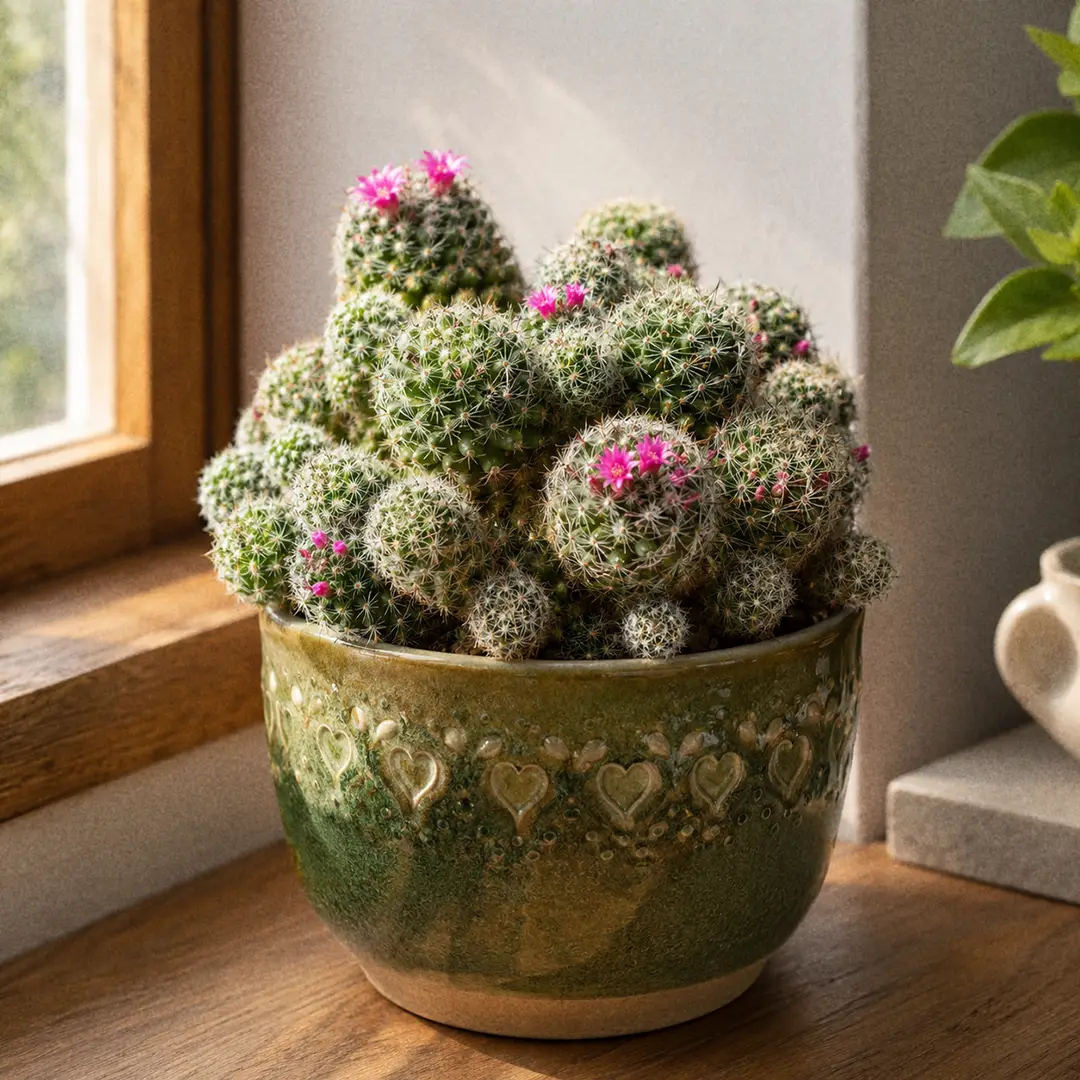
Complete Guide to Pincushion Cactus Care and Growth
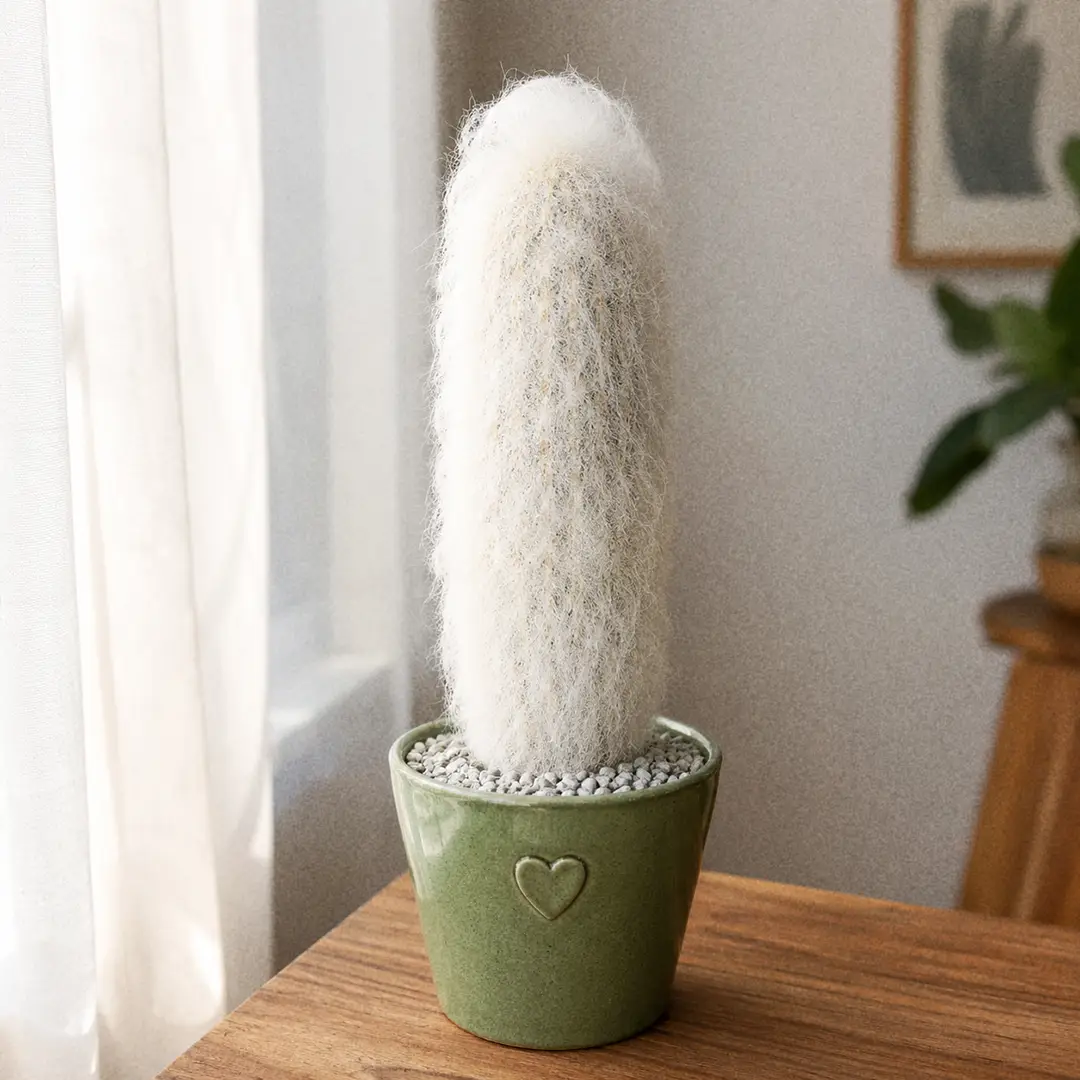
Complete Guide to Peruvian Old Man Cactus Care and Growth
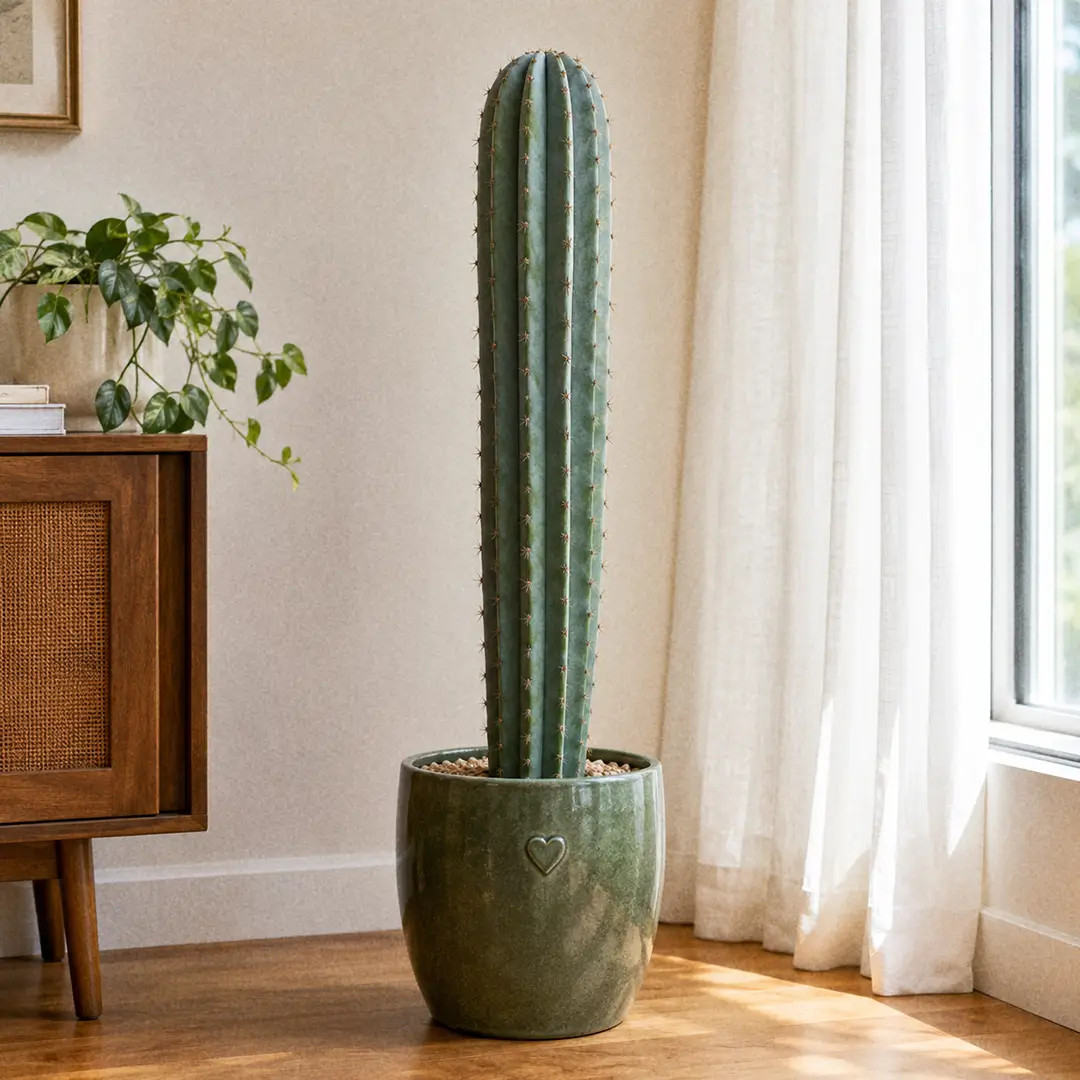
Complete Guide to Peruvian Apple Cactus Care and Growth
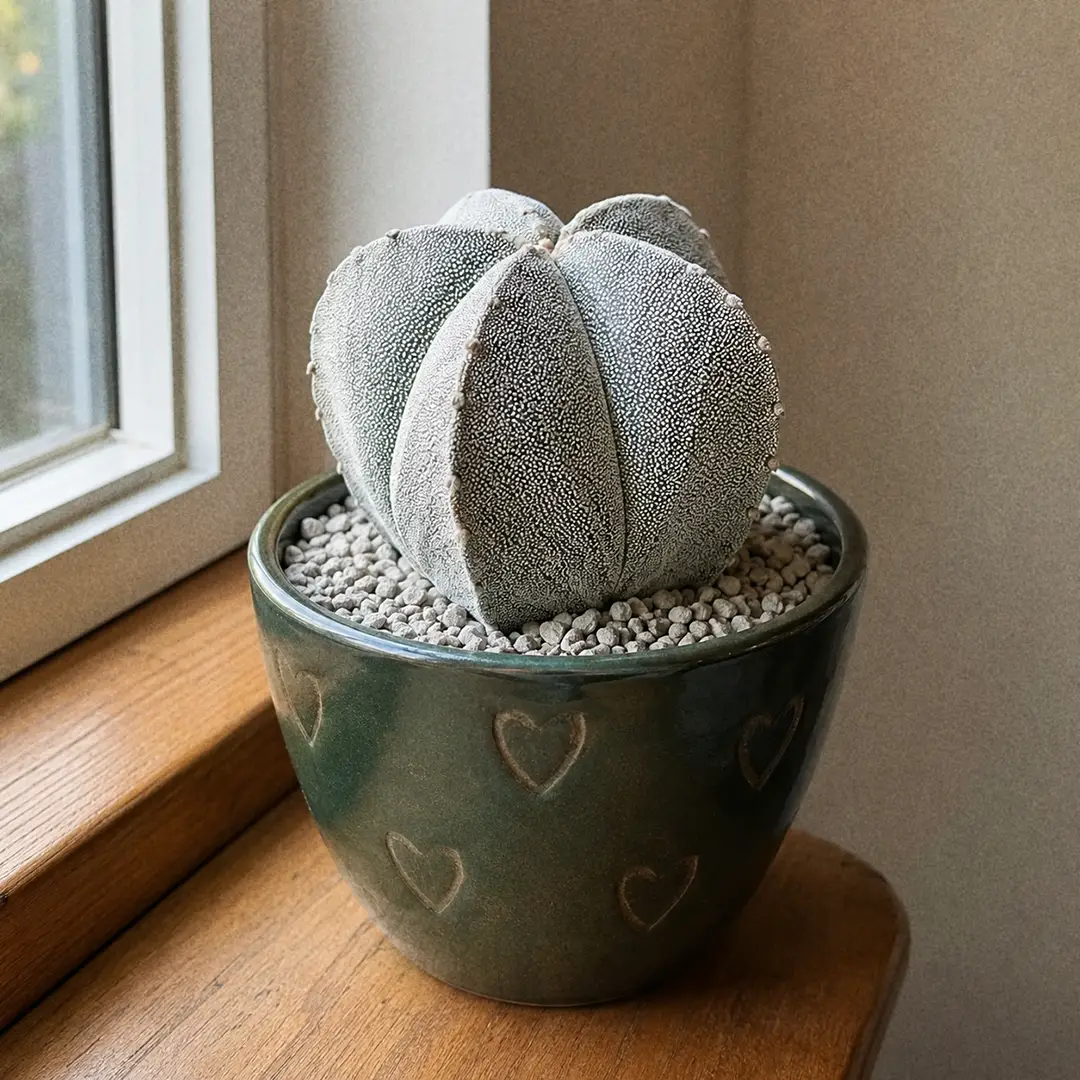
Complete Guide to Bishop's Cap Cactus Care and Growth
Complete Guide to Star Cactus Care and Growth
Complete Guide to Moon Cactus Care and Growth

Houseplant101 Forum
Questions & Comments
Ask a question, share your plant experience, or help other plant owners.
Comments are temporarily unavailable.
Open the Houseplant101 ForumNo comments yet
Be the first to ask a question or share your experience about this page.
Log in or create an account
Comments use your Houseplant101 Forum account, but you can stay on this page.
Create a new account