
Nanouk
Tradescantia albiflora 'Nanouk'
Tradescantia Nanouk, Fantasy Venice, Inch Plant Nanouk


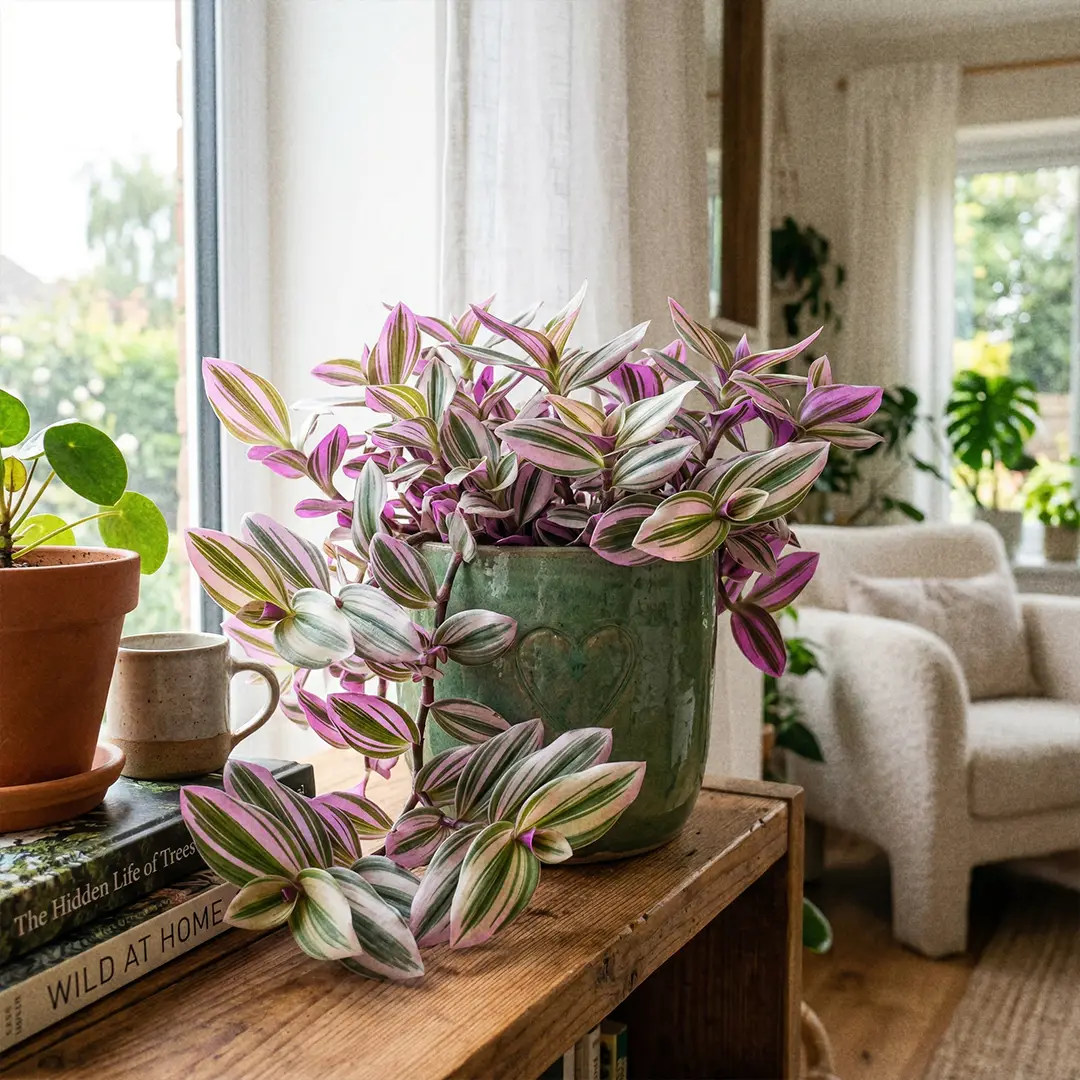
Nanouk is a compact Tradescantia cultivar with pink, cream, and green striping that looks its best when the growth stays short, bright, and full. This guide shows you how to keep Nanouk colorful indoors, avoid legginess and crispy edges, and use quick cuttings to refresh the pot.
📝 Nanouk Care Notes
🌿 Care Instructions
⚠️ Common Pests
📊 Growth Information
🪴 In This Guide 🪴

☀️ Nanouk Light Requirements (Indoor Lighting Guide)
Best Light for Nanouk
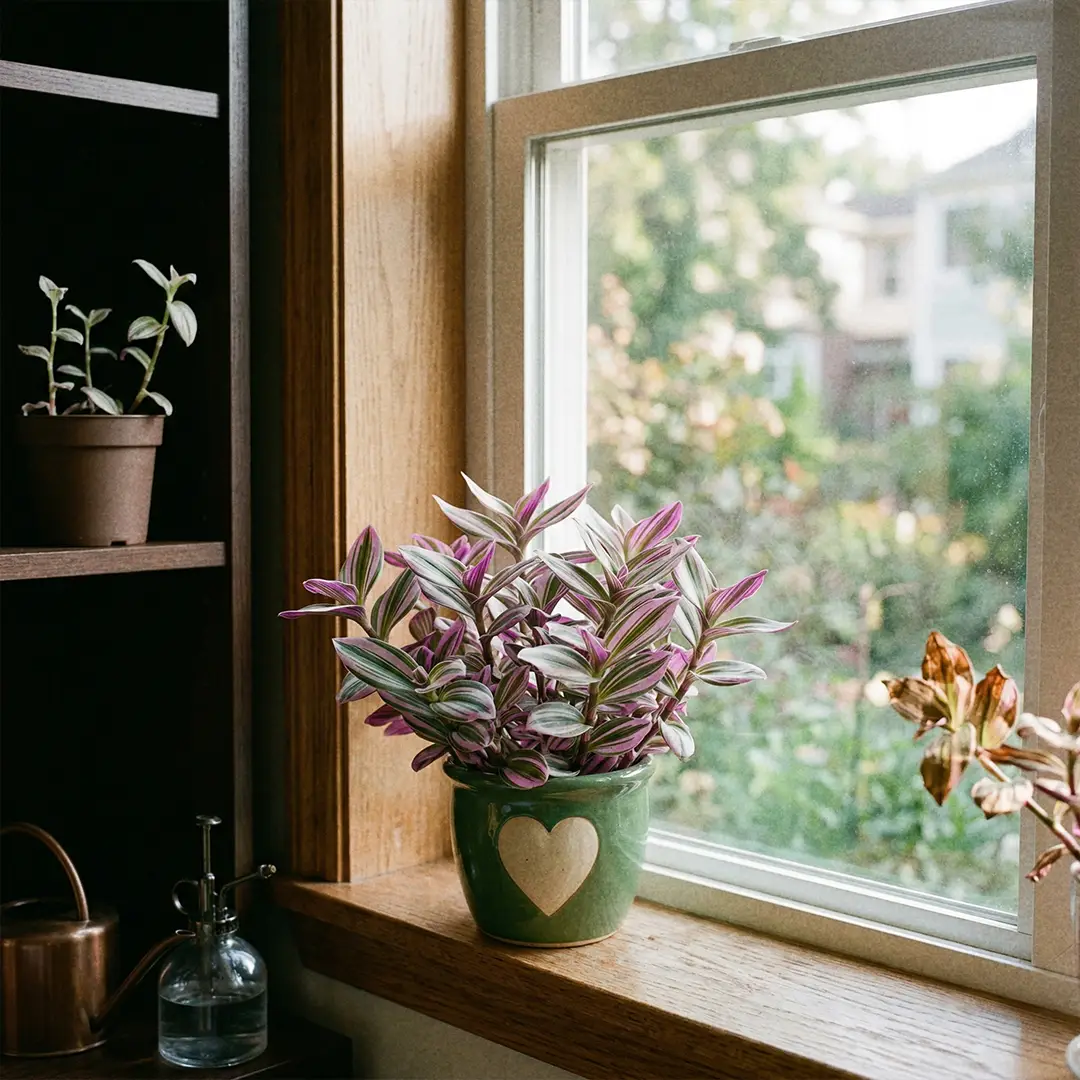
Nanouk grows best in bright, indirect light with a little gentle direct sun, usually from an east window or a bright south window pulled back from the glass. The goal is strong brightness that keeps the pink coloring active, without trapping the leaves against punishing hot afternoon sun.
This is one of those plants where light changes the look more than survival. In strong light, the leaves stay compact, the pink gets cleaner, and the stems hold a tighter stacked habit. In weaker light, the plant stays alive, but it goes greener and starts stretching almost immediately. If you need help reading your rooms, our indoor light guide is worth a quick look.
Nanouk is more light-hungry than a lot of people expect from a Tradescantia sold as an "easy houseplant." If you keep it in medium light because you are worried about scorch, the plant often turns lanky before it ever burns. I would rather start bright and make tiny adjustments than start too dim and spend weeks correcting stretch.
Can Nanouk Handle Direct Sun?
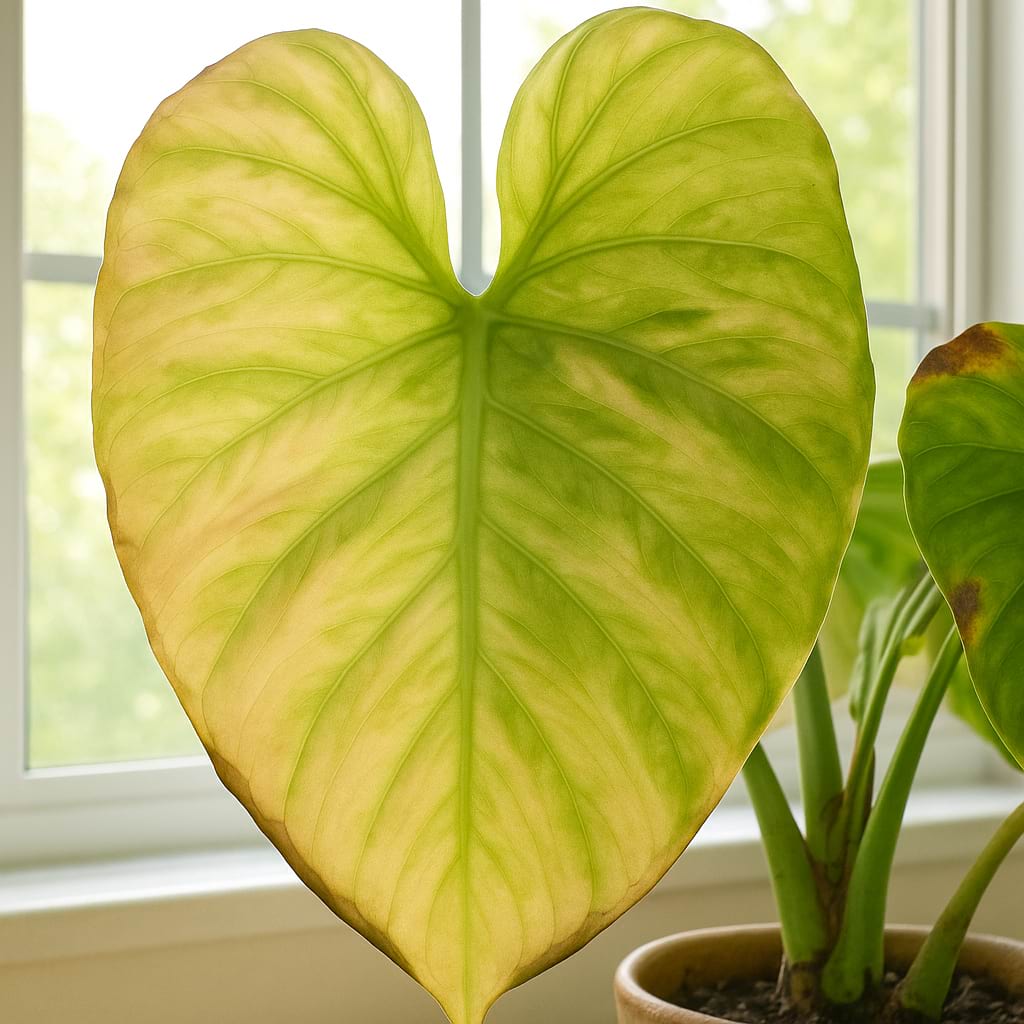
Yes, but only the gentle kind. Morning sun is usually helpful, especially if you want stronger pink tones and shorter internodes. Harsh late-afternoon sun through hot summer glass is different. That can bleach the pale sections, turn the pink dull, and push the leaf edges toward browning variegation or sunburn.
If your plant has been sitting on a darker shelf, move it into brighter conditions gradually over about a week. Nanouk adjusts fairly quickly, but the pale variegated areas can still scorch if you go from deep shade straight into a blazing window.
Under grow lights, Nanouk does very well. Keep the light close enough to prevent stretch, usually around 8-14 inches above the crown, and run it 10-12 hours a day. This is especially useful in winter when the plant wants to stay colorful but your daylight is doing very little.
Signs of Incorrect Lighting for Nanouk
- Too little light: longer gaps between leaves, weaker stems, and color fading toward plain green. This is classic leggy growth.
- Low brightness over time: the pink becomes dull, the cream sections lose definition, and the plant may start showing reversion on new growth.
- Too much harsh direct sun: washed-out patches, brown edges, or pale blistered sections on the side facing the glass.
- Light from one direction only: the window-facing side stays dense while the back side thins. Rotate the pot every week or two unless it is fixed in a hanger.
The crown matters as much as the trailing ends. If the vines get light but the center of the pot stays shaded, the plant goes bald at the top while still looking decent at the edges.
💧 Nanouk Watering Guide (How to Water Properly)
How Often to Water Nanouk
Nanouk likes a middle-ground watering rhythm. It is not a fern that wants constant moisture, and it is not a succulent that wants to sit dry for long stretches. Let the top inch of soil dry, then water thoroughly and let the excess drain away.
In a bright warm room during spring and summer, that often means every 5-8 days. In winter, especially if the plant is getting weaker natural light, it may be closer to every 10-14 days. The exact timing depends on pot size, airflow, light, and how airy your mix is, which is why a fixed schedule usually fails. Our watering guide goes deeper into how to judge the mix instead of the calendar.
Nanouk is slightly more forgiving of dryness than something like Calathea Orbifolia, but less forgiving than Purple Heart, which stores more water in its stems and takes more sun. If you let Nanouk stay too dry too often, the edges crisp and the variegation starts looking rough rather than clean.
Best Watering Method for Nanouk
Top watering is perfectly fine. Water slowly until it runs from the drainage holes, give the pot a few minutes to finish draining, and empty the saucer or cachepot.
Bottom watering also works well when the crown is very dense or when you want to avoid splashing the leaves. Place the pot in shallow water for 15-20 minutes, then remove it and let it drain fully. The main thing is not the method itself, but avoiding two common mistakes:
- giving tiny sips that never soak the root ball
- letting the plant stand in leftover water for hours
If you are unsure whether the center of the pot is still damp, a moisture meter is genuinely helpful with fast-growing trailers like this.
Signs of Overwatering vs Underwatering in Nanouk
Overwatering signs:
- yellow lower leaves
- soft or translucent stem bases
- wet heavy soil that stays damp for many days
- a sour smell from the pot
- sudden collapse at the crown, often from root rot
Underwatering signs:
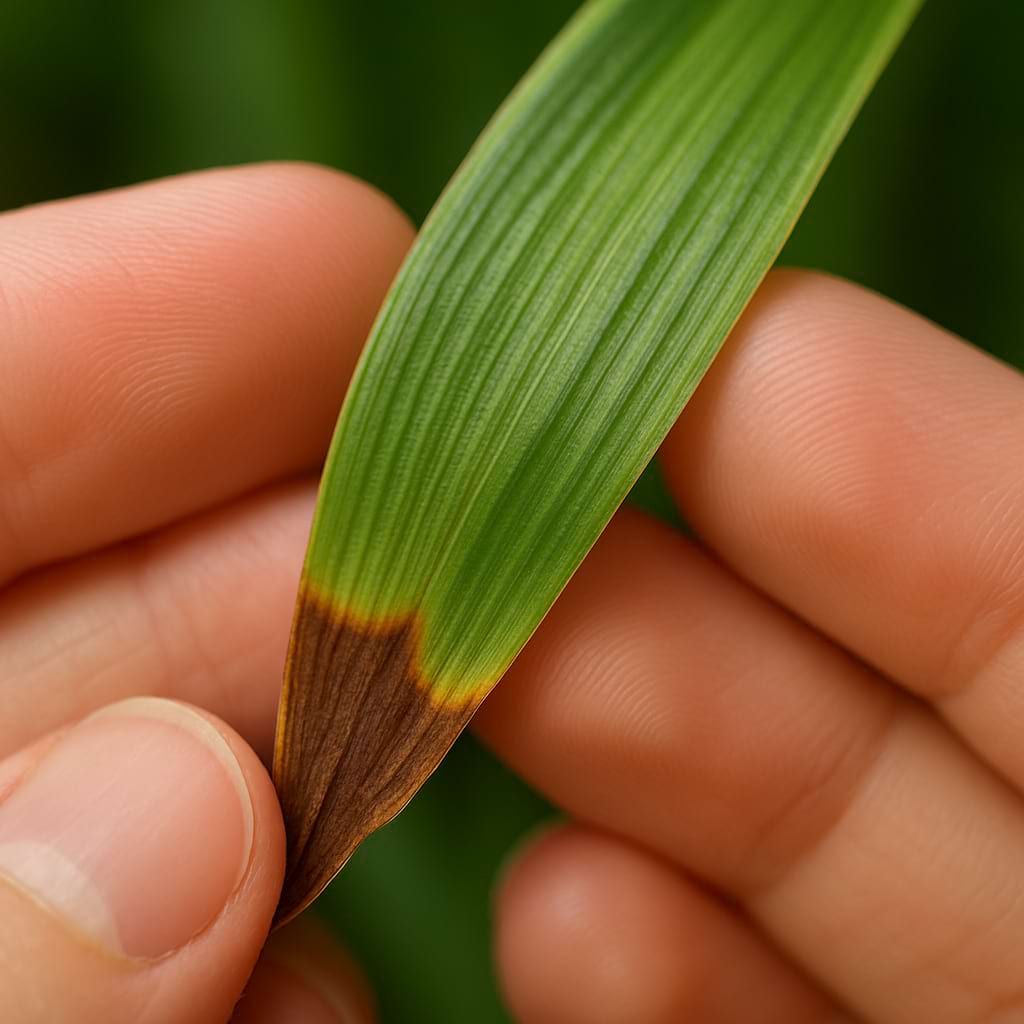
- leaf edges turning dry or papery
- thinner leaves that curl slightly inward
- a very light pot
- older leaves dropping after repeated drought cycles
Underwatering usually roughs up the leaves first. Overwatering is the more serious problem because the damage starts low in the pot where you may not see it until the crown is already going soft.
Seasonal Watering Changes for Nanouk
Spring and summer are the active months. Nanouk is growing fast, you are pruning more often, and fresh cuttings may be rooting back into the pot. That means the mix dries more quickly.
In fall and winter, cut back on frequency even if the room is still warm. Shorter days slow growth, and a warm room does not always mean a thirsty plant. This is the season when people keep the same summer routine and accidentally rot the crown.
If the plant is under grow lights and still actively pushing new leaves, your winter rhythm may stay close to summer. Let the soil tell you which season the plant is actually living through.
🪴 Best Soil for Nanouk (Potting Mix & Drainage)
Best Potting Mix for Nanouk
Nanouk wants a mix that holds some moisture but still breathes. Dense peat-heavy bagged soil stays wet too long around the lower stems. A pure cactus mix dries a little too fast and can leave the plant looking tired between waterings. The sweet spot is an airy houseplant mix.
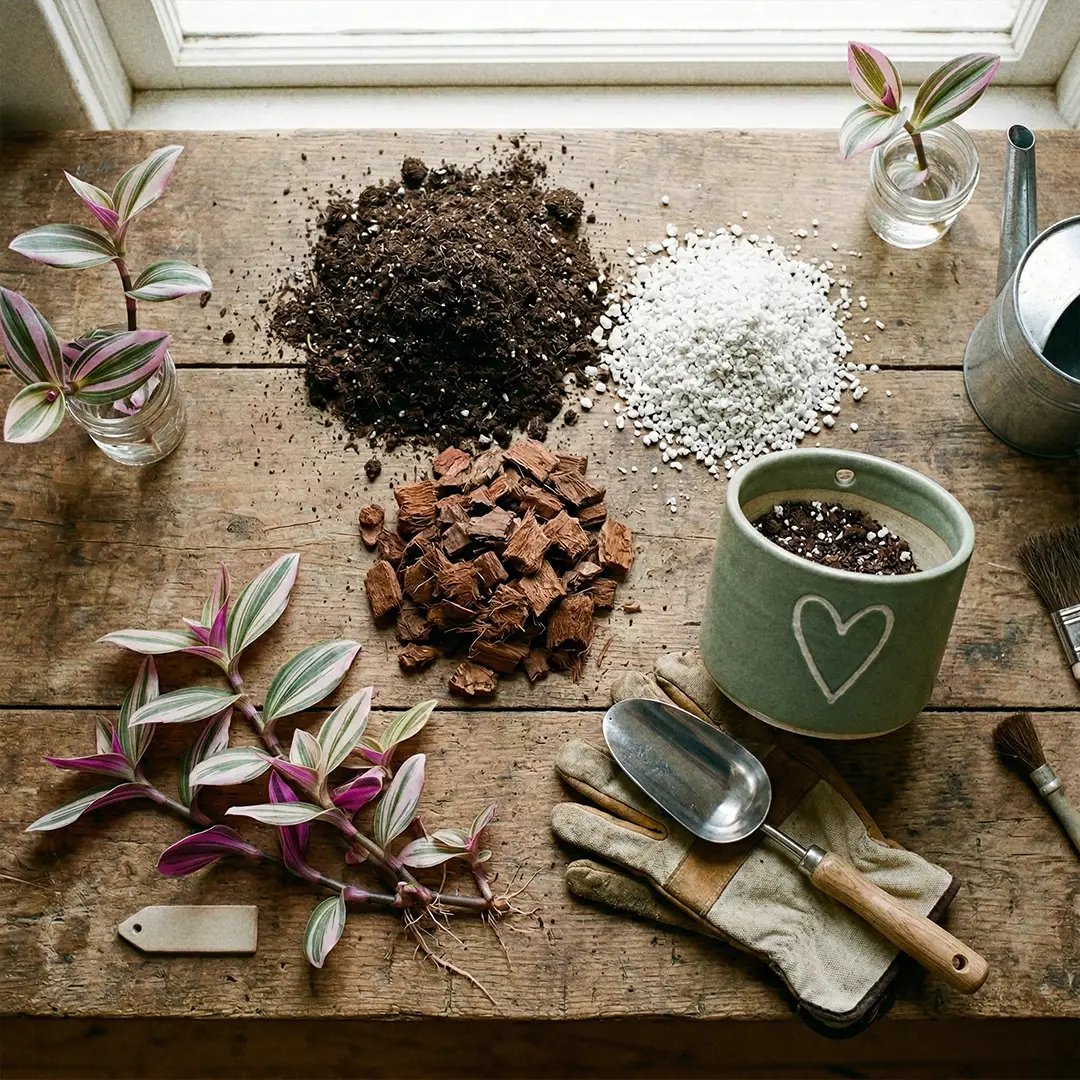
A simple recipe that works well:
- 2 parts indoor potting mix
- 1 part perlite or pumice
- 1 part orchid bark or coco chips
That combination gives you moisture, drainage, and oxygen at the same time. If your home runs cool or you tend to overwater, increase the perlite slightly. For a more general breakdown of ingredients and why they matter, see our soil guide.
Why Drainage Matters for Nanouk
The stems at the crown are the danger zone. Nanouk can look full and healthy on top while the lower stems are quietly staying too wet. Once those bases soften, recovery becomes a rescue job instead of a simple care correction.
That is why drainage holes matter, why airy mix matters, and why wide pots are usually better than deep oversized ones. A pot with no drainage does not just raise the risk a little, it changes the whole care equation in the wrong direction.
If you want the plant inside a decorative cachepot, keep it in a nursery pot and take it out to water. That simple setup solves a lot of avoidable problems.
When Soil Is the Real Problem in Nanouk
Sometimes the plant is not thirsty, it is sitting in exhausted mix. Old soil compacts, repels water on top, and stays stale in the middle. When that happens, you may see:
- water rushing down the sides of the pot
- yellow leaves even though you are watering less
- the top inch drying while the middle stays soggy
- slow growth and thinning at the crown
- crusty fertilizer salts on the surface
If that sounds familiar, a soil refresh plus a haircut often fixes the plant faster than changing anything else.
🍼 Fertilizing Nanouk
Best Fertilizer for Nanouk
Nanouk is a fast grower, so it appreciates feeding during the active season. A balanced liquid fertilizer at half strength works well, and you do not need anything exotic beyond that. The plant responds more to consistent mild feeding than to one strong dose.
The important thing is sequence. Good light first, then fertilizer. If the plant is sitting in a dim room, feeding it harder usually gives you greener, softer, stretchier growth rather than prettier color. Our fertilizing guide explains why this happens.
Seasonal Fertilizing Schedule for Nanouk
- Spring through late summer: feed monthly with half-strength balanced fertilizer
- Early fall: taper off as the light weakens and the plant slows
- Winter: stop feeding unless the plant is under strong grow lights and clearly still growing
Always fertilize already-moist soil. Feeding a bone-dry root ball is how you turn a healthy plant into one with burnt edges and salt buildup.
Signs of Too Much Fertilizer on Nanouk
Watch for:
- brown crispy edges appearing on many leaves at once
- chalky white residue on the soil surface
- weak soft new growth that looks bigger but not better
- dull color despite otherwise decent light
If that happens, flush the pot thoroughly with plain water and pause feeding for a while.
🌡️ Nanouk Temperature Range
Best Indoor Temperatures for Nanouk
Nanouk is happiest between 60 and 85°F (15-29°C). Normal indoor temperatures are usually fine, which is part of why this plant is so easy to fit into everyday rooms.
What it dislikes is not ordinary warmth, but sudden swings. Cold window glass in winter, a heater blasting one side of the pot, or a drafty door that chills the plant every time it opens can all leave the stems stressed and more likely to drop leaves.
How Cold Is Too Cold for Nanouk?
Once temperatures dip below about 50°F (10°C), Nanouk becomes vulnerable fast. Growth slows, the mix stays wet longer, and stem rot becomes more likely if you keep watering normally.
If you put the plant outdoors for summer, bring it back inside well before cool nights arrive. Do not wait for the first near-frost forecast. Tradescantia stems can go mushy quickly after a cold snap.
Summer Heat and Airflow for Nanouk
Warmth is fine as long as the plant has moisture balance and moving air. In hot rooms or on a bright summer windowsill, Nanouk may drink faster and need a little more humidity support so the edges do not crisp. In a stale hot corner, the same plant can look stressed even if you are watering correctly.
A fan nearby, without blasting the leaves directly, is useful in summer. Good airflow helps keep the crown dry enough and discourages fungal issues in dense foliage.
💦 Nanouk Humidity Needs
Ideal Humidity for Nanouk
Nanouk does well in average household humidity, but it usually looks best around 40-60%. That middle range helps new leaves unfurl cleanly and keeps the variegated edges from looking tired too quickly.
It is not a humidity diva like some calatheas. You do not need to build a greenhouse around it. Still, if your home drops very low in winter, the first thing you may notice is not total collapse, but rougher edges and less polished foliage. Our humidity guide covers easy ways to improve that without overcomplicating the setup.
Dry Air Problems on Nanouk
Very dry air can show up as:
- brown crispy edges
- new leaves that emerge slightly twisted or stick together
- faster spider mite problems in winter
- a general tired look even when watering seems correct
If that is happening, try grouping plants, moving the pot away from heating vents, or adding a humidifier nearby. I would fix the room before I would mist the leaves constantly.
Should You Mist Nanouk?
Usually no. Occasional rinsing is fine if the foliage needs cleaning, but routine misting is not the best answer. It only raises humidity for a short time and can leave moisture trapped in a dense crown if the room has poor airflow.
Nanouk responds better to stable room humidity than to leaf wetness. Think cleaner air conditions, not constant spraying.
🌸 How to Make Nanouk Bloom
Does Nanouk Flower Indoors?
Sometimes, but the blooms are not the point of this plant. Nanouk is grown for its striped foliage and compact habit. If flowers do appear, they are usually small spiderwort-like blooms in pale white or soft pink tones, and they tend to be secondary to the leaves.
Many indoor growers never see flowers at all, and that does not mean the plant is unhappy. A dense colorful pot is still a very successful Nanouk.
What Encourages Flowers on Nanouk
If you want the best chance at blooms, focus on:
- bright light
- steady feeding during active growth
- mature stems that are not being pinched every week
- warm conditions without constant stress
Plants that are always being reset for shape may flower less because you keep redirecting them into fresh vegetative growth.
Should You Prioritize Flowers on Nanouk?
Honestly, not really. If the plant is compact, colorful, and full at the crown, you are already winning. I would always prioritize shape and color over chasing inconsistent flowers.
🏷️ Nanouk Types and Similar Tradescantia
What Makes Tradescantia 'Nanouk' Different
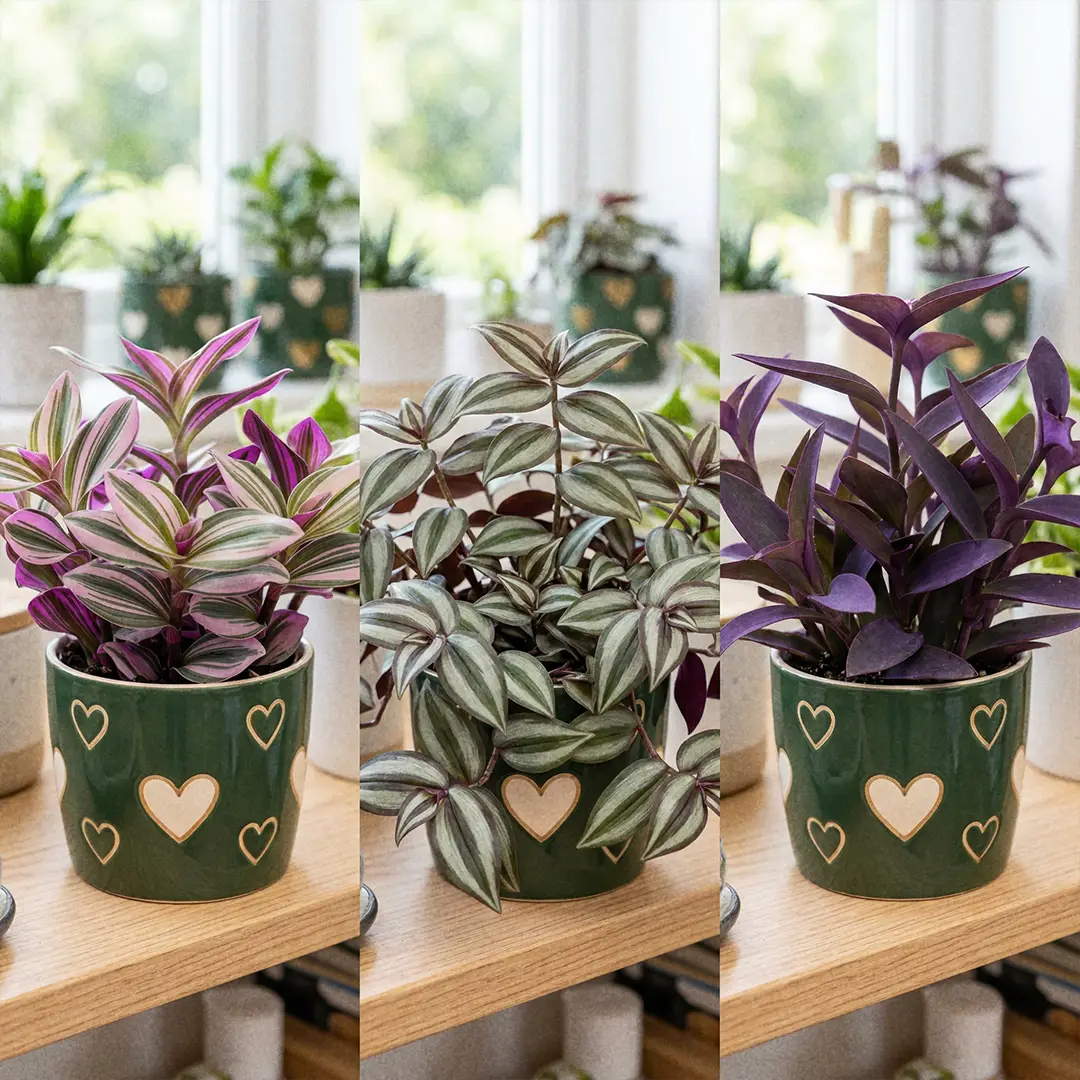
Nanouk stands out because the leaves are thicker and broader than many older wandering Tradescantia forms, and the color mix is more obvious from a distance. Instead of silver striping like Wandering Dude, you get blocks and bands of pink, cream, green, and a little purple.
The crown also tends to look denser and more upright at first, especially in good light. Over time, the stems trail, but the plant usually starts with a fuller clumping look than classic inch plants do.
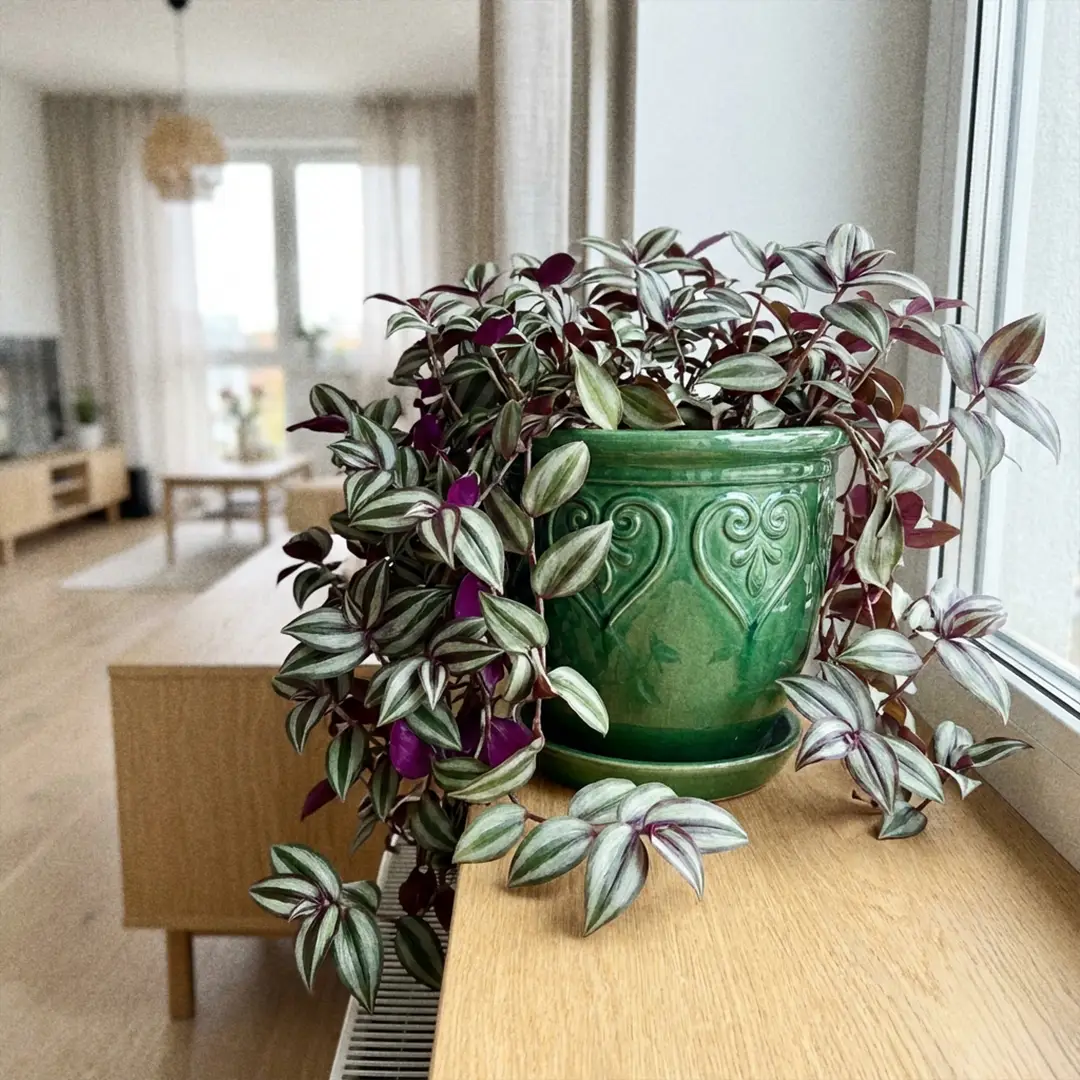
Nanouk vs Wandering Dude
This is the comparison people ask about most.
- Nanouk: chunkier leaves, pink and cream variegation, denser crown, slightly stiffer stems
- Wandering Dude: narrower leaves, metallic silver striping, purple undersides, looser and faster trailing habit
Care overlaps heavily, but Nanouk usually asks for a bit more attention to edge crisping and a bit more intention around keeping the variegation bright.
Nanouk vs Purple Heart
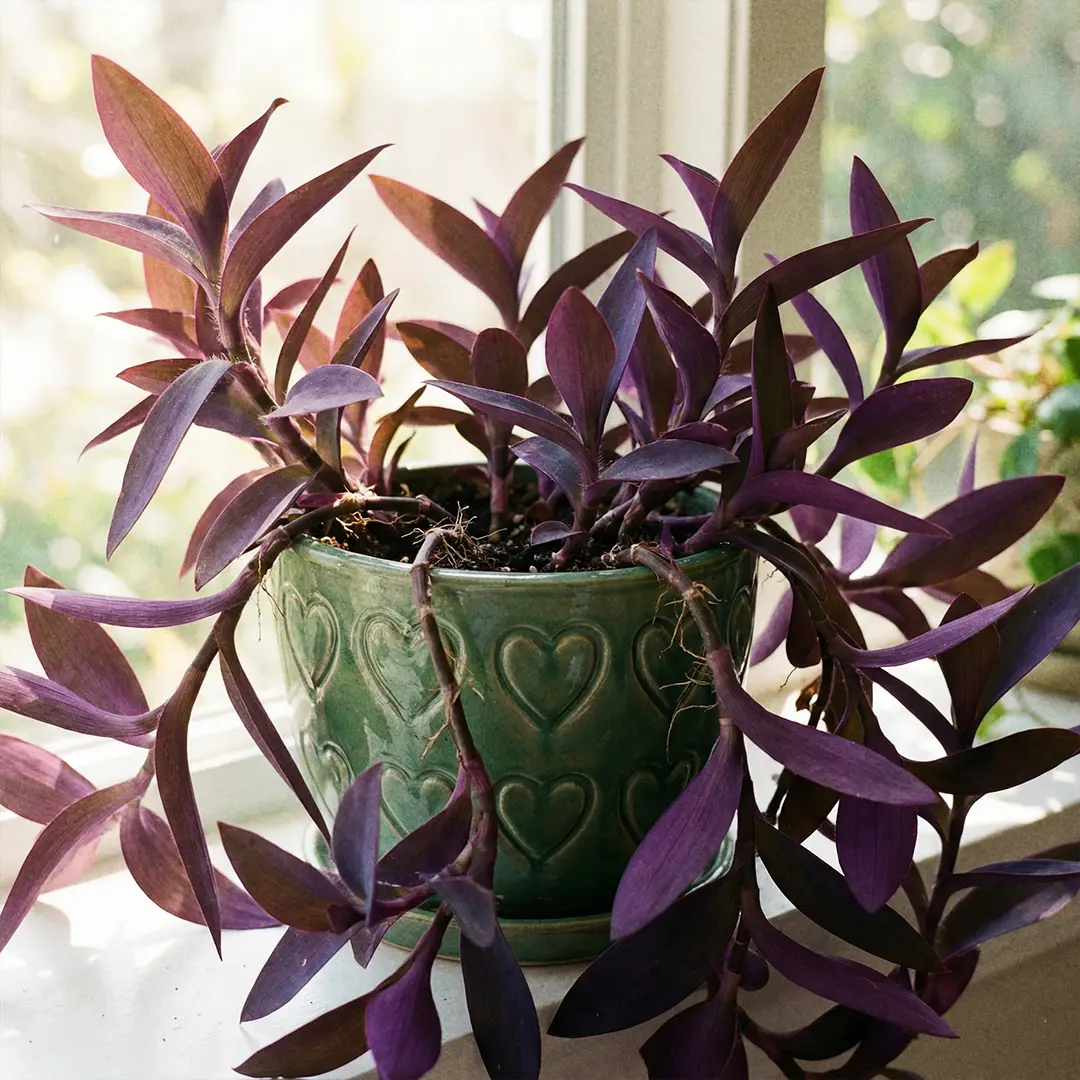
Purple Heart is the tougher sun-lover of the family. It has larger solid-purple leaves and tolerates a little more drought and direct light once established.
Nanouk, by contrast, is the prettier but slightly touchier cousin. It rewards you with more color variation, but it is quicker to show crispy edges, reversion, or washed-out leaves if the balance of light, water, and salts drifts off.
Nanouk vs Other Pink Variegated Trailers
If you want a pink plant that is easier than a Pink Princess Philodendron, Nanouk is a strong choice. It grows faster, roots faster, and recovers from pruning much more quickly.
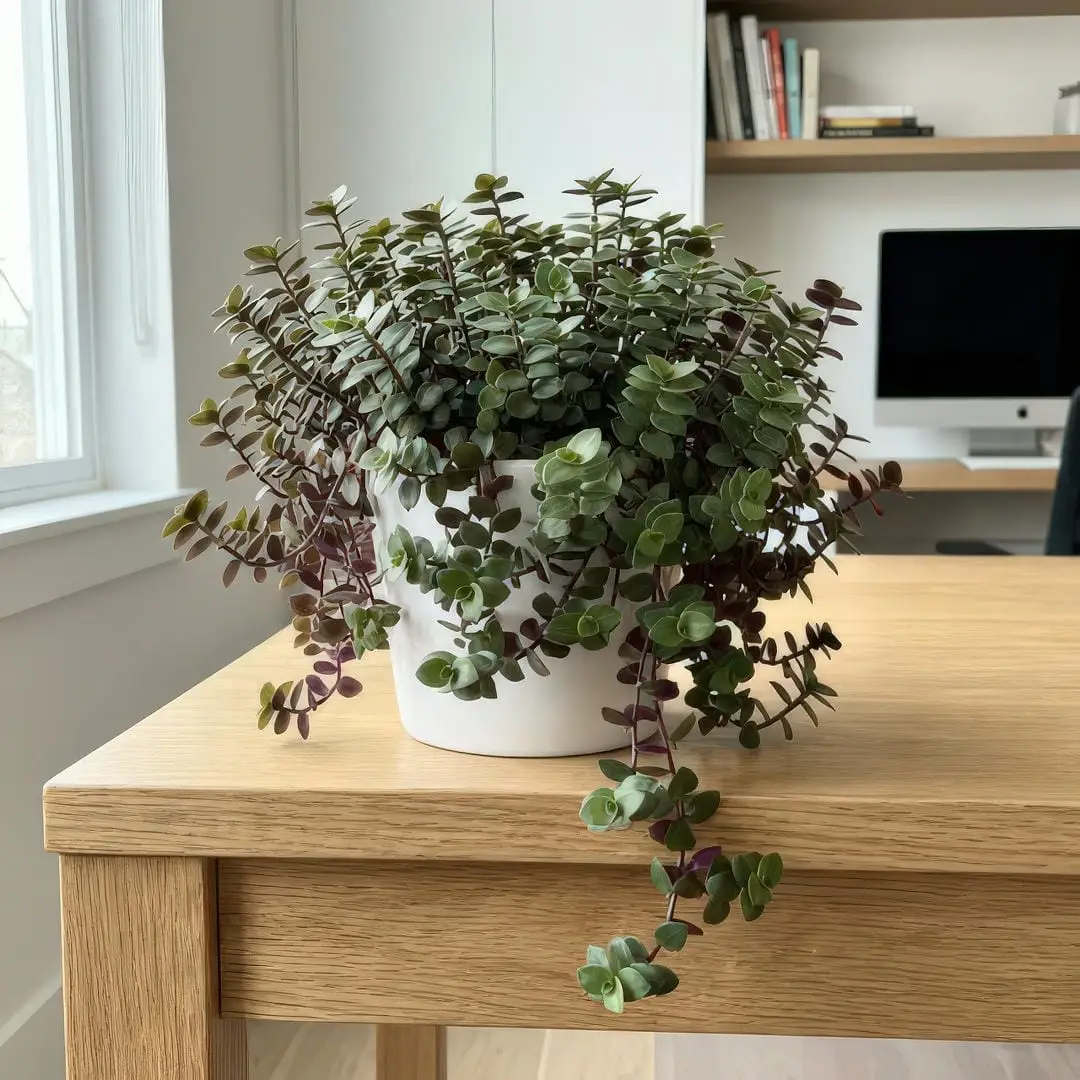
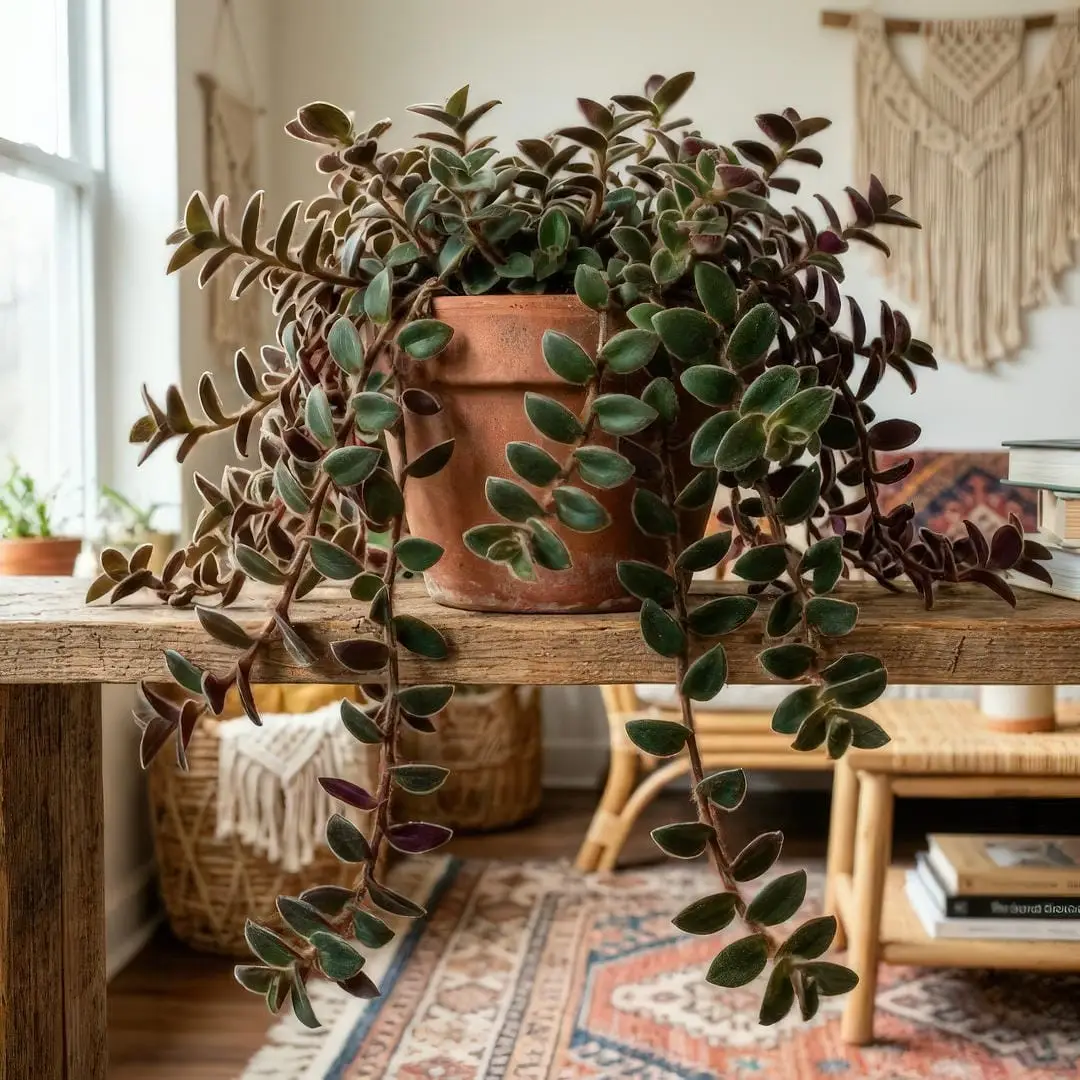
If you want a pet-safe colorful trailer, though, Turtle Vine is the better match because Nanouk is mildly toxic while Turtle Vine is not.
The closest relative of all is Tradescantia Fluminensis, since Nanouk is a cultivar in the same albiflora group. Fluminensis has smaller, thinner leaves and a more delicate cream-and-pink Tricolor look, where Nanouk is the chunkier, bolder version of the same idea.
🪴 Potting and Repotting Nanouk
When to Repot Nanouk
Repot Nanouk every 1-2 years, or sooner if the mix has broken down, water is moving strangely through the pot, or the center has thinned even though the stems are still growing at the edges.
Common signs it is time:
- roots circling the pot or coming from drainage holes
- soil drying oddly, either too fast on top or too slow in the middle
- persistent yellowing after watering corrections
- a tired crown in compacted mix
Spring is the best time because the plant rebounds fast and any fresh cuttings you tuck back in will root quickly.
Best Pot Shape for Nanouk
Wide pots, shallow bowls, and hanging baskets all suit Nanouk well. The plant wants room to branch and spread at the surface more than it wants a deep column of wet soil under the roots.
Choose a new pot only 1-2 inches wider than the old one. Oversizing is a common mistake. A huge pot holds too much damp mix and slows the dry-down that keeps the crown healthy. If you need help comparing materials and sizes, our plant pots guide is a useful shortcut.
How to Repot Nanouk Without Losing Fullness
This is the moment to improve the plant, not just move it.
- Water the day before so the root ball slides out more cleanly.
- Prepare the new pot with fresh airy mix.
- Trim the longest tired stems.
- Set the main root ball into the new container.
- Tuck several fresh cuttings around the rim or any thin spots near the crown.
- Water thoroughly, then let the pot drain fully.
That last step is the trick people skip. A repot with added cuttings gives you the dense nursery-pot look back much faster than repotting alone.
Can Nanouk Go Outdoors in a Pot?
Yes, and summer outdoor light can make the color stronger, provided the plant is sheltered from harsh midday sun at first. A bright porch or patio with morning sun and afternoon shade is a very good summer setup.
Just be disciplined about bringing it back in before cool nights and about cleaning the pot before it rejoins the indoor collection. Outdoor vacations often boost growth, but they also raise pest risk.
✂️ Pruning Nanouk
Why Nanouk Needs Regular Pruning
Nanouk is not a plant you ignore for a year and expect to stay perfect. The stems grow fast, the freshest growth looks best, and the crown gets sparse if you never pinch it back.
Pruning is what keeps the plant looking young. Every cut above a node encourages branching below it, which means more stems, a fuller rim, and less of that "all the leaves are on the ends" problem.
Where to Cut Nanouk
Always cut just above a node, the point where leaves attach and roots can form. That tells the plant exactly where to branch.
For routine maintenance, pinch the tips every couple of weeks during active growth. For a plant that has gone long and green, do a harder reset in spring. Save all healthy pieces, because almost every decent cutting is future plant material.
Hard Reset vs Gentle Pinching for Nanouk
Use gentle pinching when:
- the pot is mostly full
- you only want more branching
- the ends are getting a little too long
Use a hard reset when:
- the crown is thin
- the middle of the vines is bare
- new growth is greener than it should be
- the soil needs replacing anyway
Nanouk handles a decisive haircut surprisingly well. A bold spring prune in better light often looks much better a month later than months of timid trimming in the wrong spot.
🌱 How to Propagate Nanouk
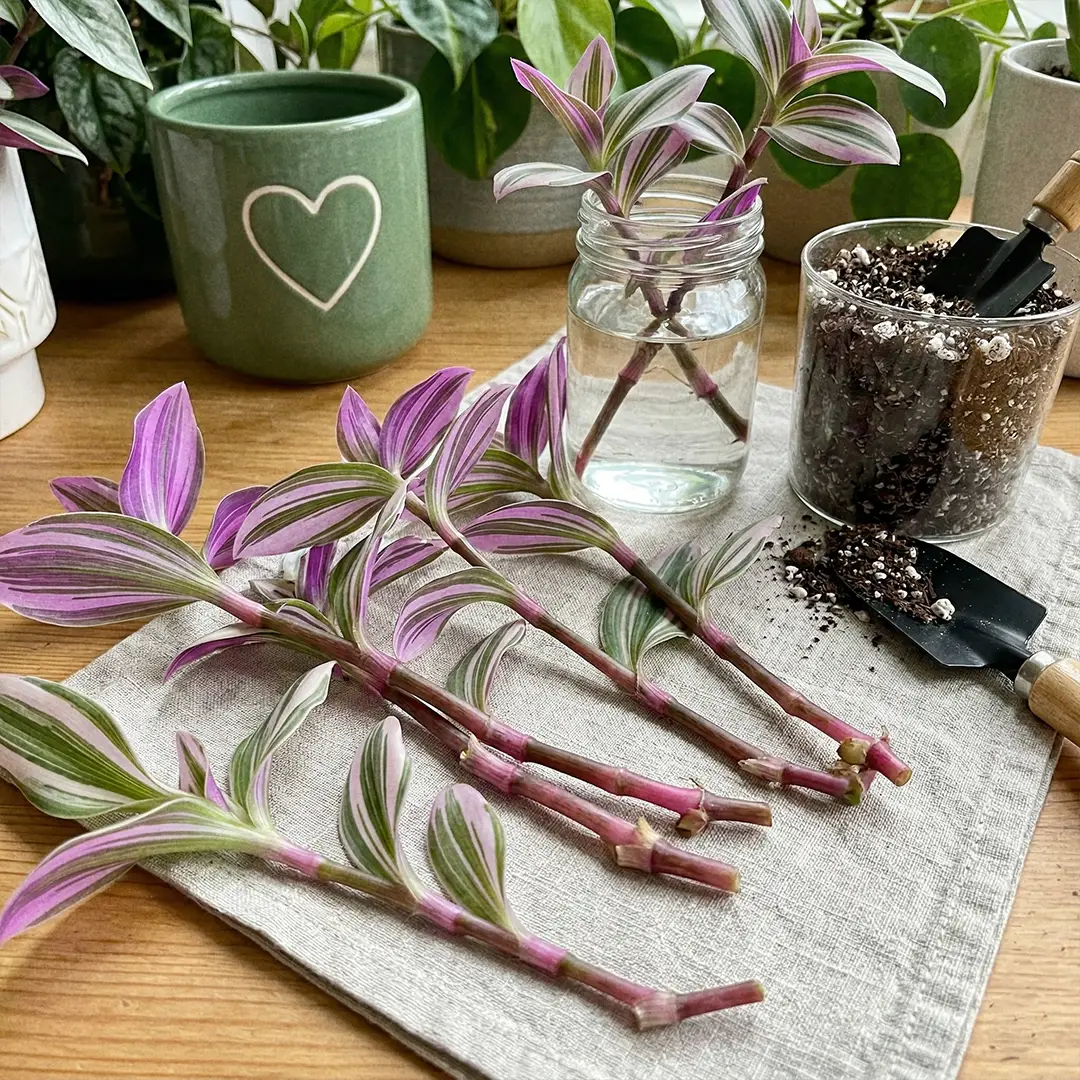
Why Nanouk Propagates So Easily
Like other Tradescantia, Nanouk roots from its nodes with very little encouragement. That is why it is so easy to rebuild a thin pot. A fresh cutting in bright light can start rooting in days, not months.
There is one legal note worth knowing: Nanouk is a patented cultivar in the United States. Commercial asexual propagation for resale requires permission from the patent holder. For plant-care purposes, though, the actual rooting behavior is the same as other inch plants.
Water Propagation for Nanouk
Water propagation is fast and satisfying with this plant, and our water propagation guide walks through the general method in detail.
- Take a healthy cutting 4-6 inches long with at least 2-3 nodes.
- Remove the lowest leaves so no foliage sits in the water.
- Place one or two nodes in a clean jar of room-temperature water.
- Keep the jar in bright indirect light.
- Change the water every few days.
Once roots are about 1-2 inches long, move the cutting into airy soil. Do not wait too long or the water roots get fussier about the transition.
Soil Propagation for Nanouk
Direct soil propagation is even simpler if you do not care about watching roots form. Our soil propagation guide covers the broader technique.
- Snip a healthy cutting below a node.
- Remove the bottom leaves.
- Insert the lower node or two into lightly moist potting mix.
- Keep the mix barely moist, not soggy, for the first 1-2 weeks.
- Place the pot in bright light and warmth.
You can often root several cuttings together in one small nursery pot, then move them as a bundle into the main plant later.
The Best Propagation Trick for Nanouk
My favorite use of Nanouk cuttings is not making lots of separate baby pots. It is patching the original plant.
Tuck fresh cuttings back into:
- the rim of the pot
- bare spots at the crown
- any side that looks thinner than the rest
Keep the pot slightly more even in moisture for a short time while those new cuttings settle in. In a few weeks, the whole container looks younger, fuller, and much more layered.
🐛 Nanouk Pests and Treatment
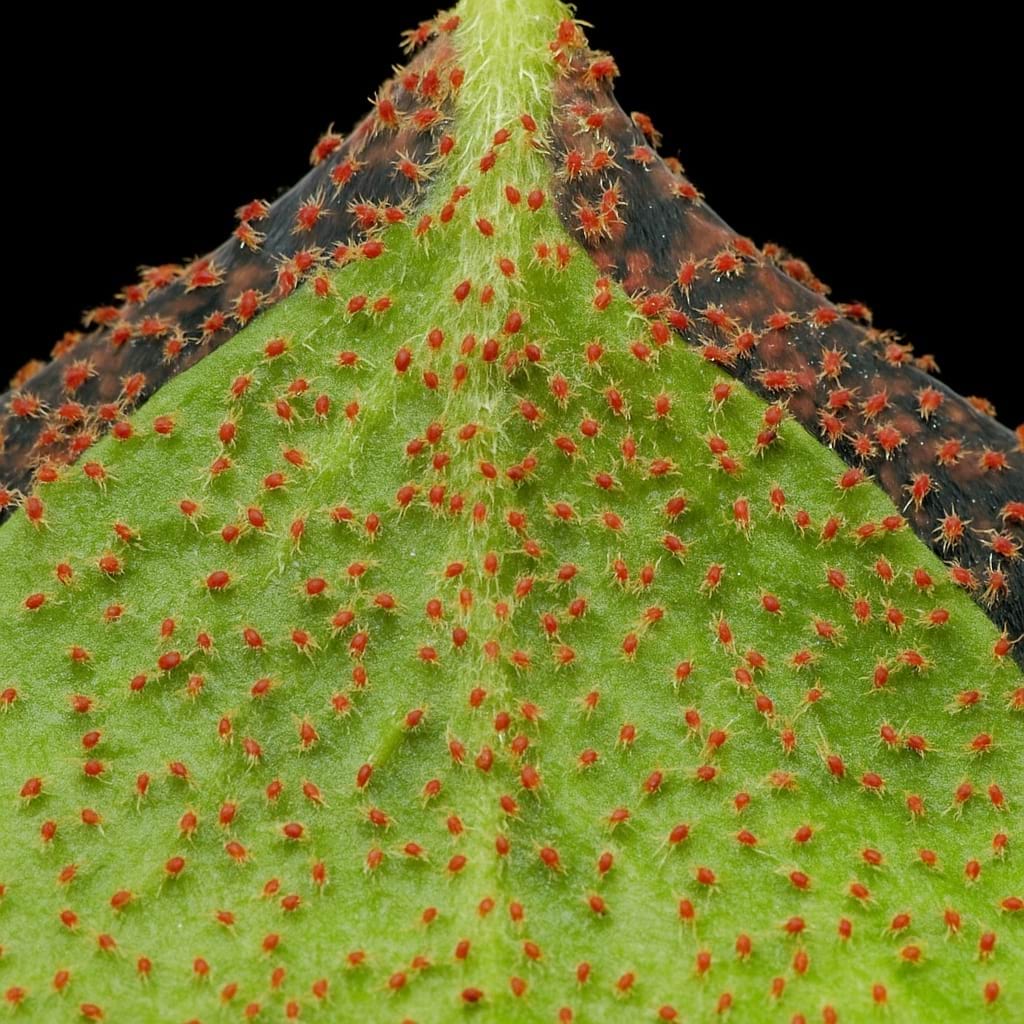
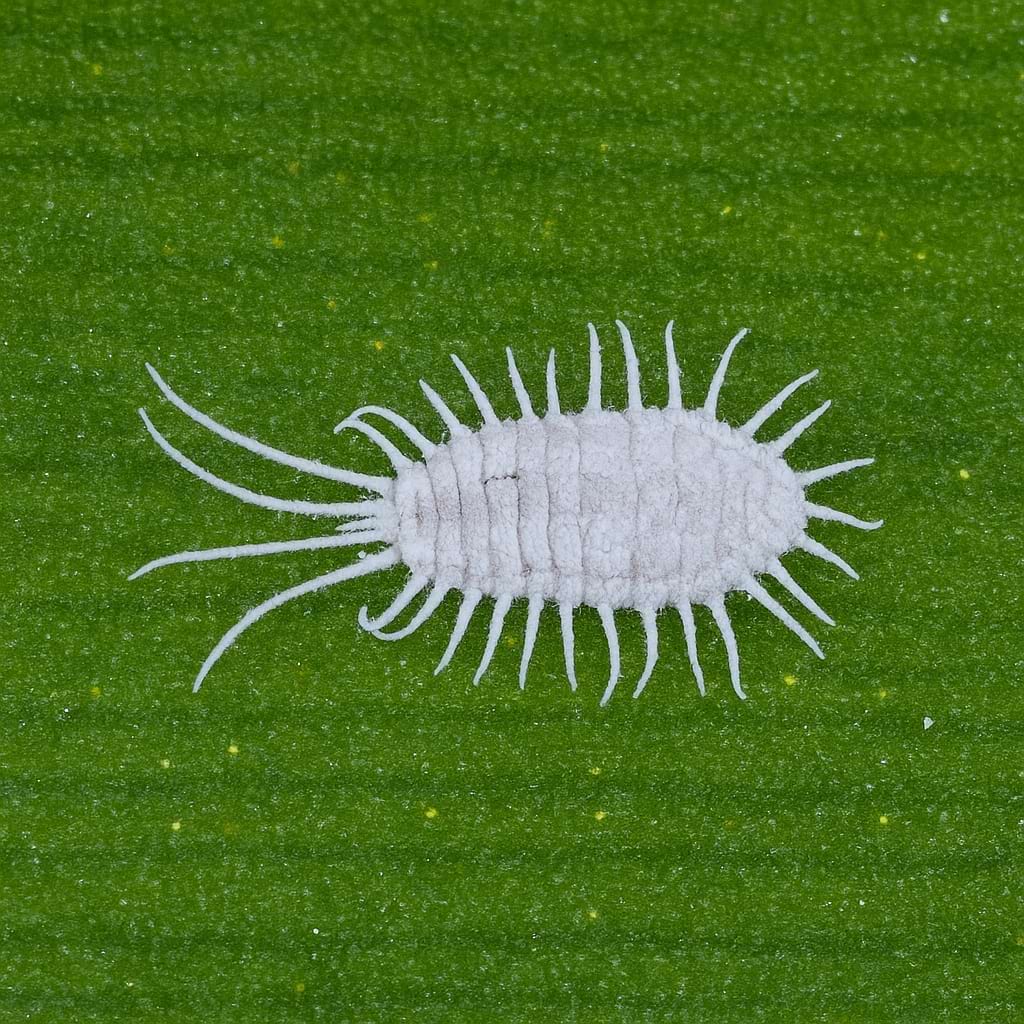
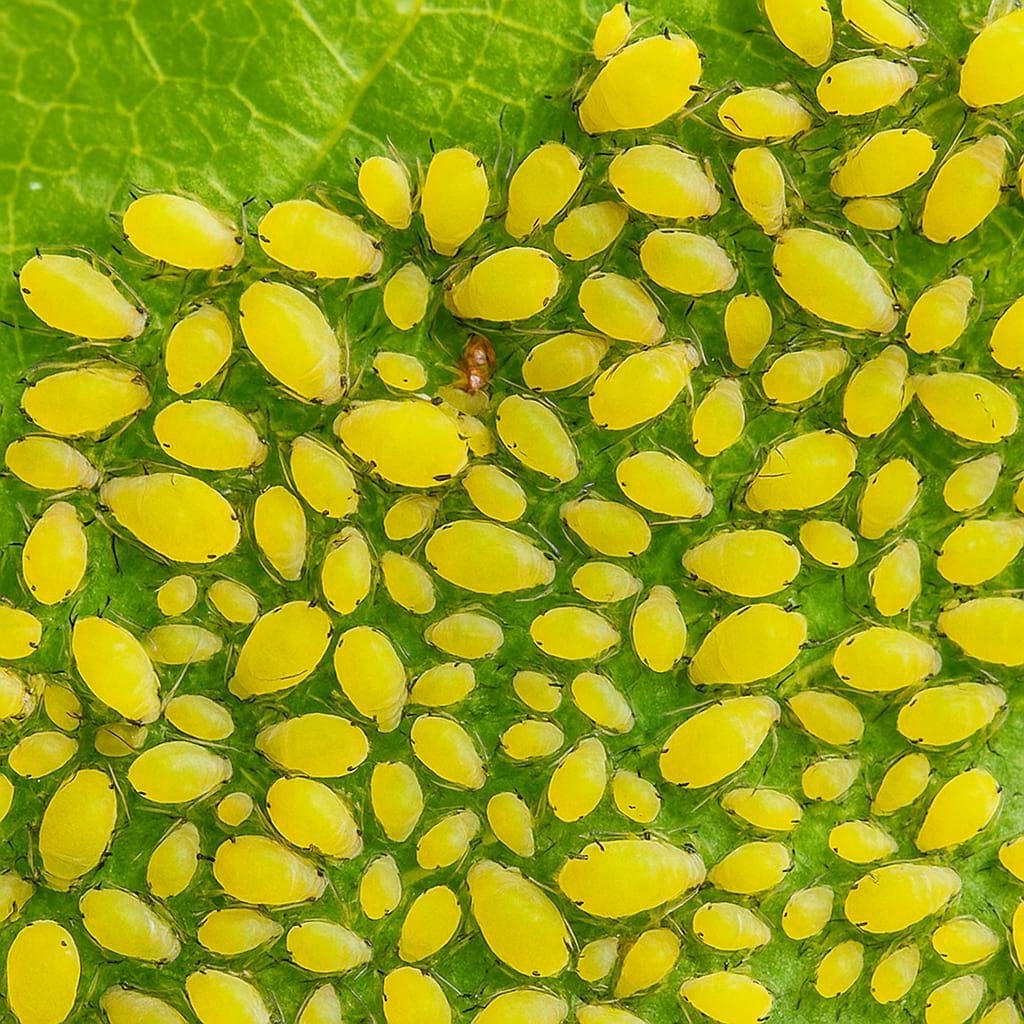
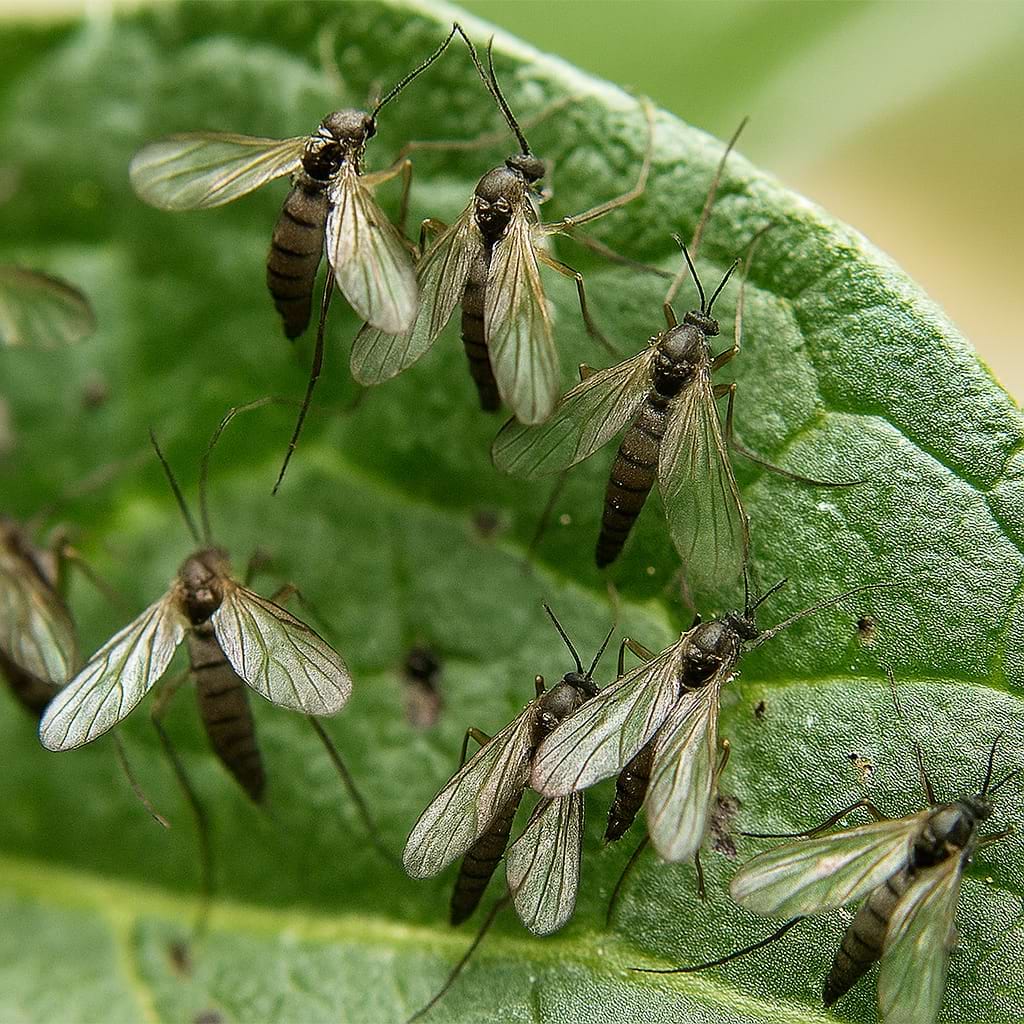
Nanouk is not unusually pest-prone, but the soft fast growth can attract trouble if the air is dry or the plant is stressed. The most common pests are spider mites, mealybugs, aphids, and fungus gnats.
How to Spot Pests on Nanouk Early
Check the nodes, the undersides of the leaves, and the crowded center of the pot. Those are the places pests hide first.
- fine webbing and dull stippled leaves suggest spider mites
- white cottony bits in the joints point to mealybugs
- clusters on new tips often mean aphids
- tiny flies rising from wet soil usually mean fungus gnats
How to Prevent and Treat Nanouk Pests
Good light, sane watering, and decent airflow prevent more pest issues than any spray bottle will. If you do find pests, isolate the plant, rinse what you can, and repeat a gentle treatment like insecticidal soap until the new growth is clean.
Pruning helps here too. Because Nanouk regrows so quickly, you can often remove the worst stems and replace them with clean cuttings rather than trying to save every leaf.
🩺 Nanouk Problems and Diseases
Leggy, Green, or Faded Nanouk Growth
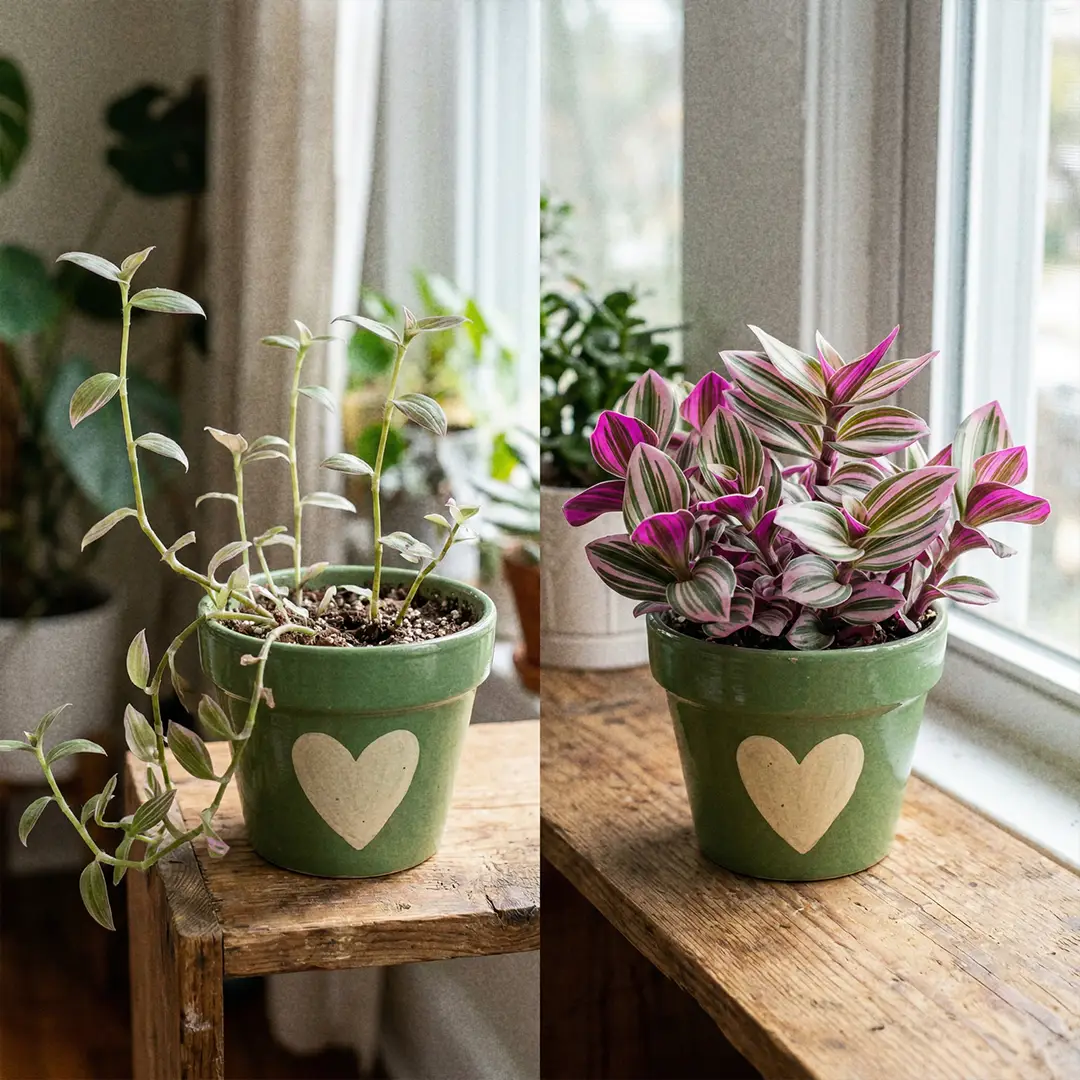
This is the most common complaint, and it almost always points back to light. The stems stretch, the leaves space out, and the pink gives way to greener new growth. Over time the plant starts looking more ordinary than special.
The fix is not subtle:
- move the plant into stronger light
- prune back the weakest stems
- rotate the pot so the crown gets even exposure
- root a few fresh cuttings back into the top
If you keep trimming a plant in the same dim location, the new growth will still come back stretched. Change the light first.
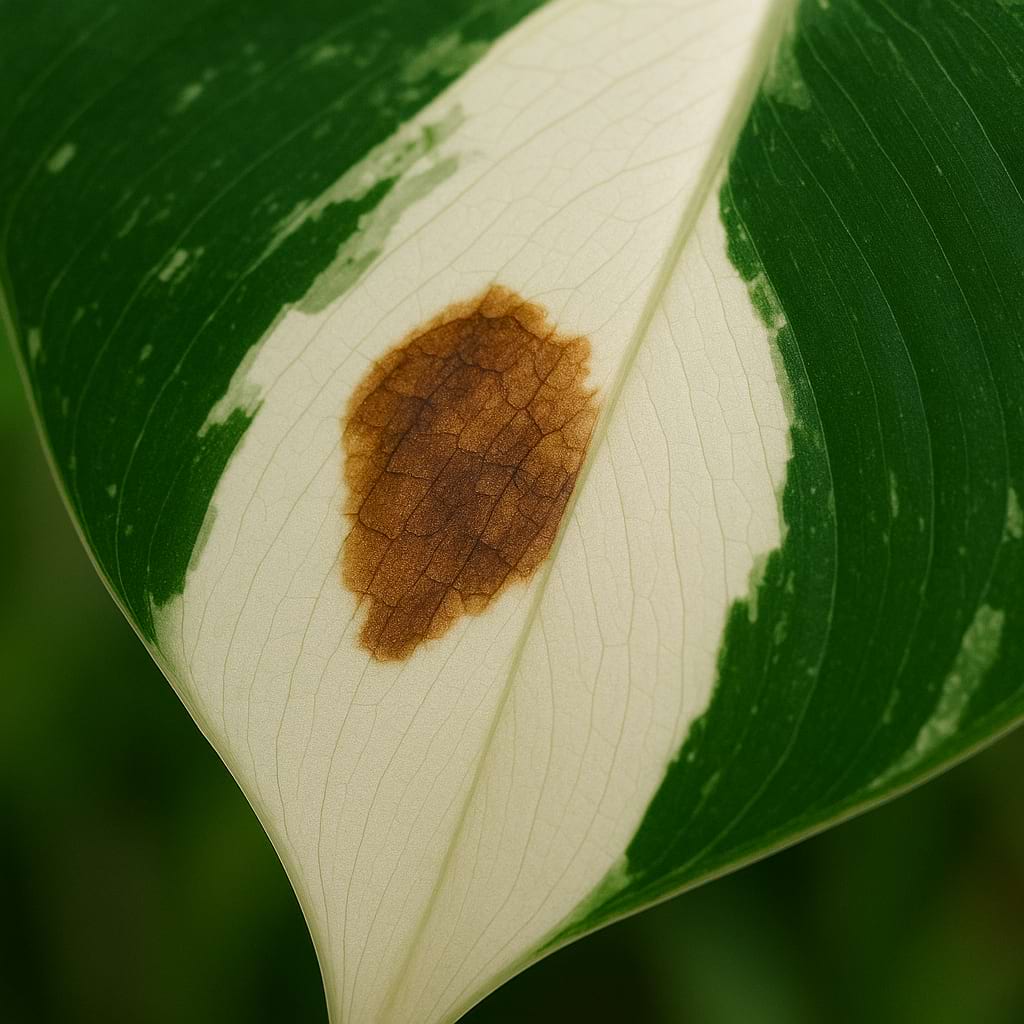
Brown Edges and Browning Variegation on Nanouk
When the pale parts go tan or the margins get crisp, think about the combined environment rather than one single cause.
Possible triggers include:
- dry air
- harsh direct sun
- fertilizer salts
- irregular watering
- older exhausted soil
This is how brown crispy edges and browning variegation usually show up on Nanouk. Flush the soil, tighten the watering rhythm, and make sure the plant is getting bright light instead of hot light.
Yellow Leaves and Soft Stems on Nanouk
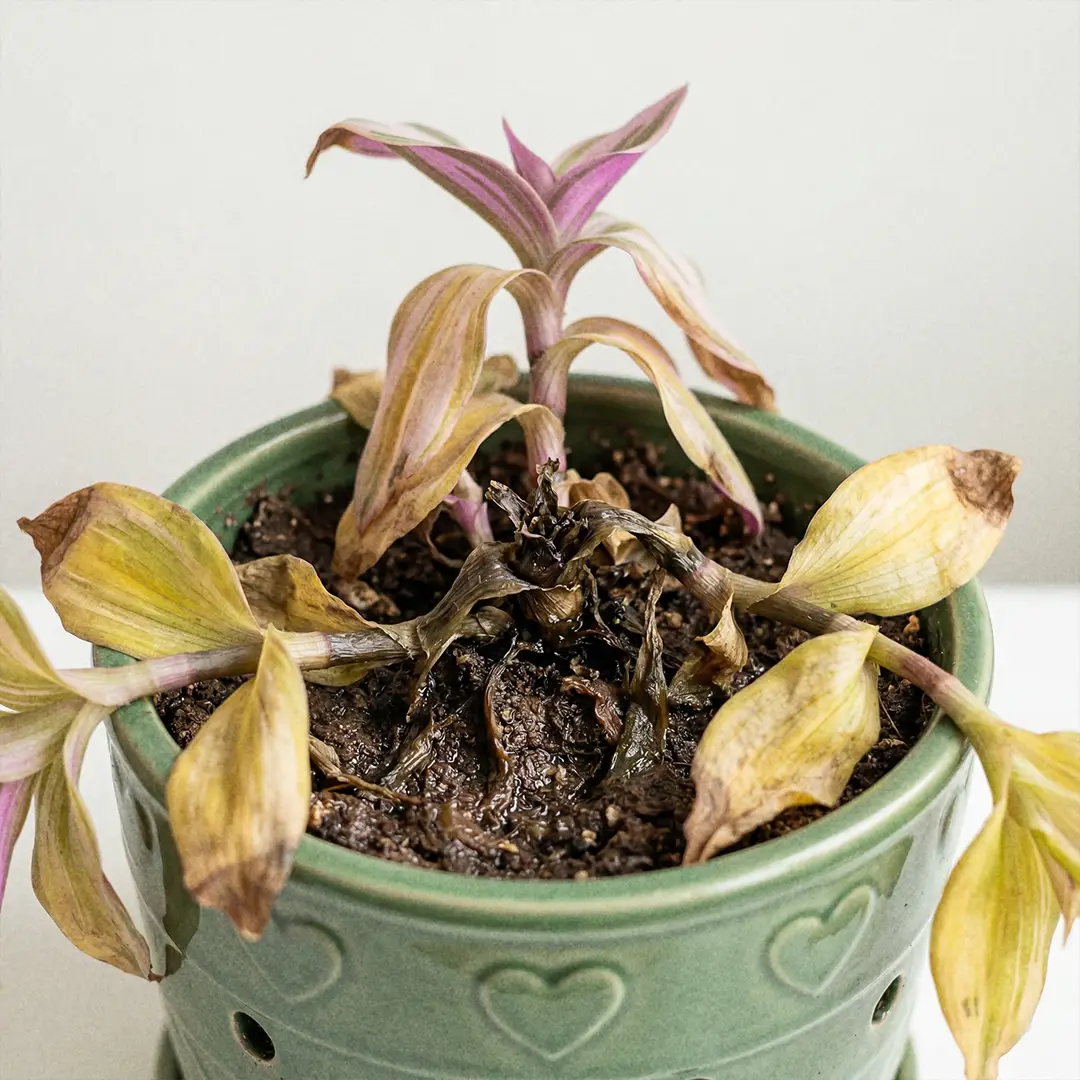
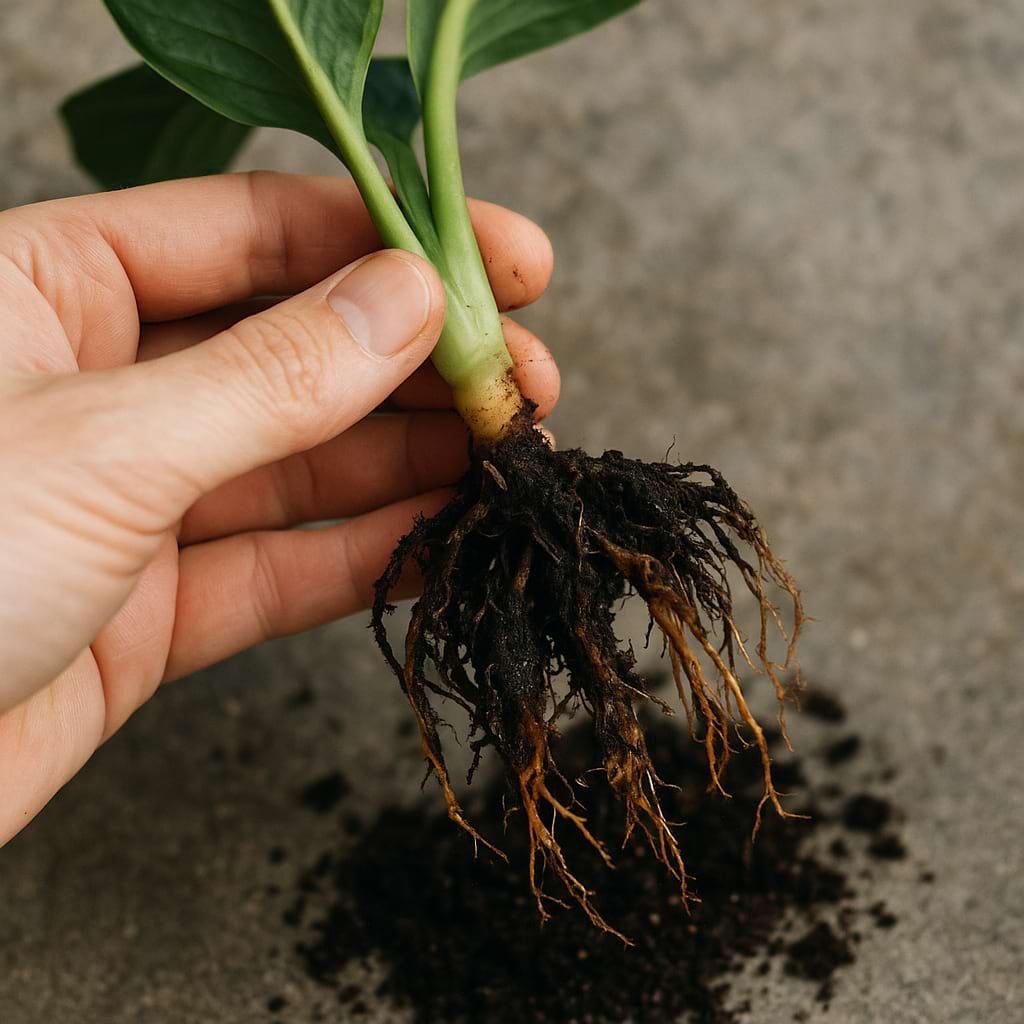
Yellowing that starts low on the plant, especially with mushy bases, usually means overwatering or stale mix. This is how yellowing leaves slide into root rot.
Move quickly if you see it:
- stop watering
- inspect the crown and roots
- cut away soft sections
- save healthy tips for propagation
- repot into fresh airy mix if needed
Do not try to fix rot with fertilizer or more sun alone. This is a root-zone problem first.
Leaf Drop and Reversion on Nanouk
Some leaf drop happens after a big move, a hard prune, or a rough dry spell. If it becomes regular, check the light, watering pattern, and crown health.
Reversion is a slightly different issue. New leaves come in greener and less variegated, usually because the plant is in lower light or being pushed with too much nitrogen. Brighter conditions and pruning out the weakest reverted stems usually bring the balance back.

🖼️ Nanouk Display Ideas
Best Places to Display Nanouk
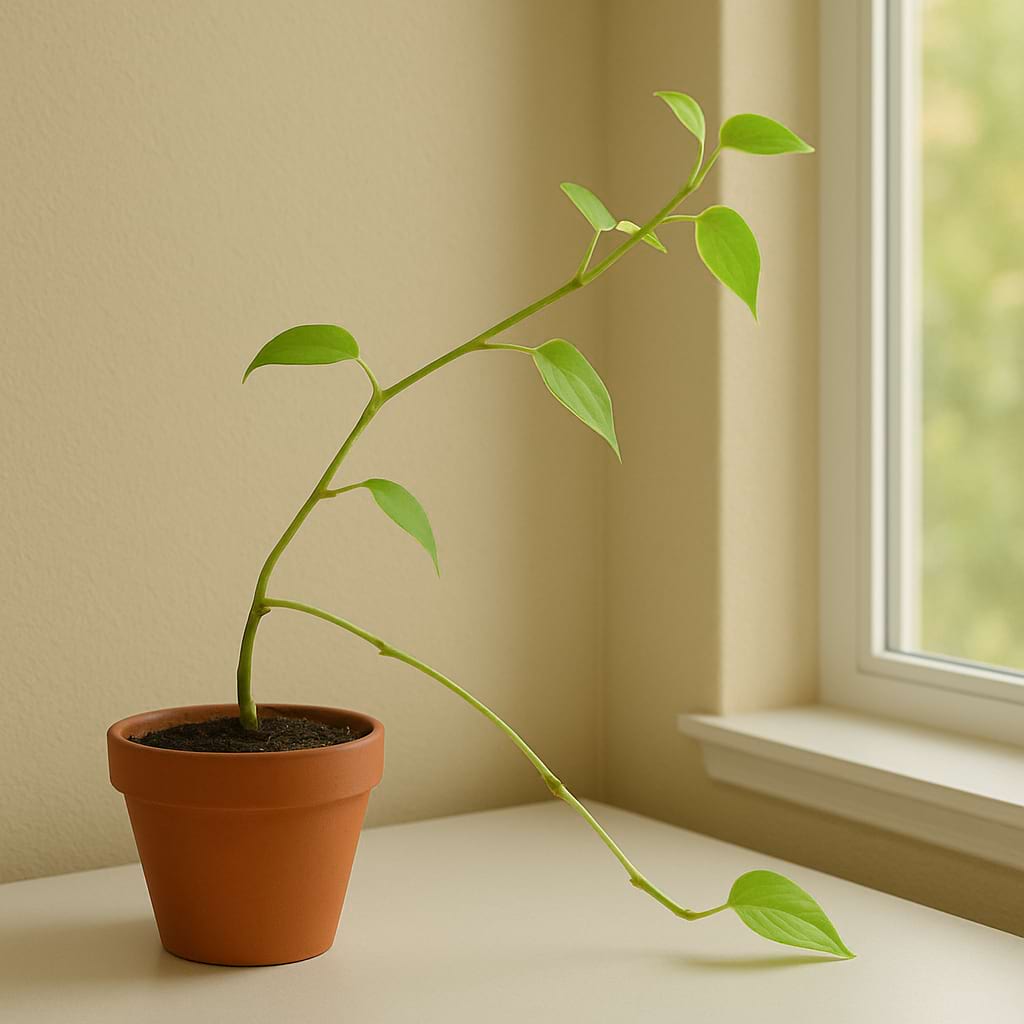
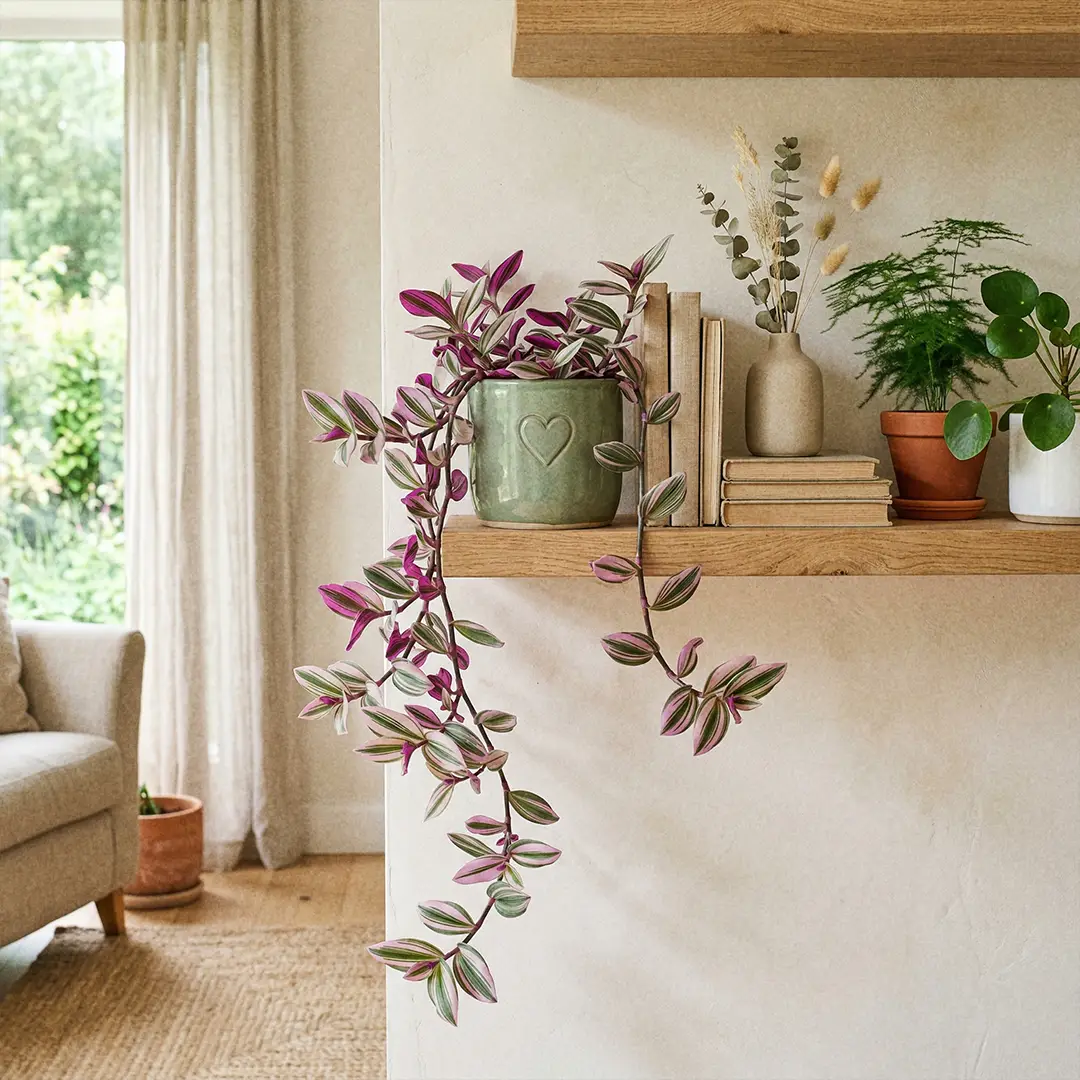
Nanouk looks best where you can see the striping from the side, not only from above. Hanging baskets, shelf edges, plant stands, and wall brackets all show it off better than parking it low on the floor.
My favorite placements are:
- an east-window shelf
- a bright bookcase with room for the stems to drape
- a windowsill planter where the pink can catch the morning light
- a bright bathroom with a real window
Pairing Nanouk With Other Plants
Because Nanouk already carries a lot of color, it pairs best with calmer companions. I like it next to String of Hearts, Philodendron Brasil, or Turtle Vine when I want different leaf sizes and habits in one trailing display.
It also looks great as the colorful spill element beside structured upright plants that do not compete with the variegation.
Safe Placement for Nanouk in Homes With Pets
Because the sap is mildly irritating, keep Nanouk where pets are unlikely to chew or bat at the stems. High shelves and hanging planters are the simplest answer.
Also think about pruning cleanup. Fresh cuttings drop easily and root quickly if they land in another pot. Keep a tray nearby when trimming so you can save the best pieces on purpose.
👍 Nanouk Care Tips (Pro Advice)
Fast Rules for Better Nanouk
- Put it closer to the window than you think.
- Let the top inch dry, not the whole pot.
- Use a wide airy potting mix, not dense bagged soil alone.
- Pinch regularly so the crown stays full.
- Root fresh cuttings back into the same pot.
- Flush the soil now and then if the edges keep crisping.
The One Habit That Makes Nanouk Look Better
If I could pick one routine that changes everything, it would be this: every time you trim the plant, stick a few healthy tips back into the pot. That one habit keeps the container layered and young-looking, and it saves you from the classic bald-crown problem.
When to Start Over With Nanouk
Sometimes the quickest route to a good-looking plant is not nursing the old stems forever. If the center is sparse, the soil is tired, and the best leaves are only on the ends, take fresh tips, rebuild the pot, and move on. With Nanouk, that is good maintenance, not failure.
❓ Frequently Asked Questions
Is Nanouk toxic to cats and dogs?
Yes, Nanouk is considered mildly toxic. Like other Tradescantia, its sap can irritate the mouth, stomach, and skin of pets. It is usually more irritating than dangerous, but hanging baskets and high shelves are still the safest placement.
Why is my Nanouk losing its pink color?
Low light is the most common reason. In dim rooms, Nanouk stretches, produces wider green sections, and the pink fades. Move it closer to a bright window or use a grow light, then prune the weaker stems so fresh growth comes in shorter and brighter.
How often should I water Nanouk?
Water when the top inch of soil feels dry. In active growth that may be every 5-8 days in a bright room, while winter may stretch closer to every 10-14 days. Always judge by the mix, not the calendar.
Can Nanouk take direct sun?
A little gentle morning sun is usually helpful, but long hours of harsh afternoon sun can bleach the variegation and crisp the leaf edges. Bright indirect light is the safest everyday target.
Is Nanouk the same as Wandering Dude?
They are related, but not the same plant. Wandering Dude usually refers to Tradescantia zebrina, which has silver-striped leaves and a looser trailing habit. Nanouk is a different cultivar with chunkier leaves, pink variegation, and a more compact crown.
Can I propagate Nanouk?
Nanouk roots very easily from stem cuttings in water or soil. However, it is a patented cultivar in the United States, so commercial asexual propagation for sale requires permission from the patent holder. For everyday care, the rooting technique is the same as with other Tradescantia.
Why does my Nanouk get brown crispy edges?
That usually comes from a mix of dry air, inconsistent watering, fertilizer salt buildup, or too much harsh sun. Tighten up the watering rhythm, flush the soil occasionally, and move the plant out of any very hot or very dry window spot.
ℹ️ Nanouk Info
Care and Maintenance
🪴 Soil Type and pH: Airy houseplant mix with perlite and bark
💧 Humidity and Misting: Average indoor humidity works, but 40-60% helps keep the variegation clean and the edges smooth.
✂️ Pruning: Pinch and trim often to keep the pot full and stop the stems from going green and leggy.
🧼 Cleaning: Wipe or rinse leaves gently and remove dead lower foliage before it traps moisture around the crown.
🌱 Repotting: Every 1-2 years, or sooner if the soil compacts and the center starts thinning out.
🔄 Repotting Frequency: Every 1-2 years
❄️ Seasonal Changes in Care: Grow actively in spring and summer, trim often in bright months, and water a little less in winter.
Growing Characteristics
💥 Growth Speed: Fast
🔄 Life Cycle: Perennial
💥 Bloom Time: Occasional and inconsistent indoors; foliage is the main feature
🌡️ Hardiness Zones: 10-12 outdoors
🗺️ Native Area: Cultivar developed in the Netherlands from South American Tradescantia stock
🚘 Hibernation: No true dormancy, but growth slows in winter
Propagation and Health
📍 Suitable Locations: Bright shelves, hanging baskets, windowsill planters, bright bathrooms, summer patio pots
🪴 Propagation Methods: Very easy from stem cuttings in water or soil, though this cultivar is still patented in some regions.
🐛 Common Pests: Spider Mites, Mealybugs, Aphids, Fungus Gnats
🦠 Possible Diseases: Root rot, stem rot, and occasional fungal spotting in stale wet conditions
Plant Details
🌿 Plant Type: Variegated trailing perennial
🍃 Foliage Type: Evergreen
🎨 Color of Leaves: Pink, cream, green, and purple
🌸 Flower Color: Small white to pale pink, when present
🌼 Blooming: Possible but not reliable indoors; most growers keep it for the foliage
🍽️ Edibility: Not edible; sap can irritate mouths and skin
📏 Mature Size: 6-10 inches at the crown
Additional Info
🌻 General Benefits: Quick growth, bright pink variegation, easy shaping, easy rooting, and a denser habit than many older inch plants
💊 Medical Properties: No established ornamental-use medical value
🧿 Feng Shui: Pink-and-green variegation is associated with fresh growth, softness, and lively movement in a room
⭐ Zodiac Sign Compatibility: Gemini
🌈 Symbolism or Folklore: Playfulness, renewal, and resilience
📝 Interesting Facts: Nanouk was selected for a stockier habit and brighter pink variegation than many older wandering Tradescantia forms. It also roots from nodes very quickly, which is why a tired pot can often be rebuilt from its own cuttings in a few weeks.
Buying and Usage
🛒 What to Look for When Buying: Choose a plant with short internodes, several shoots at the crown, and clear pink striping on newer leaves. Skip pots with long green stems, brown edges on most leaves, or mushy bases hidden under dense top growth.
🪴 Other Uses: Useful as a colorful spiller in mixed patio containers during warm weather.
Decoration and Styling
🖼️ Display Ideas: Best displayed where the pink striping can be seen from the side, such as shelf edges, plant stands, and hanging pots.
🧵 Styling Tips: Nanouk looks strongest against warm wood, white walls, terracotta, and matte green ceramics. Pair it with calmer foliage plants so the striping stays the main event.
🪴 See also 🪴
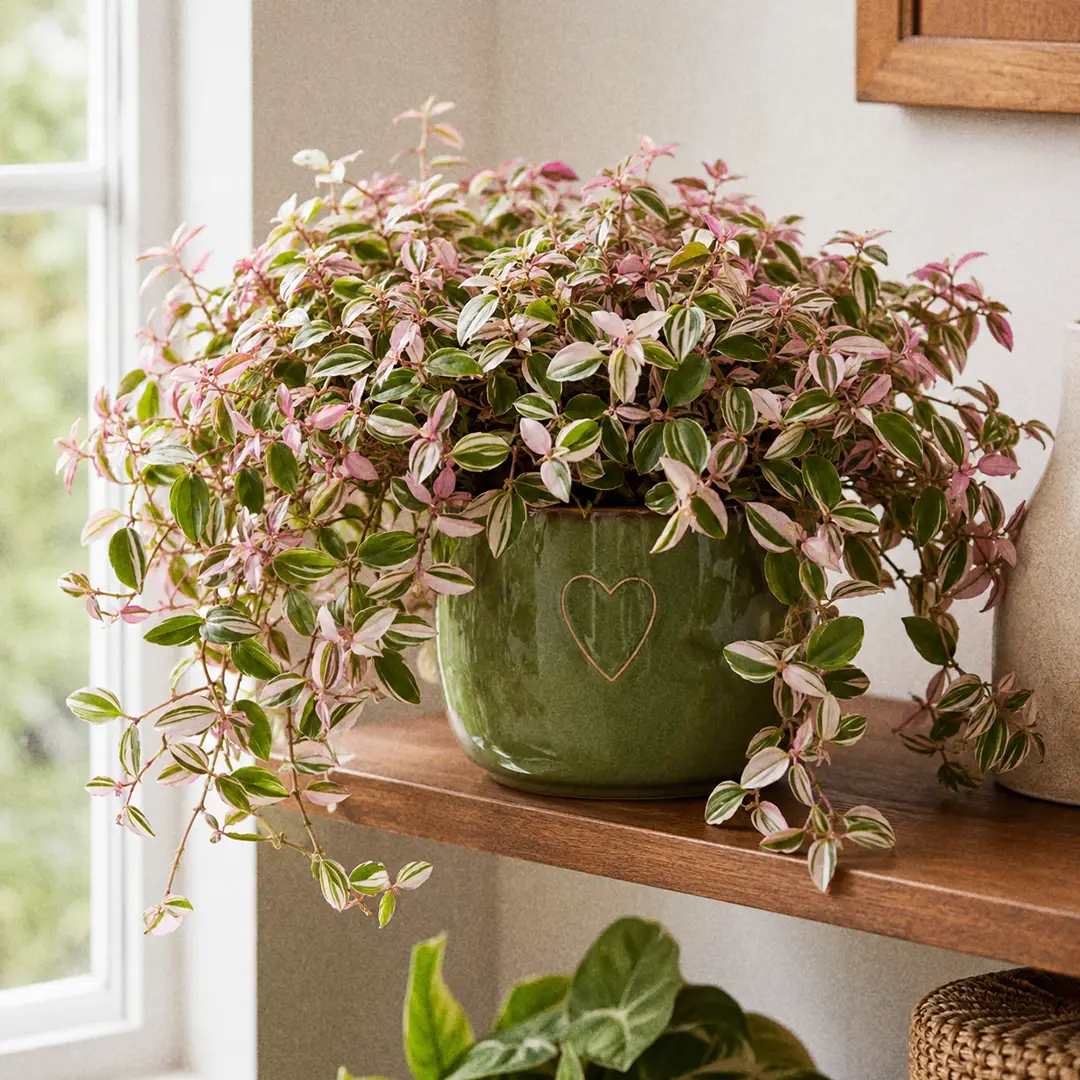
Complete Guide to Tradescantia Fluminensis Care and Growth
Complete Guide to Purple Heart Care and Growth
Complete Guide to Wandering Dude Care and Growth
Complete Guide To Turtle Vine Care and Growth

Houseplant101 Forum
Questions & Comments
Ask a question, share your plant experience, or help other plant owners.
Comments are temporarily unavailable.
Open the Houseplant101 ForumNo comments yet
Be the first to ask a question or share your experience about this page.
Log in or create an account
Comments use your Houseplant101 Forum account, but you can stay on this page.
Create a new account