
Sedum Adolphii
Sedum adolphii
Golden Sedum, Golden Glow, Golden Glow Sedum, Nussbaumer's Sedum


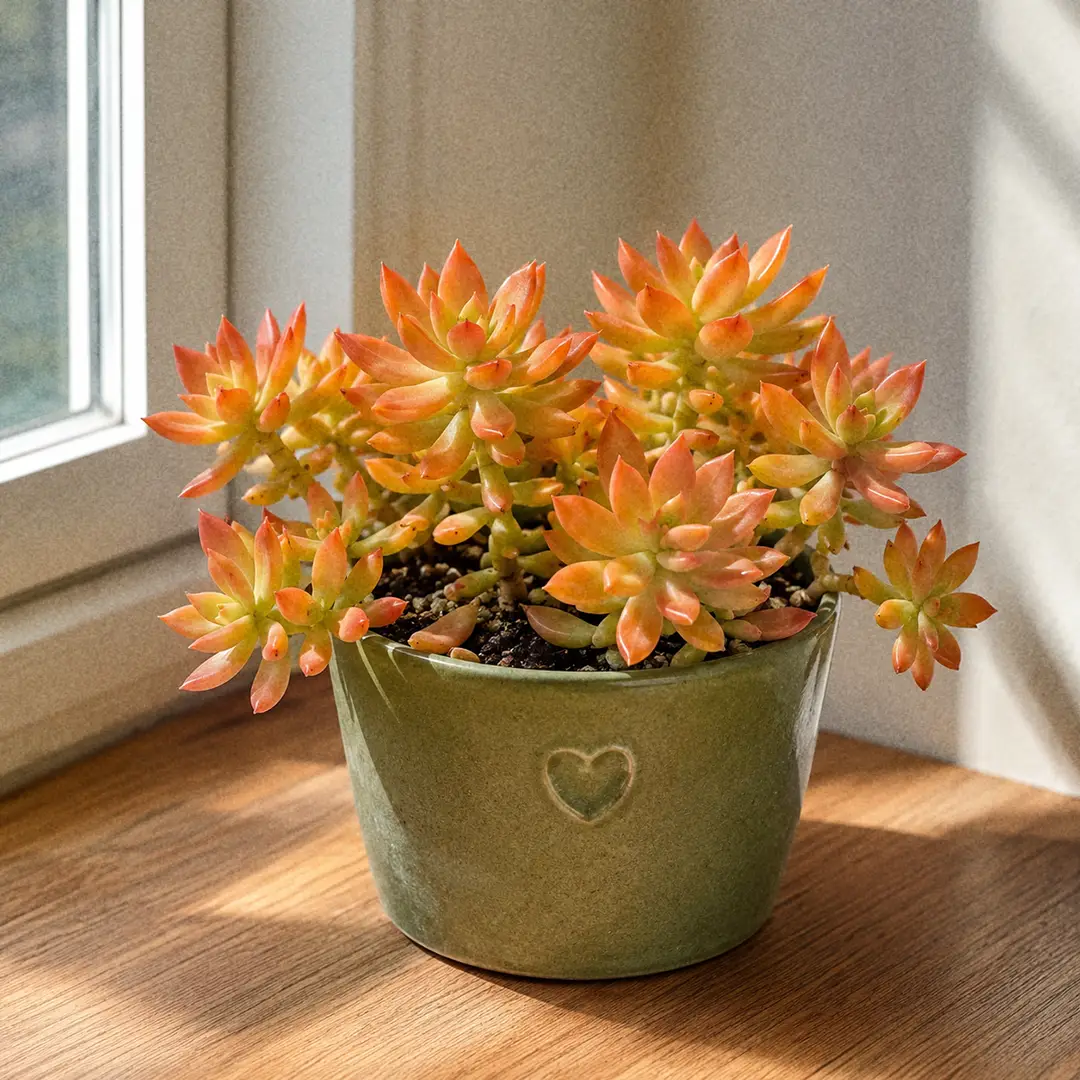
Sedum adolphii, the Golden Glow, is the sun-loving succulent that turns from lime green to sunset orange and coral on a bright sill. Learn how to water it, bring out its color, and turn every dropped leaf into a free new plant.
📝 Sedum Adolphii Care Notes
🌿 Care Instructions
⚠️ Common Pests
📊 Growth Information
🪴 In This Guide 🪴

☀️ Sedum Adolphii Light Requirements (Bright Direct Sun)
The Sweet Spot
Sedum adolphii is a genuine sun-worshipper. It wants the brightest spot you can give it indoors, ideally several hours of real, direct sun each day. A south or west-facing windowsill is the dream. This is a plant that grows on open rocky slopes in eastern Mexico, so it is built to take light that would scorch a Boston Fern or a Maranta.
Light does more than keep this Sedum alive. It controls the color. Grown in strong sun with a bit of temperature swing between day and night, the leaves flush orange, coral, and rosy pink at the tips. That "Golden Glow" is the whole reason people buy the plant, and it is a direct reward for good light.
Too Little Light
In a dim room or set back from the window, Sedum adolphii turns a flat, uniform lime green and starts to stretch. The rosettes loosen, the stems lengthen with wide gaps between leaves, and the plant reaches toward the nearest light source. This is etiolation, or leggy growth, and it is the number one sign your plant wants more sun. The color drains away first, then the shape follows.
If a bright window genuinely is not an option, a small grow light on for 10 to 12 hours a day will keep the plant compact and colorful. Our light guide walks through reading indoor light like a plant does.
Too Much Light
There is a ceiling, even for a sun-lover. A plant grown in low light and then moved straight into blazing summer afternoon sun can sunburn, showing white or brown scorched patches that never heal. The fix is to acclimate. Move it into stronger light over a week or two rather than all at once, and give a little shade during the harshest afternoon hours if your window bakes.

💧 Sedum Adolphii Watering Guide (Soak and Dry)
Watering Frequency
Those plump leaves are water tanks. Sedum adolphii stores enough moisture in its foliage to coast through long dry spells, which means the fastest way to kill it is to water too often. When in doubt, wait.
In spring and summer, that usually works out to a deep drink every 10 to 14 days, but treat that as a loose guide, not a rule. In winter, when the plant is resting, you might go three or four weeks between waterings, sometimes longer. Your pot size, soil, and how much sun the plant gets all shift the timing, so check the soil instead of the calendar.
How to Water
Use the soak and dry method. Wait until the soil is completely dry all the way through the pot, then water thoroughly until it runs from the drainage holes. Then leave it alone until it is bone dry again. This mimics the boom-and-bust rain the plant evolved with and keeps the roots healthy.
Try to keep water off the rosettes themselves. Moisture that pools in the center of a tight rosette can sit there and invite rot or fungal spotting. Watering at the soil line, or bottom watering by setting the pot in a shallow tray for 15 minutes, keeps the foliage dry and the farina coating intact.
Signs of Trouble
Learn to read the leaves and this plant becomes almost foolproof. Firm, plump leaves mean the plant is well hydrated and needs nothing. Slightly soft, wrinkled, or deflated leaves mean it is thirsty, and a good soak will plump them back up within a day or two.
The danger sign runs the other way. Leaves that turn translucent, mushy, or yellow, especially near the base, point to overwatering and the start of root rot. If you see that, stop watering immediately and check the roots. Our full watering guide covers the fundamentals.
🪴 Best Soil for Sedum Adolphii (Fast-Draining Mix)
What the Soil Needs
Drainage is everything for this plant. Sedum adolphii cannot sit in wet soil without rotting, so the mix has to drain fast and dry out quickly between waterings. Regular potting soil, on its own, holds far too much water and will slowly suffocate the roots.
The goal is a gritty, airy blend that lets water rush through and leaves plenty of air pockets around the roots. If you can squeeze a handful of your mix and it holds together in a wet clump, it is too dense for this Sedum.
DIY Gritty Mix
Mixing your own is cheap and reliable. A blend I come back to again and again:
- 2 parts cactus and succulent soil
- 1 part pumice or perlite
- 1 part coarse sand or fine gravel
That extra grit is what separates a thriving Sedum from a rotting one. Pumice is my first choice because it holds a little moisture and nutrients without ever going soggy. Our soil guide explains the science of why drainage matters so much for succulents.
Pre-Made Options
If you would rather not mix anything, a bagged cactus and succulent mix works as a base, but cut it with an extra handful or two of perlite or pumice per pot. Most commercial succulent soils still hold a bit more water than a plant this drought-adapted really wants. A top dressing of gravel or coarse sand also helps by keeping the leaves off damp soil and speeding evaporation at the surface.
🍼 Fertilizing Sedum Adolphii
When and How Often
Sedum adolphii is a light feeder. In the wild it grows in poor, rocky ground, so it expects very little. A few gentle feedings across the growing season are plenty. Feed two or three times total between spring and late summer, then stop completely for fall and winter while the plant rests.
What to Use
Reach for a fertilizer made for cacti and succulents, diluted to half strength. These are formulated to be low in nitrogen, which is exactly what you want. Always apply feed to soil that is already slightly moist, never bone dry, since concentrated fertilizer on dry roots can burn them. Our fertilizing guide covers dilution and timing in more detail.
Easy on the Nitrogen
Too much nitrogen is the classic mistake with colorful succulents. A big dose pushes fast, soft, green growth, and that green growth comes at the cost of the sunset color you actually wanted. Overfed plants also stretch and turn floppy, more prone to snapping. When it comes to feeding this plant, less really is more.
🌡️ Sedum Adolphii Temperature Range
Ideal Range
Standard room temperature suits Sedum adolphii perfectly. It is happiest somewhere between 65 and 80°F (18 to 27°C), which covers most homes year-round. It handles summer heat easily as long as it is not baking behind glass with zero airflow.
There is a bonus hidden in cooler nights. A drop in nighttime temperature during fall and winter, down toward 50 to 55°F, actually deepens the leaf color and helps set up spring flowers. That day-to-night swing is part of what makes the tips flush so intensely.
Cold and Heat
This is not a cold-hardy plant. It survives outdoors year-round only in USDA zones 9b to 11, and frost will turn the leaves to mush. If you move it outside for summer, bring it back in well before nights dip below about 40°F (4°C). Indoors, keep it away from cold drafts, single-pane windows in winter, and the hot, drying blast of a heating vent. Steady conditions beat wild swings.
💦 Sedum Adolphii Humidity Requirements
Dry Air Is Perfect
Here is the easiest section in the guide: do nothing. Sedum adolphii thrives in the dry air most homes already have, somewhere around 30 to 45 percent humidity. It has zero interest in misting, pebble trays, or a humidifier. In fact, extra humidity works against it.
Airflow Matters
If you live somewhere genuinely humid, above 60 percent, the plant can still do well, but airflow becomes important. Stagnant, damp air around a succulent invites fungal spots and rot, especially if water lingers in the rosettes. A gently moving current of air, a cracked window or a nearby fan on low, keeps the foliage dry and healthy. Skip misting entirely. This plant never wants it.
🌸 Sedum Adolphii Flowers (Bloom Guide)
What the Flowers Look Like
Given enough sun and a little age, Sedum adolphii rewards you with clusters of small, white, star-shaped flowers, usually in late winter or early spring. They sit on short sprays that rise just above the rosettes, with a light fragrance that is easy to miss unless you lean in. The blooms are pretty, but let's be honest, this plant is grown for its foliage.
How to Trigger Bloom
Flowering comes down to maturity, sun, and a cool winter rest. A young plant simply will not bloom, so patience is part of it. Beyond that, the plant needs a season of strong light and a cool, nearly dry winter period around 50 to 55°F to signal that spring is coming. Plants grown in dim indoor light or kept warm and watered all winter rarely flower, and that is fine. A well-colored, compact rosette is the real prize here.
🏷️ Sedum Adolphii Types and Varieties
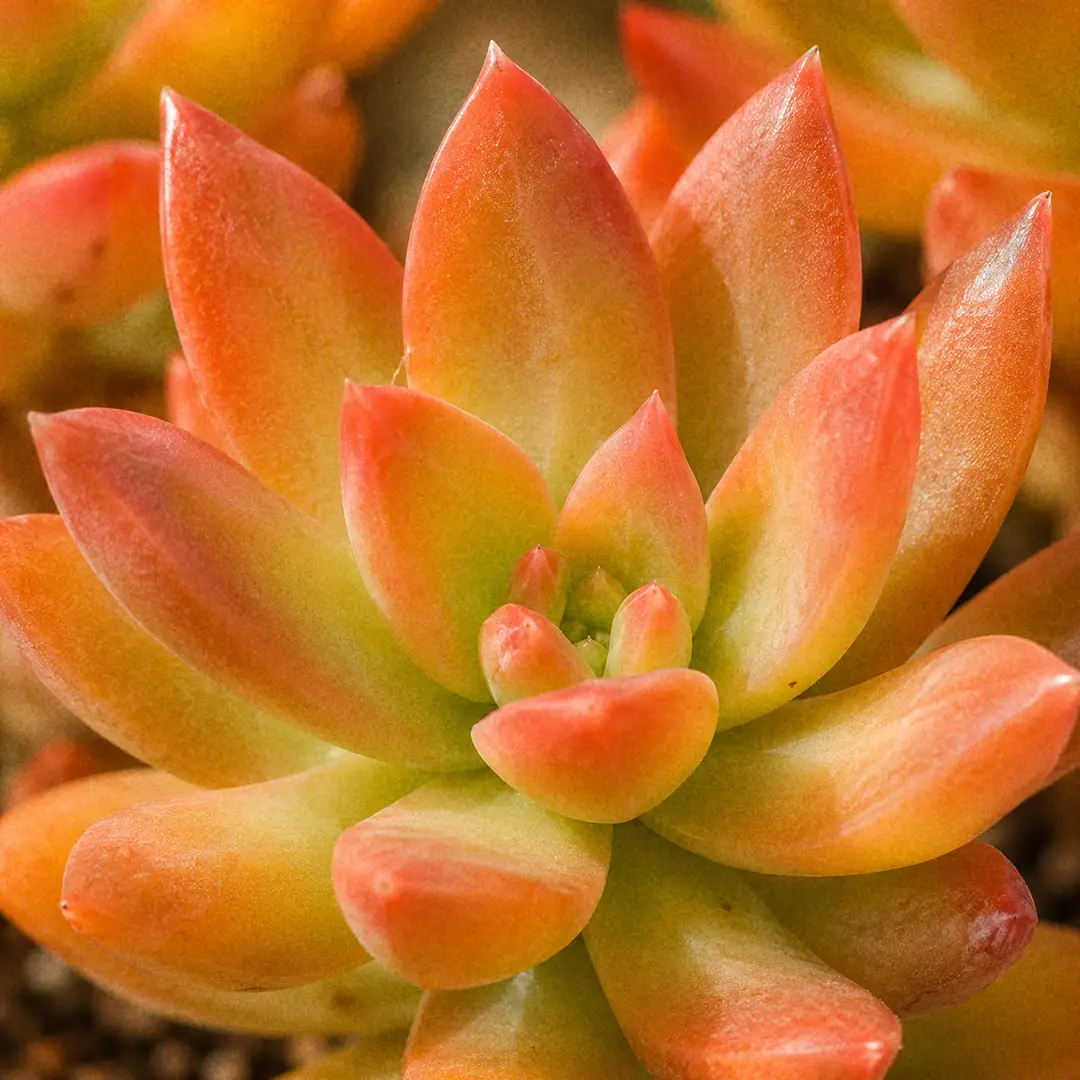
Golden Glow (Sedum adolphii 'Golden Glow')
This is the plant most people mean when they say Sedum adolphii. Its leaves are yellow-green at the base, with tips and edges that flush warm orange and rosy pink in strong sun. The "golden" name comes from that warm lime-gold base color, which stays brighter and more yellow than its coppery relatives even in shade.
Coppertone Stonecrop (Sedum nussbaumerianum)
Sedum adolphii and Sedum nussbaumerianum are so closely related that nurseries constantly swap the labels, and some botanists treat them as one variable species. The practical difference is color. Coppertone leans into deep copper and burnt-orange tones, especially the whole leaf rather than just the tips, while Golden Glow keeps more of its yellow-green base. Care for the two is identical, so if your label is wrong, it changes nothing.
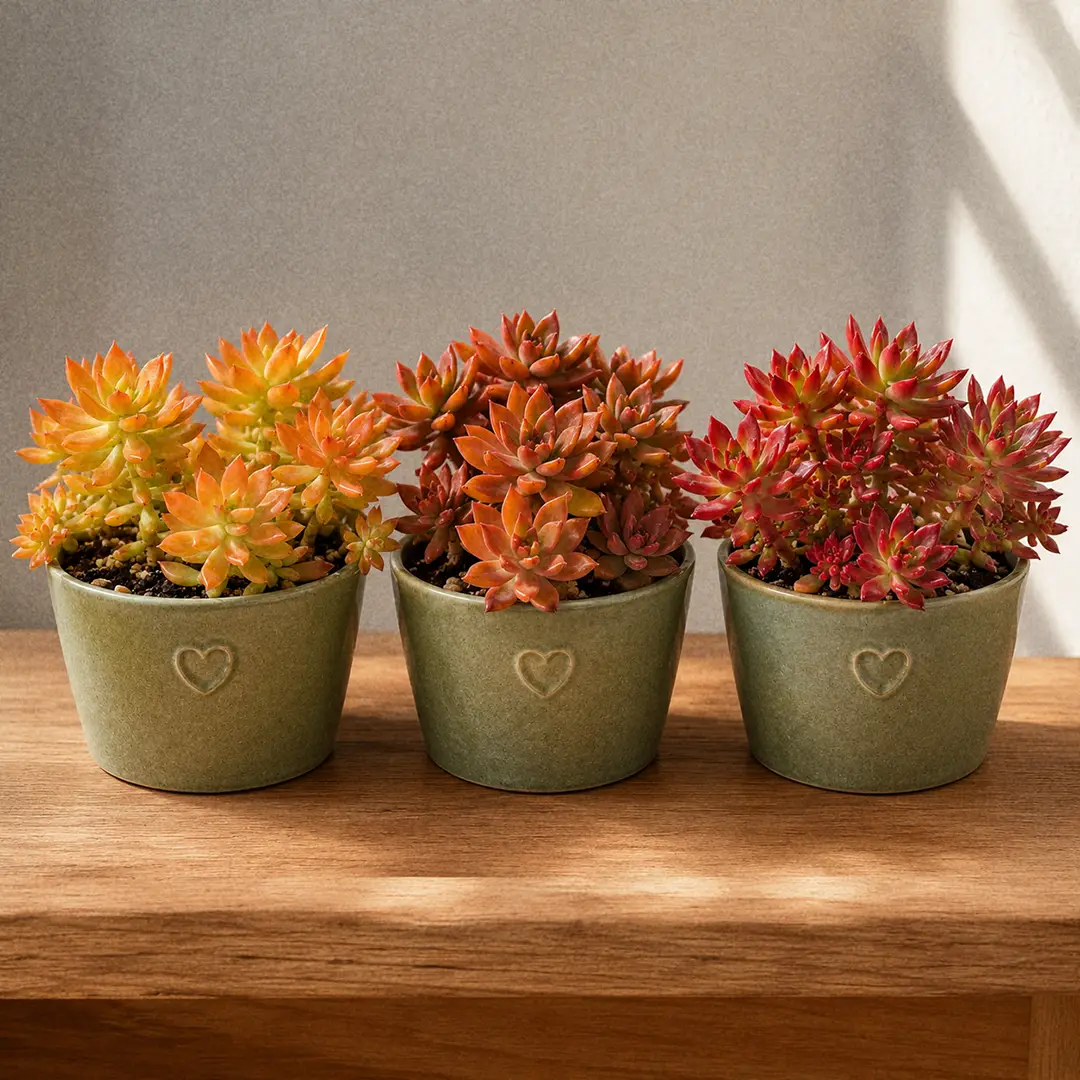
'Firestorm' is a selected form with even more dramatic red leaf margins under stress, essentially a Golden Glow turned up to eleven. Beyond the adolphii complex, this plant sits in excellent company. The Jelly Bean Plant (Sedum rubrotinctum) is a fellow Sedum with plump, bean-shaped leaves that blush red in sun. Burro's Tail (Sedum morganianum) is the trailing cousin with rope-like strands. And the Ghost Plant (Graptopetalum paraguayense), a Crassulaceae relative, is a parent of the Graptosedum hybrid 'California Sunset' alongside Sedum adolphii itself. If you love the sunset-succulent look, any of these belongs on the same sunny sill.
🪴 Potting and Repotting Sedum Adolphii
When to Repot
Sedum adolphii is in no hurry to be repotted. It is perfectly content a little root-bound, and less repotting means fewer knocked-off leaves. Plan on moving it up a size every two to three years, or whenever the stems have clearly sprawled past the edge of the pot or the soil has broken down and stopped draining well. Spring, at the start of active growth, is the best time.
Choosing a Pot
Go for a shallow, wide pot with drainage holes rather than a deep one. This Sedum has a shallow root system, and a deep pot just holds a reservoir of wet soil below the roots that never dries out. Terracotta is ideal because its porous walls wick moisture away and help the mix dry evenly. Whatever the material, drainage holes are non-negotiable.
Step-by-Step Repotting
- Let the soil dry out fully first, which makes the root ball easier to remove and gentler on the roots.
- Slide the plant out by tipping the pot, supporting the base rather than pulling on the stems.
- Shake off the old soil and check the roots, trimming anything black, soft, or mushy.
- Set the plant into a pot only one size larger, pre-filled with your gritty mix, at the same depth it sat before.
- Wait three to five days before watering. This lets any nicked roots callus over and prevents rot. Our repotting guide has the full walkthrough.
Lay a towel under your workspace. This plant sheds leaves when handled, so collect every one that falls and set it aside for propagation.
✂️ Pruning Sedum Adolphii
When and Why to Prune
Pruning keeps this Sedum looking its best and gives you free plants in the bargain. Over time, stems stretch, lower leaves drop, and the plant can look bare at the base with rosettes only at the tips. A prune resets that. The best time is spring or early summer, when the plant is growing actively and heals fastest.
How to Behead and Pinch
The main technique with rosette Sedums is "beheading," which sounds dramatic but just means cutting the top rosette off a leggy stem. Use clean, sharp scissors and snip the rosette with an inch or two of stem attached. The cut top roots into a fresh compact plant, and the bare stem you left behind will usually sprout new rosettes along its length. Pinching or trimming stem tips earlier, before things get leggy, encourages branching and a fuller, bushier shape. Save every cutting and every fallen leaf. None of it is waste.
🌱 How to Propagate Sedum Adolphii
The Easiest Plant to Multiply
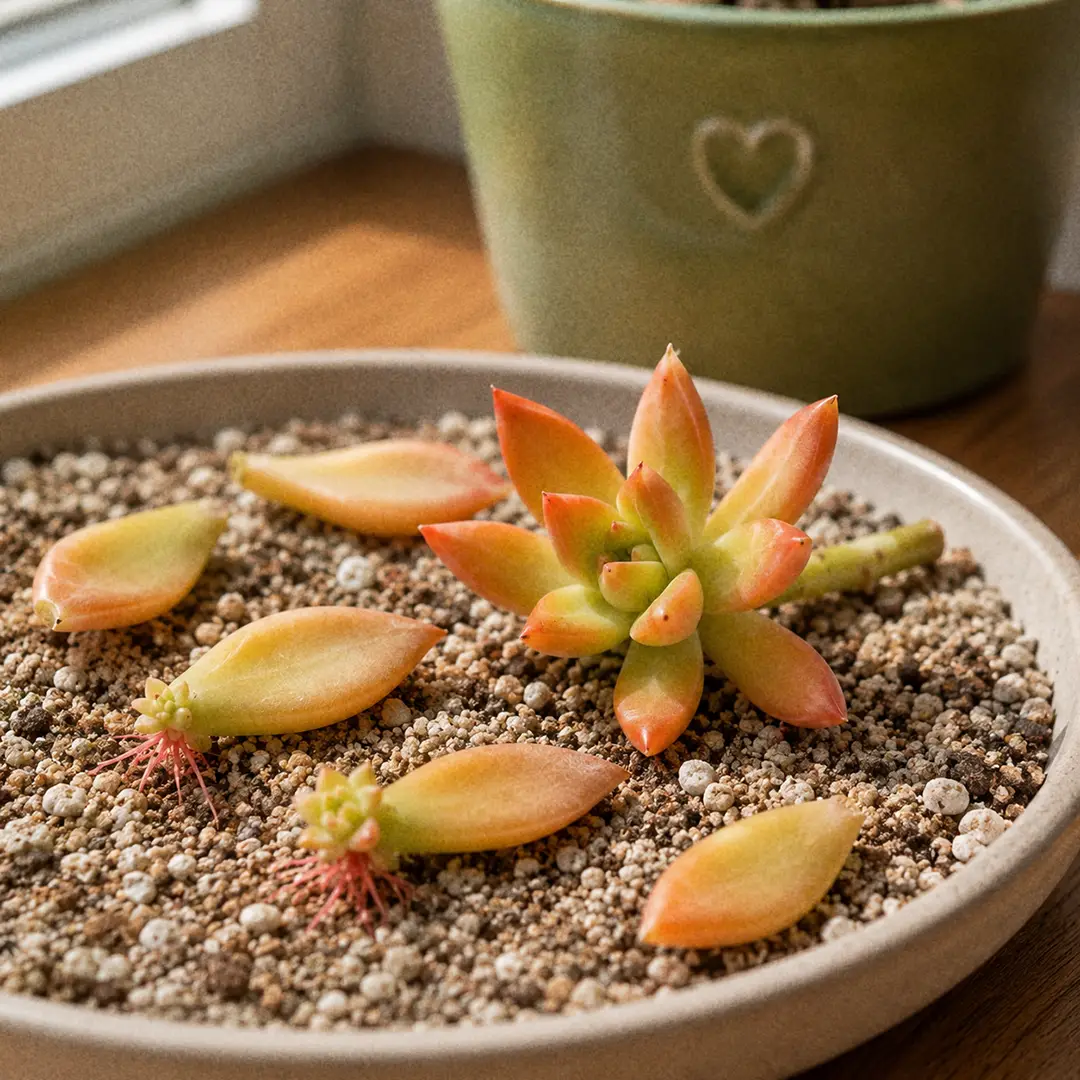
Sedum adolphii propagates almost by accident. Every leaf that drops onto the soil has a good chance of rooting itself into a new plant, which is exactly how it spreads across rocky ground in the wild. That makes it one of the most generous, beginner-friendly succulents you can own. Our succulent propagation guide covers the general principles, but this plant barely needs them.
Leaf Propagation
- Collect leaves. Gather fallen ones, or gently twist a plump, healthy leaf off the stem. It has to come away clean at the base. A torn leaf will not root.
- Let them callus. Set the leaves on a dry surface out of direct sun for two or three days until the cut end forms a dry skin. This step prevents rot.
- Lay on soil. Rest the calloused leaves flat on top of dry, gritty succulent mix. Do not bury them.
- Wait and mist. Keep them in bright, indirect light. After a week, start misting the surface lightly every few days. Within a few weeks you will see tiny pink roots, then a miniature rosette.
- Transplant. Once the baby has its own small roots and a few leaves, and the parent leaf has shriveled, pot it up.
Stem and Beheading Propagation
For a bigger plant faster, use stem cuttings or the rosette you removed while pruning. Cut a 2 to 4 inch stem, strip the lowest leaves, and let the cut end callus for three to five days. Then insert it into barely moist gritty soil and set it in bright light. Roots usually form within two to four weeks, after which you can shift to normal soak-and-dry watering. For soil-based rooting tips, our soil propagation guide helps.
🐛 Sedum Adolphii Pests and Treatment
Sedum adolphii is not especially pest-prone. Its waxy coating and firm leaves put off many bugs, but a stressed or crowded plant can still attract a few. Check the tight spaces where leaves meet the stem, since that is where trouble tends to hide.
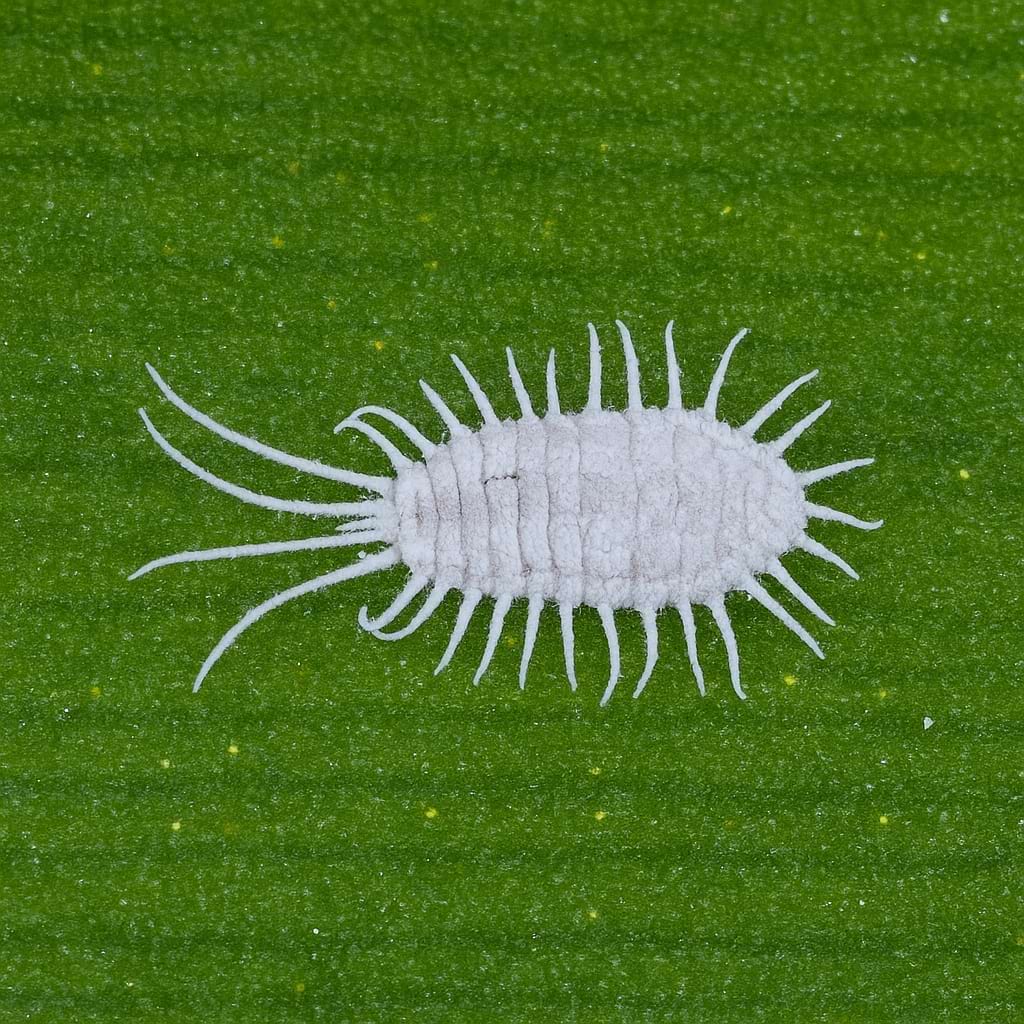
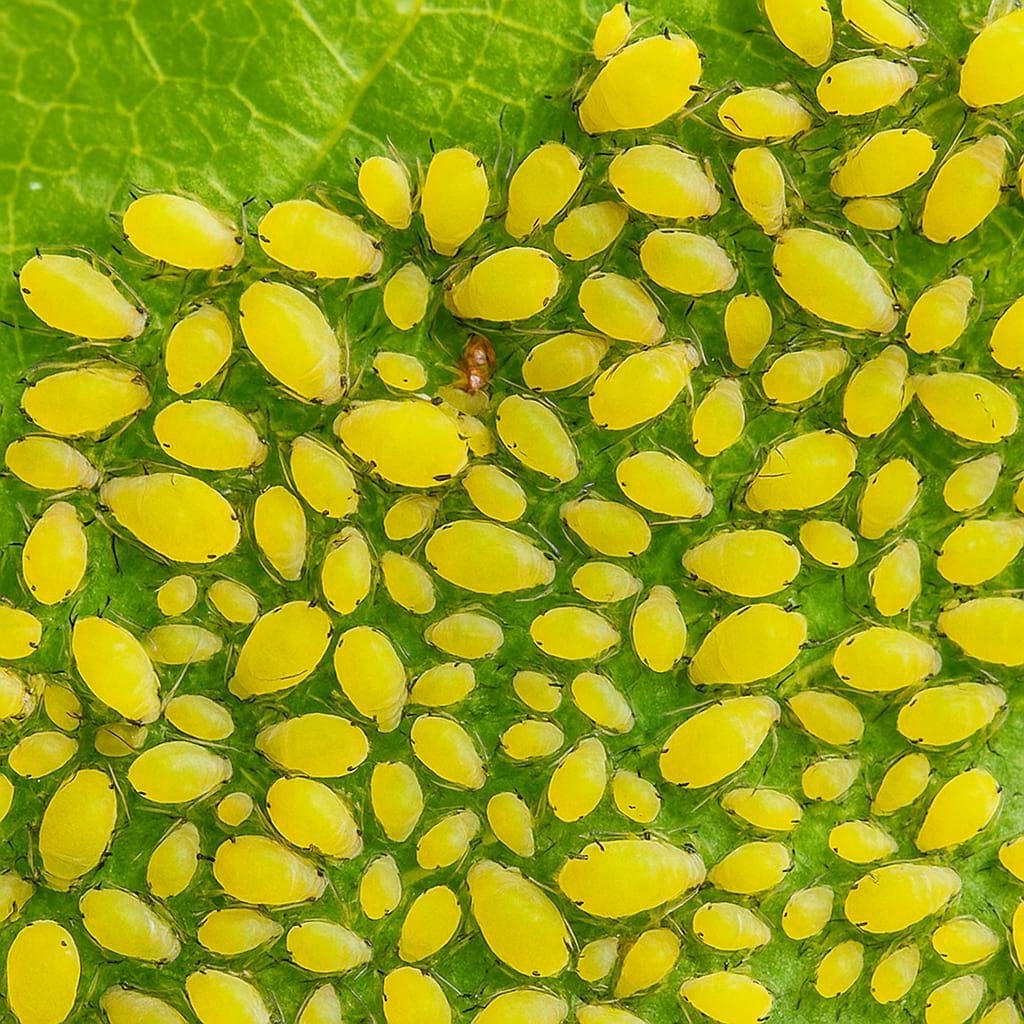
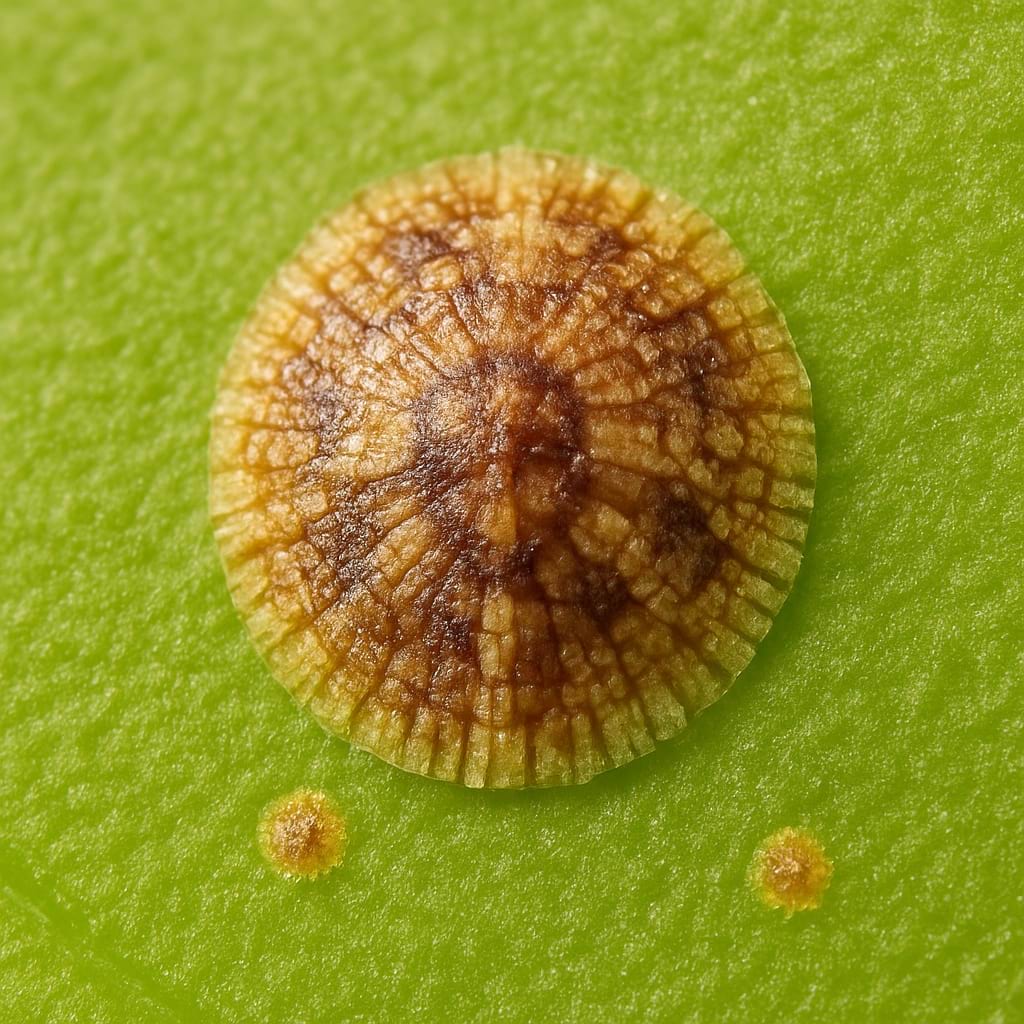
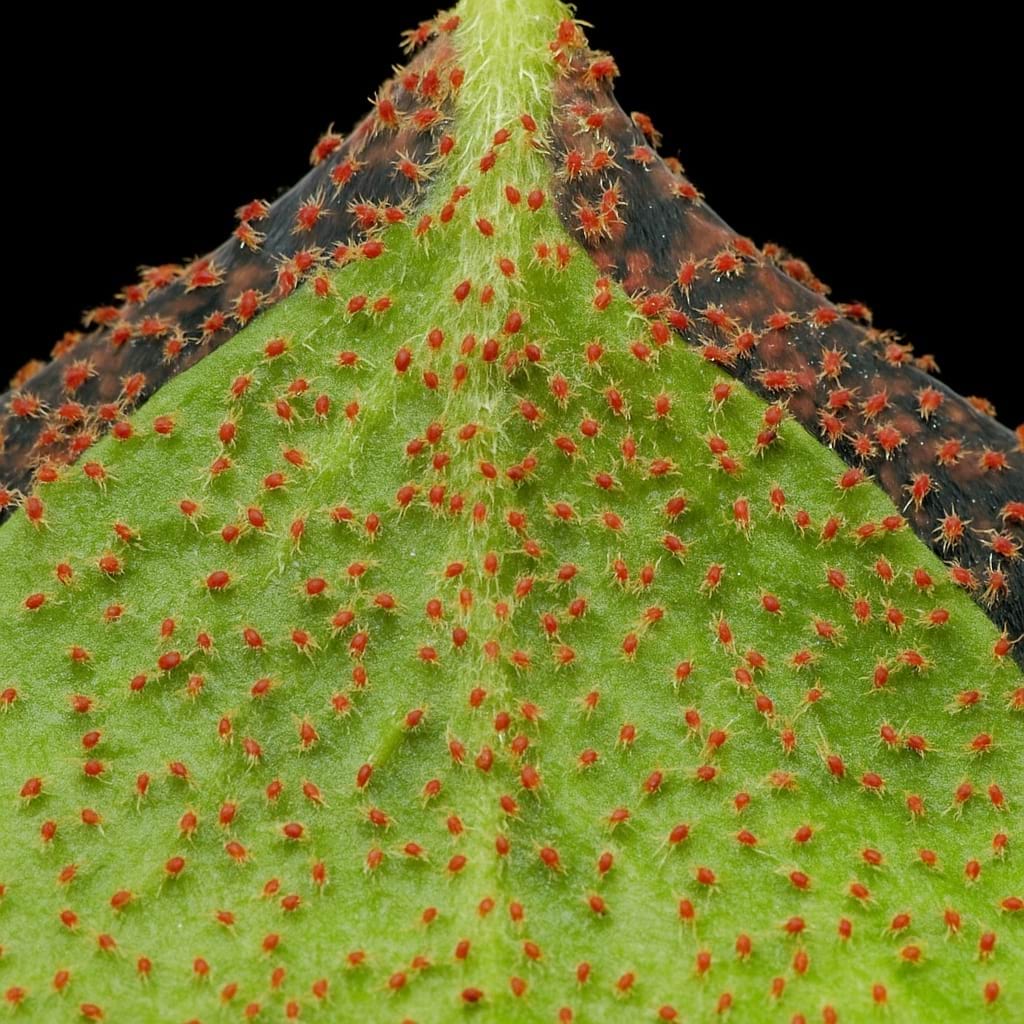
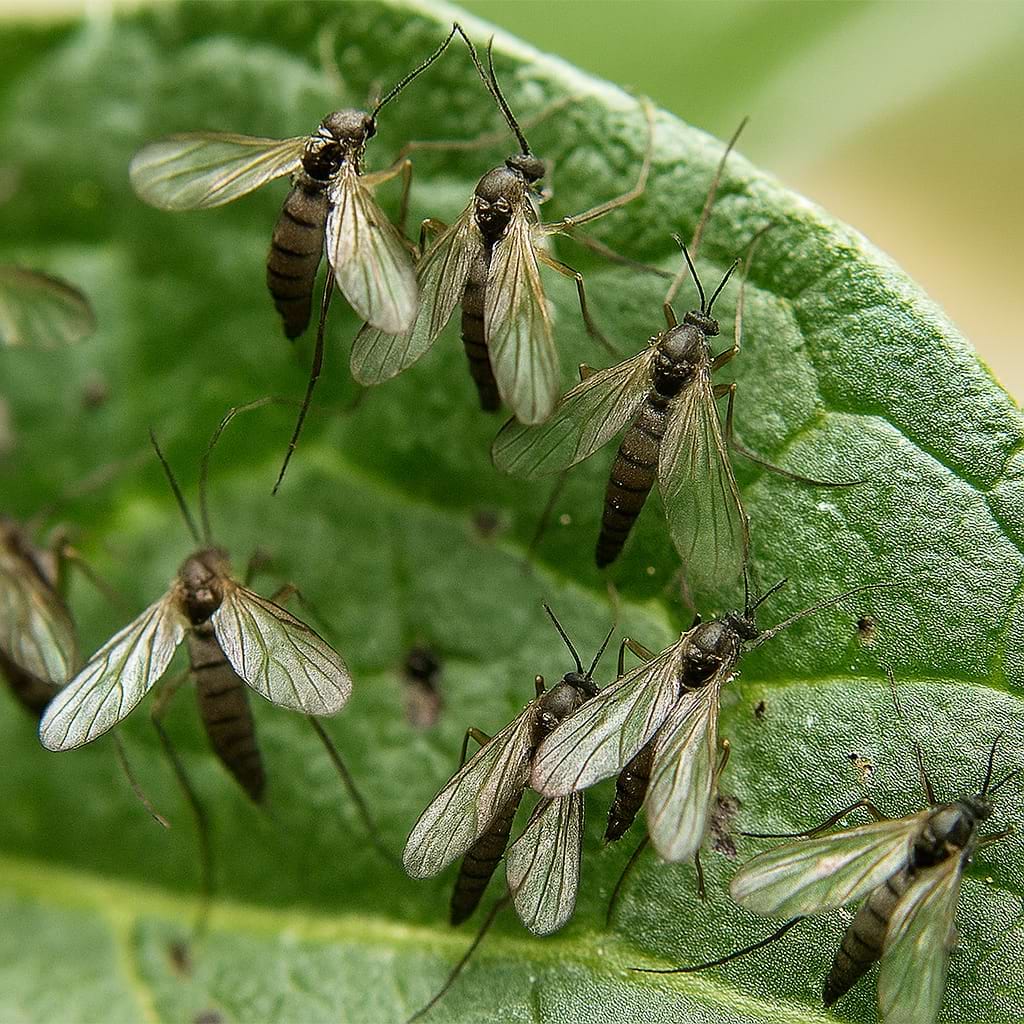
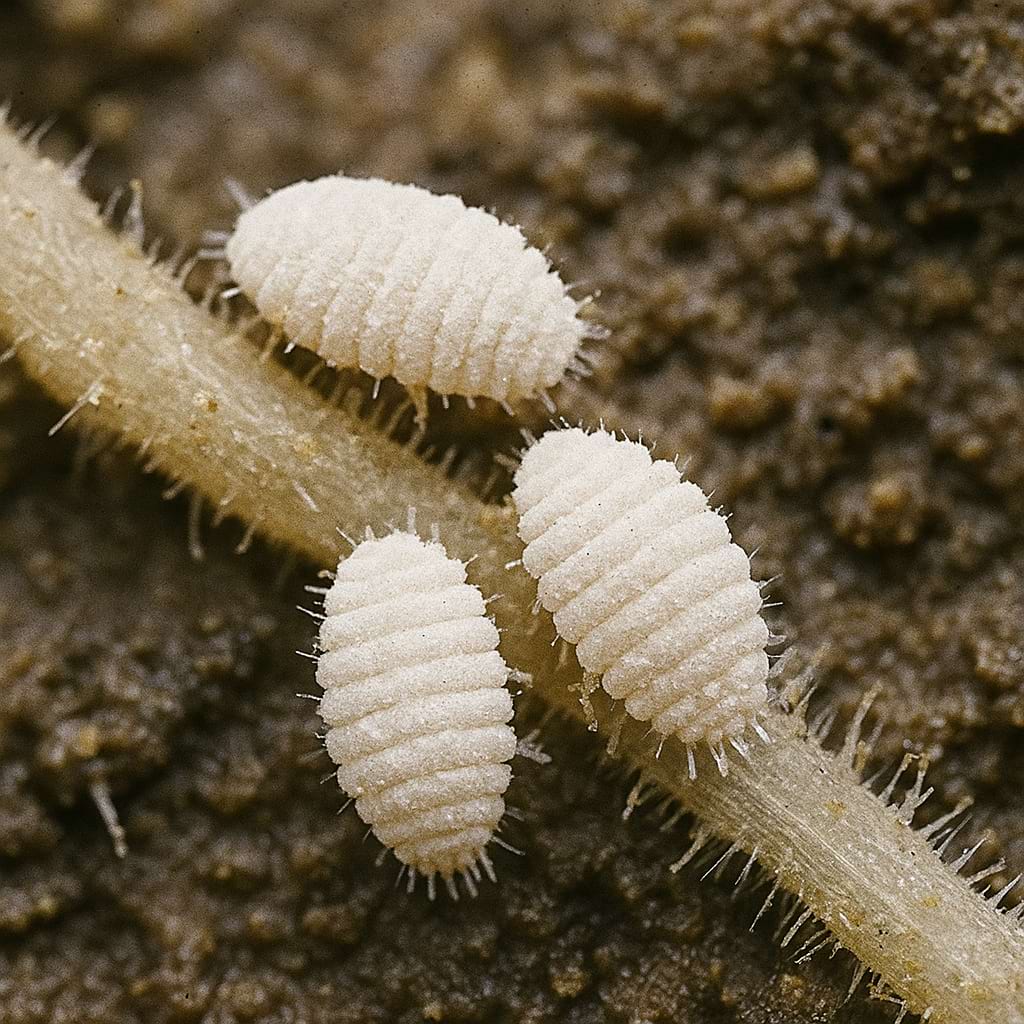
Mealybugs are the most common visitor, showing up as small white cottony clusters tucked into the rosettes and leaf joints. Aphids cluster on new growth and flower stalks, especially on plants that summer outdoors. Scale insects look like tiny brown bumps stuck to the stems, and spider mites leave fine webbing and stippled leaves in hot, dry conditions. Down at the roots, root mealybugs can lurk in the soil and are worth checking for at repotting time.
For a small outbreak, dab pests with a cotton swab dipped in rubbing alcohol. For anything larger, treat with insecticidal soap or diluted neem oil, and be gentle so you do not knock off leaves. Isolate a newly infested plant from your other succulents until it is clean.
🩺 Common Sedum Adolphii Problems
Nearly every problem with this plant traces back to too much water or too little light. Here is how to read the warning signs.
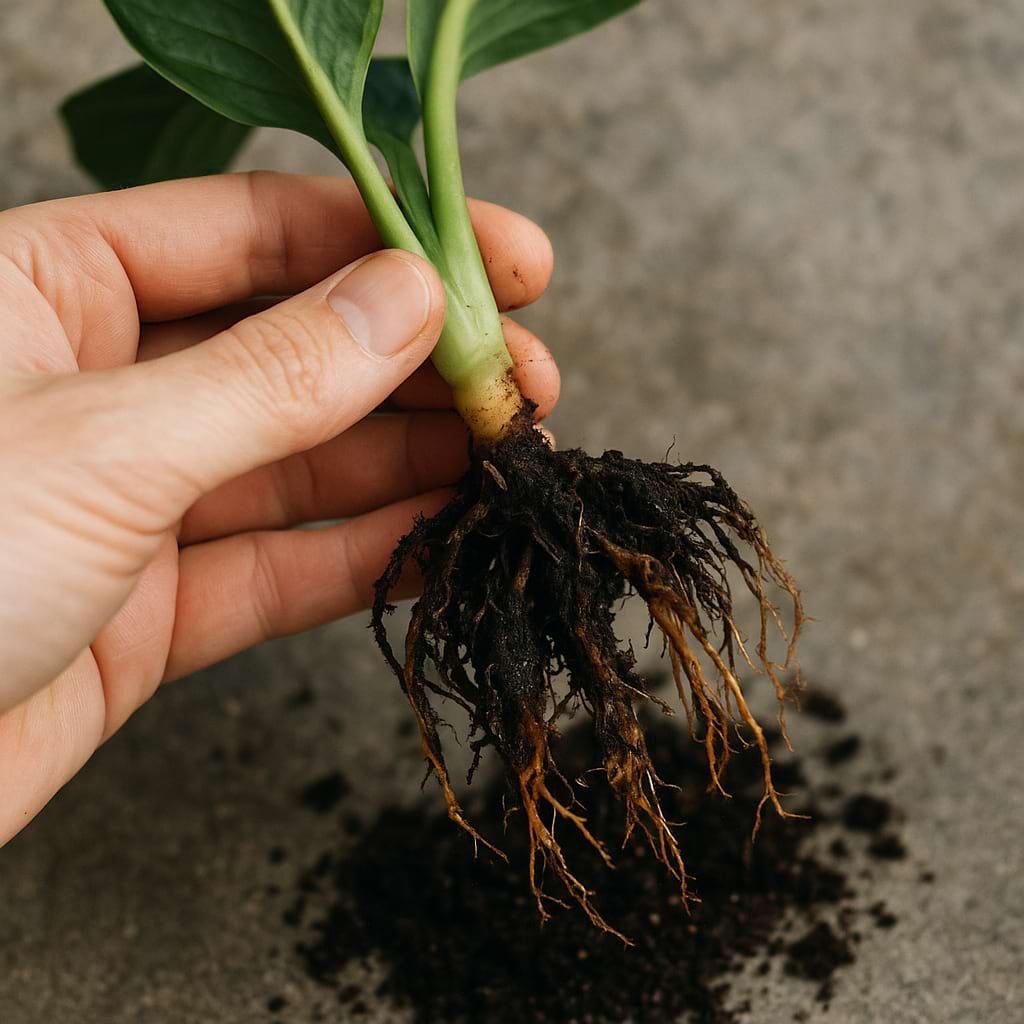
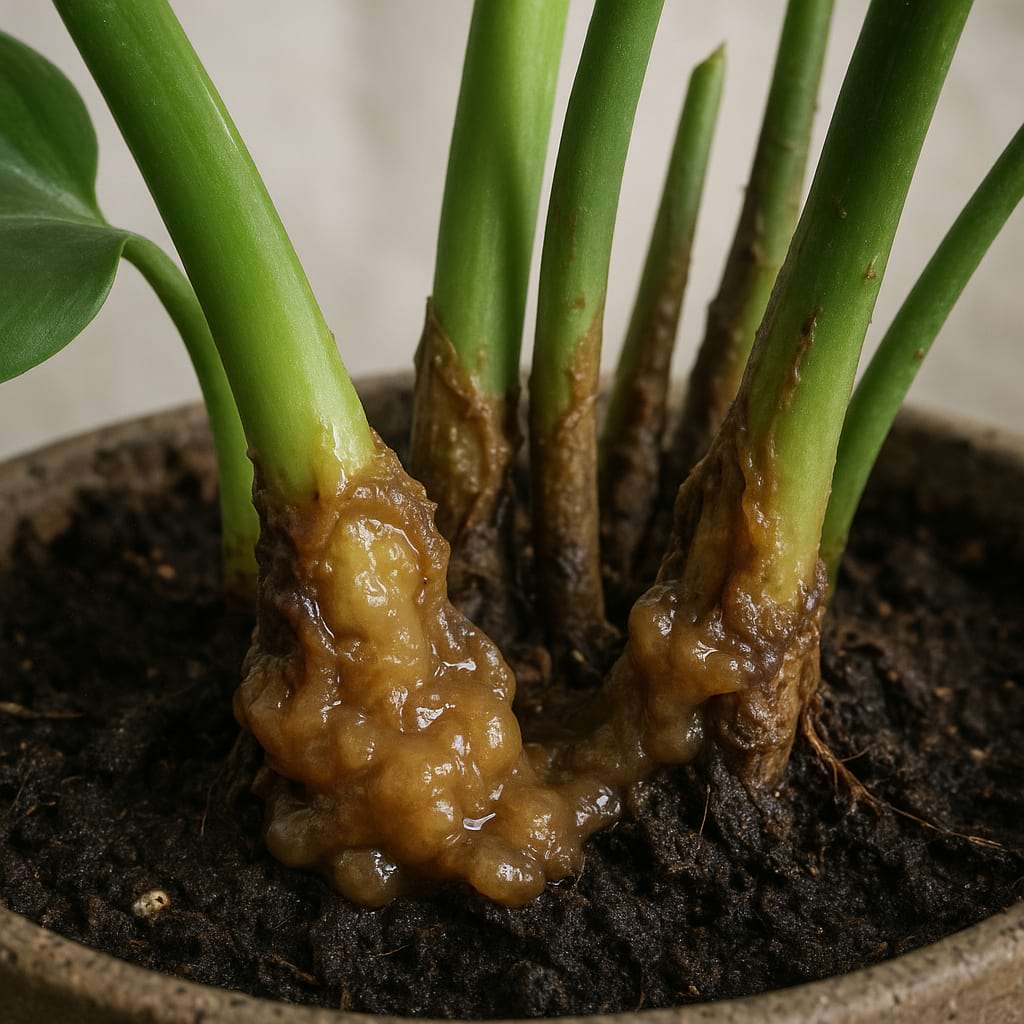
Root rot is the number one killer, caused by overwatering or dense, slow-draining soil. The tell is mushy, darkening stems at the base and yellow, translucent leaves that fall at a touch. Catch it early: cut away the rot, let healthy cuttings callus, and re-root them in dry, gritty mix.
Leggy growth, where stems stretch and rosettes loosen with wide gaps between leaves, means not enough light. Move the plant to a brighter spot and behead the stretched stems to restart a compact shape. Sunburn is the opposite problem, showing as white or brown scorched patches after a sudden jump into intense sun. Acclimate the plant gradually to prevent it.
Some leaf drop is simply normal for this Sedum, which sheds at the lightest bump. But leaves dropping on their own, without being touched, usually signal overwatering, a temperature shock, or root problems. Check the soil and roots first. Wrinkled, deflated leaves on dry soil just mean the plant is thirsty, and a good soak fixes that fast.
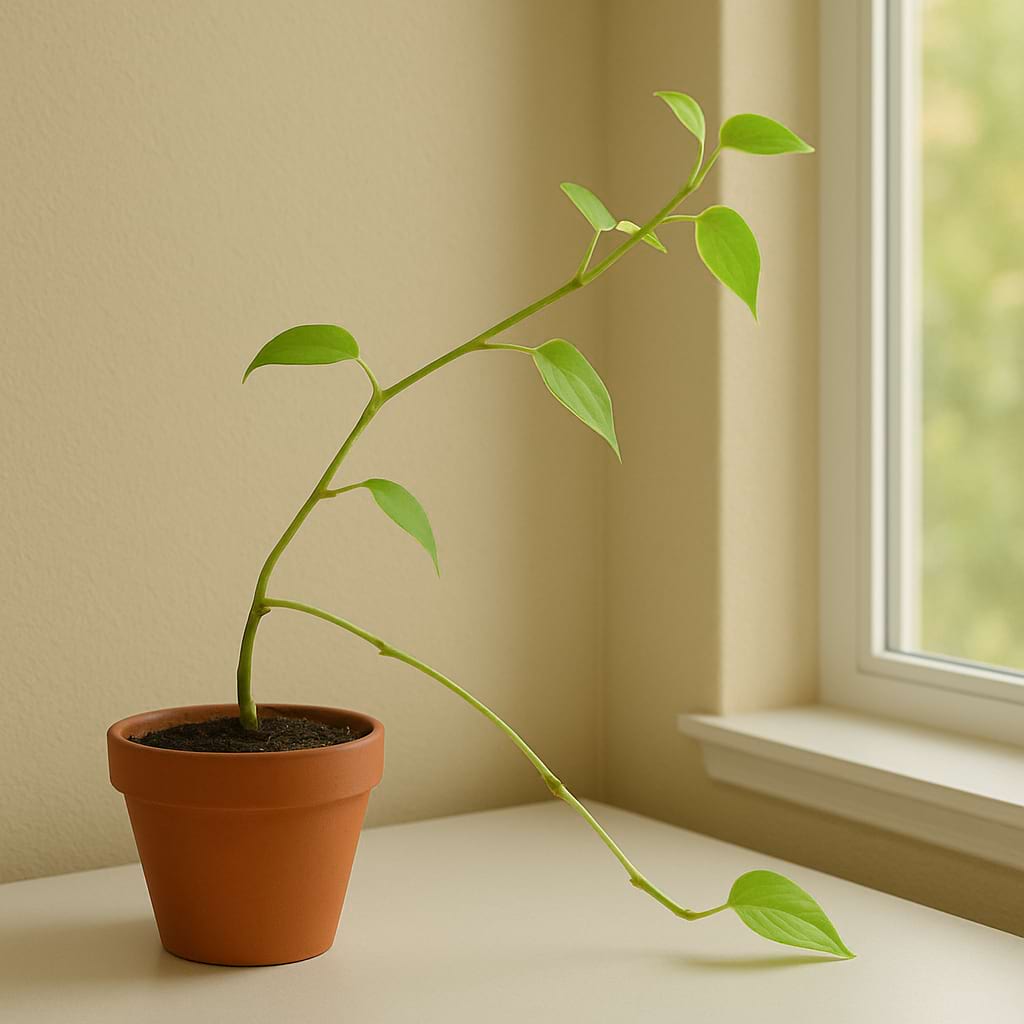
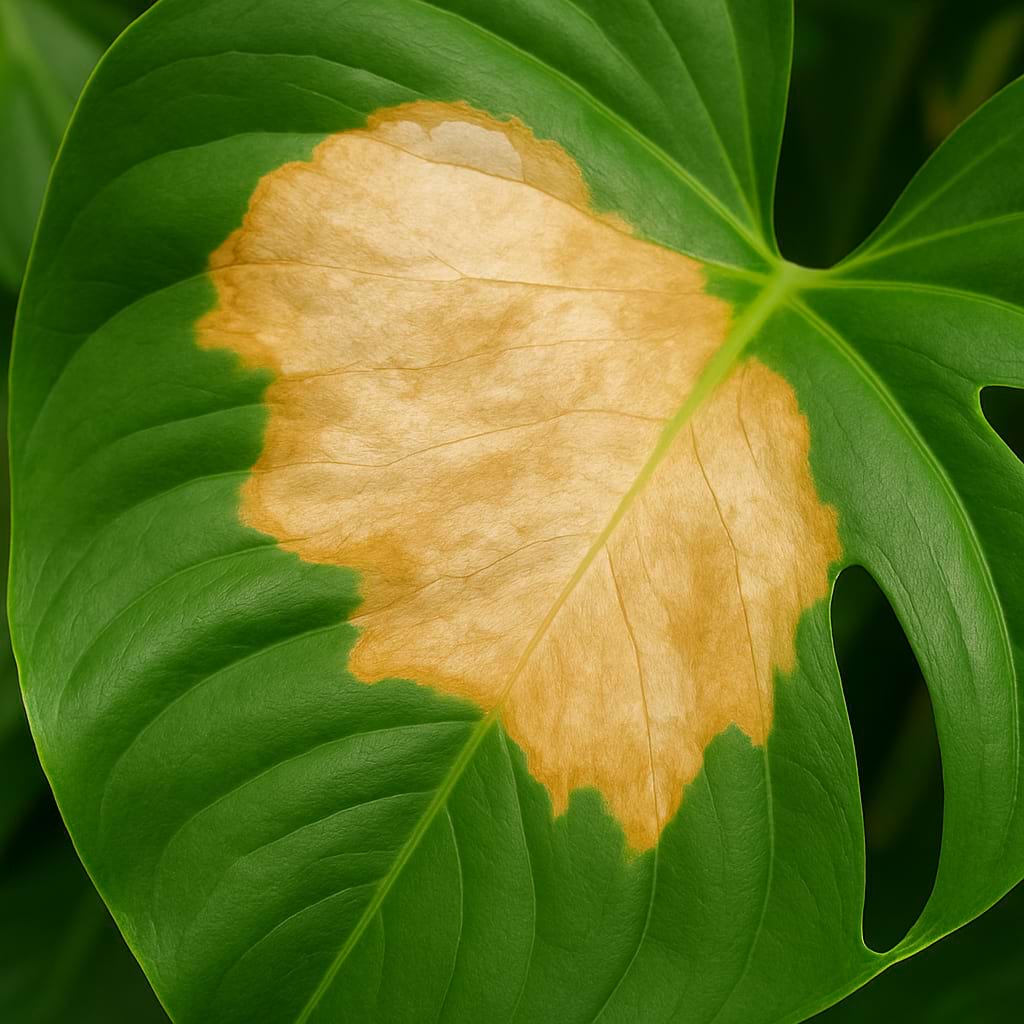
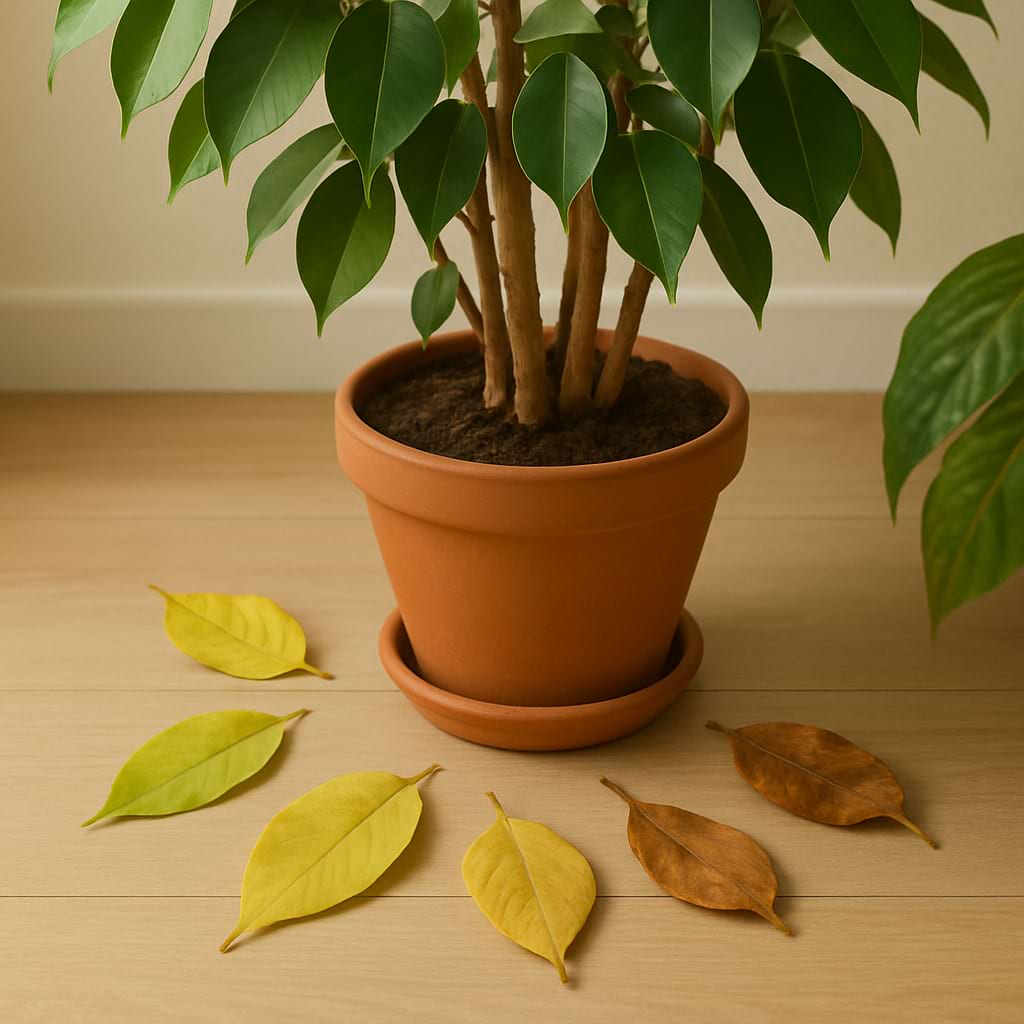

🖼️ Sedum Adolphii Display and Styling Ideas
Solo Setups
A single well-grown Sedum adolphii on a sunny windowsill is a genuine showpiece, especially when the tips are glowing orange. A shallow terracotta or pale ceramic pot keeps the eye on the color. As the stems lengthen and sprawl over the rim, the plant takes on a relaxed, tumbling shape that looks great on a ledge or a small plant stand right in the light.
Grouped Arrangements
This Sedum earns its keep in mixed succulent displays. Its warm orange and coral tones pop hardest next to cool blue-green and pearly neighbors. Try it in a shallow bowl alongside an Echeveria rosette, a Jade Plant, or an Elephant Bush for a living-color contrast. In a hanging pot, the sprawling stems spill over the edge much like a Burro's Tail, just shorter and more colorful.
Where Not to Put It
The one rule: do not tuck it in a dim corner to "brighten up the room." Low light drains the color and stretches the plant within weeks. Keep it in the sunniest window you have, and skip busy walkways and shelves where the pot gets bumped, since every knock costs you leaves.
🌟 Sedum Adolphii Pro Care Tips
✅ Chase the sun. The more direct light this plant gets, the more orange and coral it turns. Color is a light meter you can see.
✅ When in doubt, don't water. This Sedum forgives drought and punishes soggy soil. Dry is safe. Wet is dangerous.
✅ Read the leaves. Firm and plump means skip watering. Soft and wrinkled means soak it. Your plant tells you what it needs.
✅ Grit up your soil. Add extra pumice or perlite to any bagged succulent mix. Fast drainage prevents most problems this plant ever has.
✅ Go easy on fertilizer. Two or three light feeds a year is plenty. Overfeeding trades the sunset color for floppy green growth.
✅ Save every dropped leaf. Toss fallen leaves on some dry soil and forget them. In a few weeks you'll have a tray of babies.
✅ Behead the leggy ones. When a stem stretches out, cut the rosette off and re-root it. You get a fresh compact plant and a stem that resprouts.
✅ Cool nights, better color. A dip in winter night temperature deepens the tips and helps set spring flowers. Let it rest cool and dry.
✅ Keep water out of the rosettes. Water at the soil line or from below so moisture doesn't pool in the center and cause rot.
❓ Frequently Asked Questions
Is Sedum adolphii toxic to cats and dogs?
No. Sedum adolphii is non-toxic to cats, dogs, and humans, which makes it a safe choice for homes with curious pets. Like other Sedums, it is not meant to be eaten, but a nibble will not harm an animal. It is a good pet-safe alternative to mildly toxic trailing succulents like String of Pearls.
Why is my Sedum adolphii turning green instead of orange?
Not enough light. Those warm sunset tones only appear when the plant gets strong, direct sun, ideally with cool nights. In softer indoor light it reverts to a plain yellow-green and may start stretching. Move it to your brightest south or west window, and the color will slowly return as the new growth comes in.
Why is my Sedum adolphii stretching out and getting leggy?
This is etiolation, and it means the plant is starved for light. Stems lengthen and rosettes loosen as the plant reaches toward the nearest window. You cannot reverse the stretch on existing growth, but you can behead the leggy stems, re-root the tops, and give the plant much more direct sun so new growth stays compact.
How often should I water Sedum adolphii?
Only when the soil is completely dry, which is usually every 10 to 14 days in spring and summer and every three to four weeks or less in winter. Skip fixed schedules and check the soil and the leaves instead. Plump, firm leaves mean wait; soft, wrinkled leaves mean it is time for a deep soak.
What is the difference between Sedum adolphii and Sedum nussbaumerianum?
They are extremely close relatives, so close that nurseries often mislabel them and some botanists lump them together. The main difference is color: Sedum nussbaumerianum (Coppertone Stonecrop) shows deeper copper-orange across the whole leaf, while Sedum adolphii (Golden Glow) keeps a more yellow-green base with colored tips. Their care is identical.
Why are the leaves on my Sedum adolphii falling off?
Some leaf drop is normal, since this plant sheds at the slightest bump. If leaves are falling untouched, though, the usual cause is overwatering, sometimes paired with a temperature shock or early root rot. Check whether the soil is staying wet and whether the base of the stems feels soft. Every fallen leaf can be propagated, so nothing is truly lost.
Can Sedum adolphii grow outdoors?
Yes, in USDA hardiness zones 9b to 11 it thrives outdoors year-round in a sunny, well-drained spot. In colder climates you can move it outside for the warm months, then bring it back indoors before nights drop below about 40°F (4°C). Frost is fatal, so never leave it out through a freeze.
How do I propagate Sedum adolphii?
Extremely easily. Lay a clean, calloused leaf or a beheaded rosette on dry gritty soil, keep it in bright indirect light, and mist lightly after the first week. Roots and tiny new plants appear within a few weeks. This is one of the most reliable succulents to multiply, so a single plant can become a whole windowsill.
Does Sedum adolphii need a lot of care?
No, it is one of the most low-maintenance succulents around. Give it a sunny window, gritty fast-draining soil, and water only when it is bone dry, and it mostly takes care of itself. The two mistakes to avoid are overwatering and low light. Get those right and this plant is close to unkillable.
ℹ️ Sedum Adolphii Info
Care and Maintenance
🪴 Soil Type and pH: Gritty, fast-draining cactus and succulent mix amended with pumice, perlite, or coarse sand; neutral pH.
💧 Humidity and Misting: Thrives in dry household air around 30 to 45 percent; dislikes damp, stagnant corners.
✂️ Pruning: Behead leggy stems and pinch tips for fullness; every trimming roots into a new plant.
🧼 Cleaning: Hands off. The faint waxy farina on the leaves is the plant's sunscreen, and fingerprints leave permanent smudges.
🌱 Repotting: Bump up one pot size in spring every 2 to 3 years, or when stems have outgrown the container.
🔄 Repotting Frequency: Every 2-3 years
❄️ Seasonal Changes in Care: Active in spring and autumn; slows in peak summer heat and rests nearly dry through winter.
Growing Characteristics
💥 Growth Speed: Moderate
🔄 Life Cycle: Perennial
💥 Bloom Time: Late winter through early spring on mature, sun-grown plants
🌡️ Hardiness Zones: 9b-11 outdoors; grown as a houseplant everywhere colder
🗺️ Native Area: Eastern Mexico (Veracruz), on rocky slopes and cliffs
🚘 Hibernation: Cool, nearly dry winter rest at 45 to 55°F (7 to 13°C) keeps growth compact and sets up spring flowers
Propagation and Health
📍 Suitable Locations: Sunny south or west windowsills, hanging pots near bright glass, sunrooms, sheltered summer balconies
🪴 Propagation Methods: Extremely easy from single leaves, stem cuttings, and beheaded rosettes.
🐛 Common Pests: Mealybugs, Aphids, Scale Insects, Spider Mites, Fungus Gnats, Root Mealybugs
🦠 Possible Diseases: Root rot, mushy stems, fungal spotting from trapped moisture
Plant Details
🌿 Plant Type: Sprawling rosette succulent
🍃 Foliage Type: Thick, pointed, keel-shaped leaves in loose rosettes at the stem tips, coated in pale wax (farina)
🎨 Color of Leaves: Lime to yellow-green in soft light, flushing orange, coral, pink, and red at the tips and edges in strong sun
🌸 Flower Color: Small white star-shaped flowers, lightly fragrant, on short sprays
🌼 Blooming: Yes; reliable in spring on mature plants given enough sun
🍽️ Edibility: Not eaten; non-toxic but not a food plant
📏 Mature Size: 6-12 inches tall before stems begin to sprawl and trail
Additional Info
🌻 General Benefits: Nearly unkillable, pet-safe, color-shifting foliage, self-propagates from dropped leaves
💊 Medical Properties: None of significance for indoor growers
🧿 Feng Shui: A warm, glowing succulent for a sunny ledge; the sunset tones read as bright, uplifting energy
⭐ Zodiac Sign Compatibility: Leo
🌈 Symbolism or Folklore: Warmth, resilience, and renewal
📝 Interesting Facts: Sedum adolphii is so close to Sedum nussbaumerianum (Coppertone Stonecrop) that the two are constantly mixed up, sold under each other's names, and treated by some botanists as one variable species complex. The famous Graptosedum hybrid 'California Sunset' has Sedum adolphii as one of its parents. The plant's yellow-green base color is why it earned the trade name Golden Glow, but that gold only turns to fire when the plant is stressed by strong sun and cool nights.
Buying and Usage
🛒 What to Look for When Buying: Look for tight rosettes, plump leaves, and at least a hint of color on the tips, which tells you the plant has been grown in real light. A few loose leaves in the pot are normal since this Sedum sheds at a touch. Skip stretched plants with long bare gaps between leaves or any stem that feels soft near the soil.
🪴 Other Uses: Hanging baskets, rock gardens in mild climates, succulent wreaths and living-wall panels, beginner propagation projects
Decoration and Styling
🖼️ Display Ideas: A sunny windowsill where the color can develop, a shallow bowl of mixed succulents, or a hanging pot where the sprawling stems spill over the rim
🧵 Styling Tips: Let the sun do the styling. Grouped with blue-green and pearly succulents, the orange tips pop hardest. A plain pale pot keeps the focus on the shifting leaf color.
🪴 See also 🪴
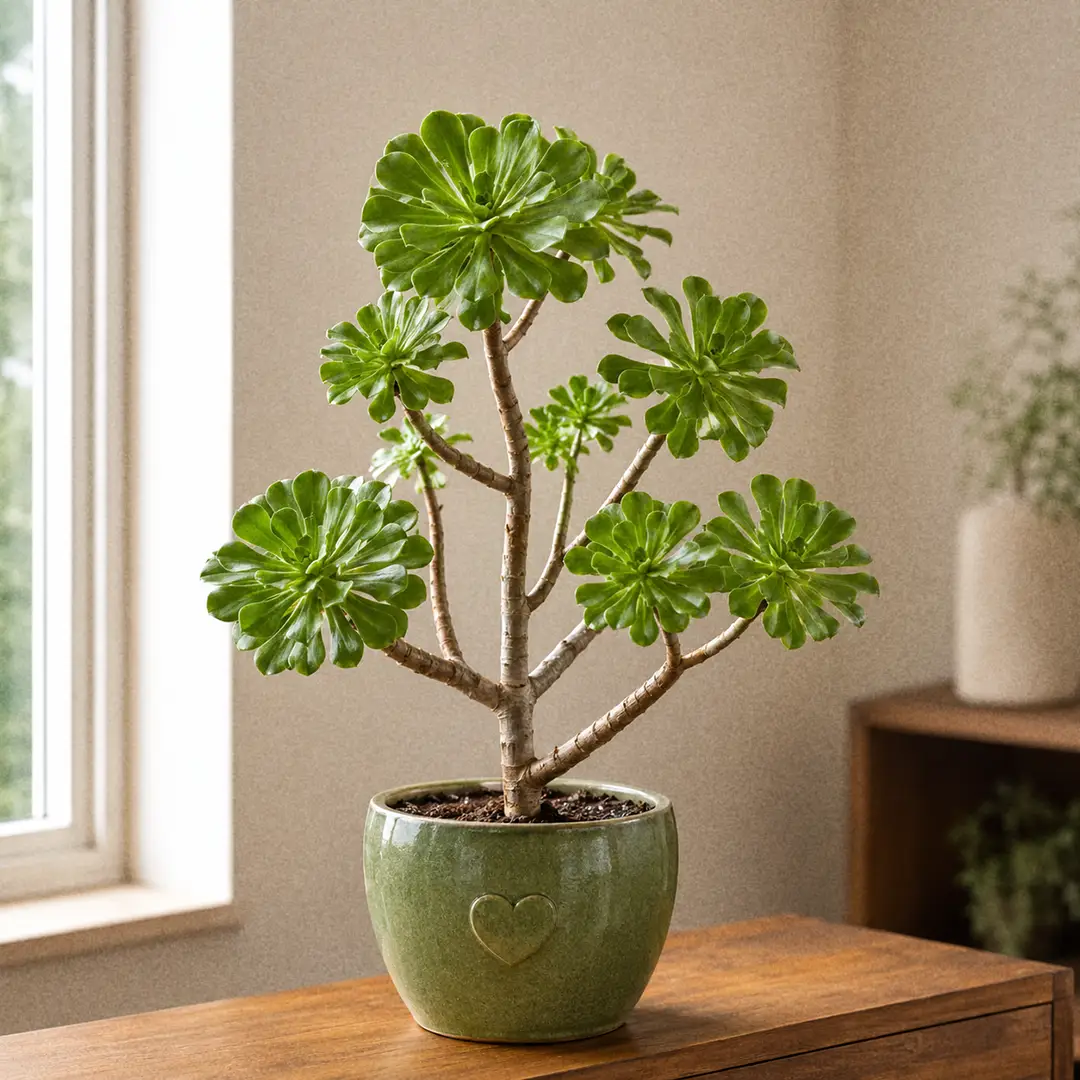
Complete Guide to Aeonium Care and Growth
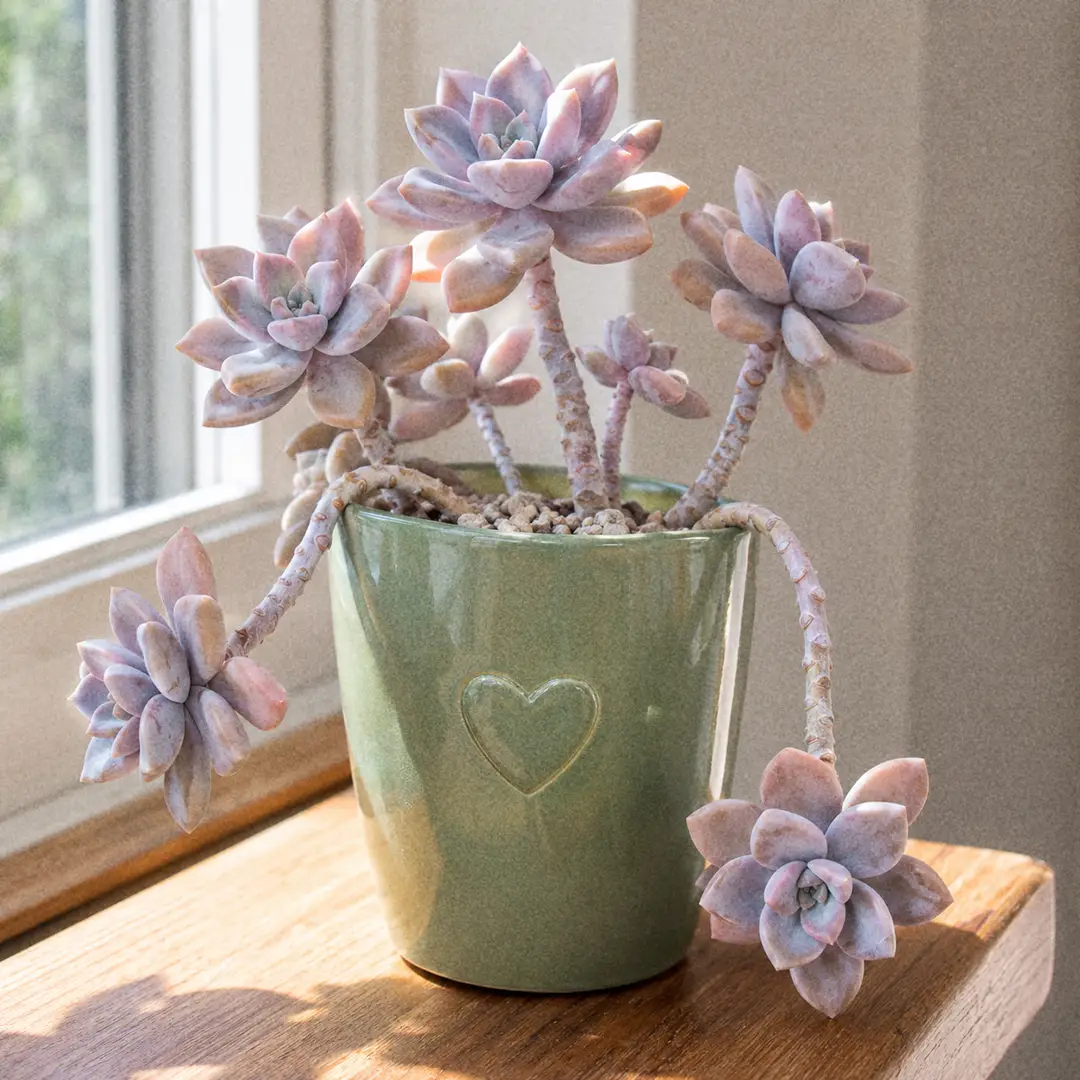
Complete Guide to Ghost Plant Care and Growth
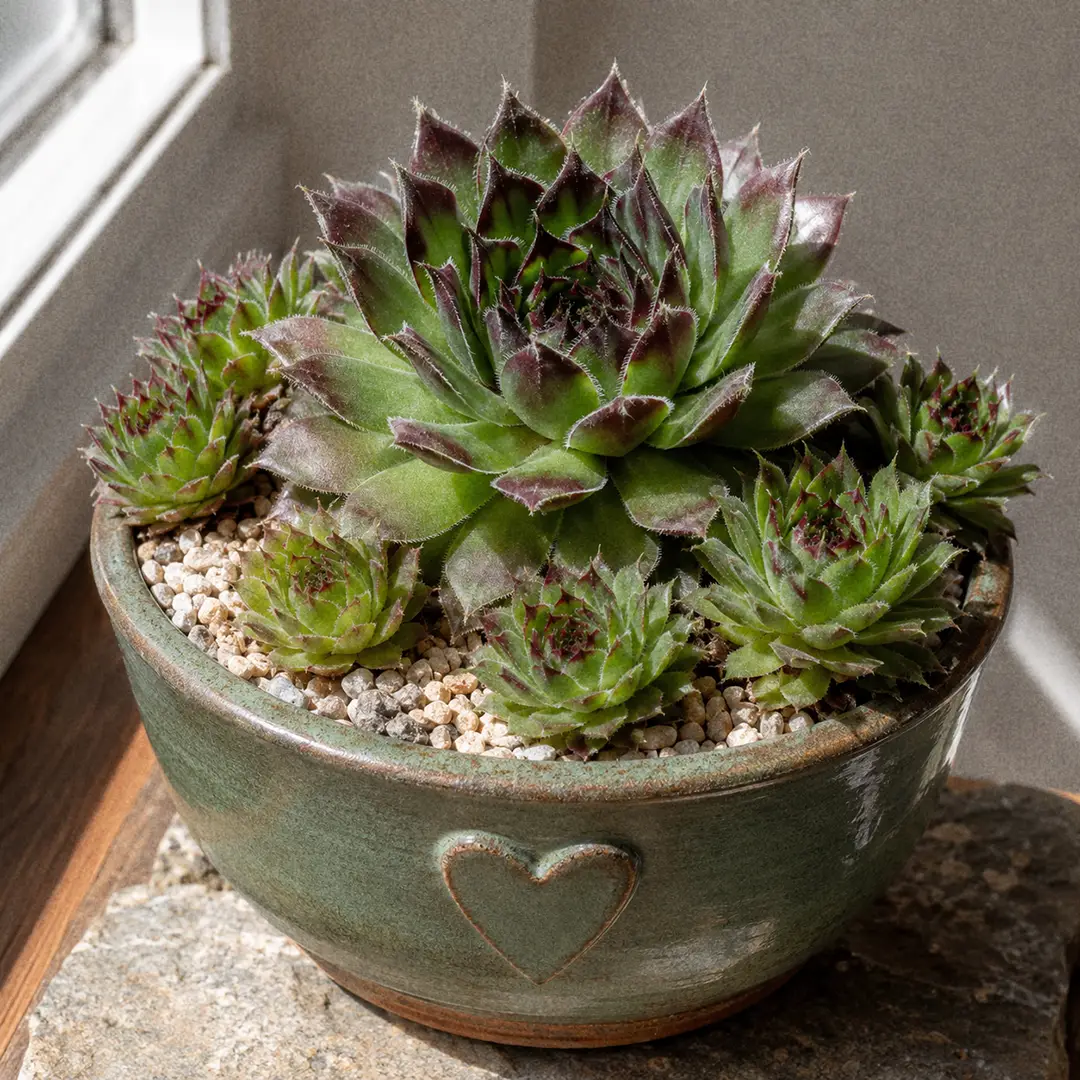
Complete Guide to Hens and Chicks Care and Growth
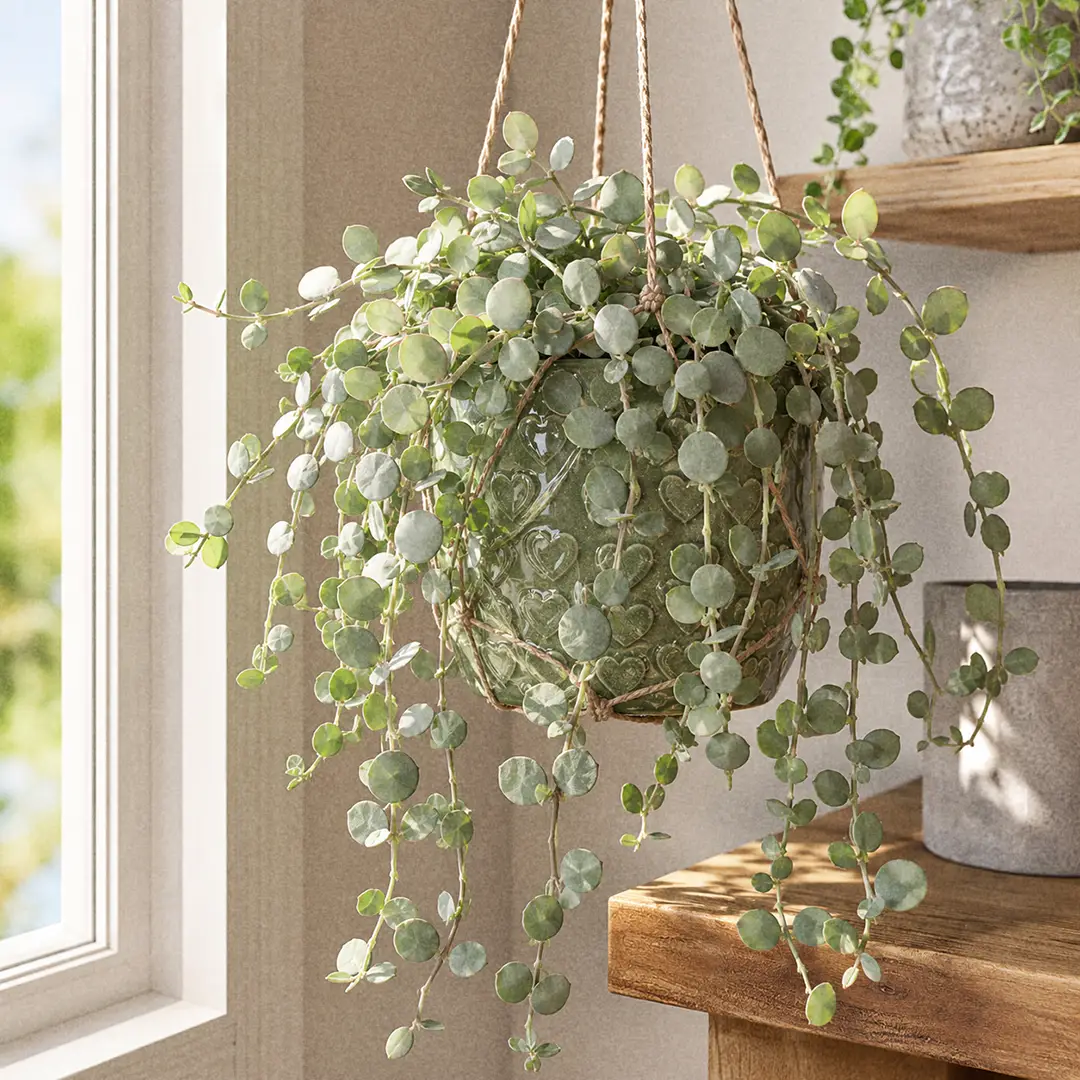
Complete Guide to String of Coins Care and Growth
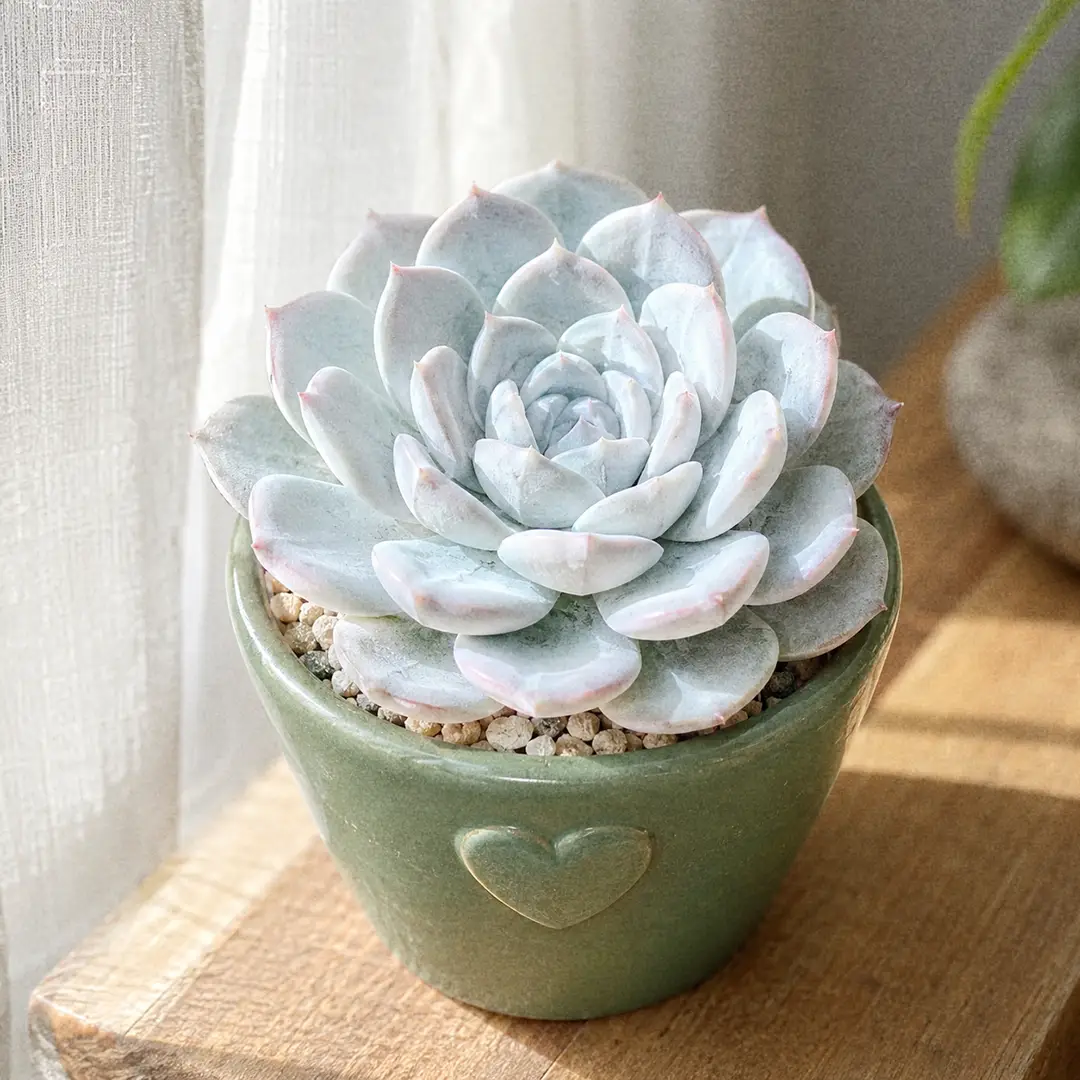
Complete Guide to Echeveria Care and Growth
Complete Guide to Gasteria 'Little Warty' Care and Growth

Houseplant101 Forum
Questions & Comments
Ask a question, share your plant experience, or help other plant owners.
Comments are temporarily unavailable.
Open the Houseplant101 ForumNo comments yet
Be the first to ask a question or share your experience about this page.
Log in or create an account
Comments use your Houseplant101 Forum account, but you can stay on this page.
Create a new account